WORLD
WORLD
Azcatl
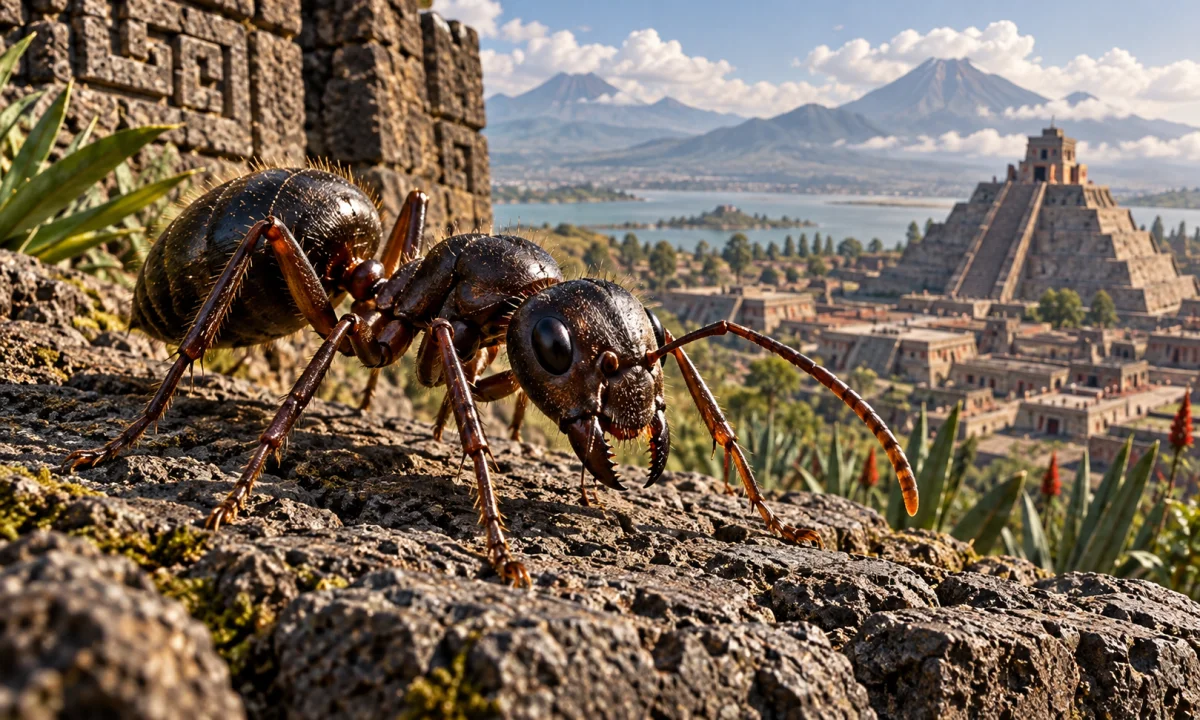
Azcatl is the Nahuatl word for “ant” and is best known in Aztec, or more precisely Mexica and wider Nahua, tradition as the ant connected with Quetzalcoatl’s discovery of maize. Azcatl is not securely attested as a major independent god with a standardized biography. In surviving accounts, the ant is usually an animal helper or guide within a creation and food-origin story, although details differ between versions.
Name and identity
In Classical Nahuatl, azcatl means “ant.” The word can describe an ordinary ant, a symbolic animal, or a named character in a traditional narrative. This creates an important distinction: references to Azcatl do not necessarily indicate a formally worshipped deity called Azcatl.
Popular summaries sometimes present Azcatl as an “Aztec ant god,” but that label is stronger than the surviving evidence allows. The most securely documented role is that of an ant involved in obtaining maize for humanity. The figure’s importance comes from the story and its symbolism rather than from evidence of a large, independent cult devoted to an ant deity.
The name should also be distinguished from Acatl, a different Nahuatl word meaning “reed.” Acatl appears in personal names, calendrical terminology and the name of the historical ruler Acamapichtli’s descendant Ce Acatl Topiltzin Quetzalcoatl, but it is not the same word as azcatl. Spelling can vary in older transcriptions because Spanish-speaking writers represented Nahuatl sounds inconsistently.
Cultural setting
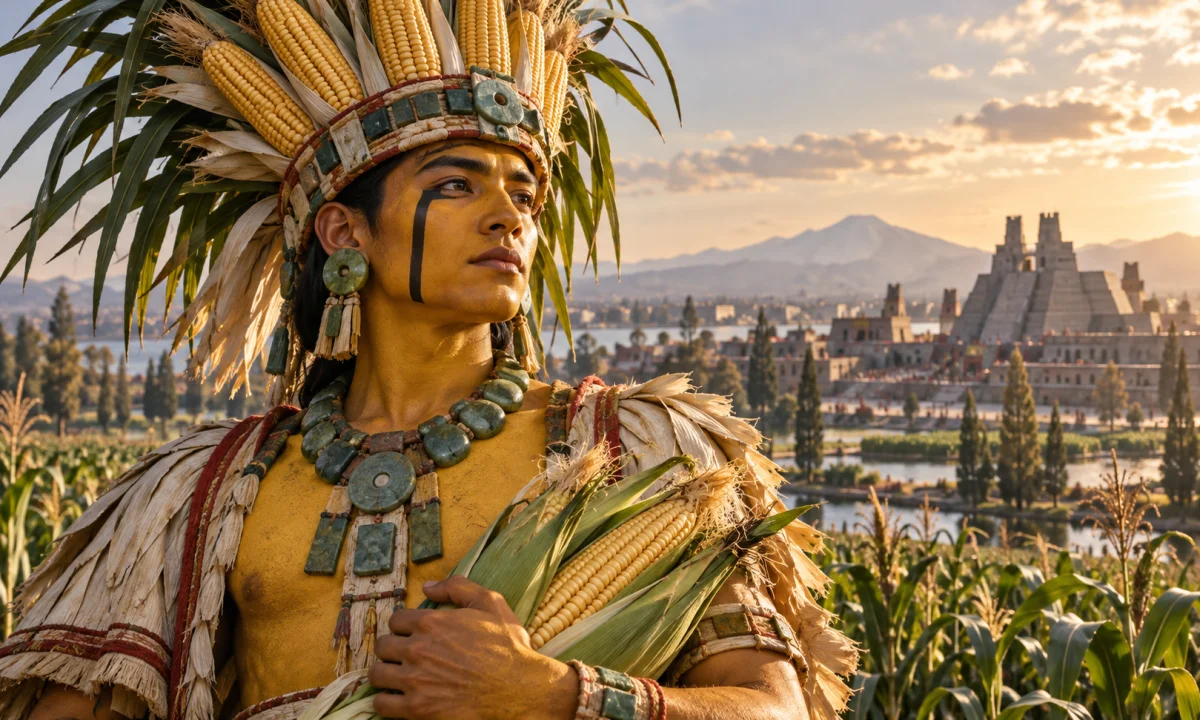
Maize was the foundation of food, agriculture and settled life in central Mexico. For Nahua-speaking communities, corn was not merely a crop. It was part of the material and religious order of the world, and stories about its origin explained how human beings gained the food that sustained society.
The story associated with Azcatl belongs to a wider group of Mesoamerican traditions in which valuable food is hidden inside a mountain, discovered through the actions of animals or supernatural beings, and brought into human use. The precise form of the story is not identical in every community. It is therefore more accurate to speak of related Nahua accounts than of one fixed version of “the Aztec myth.”
These traditions were recorded mainly after the Spanish invasion by Indigenous informants, bilingual scholars and colonial writers. Important accounts include material preserved in the Codex Chimalpopoca, especially the section commonly called the Leyenda de los Soles, as well as other colonial descriptions of Nahua religion and history. Such records are invaluable, but they do not provide a complete transcript of pre-conquest religious life. They reflect oral traditions, the interests of their compilers and the circumstances of colonial recording.
The ant and the discovery of maize
In the best-known narrative, Quetzalcoatl seeks maize after the creation or restoration of human beings. The food is hidden within Tonacatepetl, the “Mountain of Sustenance” or “Mountain of Our Food.” The mountain contains maize and other forms of nourishment, but it cannot simply be opened or entered by ordinary human means.
Quetzalcoatl encounters an ant carrying a grain of maize. The ant knows where the food comes from and, after being questioned or persuaded, leads him toward the mountain. In some versions, the ant is described as a red ant. Quetzalcoatl then transforms himself into an ant, sometimes specifically a black ant, so that he can follow the other ant into the mountain or help carry the maize out.
The details are not uniform. Some tellings emphasize that the ants already possess access to the maize. Others focus on Quetzalcoatl’s transformation and his ability to enter a place inaccessible to larger creatures. The narrative may also involve other gods or the opening of the mountain after the maize has been recovered. These differences are characteristic of traditions preserved through multiple oral and written channels, rather than evidence of several entirely separate ant gods.
After the maize is obtained, it becomes available to the gods and to humanity. In some accounts, the gods test whether people can survive on maize or use it to nourish newly created humans. The larger meaning is consistent even when the sequence varies: a small animal reveals a hidden source of life, and a divine figure brings that sustenance into the human world.
Why an ant?
The ant is a powerful narrative choice because it can enter narrow spaces, move through the earth and carry objects larger than its body. Its size allows it to reach places that a god in ordinary human form might not enter. The ant’s underground movement also suits a story in which maize is concealed inside a mountain or beneath the earth.
The animal’s apparent modesty is significant as well. Quetzalcoatl, a major divine and cultural figure, depends on knowledge possessed by a small creature. The story does not portray strength or status as sufficient to obtain food. Instead, success requires observation, transformation, cooperation and attention to the natural world.
The ant may also represent the practical intelligence of insects and their close relation to agriculture. Ants excavate soil, build organized colonies and transport food. These visible behaviors could make them compelling figures in stories about hidden nourishment and the relationship between earth and cultivation. Such interpretations are reasonable readings of the narrative, but they should not be treated as a fixed ancient theological doctrine unless a particular source states it.
Quetzalcoatl’s role
Quetzalcoatl is often translated as “Feathered Serpent,” from quetzal, referring to the resplendent quetzal bird, and coatl, “serpent.” In Nahua religious traditions, Quetzalcoatl could appear in several related aspects and narratives. He was associated with wind in the form of Ehecatl, with rulership and priestly identity, and with acts of creation or restoration.
In the maize story, Quetzalcoatl is not simply a passive recipient of the ant’s help. He actively searches for food, adopts the ant’s form or follows its path, and transports the maize. The ant provides essential knowledge and access, while Quetzalcoatl performs the difficult task of acquiring and delivering the food.
This relationship should not automatically be interpreted as one of an ant subordinate to a god. The story gives the ant a crucial role that the larger divine figure cannot fulfill alone. It presents knowledge as distributed among different forms of life, with a divine being learning from an animal.
Versions and uncertainties
The phrase “the Azcatl myth” can suggest a single canonical story, but no such universally fixed version survives. The surviving accounts differ in the ant’s color, Quetzalcoatl’s precise actions, the identity of the other beings involved and the stage of creation at which maize is obtained.
Some retellings say that Quetzalcoatl finds an ant carrying a kernel and follows it. Others describe him as asking an ant where the maize is hidden. In certain versions, the ant is initially unwilling to reveal the secret or must be convinced to help. Quetzalcoatl’s transformation may be presented as a deliberate act of magic, while other summaries simplify it into the statement that he “became an ant.”
There is also uncertainty about how the story should be classified religiously. It can be read as a creation account, a food-origin narrative, a myth about agricultural knowledge or a story explaining the cooperation between gods and animals. These categories are modern analytical descriptions. Nahua traditions did not necessarily separate “myth,” “religion,” “history” and “natural explanation” in the same way modern readers do.
Because the records were written in the colonial period, it is also important not to assume that every detail reflects an unchanged pre-conquest text. Oral traditions could preserve very old material while also adapting it to new circumstances. The existence of a colonial written record does not make the story inauthentic, but it does mean that its transmission history must be taken seriously.
Azcatl and the meaning of maize
Maize occupied a central place in the economy and ritual life of central Mexican societies. Fields, rain, fertility and seasonal cycles were connected with religious observances, offerings and community labor. A story about the recovery of maize therefore concerns more than the origin of a foodstuff. It concerns the conditions that make human society possible.
The hidden mountain can be understood as a storehouse of potential nourishment. The ant knows how to reach that nourishment, while Quetzalcoatl acts as the agent who makes it available beyond the mountain. The tale links the underworld or interior of the earth with cultivated life above ground.
It is tempting to describe Azcatl as a symbol of “humility” or “hard work,” especially because ants are commonly associated with collective labor in modern interpretations. Such ideas may be compatible with the story, but they are not a complete account of its traditional significance. The narrative’s clearest emphasis is on access to maize, the importance of animal knowledge and the transformation required to obtain life-sustaining food.
Ants in the wider Mesoamerican world
Ant imagery is not exclusive to the Mexica. Ants appear in traditions from different parts of Mesoamerica, often in stories involving maize, agriculture, rain or the discovery of hidden resources. Similar motifs do not prove that every ant story derives from one source or that all Mesoamerican peoples worshipped the same ant being.
Environmental experience helps explain why ants could become important in multiple traditions. Many species live in or near the ground, emerge seasonally and transport food. Their nests can seem like entrances to an invisible world. In some regions, winged ants and other insects were also collected as food, further connecting ants with subsistence and seasonal abundance.
These broad comparisons should not erase local differences. A Maya, Mixtec, Zapotec or Nahua story may use an ant in a different religious setting and assign it a different role. Azcatl, as the Nahuatl ant associated with the maize narrative, should not be treated as a universal Mesoamerican ant deity.
Distinguishing Azcatl from similar names and figures
- Acatl: A Nahuatl word meaning “reed,” distinct from azcatl, “ant.” Confusion often results from similar-looking spellings in English-language retellings.
- Quetzalcoatl: The Feathered Serpent and the principal divine figure in the maize-acquisition story. Quetzalcoatl is not another name for Azcatl.
- Ehecatl: A wind aspect or related form of Quetzalcoatl in Nahua religious traditions. Ehecatl and Azcatl are separate names with different meanings.
- Other Mesoamerican ant figures: Ants appear in traditions outside central Mexico, but those beings should not be merged with the Nahuatl ant in the Quetzalcoatl story.
Azcatl should also not be confused with every occurrence of the Nahuatl word in historical documents. A person, place or personal name containing azcatl may refer to an ant as a name element without identifying the character from the maize narrative.
Historical and modern reception
In modern books, websites and illustrated retellings, Azcatl is sometimes expanded into a fully individualized “ant god” with a fixed appearance, personality, sacred symbols and extensive powers. Some creative works depict the figure as a giant ant, an armored warrior or a humanoid insect. These representations can be effective adaptations, but they are modern elaborations unless they are clearly supported by a traditional source.
There is no securely established ancient portrait of Azcatl comparable to the recognizable iconography associated with major figures such as Tlaloc, Coatlicue or Quetzalcoatl. Artistic depictions of an ant in a modern publication therefore should not automatically be presented as surviving Aztec imagery.
The traditional material remains significant without those additions. Azcatl’s importance lies in the small creature’s role in the recovery of maize, the central food of Nahua life. The story places an animal at the threshold between hidden earth and human society, while showing that even a powerful god must rely on knowledge carried by a seemingly insignificant guide.