WORLD
WORLD
Centeotl
Centeotl is a maize deity in the religious traditions of central Mexico, especially those associated with the Nahua-speaking peoples of the Aztec, or Mexica, world. Maize was the foundation of Mesoamerican foodways, agriculture, economy and ritual life, so Centeotl was connected with far more than a single crop. The deity represented the life-giving, nourishing and regenerative qualities of maize, while also participating in wider beliefs about fertility, bodily transformation, death and renewal.
Name and identity
The name is written in several forms, including Centeotl, Cintéotl and Cinteotl. These differences reflect colonial spelling practices and the difficulty of representing Nahuatl sounds and vowel length with the Latin alphabet. The name is generally understood as deriving from centli, “maize” or “maize ear,” and teōtl, “deity” or “divine being.” It is therefore commonly translated as “Maize God” or “Maize Deity.”
The identity and gender of Centeotl are not completely consistent across surviving sources. Some colonial descriptions present Centeotl as male, while other traditions and modern discussions treat the maize deity in feminine, masculine or dual terms. This does not necessarily indicate a simple disagreement about one fixed individual. Nahua religious systems often described forces through complementary aspects, and maize could be personified in more than one form according to its age, condition, season or ritual role.
Centeotl should therefore not be reduced to a single standardized character with one universally accepted appearance or biography. The surviving evidence comes mainly from accounts written after the Spanish conquest, often by Christian missionaries or Indigenous collaborators working within colonial institutions. These records preserve valuable information, but they do not provide a complete or neutral record of pre-conquest religion.
Maize in Nahua religious life
Maize was central to life in Mesoamerica long before the rise of the Mexica empire. It supplied food in forms such as tortillas, tamales and maize gruels, and it was cultivated alongside beans, squash and other crops. Agricultural work depended on seasonal rains, fertile soil, human labour and the successful growth of plants from buried seed. These practical realities shaped religious ideas about nourishment and renewal.
For Nahua communities, maize was not merely a resource. It was part of a sacred relationship linking humans, the earth, rain, sunlight, cultivated fields and divine powers. The planting of a seed and the emergence of a green shoot could be understood through the same broad religious logic as birth, sacrifice and resurrection. A kernel disappeared into the earth before reappearing as a growing plant, making maize a powerful symbol of hidden life and transformation.
Centeotl belonged to this agricultural and bodily world. The deity’s significance lay in the capacity of maize to sustain human communities, but also in its vulnerability. Drought, frost, pests, warfare and poor harvests threatened both physical survival and social order. Ritual attention to maize was consequently an expression of dependence, gratitude and anxiety.
Sources and surviving traditions
Information about Centeotl comes from several early colonial accounts of Nahua religion. The most important materials include the Florentine Codex, compiled in the sixteenth century under the direction of Bernardino de Sahagún with the participation of Nahua speakers and scholars. Other colonial works, including accounts associated with Diego Durán and the authors of mythographic histories, also refer to maize deities and agricultural ceremonies.
These sources do not always agree. They were produced in different places and circumstances, and the writers may have recorded local traditions, interpreted Nahua concepts through Christian categories or used Spanish terms such as “god,” “idol” and “devil” in ways that do not perfectly correspond to Nahua religious thought. The same divine power might also be described differently depending on whether the discussion concerned a temple image, a festival impersonator, a mythic ancestor or a ritual object.
Modern interpretations must therefore distinguish between what a particular colonial source says and what can be confidently generalized about all Nahua communities. Centeotl was important within the broader religious environment of central Mexico, but the evidence does not support the idea of one completely uniform belief system extending unchanged across every region.
Relationship to other maize figures
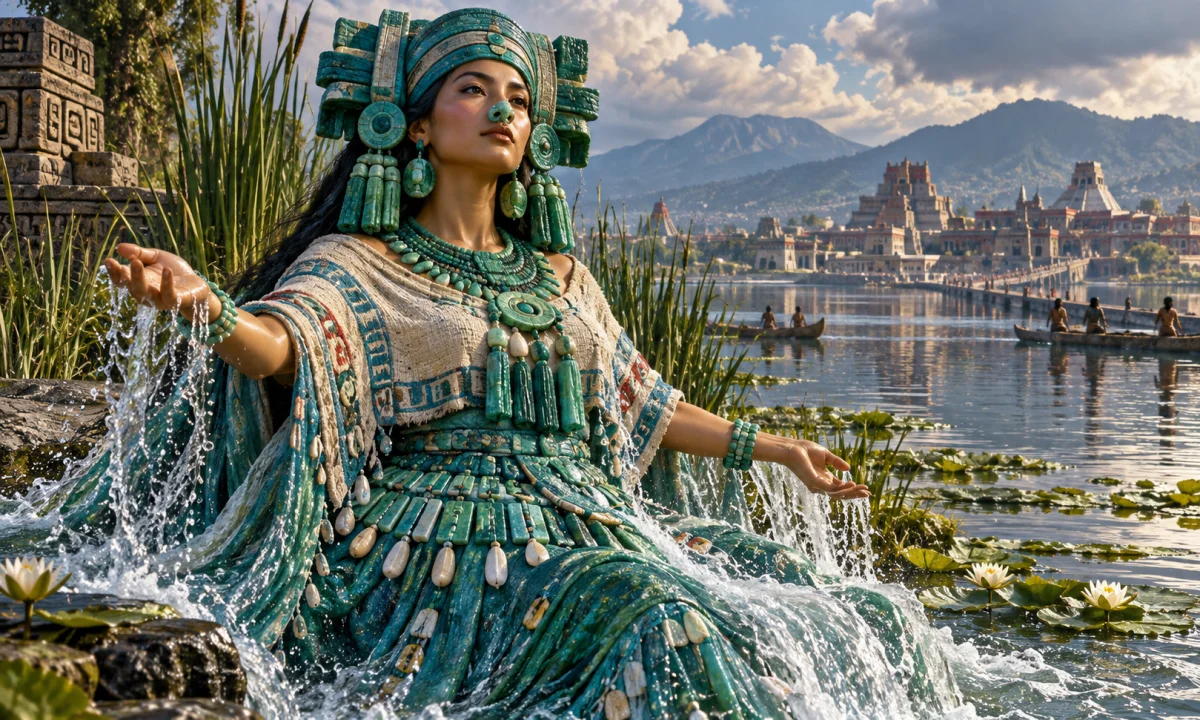
Centeotl is often discussed alongside Chicomecoatl, whose name means “Seven Serpent.” Chicomecoatl was a major maize and agricultural goddess, especially prominent in rituals concerned with food, fertility and the harvest. She could be represented as a mature female provider carrying maize ears or agricultural insignia. In some accounts, she is the most important female personification of maize.
Centeotl and Chicomecoatl should not automatically be treated as identical. They are distinct names with different ritual associations in the surviving evidence. Nevertheless, their functions could overlap, and both were connected with the growth and nourishment of maize. Their relationship may be understood as part of a wider network of complementary agricultural powers rather than as a simple division between two unrelated deities.
Another figure sometimes connected with Centeotl is Xilonen, a goddess associated particularly with young or tender maize. Her name is commonly interpreted as referring to the maize ear in an early stage of growth. Xilonen had her own festival and ritual identity, and she should not be collapsed into Centeotl merely because both figures concerned maize.
There is also a deity or divine expression called Centeocihuatl, often translated as “Maize Woman.” The term can be relevant when discussing feminine aspects of maize, but the surviving evidence does not justify treating every reference to Centeotl, Centeocihuatl, Chicomecoatl and Xilonen as interchangeable. Translation and regional variation make these relationships especially difficult to define with certainty.
Appearance and symbolism
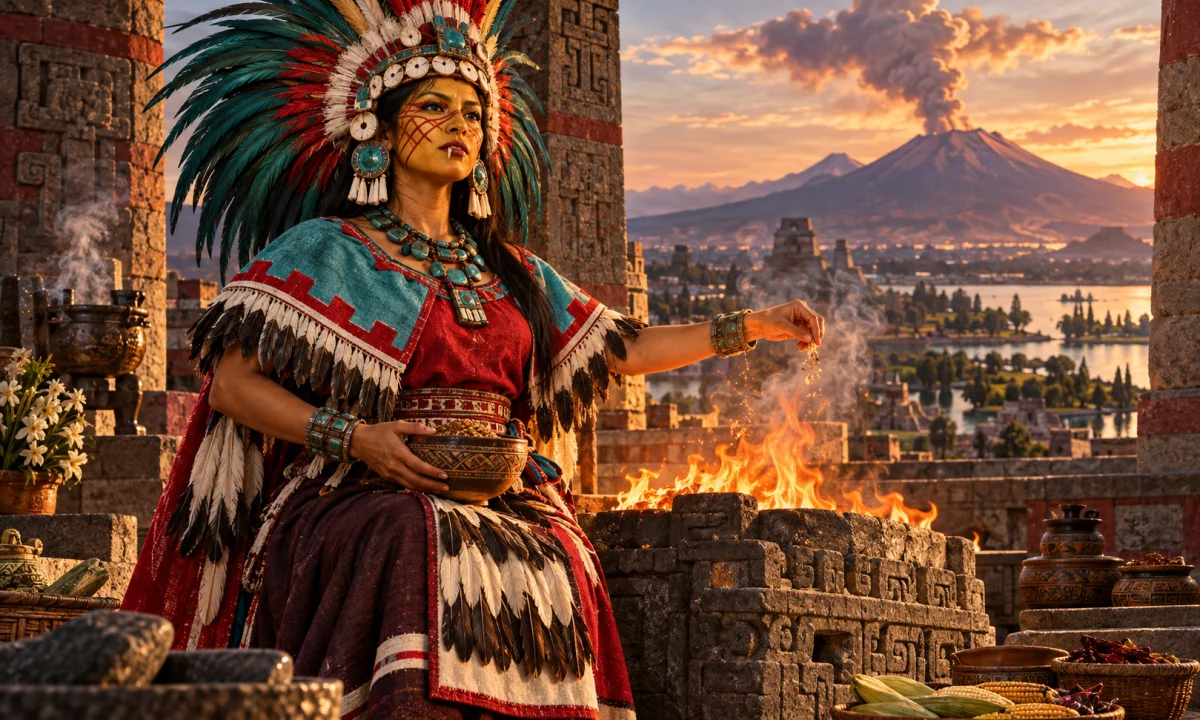
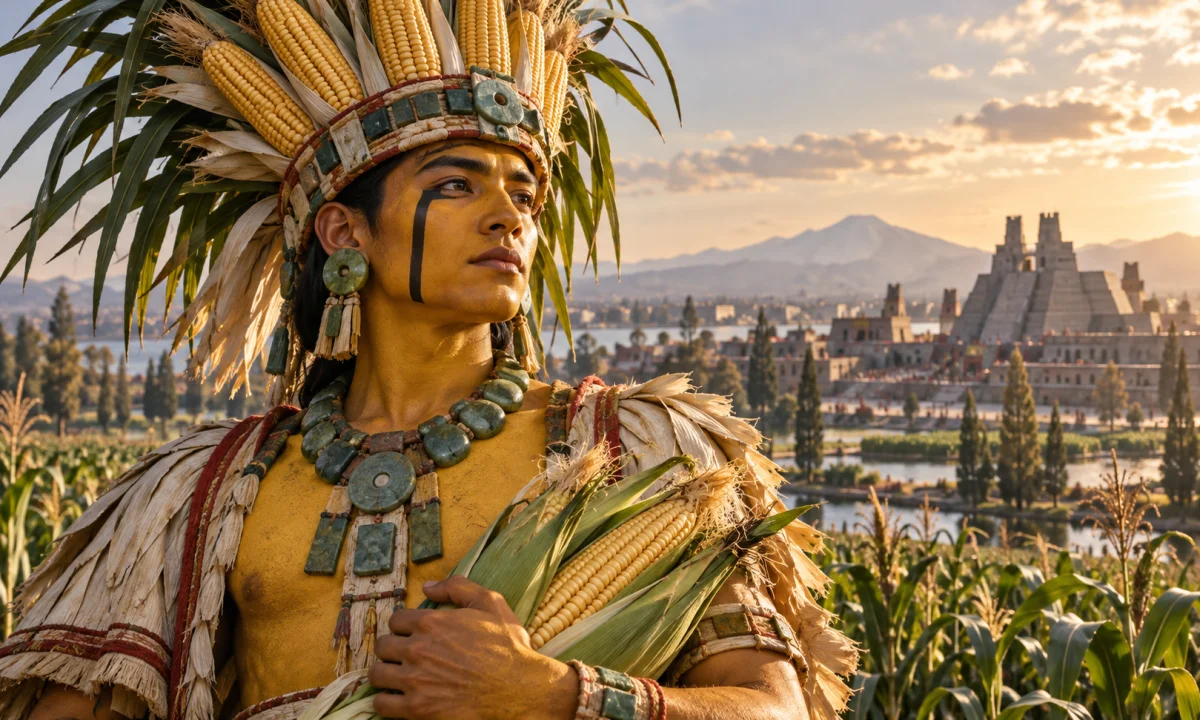
Descriptions of Centeotl vary, but maize imagery is the central visual theme. The deity may be shown with maize ears, a maize-leaf headdress or yellow body paint recalling the colour of ripe grain. Some representations associate the figure with a youthful appearance, reflecting the vulnerability and promise of a growing crop. Other images and descriptions emphasize ornaments, precious materials or colours connected with agricultural abundance.
It is important to treat these details cautiously. Many surviving images were copied, described or reorganized after the conquest, and not every illustrated figure can be identified securely. Colonial commentators also sometimes gave a single name to an image or ritual role that may have had more complex local meanings.
Maize itself functioned as a symbol of the human body and of social continuity. People were nourished by maize, worked to cultivate it and depended on its successful reproduction. The crop consequently connected the household, the field and the wider community. A maize deity was not simply a supernatural farmer. Centeotl represented the conditions that allowed life to continue through recurring cycles of planting, growth, harvest, consumption and replanting.
Festivals and ritual associations
Maize deities were honoured during the annual cycle of veintenas, the eighteen ritual periods recorded in central Mexican calendars. Different communities and sources assign particular agricultural meanings to these ceremonies, and the surviving descriptions are not always consistent. Centeotl is especially relevant to rituals involving the planting, growth and harvest of maize, although other deities often shared or complemented these responsibilities.
The festival of Huey Tozoztli, the “Great Vigil” or “Great Vigilance,” was associated with agricultural renewal and the honouring of powers connected with rain, mountains and maize. In descriptions of the ceremony, maize plants and seed were treated with reverence, and offerings were made to support the coming crop. Chicomecoatl is especially prominent in accounts of this period, which illustrates why Centeotl should not be assumed to have been the only maize deity involved in agricultural ritual.
The festival of Ochpaniztli, the “Sweeping,” also included important agricultural and fertility symbolism. It was connected with Toci, “Our Grandmother,” and with several female powers associated with the earth, fertility and cultivated abundance. A ritual performer representing a maize-related deity could be killed in a ceremonial enactment, after which the skin was used by another ritual specialist. To modern observers this may appear shocking, but within the symbolic structure of the ceremony it expressed transformation, the renewal of life and the return of vitality to the community.
Such rituals should not be interpreted as literal attempts to “feed” a single god in a simple transactional sense. They belonged to a religious system in which divine forces, human communities and the natural world were linked through offerings, obligations, imitation and transformation. The ceremonies dramatized the conditions by which crops and people continued to live.
Myths of maize and creation
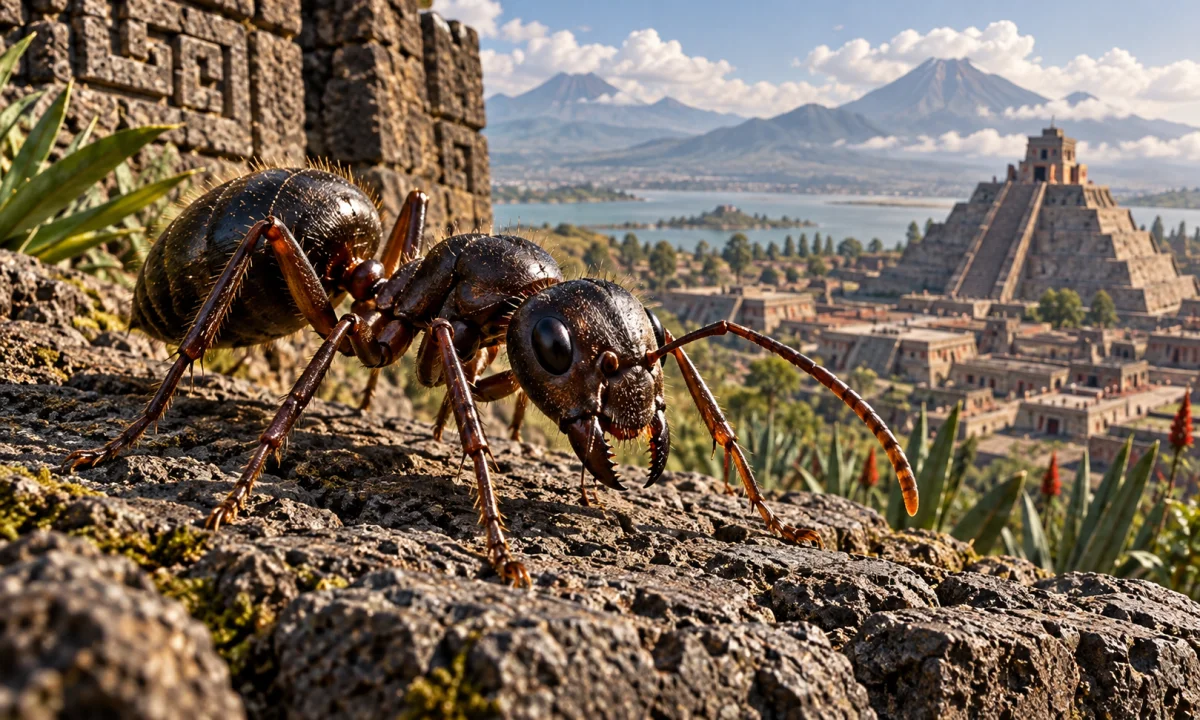
Central Mexican traditions explain the origin of maize in several different ways. One widely known story tells how Quetzalcoatl discovered that the valuable grain was hidden inside a mountain. Ants led him to the maize, or helped reveal its location, and he obtained it for humanity. In some versions, other gods or rain deities are involved in opening the mountain or making the grain accessible.
This story is important for understanding the cultural value of maize, but it is not necessarily a story specifically about Centeotl. Quetzalcoatl’s role as the bringer of maize and the personification of the maize crop are separate themes. Later retellings sometimes combine them, creating a more unified narrative than the colonial records themselves support.
Some mythographic traditions associate Centeotl with Piltzintecuhtli and Xochiquetzal, and describe the deity as being born from their union. Other accounts place maize within a broader sequence of divine births, transformations and gifts to humanity. These genealogies should be presented as variants rather than as a single agreed biography. The sources were written in different contexts, and their authors did not preserve one standardized canon comparable to a single scripture.
Another recurring idea is that maize emerges from the body of a divine or ancestral being. In such accounts, parts of the body become useful plants or other forms of nourishment. The imagery links the physical body to the earth and suggests that food is the result of sacrifice, transformation or the return of life from death. Whether these stories refer directly to Centeotl varies by source and interpretation.
Death, renewal and the maize body
The agricultural cycle gave maize deities a strong association with death and rebirth. A seed is buried, apparently lost, before it germinates. The mature plant is then cut down, its grain is removed and the remaining material returns to the soil or serves other purposes. This cycle could be expressed through ritual impersonation, mythic ancestry and images of a youthful deity whose fate parallels that of the crop.
These themes also appear in the treatment of ritual impersonators. An individual selected to represent a deity could wear the deity’s ornaments and be treated as a sacred presence during a festival. The person’s death at the end of the ceremony was not simply theatrical entertainment. It marked a transition in which the represented power was renewed through a highly structured act of sacrifice and transformation.
Descriptions of these rites must be separated from later sensational portrayals of Aztec religion. Human sacrifice was one part of a larger ritual system, and the surviving records often describe it through the moral language of Spanish Christianity. At the same time, acknowledging colonial bias does not require denying that sacrificial ceremonies occurred. The historical evidence supports both the existence of such rites and the need to interpret them within their specific religious and political context.
Centeotl and the wider pantheon
Centeotl’s role becomes clearer when considered alongside other powers. Tlaloc governed or embodied rain and was essential to agricultural success. Chalchiuhtlicue was associated with water, springs, rivers and other forms of flowing or sustaining water. Coatlicue and Toci represented aspects of earth, ancestry and generative power in traditions that could overlap with agricultural concerns. Xipe Totec, associated with renewal, vegetation and the wearing of flayed skin, also participated in symbolism of seasonal regeneration.
These relationships do not mean that Centeotl was merely another name for any of these figures. Rather, maize existed within a network of divine processes. Rain made growth possible, earth received the seed, the plant produced nourishment and human labour brought the crop to harvest. Religious practice could therefore honour several deities during the same agricultural season without requiring them to have identical functions.
Historical and cultural significance
The importance of Centeotl reflects the central place of maize in Mesoamerican civilization. The crop supported dense populations, urban centres, markets and political states. It was used in everyday meals, feasts, offerings and tribute. The sacred meaning of maize was consequently inseparable from questions of labour and power: who cultivated the land, who controlled stores of grain and who received agricultural tribute.
For the Mexica, religious ceremonies also helped organize the imperial calendar and express relationships between the capital, subject communities and the divine world. Agricultural festivals could be local and household-based, but they could also be incorporated into state-sponsored ceremonies. This does not mean that every farmer understood Centeotl in exactly the same way as priests at the imperial capital. Local traditions, languages and ecological conditions shaped religious practice.
After the Spanish conquest, Indigenous communities continued to cultivate maize and preserve agricultural customs while adapting them to Christian institutions and festivals. Some older concepts survived under new names or through practices that were no longer publicly described in pre-conquest religious terms. It is often difficult to identify a direct, uninterrupted worship of Centeotl in later records, but the continuing cultural importance of maize in Mexico and Central America is unmistakable.
Distinguishing Centeotl from modern portrayals
Modern illustrations frequently present Centeotl as a single, clearly defined young man covered in maize leaves, sometimes with elaborate green or yellow clothing. Such images can communicate the deity’s agricultural symbolism, but they are artistic interpretations rather than universally documented ancient portraits. The evidence allows maize-related attributes, yet it does not establish one fixed canonical costume.
Contemporary games, fantasy fiction and popular mythology websites may also treat Centeotl as a generic “Aztec god of corn” with a complete set of powers, weapons and relationships. Those additions should not be confused with the surviving Nahua traditions. In particular, modern sources sometimes merge Centeotl with Chicomecoatl, Xilonen or other agricultural deities to create a simpler pantheon.
The traditional evidence presents something more complex: overlapping maize figures, regional variation, changing ritual roles and different ways of expressing masculine and feminine aspects of agricultural life. Centeotl is best understood not as an isolated character in a fixed mythological universe, but as one important personification of the maize that sustained Nahua communities and connected human life with the cycles of the earth.