WORLD
WORLD
Chalchiuhtecólotl
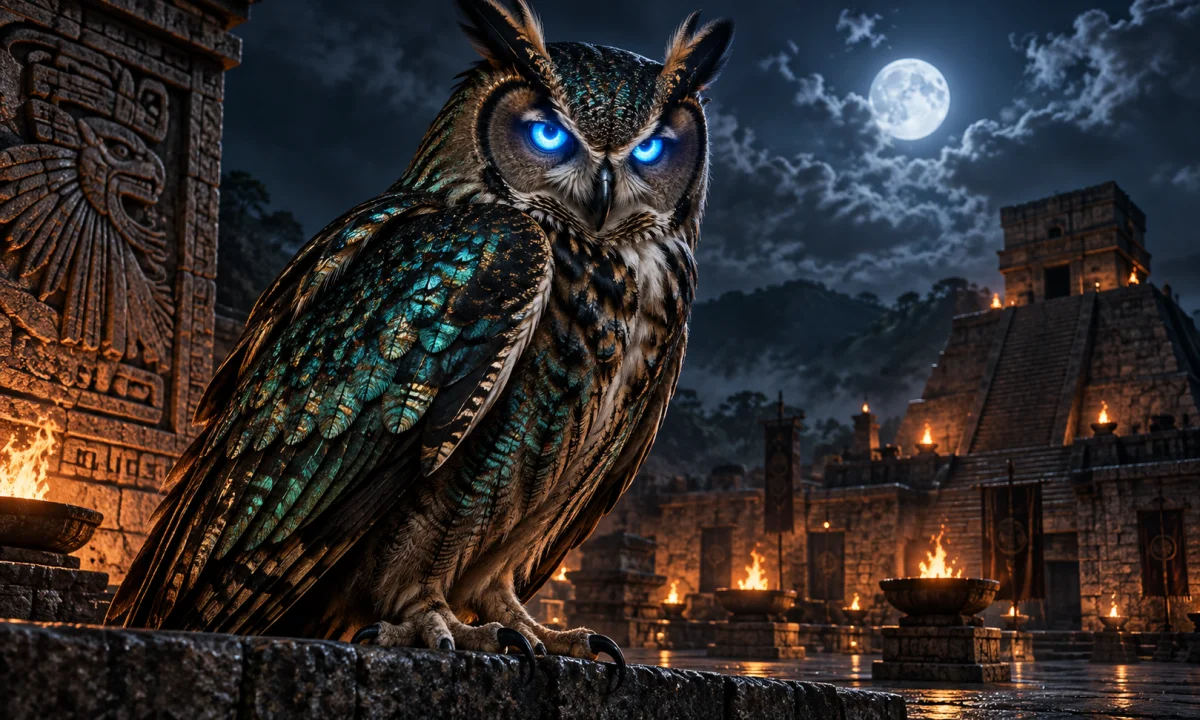
Chalchiuhtecólotl is an obscure figure associated with Nahua, especially Mexica or “Aztec,” religious traditions. The name is commonly translated as “Precious Owl” or “Jade Owl,” from Nahuatl elements connected with a precious green stone and an owl. Surviving colonial descriptions and modern interpretations do not present Chalchiuhtecólotl as a fully documented, independent god with a single clearly defined mythology. Instead, the name appears to belong to the complex religious symbolism surrounding owls, night, danger and the deity Tezcatlipoca.
Name and meaning
The name is written in several forms, including Chalchiuhtecólotl, Chalchiuhtécolotl and Chalchiuhtecolōtl. These differences reflect the difficulties of representing Classical Nahuatl in the Latin alphabet. Colonial writers used Spanish spelling conventions, while modern scholars may mark vowel length or accentuation in different ways.
The first element is related to chalchihuitl, a word associated with jade, greenstone and valuable polished stones. In Mesoamerican religious language, such stones were not merely decorative objects. They could signify preciousness, life, water, fertility and sacred vitality. Translating the element simply as “jade” is convenient, but it can suggest a modern mineral classification that does not always correspond to Indigenous categories of precious greenstone.
The second element, tecolotl, means “owl.” The compound therefore has the basic sense of “precious owl” or “greenstone owl.” As with many Nahuatl divine names, however, a literal translation does not necessarily explain the figure’s complete religious significance. The name may describe a supernatural manifestation, an epithet or a symbolic being rather than a separate deity with an extensive narrative tradition.
Cultural and religious setting
Religious life in central Mexico before the Spanish conquest included numerous gods, sacred forces, local manifestations and names used in particular ritual or poetic contexts. The Mexica state shared much of its religious world with other Nahua-speaking communities, while also emphasizing certain deities and ceremonies in the capital, Tenochtitlan. The modern label “Aztec mythology” brings together material from these related but not identical traditions.
Most written information about Nahua religion comes from the sixteenth century, after the conquest. Important evidence includes the Florentine Codex, compiled under the direction of Bernardino de Sahagún with Indigenous informants and artists, and pictorial manuscripts such as the Codex Borgia and other central Mexican codices. These sources preserve valuable Indigenous knowledge, but they do not form a single mythological handbook. They were produced in different settings, for different purposes and under colonial conditions.
Chalchiuhtecólotl is not among the best-documented central deities such as Huitzilopochtli, Tlaloc, Quetzalcoatl, Coatlicue, Mictlantecuhtli or Tezcatlipoca. References to the name are limited and have been interpreted in different ways. Some accounts treat it as an aspect or manifestation of Tezcatlipoca; others discuss it as an owl-related supernatural figure. The available evidence does not justify presenting a long, independent cycle of myths as though its details were certain.
Relationship to Tezcatlipoca
The strongest recurring interpretation connects Chalchiuhtecólotl with Tezcatlipoca, the powerful and changeable deity whose name is usually translated as “Smoking Mirror.” Tezcatlipoca was associated with night, the earth, rulership, conflict, fate, sorcery, temptation and the unpredictable power of the sacred. He was not restricted to one simple function. His many names and manifestations expressed different aspects of that power.
In Nahua religious thought, a divine being could be known through several titles, forms or manifestations without those forms necessarily becoming separate gods in the modern sense. A name involving an animal might identify a supernatural transformation, a ritual identity, a sacred emblem or a particular mode in which a deity acted. For this reason, calling Chalchiuhtecólotl “an aspect of Tezcatlipoca” is often more cautious than describing it as an entirely separate owl god.
The connection is also symbolically appropriate. Tezcatlipoca’s sphere included the darkness of night and the hidden forces that could not be controlled by ordinary human beings. Owls, active after sunset and capable of moving through darkness, naturally fitted this religious imagery. Their cries and nocturnal habits could be understood as signs of unseen powers, approaching danger or communication from the supernatural world.
Even so, the relationship should not be treated as fully settled. The surviving sources do not always explain whether Chalchiuhtecólotl was a fixed title of Tezcatlipoca, a distinct but related being, or a name used in a narrower ritual or textual context. Interpretations that place the figure firmly within a complete hierarchy of “Aztec owl gods” often go beyond what the evidence securely establishes.
The owl in Nahua symbolism
Owls held an ambiguous place in Mesoamerican thought. Their ability to see and move at night could suggest supernatural knowledge, but their nocturnal cries were also associated with fear and death. In colonial descriptions of Nahua beliefs, certain night birds appear among the creatures whose calls could be interpreted as omens. Such associations do not mean that every owl was considered evil. Rather, the animal belonged to a dangerous threshold between ordinary human life and the hidden world.
Night itself had a similarly complex meaning. Darkness could conceal enemies, thieves and harmful spirits, yet it was also a time of transformation, divination and contact with sacred powers. A figure called the “Precious Owl” may therefore combine danger with sacred value. The precious-stone element does not remove the owl’s ominous character; it gives that power a distinguished, elevated or ritually charged quality.
Animal forms were important throughout central Mexican religion. Serpents, jaguars, eagles, butterflies, dogs, turkeys and other creatures could symbolize divine forces or serve as manifestations of gods. These associations were not always fixed in the manner of a modern emblem. The same animal could carry different meanings depending on the deity, ceremony, story or visual context in which it appeared.
Attributes and possible significance
Because evidence for Chalchiuhtecólotl is sparse, detailed descriptions of costume, temple, offerings or personal mythology should be treated with caution. The name itself supports several broad associations:
- Night and darkness: The owl’s activity after sunset links the figure with nocturnal powers and the unseen world.
- Ominous signs: Owl calls and appearances could belong to the wider field of warnings, portents and supernatural danger.
- Transformation: In relation to Tezcatlipoca, the owl may represent a divine form or manifestation rather than an ordinary animal.
- Precious greenstone: The element connected with jade or valuable stone suggests sacred worth, vitality or concentrated divine power.
- Hidden knowledge: The owl’s ability to function in darkness can be read as a symbol of perception beyond ordinary human sight, although this interpretation is more general than a securely attested doctrine about Chalchiuhtecólotl.
These themes should not be turned into a precise list of powers without supporting evidence. In particular, there is no secure basis for assigning Chalchiuhtecólotl a distinct domain such as healing, agriculture, warfare or the underworld simply because those subjects occur elsewhere in Nahua religion.
Stories and textual evidence
No widely preserved creation myth, heroic cycle or episode focuses exclusively on Chalchiuhtecólotl. The figure is therefore unlike Quetzalcoatl, whose traditions include the recovery of bones from the underworld, or Huitzilopochtli, whose birth and conflict with Coyolxauhqui form a major Mexica narrative. The limited references to Chalchiuhtecólotl are better understood through names, classifications and symbolic contexts than through a continuous story.
The central problem is that colonial sources often record Indigenous religious information in categories that do not correspond neatly to modern ideas of “god,” “spirit” and “mythical animal.” A Spanish gloss may group several related forms under one deity, while a pictorial manuscript may convey ritual information without spelling out a name in alphabetic writing. Conversely, a single name may be detached from the setting that originally explained its meaning.
Modern writers sometimes expand the figure into a clearly defined deity of darkness, sorcery or prophecy. Some of these descriptions may reflect reasonable interpretations of the owl and Tezcatlipoca symbolism, but they should not be presented as direct quotations from a fully preserved ancient tradition. The safest description is that Chalchiuhtecólotl is an owl-associated name or manifestation linked by many interpretations to Tezcatlipoca and to the religious symbolism of night.
Distinctions from similar names
Chalchiuhtecólotl should not be confused with several better-known figures whose names begin with a similar element.
- Chalchiuhtlicue is the “Jade Skirt,” a major water goddess associated especially with rivers, lakes, springs and other bodies of water. The similarity comes from the precious-greenstone element, not from an identity with the owl figure.
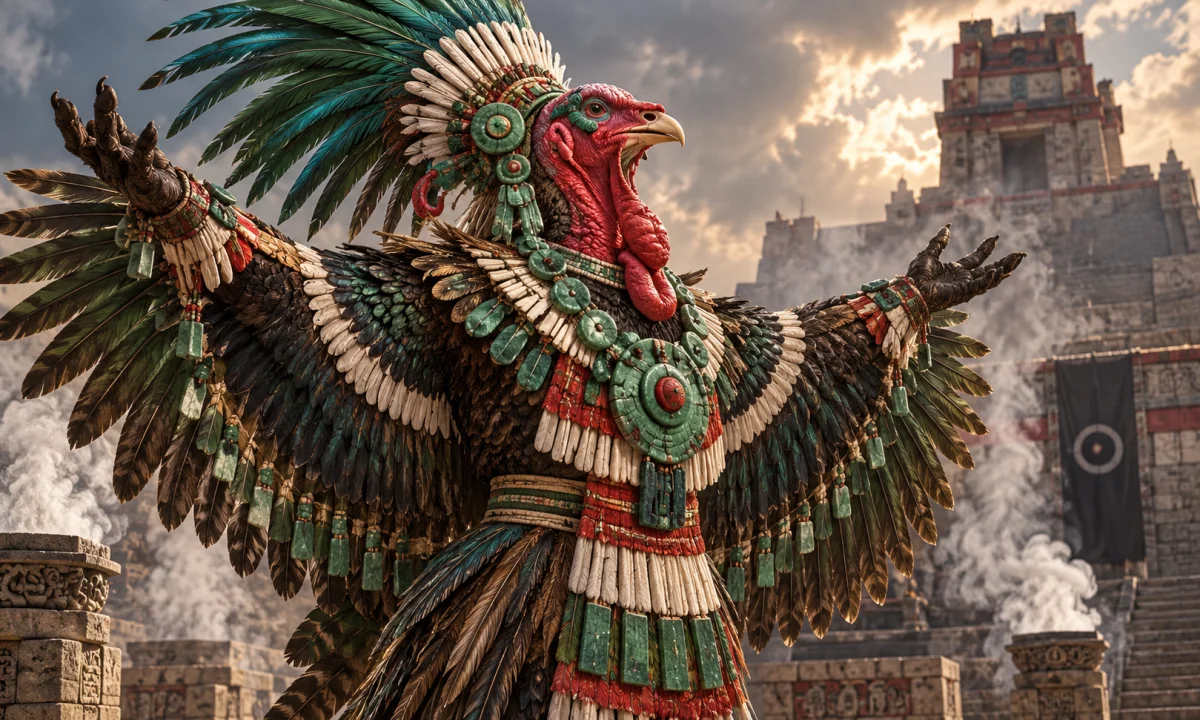
- Chalchiuhtotolin means “Precious Turkey” or “Jade Turkey.” It is associated in some sources with a form of Tezcatlipoca and with themes of sickness, purification and supernatural danger. A turkey and an owl are different animal manifestations, even when both appear in connection with Tezcatlipoca.
- Tezcatlipoca is a major deity with a broad and complex religious identity. Chalchiuhtecólotl may be interpreted as one of his forms or titles, but the two names should not automatically be treated as exact equivalents in every source.
- Mictlantecuhtli is the lord of the dead and a principal underworld deity. Owls and other night creatures can evoke death or the underworld, but that symbolism does not make Chalchiuhtecólotl another name for Mictlantecuhtli.
These distinctions matter because modern lists of “Aztec gods” often place every named being in a single flat catalogue. Nahua religious language was more flexible. A deity could possess multiple names, an animal could embody a divine force, and a local or ritual title might not represent a separate person in the way a modern catalogue implies.
Interpretation and cultural significance
Chalchiuhtecólotl is significant partly because the figure shows how much of Mesoamerican religion survives in fragments. The evidence does not always provide the complete explanation that modern readers expect. A name can preserve a meaningful combination of ideas—preciousness, nocturnal vision, danger and divine manifestation—even when the original ceremony or narrative context has been lost.
The figure also illustrates the tension between two common approaches to mythology. One approach seeks neatly separated gods, each with a fixed appearance, domain and biography. The other recognizes overlapping identities, epithets and transformations. The second approach is generally more appropriate for understanding Chalchiuhtecólotl. The name belongs to a religious world in which the sacred could appear through changing forms and in which animal symbolism was part of theology, ritual practice and omen interpretation.
The translation “Jade Owl” captures the compact imagery of the name, but “Precious Owl” is often a more careful rendering. The stone element expresses value and sacred intensity, while the owl contributes nocturnal and potentially ominous associations. Taken together, the name suggests not a harmless decorative bird but a powerful supernatural presence whose worth and danger exist at the same time.
There is no need to supply Chalchiuhtecólotl with an elaborate modern biography in order to recognize its importance. Its fragmentary appearance in Nahua religious material points to the richness of Tezcatlipoca’s manifestations and to the cultural meaning of nocturnal animals in central Mexico. It also reminds readers that uncertainty is part of responsible interpretation: some aspects of the figure can be described with confidence, while others remain open to scholarly discussion.