WORLD
WORLD
Si
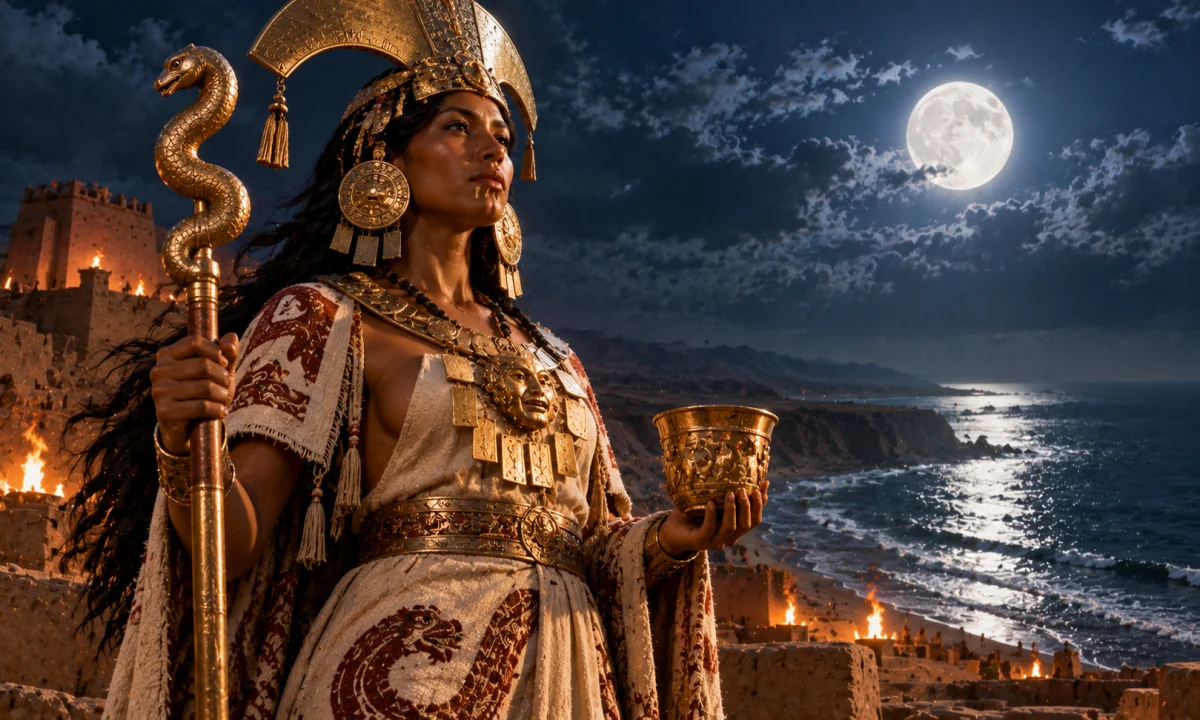
Si is a name sometimes listed in modern references as an Inca lunar goddess. The identification is uncertain, however. In the best-documented accounts of Inca religion, the Moon is called Quilla or Killa and is personified chiefly as Mama Quilla (“Mother Moon”). Early colonial descriptions of the Inca pantheon do not consistently present Si as a separate, well-defined goddess. The name may represent a later variation, a simplified label, or a confusion between Inca traditions and those of other Andean cultures.
Si and the Inca religious world
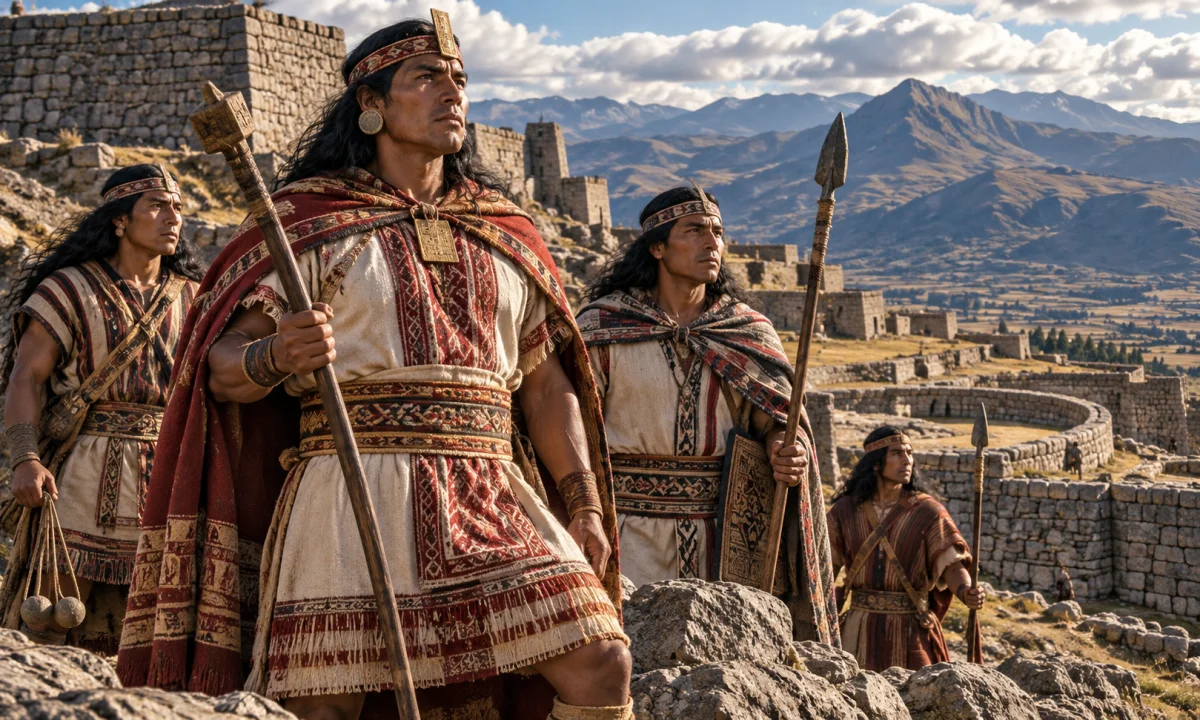
The Inca Empire developed in the central Andes, with its political and ceremonial centre at Cusco. Its religion was not a single, uniform system imposed on every community. The imperial state honoured certain major gods, while local peoples continued to worship sacred mountains, springs, ancestors, animals and regional deities. As a result, names and stories could vary between communities and between the many languages spoken across the empire.
Inca religion gave great importance to the movements of the Sun, Moon, stars and planets. These celestial bodies regulated agricultural work, ritual calendars and ideas about royal ancestry. The Sun, Inti, received especially prominent state worship because Inca rulers claimed a special relationship with him. The Moon also held a high position, particularly in connection with women, marriage, fertility and the passage of time.
Within this setting, a lunar figure named Si would fit the general pattern of Andean celestial worship. Yet fitting the pattern is not the same as proving that Si was a distinct Inca goddess. The surviving evidence points much more securely to Mama Quilla than to an independent deity called Si.
The name and the problem of identification
The spelling Si is short and easily reproduced in encyclopaedias, lists of mythological beings and modern summaries of South American mythology. Such lists often describe Si as a Moon goddess and sometimes identify her as the wife or companion of Inti. These descriptions are widespread enough to give the impression of a standard Inca tradition.
There are several reasons for caution. The Inca language of administration, Quechua, used killa for the Moon, and colonial accounts commonly refer to the lunar deity as Quilla or Mama Quilla. The form “Si” is not the normal Quechua word for the Moon. It may have been preserved from a different Andean language, produced by a spelling or transcription process, or detached from its original cultural context in later reference works.
Another difficulty is that the word Si is also associated in modern discussions with the Moon deity of the Moche, a civilisation that flourished on the northern coast of Peru centuries before the Inca Empire. Moche religious art gives the lunar power an important role, and some interpretations render the deity’s name as Si or Shi. The Moche were not Incas, although the Inca state later conquered parts of the wider Andean region. Treating Moche Si and Inca Mama Quilla as automatically identical erases important cultural differences.
For these reasons, Si is best described as a questionable or secondary name for an Andean lunar figure, rather than as a securely documented member of the central Inca pantheon. When the name appears in a discussion of Inca mythology, it should be accompanied by a note about its uncertain status.
Mama Quilla: the securely attested Inca lunar deity
Mama Quilla occupies the position most often associated with an Inca Moon goddess. Her name means “Mother Moon” in Quechua, although colonial spelling varied considerably. She was linked to the measurement of months, the organisation of ritual time and the regulation of important social events.
Descriptions of Mama Quilla present her as a female divine power associated with women and with the rhythms of the lunar cycle. The Moon’s changing phases provided a visible method of marking time, while its relationship with menstruation and reproduction helped connect lunar worship with female life. These associations should not be reduced to a single “goddess of fertility” formula: Mama Quilla’s importance also concerned the calendar, royal ritual and the stability of the cosmic order.
In the imperial capital, the Moon had a major temple known as the Qorikancha, or “Golden Enclosure,” a complex devoted especially to Inti but also connected with other major sacred powers. Colonial accounts describe an image or representation of Mama Quilla placed in relation to the solar deity. The precise appearance and ritual arrangements are difficult to reconstruct because the temple was dismantled and its contents were removed after the Spanish conquest.
Some accounts describe the Moon as the wife, sister or close female counterpart of Inti. Such relationships should not be treated as perfectly consistent across all traditions. In Andean religion, divine kinship could express political and cosmic relationships rather than a single fixed family tree. The imperial ideology of the Inca royal household also used the relationship between Sun and Moon to give sacred meaning to royal marriage and ancestry.
Possible attributes of Si
Where modern sources identify Si as an Inca lunar goddess, they generally assign her the attributes already associated with Mama Quilla. These include:
- the Moon and its changing phases;
- the measurement of months and ritual time;
- women, marriage and reproductive cycles;
- fertility and the renewal of life;
- a close relationship with the Sun, usually named Inti; and
- the protection or ordering of the night sky.
These attributes are plausible for a lunar goddess in the Inca religious system, but they should not be presented as a firmly documented biography of Si. There is no securely established body of myths about Si comparable to the surviving traditions concerning figures such as Viracocha, Inti, Pachamama or Mama Ocllo. Nor is there a consistent ancient description of her physical appearance.
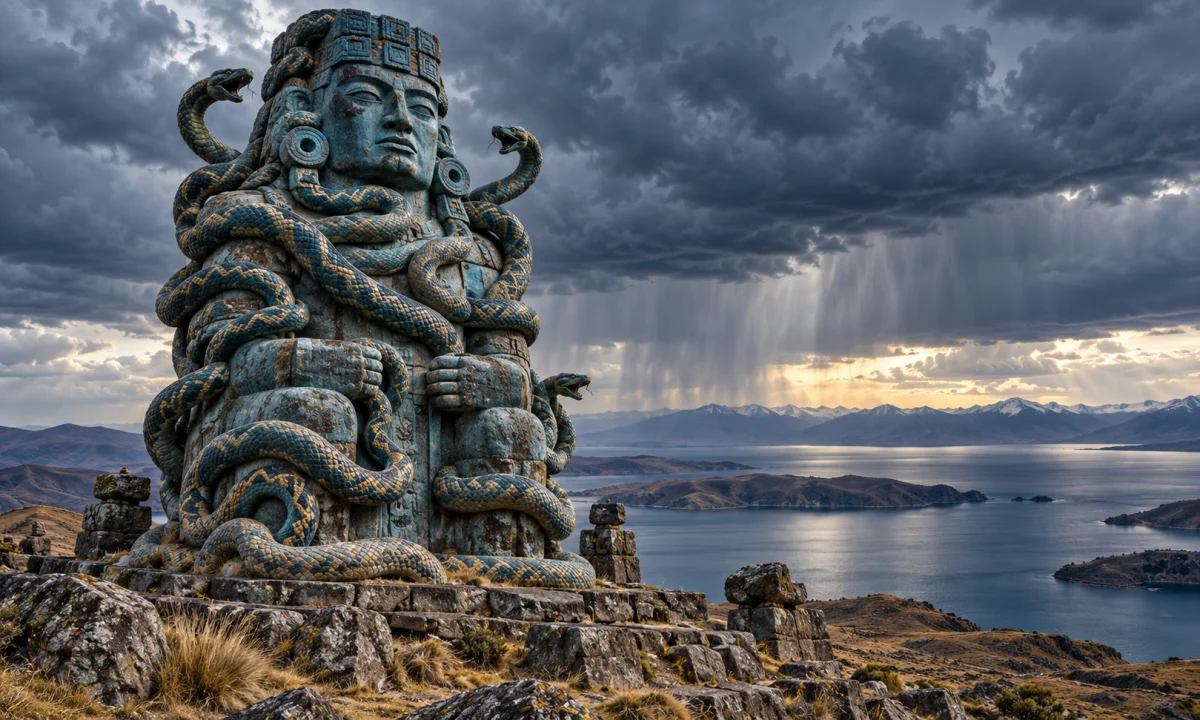
Images associated with the Inca Moon are therefore more safely described through the evidence for Mama Quilla. A lunar representation might be shown as a shining disc, a face or a precious-metal object. Silver was symbolically connected with the Moon in contrast to the gold associated with the Sun, although the surviving descriptions and archaeological evidence do not provide a single universal image. A modern illustration of Si as a robed woman with a crescent crown is an artistic reconstruction, not an authenticated ancient portrait.
Relationship with Inti and the celestial order
The pairing of Sun and Moon was important in Andean thought, but it should not be interpreted solely through European ideas of a simple male-female opposition. Celestial powers were part of a wider network that included sacred places, ancestors, weather forces and agricultural cycles.
Inti represented the imperial solar order and was particularly important to the Inca state. The Moon had a different but complementary authority. Its phases offered a measure of time, while its nocturnal visibility made it a powerful counterpart to the Sun. In traditional accounts of the Inca cosmos, the stars could also be connected with animals, ancestors and the continuation of earthly life. The night sky was not an empty background but a sacred realm with practical and religious significance.
If Si is used as a name for the Inca Moon, her significance therefore lies less in a detailed set of adventures than in this celestial relationship. She represents the lunar dimension of an ordered universe: periodic rather than constant, reflective rather than self-luminous, and closely tied to the rhythms by which communities planned ceremonies and agricultural labour.
Stories and the limits of the surviving tradition
No widely accepted Inca myth gives Si a distinctive cycle of adventures. Modern accounts may state that she was the wife of Inti, the mother of the stars or a rival of the Sun, but these claims are not equally supported and may combine details from different traditions. They should not be repeated as though they belonged to a single, universally known Inca narrative.
Inca mythology survives through several imperfect channels. Spanish administrators, missionaries and chroniclers recorded Indigenous beliefs after the conquest, sometimes relying on interpreters and sometimes reshaping what they heard according to Christian categories. Oral traditions continued in Quechua-speaking communities, but they were not preserved as one canonical book of mythology. Archaeological evidence, colonial descriptions, local folklore and later scholarship consequently do not always agree.
This explains why a deity can appear in a modern list without having a clear place in the oldest available accounts. A short entry may preserve a genuine regional name, a colonial-era spelling, a local tradition absorbed into an imperial system, or an error repeated by later writers. Si belongs to this uncertain group. The absence of a securely documented myth does not prove that no community ever used the name, but it does mean that detailed claims require qualification.
Si and the Moche Moon deity
The most important distinction is between the supposed Inca Si and the Moche lunar deity also called Si or Shi in some modern interpretations. The Moche culture developed along the northern Peruvian coast from roughly the first centuries of the Common Era until the eighth or ninth century, long before the rise of the Inca Empire.
Moche ceramics, murals and metalwork portray supernatural beings connected with warfare, sacrifice, animals, the sea and the sky. The Moon appears to have had exceptional importance in Moche religious life. Interpretations of Moche imagery often associate the lunar power with weather, tides, fertility and the ordering of time. Some descriptions even suggest that the Moon held greater authority than the Sun in the Moche religious imagination.
Those traditions belong to a coastal civilisation with its own language, political structures and artistic conventions. They should not be transferred directly to the highland Inca religion. The similarity of the name, and the shared importance of the Moon, may explain why later mythological compilations have connected the two figures. It does not establish that Moche Si and Inca Mama Quilla were the same goddess.
Distinguishing Si from related figures
Mama Quilla
Mama Quilla is the principal and securely recognised Inca lunar figure. Si is sometimes treated as an alternative name for her, but the equivalence is not firmly demonstrated. In a careful account, Mama Quilla should be named first, while Si should be presented as a disputed or secondary identification.
Inti
Inti is the Inca Sun deity and the central celestial patron of the imperial state. Some modern summaries call Si his wife. This relationship reflects the general pairing of Sun and Moon, but it should not be used to establish a detailed family story unsupported by the surviving evidence.
Pachamama
Pachamama is a major earth and fertility power in Andean religious traditions. She is sometimes brought into discussions of lunar fertility because both figures can be associated with agricultural renewal. They are not the same deity. Pachamama concerns the living earth and its productive power, while the lunar figure belongs to the celestial order.
Chasca
Chasca, also called Ch'aska, is associated in Inca tradition with dawn, twilight and the planet Venus. Her connection with the morning and evening sky can lead to confusion with other celestial beings. She is not simply another name for Si or Mama Quilla.
Cultural significance and responsible interpretation
The uncertain identity of Si illustrates a wider problem in the study of Indigenous religions. Names collected by outsiders may be detached from their original languages, while later writers may combine traditions from cultures separated by geography and centuries. A concise label can make a complex religious landscape appear more uniform than it really was.
Using the name Si responsibly means separating three levels of information. First, the Inca lunar tradition is strongly associated with Mama Quilla. Second, Si appears in some modern accounts as a lunar goddess, but its status as a distinct Inca name is uncertain. Third, a lunar deity called Si or Shi is also discussed in connection with the earlier Moche civilisation and must not be treated as automatically Inca.
For readers encountering Si in popular mythology lists, the most accurate interpretation is therefore cautious: Si may be a variant or misattributed name for an Andean Moon goddess, but the well-attested Inca form is Mama Quilla. Any expanded story involving a detailed appearance, genealogy or series of exploits should be regarded as a modern reconstruction unless it can be tied to a clearly identified regional tradition.