WORLD

Phiphek
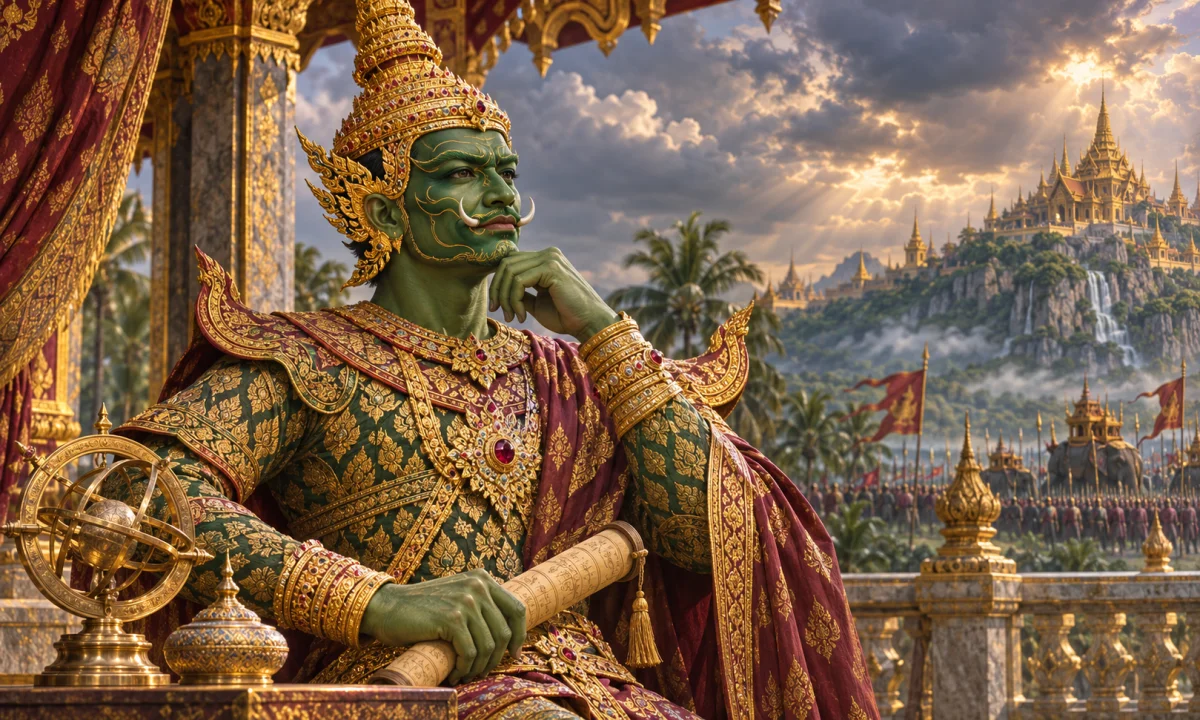
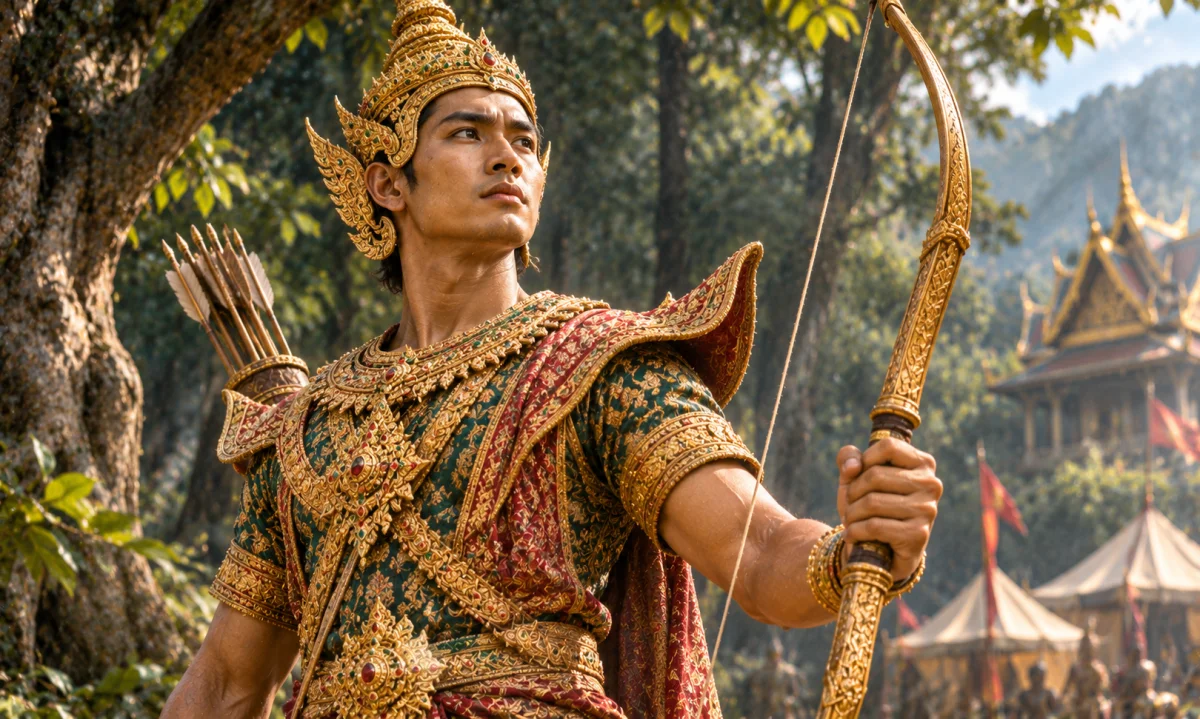
Phiphek is a major figure in the Thai Ramakien, the Thai national epic based chiefly on the Indian Ramayana. He corresponds to Vibhishana, the younger brother of the demon king Ravana, who is called Thotsakan in Thai tradition. Although Phiphek belongs to the same family as Lanka’s powerful ruler, he rejects Thotsakan’s unjust conduct and becomes an important ally of Phra Ram, the Thai counterpart of Rama.
Phiphek in Thai tradition
The Ramakien is not simply a direct translation of the Sanskrit Ramayana. It is a Thai literary and performance tradition that reshaped the older epic through Thai language, court culture, visual art, theatre and local ideas of kingship. Its stories circulated in forms associated with earlier Thai kingdoms, while the best-known surviving court version was developed under King Rama I in the late eighteenth century after the destruction of much of Ayutthaya’s literary heritage.
Within this tradition, Phiphek is a yak or giant associated with the demonic inhabitants of Lanka, but he is not portrayed as morally identical to Thotsakan. His knowledge, restraint and concern for justice distinguish him from the king he serves. Phiphek’s importance comes partly from this contrast: he demonstrates that birth, appearance and family allegiance do not entirely determine a person’s character.
The Ramakien exists within a Thai cultural environment shaped by Buddhism, Brahmanical traditions, royal ritual and older Southeast Asian ideas about supernatural beings. It is therefore more accurate to describe Phiphek as a figure of Thai epic mythology and literary culture than as a figure belonging to a single, neatly defined religious system. The epic has been performed and depicted in settings connected with the monarchy, temples, murals, masked dance and popular storytelling.
Name and identity
The Thai name is written พิเภก and is commonly rendered in English as Phiphek, though spellings such as Phiphek and Piphek also occur. He is the Thai equivalent of Vibhishana, usually written Vibhīṣaṇa in more precise Sanskrit transliteration. The different English spellings reflect differences in transliteration rather than separate characters.
Phiphek is the brother of Thotsakan, the Thai form of Ravana. He is also related to other prominent figures in the Lanka royal family, including Kumbhakan, the Thai counterpart of Kumbhakarna. In the broad Ramayana tradition, these brothers represent different responses to power and duty. Thotsakan is ruled by desire and pride, Kumbhakan is associated with immense strength and loyalty to his king, while Vibhishana and Phiphek are associated with counsel, moral discernment and allegiance to righteousness.
In Thai descriptions, Phiphek is especially known as an astrologer, diviner or interpreter of auspicious and disastrous signs. His knowledge gives him a position at Thotsakan’s court, but it also places him in conflict with the king. He can recognise the consequences of Thotsakan’s decisions even when the ruler refuses to accept them.
Appearance and supernatural classification
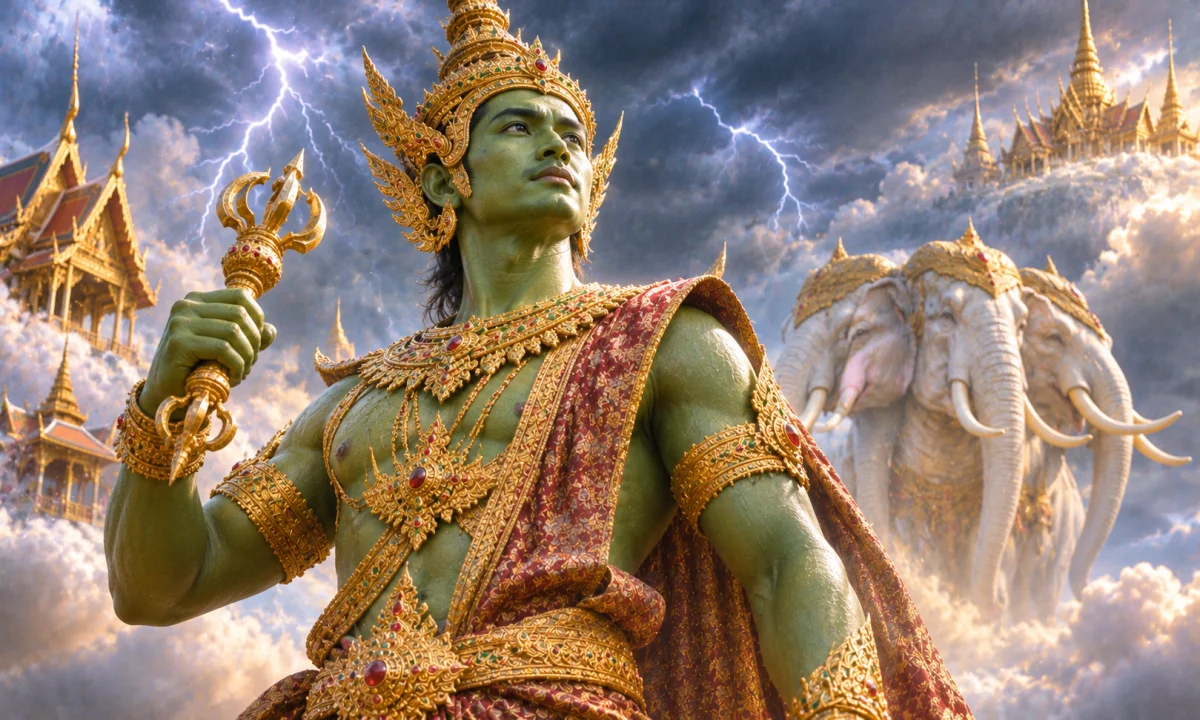
Phiphek is generally represented as a member of the yak or giant class in Thai art. Thai yak figures are often shown with powerful bodies, elaborate crowns, large eyes, prominent fangs and richly decorated costumes. Their frightening appearance does not always indicate evil. In the visual language of the Ramakien, giants may be kings, warriors, guardians or advisers, and their moral character must be understood from their actions.
Artistic representations of Phiphek vary according to the medium. Temple murals, illustrated manuscripts, stage performances and masked dance may give him different colours, costumes and facial details. There is no need to treat every modern image as evidence of a single fixed canonical appearance. His most consistent visual identity is that of an aristocratic or royal yak associated with Lanka and with astrological wisdom.
Phiphek’s supernatural abilities are usually expressed through knowledge rather than through spectacular physical combat. He reads omens, understands celestial influences and can advise others about the likely results of political and military actions. In the epic, this makes him valuable to both sides of the conflict. His information is not merely decorative: it helps explain how the forces opposing Thotsakan understand the structure of the war.
The dispute with Thotsakan
The central episode in Phiphek’s story begins with Thotsakan’s abduction of Sida, the Thai counterpart of Sita. Thotsakan desires Sida and takes her to Lanka, setting in motion the conflict with Phra Ram. Phiphek recognises that the abduction is wrongful and that it places the kingdom in grave danger.
He advises Thotsakan to return Sida rather than continue the confrontation. His warning is an example of the traditional role of the wise counsellor: he speaks truth to a ruler whose authority has become distorted by pride. Phiphek’s position is particularly dangerous because his advice challenges not only a political decision but also the king’s personal desire and public honour.
Thotsakan refuses to listen. In many versions of the story, his anger leads him to drive Phiphek from Lanka. The expulsion marks a decisive break between family loyalty and moral duty. Phiphek is not removed because he lacks knowledge; he is removed because the king will not accept knowledge that contradicts his wishes.
This episode also reveals one of Phiphek’s defining qualities. He does not leave Thotsakan because he seeks the throne or because he has been defeated in battle. He leaves because he considers the king’s conduct intolerable and recognises that continued support would make him complicit in wrongdoing.
Phiphek and Phra Ram
After his banishment, Phiphek approaches Phra Ram and offers his allegiance. This decision is politically risky and emotionally difficult. He is joining the enemy of his own brother, and his knowledge of Lanka may appear to be a form of betrayal. The epic, however, presents the decision as a higher form of loyalty: loyalty to justice and rightful order rather than to a corrupt ruler.
Phra Ram’s forces do not necessarily have to trust him immediately. Phiphek comes from the enemy court and knows the city’s defences, royal family and military circumstances. His acceptance therefore involves a question found throughout epic literature: can a former member of an unjust regime become a reliable adviser to those resisting it?
In the Ramayana tradition, and in Thai retellings of the same narrative, Phiphek demonstrates his loyalty through repeated counsel. He explains the strengths and weaknesses of Thotsakan’s forces and helps Phra Ram interpret events during the war. His contribution is intellectual and strategic rather than based on the kind of physical heroism associated with the monkey warriors.
Phiphek’s knowledge is particularly important because the opposing army contains beings with extraordinary powers, protective rituals and unusual weapons. In episodes that vary in detail between versions, he helps reveal how particular enemies may be defeated and warns Phra Ram about the dangers created by Thotsakan’s allies. His advice does not replace the actions of Phra Ram, Phra Lak, Hanuman and the other heroes, but it makes their victories possible in situations where ordinary military strength would not be enough.
Relationship with Thotsakan
The conflict between Phiphek and Thotsakan is more complex than a simple opposition between good and evil. They are brothers and members of the same royal family. Phiphek understands Thotsakan’s character better than most of Phra Ram’s allies do, and he may still recognise the king’s power, courage and authority even while condemning his actions.
Thotsakan’s rejection of Phiphek reflects a recurring epic theme: rulers often surround themselves with advisers but listen only to those who confirm their desires. A king who cannot tolerate unwelcome counsel becomes isolated from reality. Phiphek’s warnings show that the disaster of Lanka is not caused solely by the strength of Phra Ram’s army. It is also caused by Thotsakan’s refusal to correct his own conduct.
For Phiphek, family affection cannot justify participation in an unjust war. His decision does not make kinship meaningless; rather, it shows the limits of kinship when it is used to demand obedience to wrongdoing. This moral tension is one reason the character has remained memorable across versions of the epic.
The fall of Lanka and Phiphek’s kingship
When Thotsakan is defeated, Phiphek becomes the rightful ruler of Lanka in the Ramayana narrative and in Thai adaptations of that narrative. His elevation is not simply a reward for changing sides. It represents the restoration of a kingdom under a ruler capable of accepting counsel and governing with greater justice.
The succession also gives political meaning to Phiphek’s earlier choice. He does not join Phra Ram in order to destroy Lanka or claim it for himself. He becomes its king after the old ruler has fallen, preserving the kingdom while replacing the form of rule that led it into catastrophe.
In the epic’s moral structure, legitimate kingship depends on more than lineage or military power. A ruler must be capable of self-control, respect for order and attention to truthful advice. Phiphek’s coronation therefore contrasts with Thotsakan’s reign. Both belong to the same royal family, but they represent different models of authority.
Symbolism and interpretation
Phiphek is often interpreted as a figure of ethical discernment. He can see the consequences of events before those around him are willing to acknowledge them. His astrological knowledge gives a supernatural form to a more general wisdom: the ability to read circumstances accurately and to distinguish an attractive desire from a defensible action.
He also represents the conscientious adviser. In royal and political literature, advisers are useful only when they can speak honestly, and rulers are wise only when they can hear unwelcome truths. Phiphek fulfils the first requirement, while Thotsakan fails at the second. Their disagreement is therefore a lesson about power and counsel as much as it is a family quarrel.
Another important theme is moral choice across social and supernatural boundaries. Phiphek is a giant of Lanka, while Phra Ram’s coalition includes humans, forest beings and monkey warriors. The story does not make virtue dependent on species or appearance. A giant may become a defender of justice, while a magnificent king may become the source of destruction.
His story can also be understood through the traditional contrast between dharma, or righteous order, and the uncontrolled pursuit of personal desire. Terminology and interpretation differ across the Indian and Thai traditions, and the Thai Ramakien should not be treated as a direct statement of Sanskrit religious doctrine. Nevertheless, the broad ethical pattern remains visible: Phiphek chooses a larger moral order over obedience to a powerful relative.
Differences between Phiphek and Vibhishana
Phiphek and Vibhishana are counterparts, not unrelated figures with merely similar stories. Vibhishana is the character’s Sanskrit name in the older Indian epic tradition, while Phiphek is his Thai identity within the Ramakien. The Thai version shares the fundamental narrative of the brother who advises Ravana, is rejected, joins Rama and becomes king of Lanka, but it presents the material through Thai literary and artistic conventions.
Details such as dialogue, costume, names of secondary characters, courtly behaviour and the sequence of certain episodes may differ between versions. It is therefore misleading to assume that every description of Vibhishana in an Indian text applies word for word to Phiphek in Thai tradition. At the same time, treating them as entirely separate beings would obscure the clear relationship between the two epic traditions.
Phiphek in Thai performance and visual culture
The Ramakien has been represented through khon, the highly stylised Thai masked dance-drama, as well as theatre, murals, sculpture and illustrated editions. In performance, Phiphek’s role is expressed through costume, movement and his place among the characters of Lanka. The visual distinction between allied and opposing forces can be important, but the elaborate appearance of a yak character does not by itself identify him as a villain.
Episodes involving Phiphek are especially suitable for dramatic presentation because they combine political conflict, family tension, prophecy and a change of allegiance. His banishment, arrival among Phra Ram’s forces and later accession to the throne provide clear transitions between the court of Thotsakan and the coalition opposing it.
In contemporary Thai culture, Phiphek may also appear in illustrations, adaptations, educational retellings and popular discussions of the Ramakien. These presentations may simplify his role or emphasise his astrological identity. Such modern portrayals belong to the continuing reception of the epic and should be distinguished from the older narrative tradition itself.