WORLD

Phra Angkarn
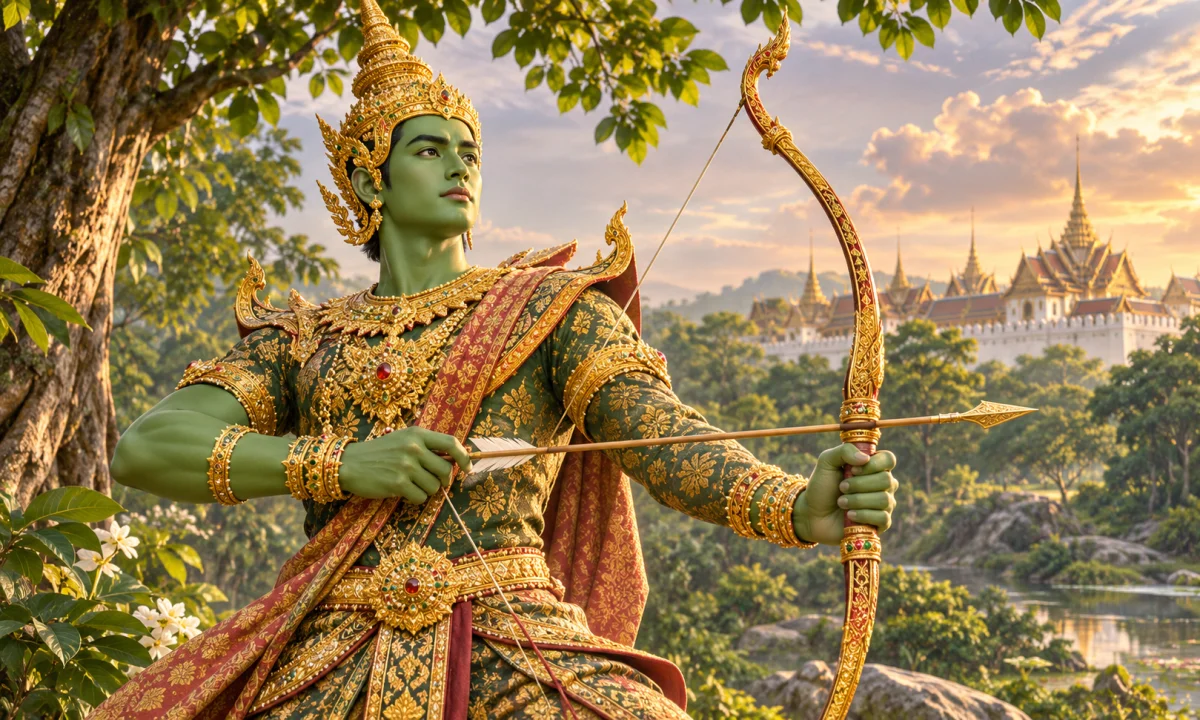
Phra Angkarn, also transliterated as Phra Angkhan or Phra Angkara, is the Thai personification of the planet Mars. In Thai astrological and religious tradition, he is one of the planetary deities known collectively as the navagraha or thewada naw khro, the nine celestial powers associated with the Sun, Moon, five visible planets, and the lunar nodes. Phra Angkarn governs Tuesday and is connected with heat, force, courage, conflict, vitality, and decisive action.
Unlike figures such as Hanuman, Phra Narai, or Mae Nak, Phra Angkarn does not belong to a single famous Thai narrative cycle. He is principally an astral deity: a divine embodiment of a planet whose movement and position are believed to influence human life. His identity comes from the meeting of Indian planetary lore, Thai astrology, Buddhist temple culture, and older Southeast Asian ideas about celestial powers.
Name and Identity
The Thai name Phra Angkarn is written พระอังคาร. The first element, phra, is an honorific used for sacred beings, revered religious objects, royalty, and other figures treated with respect. The second element is related to Sanskrit Angāraka and Pali Aṅgāraka, names for Mars. The Sanskrit word is associated with burning charcoal, embers, or something fiery, reflecting the planet’s reddish appearance and its traditional astrological character.
English spellings vary because Thai pronunciation does not map perfectly onto Roman letters. Phra Angkarn is common in English-language writing, while Phra Angkhan may more closely represent some Thai pronunciations. Angaraka is the Sanskrit-derived form used in discussions of Indian astrology. These names generally refer to the same planetary figure, although the details of his iconography and religious interpretation differ between India and Thailand.
Phra Angkarn should not be confused with a separate Thai deity merely because different sources use different spellings. Nor should he be treated as identical in every detail to the Indian god Mangala. The Thai figure developed within a local astrological and Buddhist environment, even though his name and much of his symbolism derive from South Asian planetary tradition.
Place in Thai Astrology
Phra Angkarn is the ruler or governing deity of Tuesday. Thai astrology assigns a planetary power to each day of the week, and people traditionally identify certain colors, numbers, directions, bodily influences, and personal tendencies with the day on which they were born. Tuesday is therefore not only a unit of time but also a category of astrological identity.
Mars is commonly associated with a forceful, active, and sometimes dangerous temperament. Under Phra Angkarn’s influence, traditional astrology may emphasize bravery, physical energy, competitiveness, anger, military ability, and the capacity to overcome obstacles. These qualities can be constructive when expressed as discipline, courage, and determination, but destructive when expressed as violence, impatience, quarrelling, or recklessness.
Astrological interpretation is not uniform. A person born on Tuesday is not automatically regarded as violent or unfortunate, and a planetary influence is usually interpreted in relation to the entire horoscope. Thai astrologers may consider the position of Mars, its relationship with other planets, the lunar day, and other calculations before reaching a judgment. Popular descriptions of Tuesday-born people are therefore simplified versions of a more complex astrological system.
Phra Angkarn is commonly linked with the number three and with the color pink in the Thai system of colors assigned to the days of the week. However, colors used in artistic representations of Mars may differ. Because Mars is widely connected with fire and blood in South Asian and European traditions, artists may also emphasize red, orange, or other heated tones. The Thai weekday color should not be confused with a fixed rule for every image of the deity.
Origins and Religious Setting
The background of Phra Angkarn lies in the long history of planetary religion and astrology in South Asia. Hindu, Buddhist, and regional traditions have often treated the visible planets as powerful beings or as signs of divine order. These ideas travelled across the cultural networks linking India, Sri Lanka, mainland Southeast Asia, and the kingdoms that preceded modern Thailand.
Thai religious culture adopted and reshaped these concepts rather than preserving them as a single unchanged system. Planetary deities appear alongside Buddhist images, Hindu gods, guardian spirits, local sacred beings, and astrological practices. Their presence reflects the layered nature of Thai religion, in which temple Buddhism, Brahmanical ritual, court ceremony, astrology, spirit beliefs, and popular devotion have frequently existed together.
Phra Angkarn is therefore best understood as part of Thai Buddhist-Brahmanical cosmology, rather than as a figure from Buddhist scripture alone. The Buddha is not a planetary god, and the planetary deities do not occupy the same religious position as the Buddha. In practice, however, Thai temples and devotional life may place Buddhist images and Hindu-derived celestial figures within the same sacred environment.
There is no single canonical Thai scripture that provides a complete biography of Phra Angkarn. Information about him is distributed across astrological manuals, temple iconography, ritual traditions, weekday associations, artistic conventions, and regional explanations. As a result, details that seem certain in one account may be absent or different in another.
Appearance and Attributes
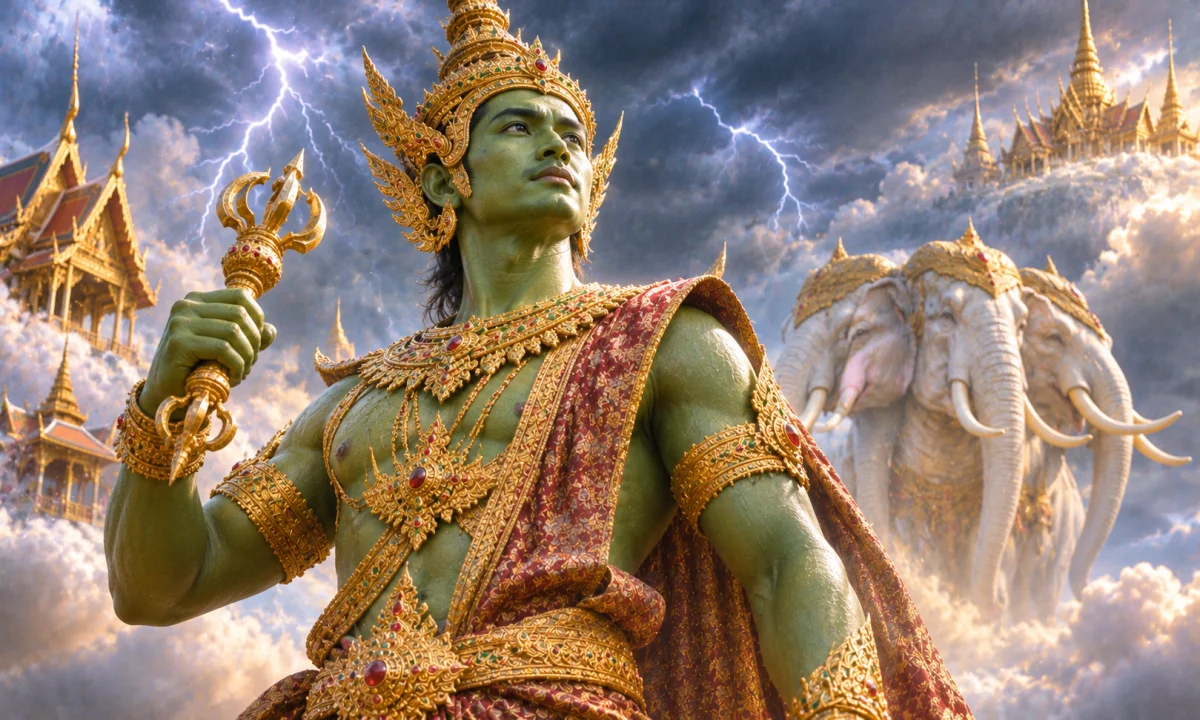
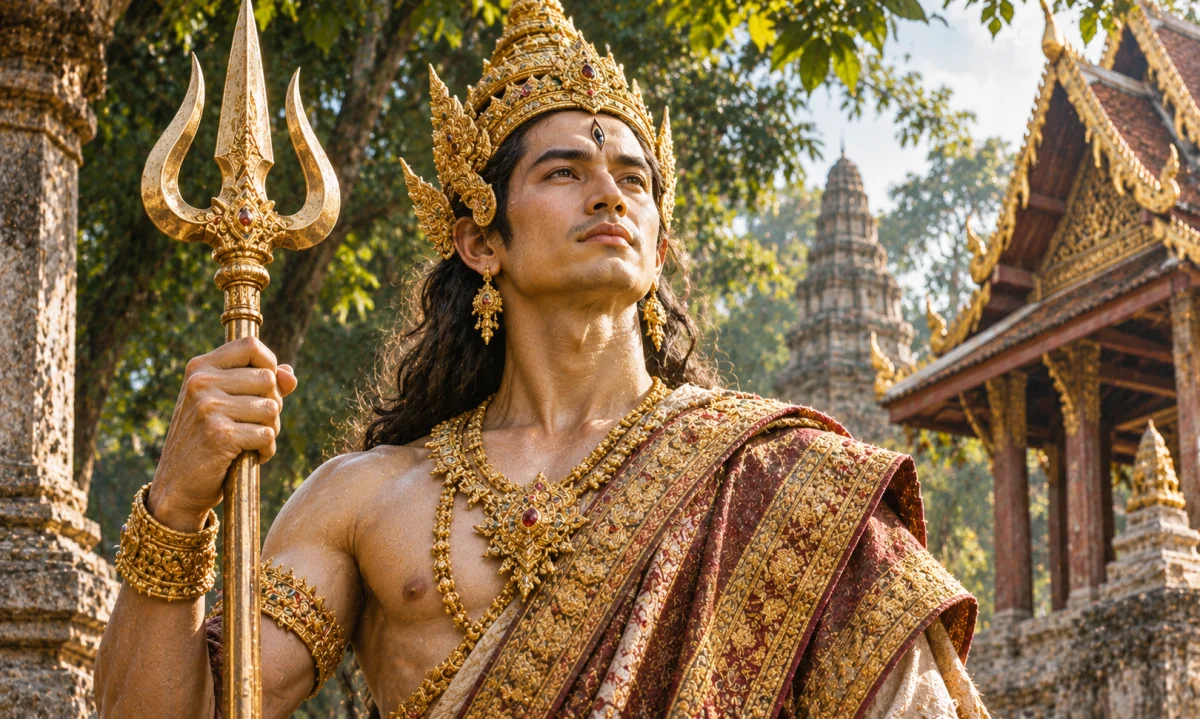
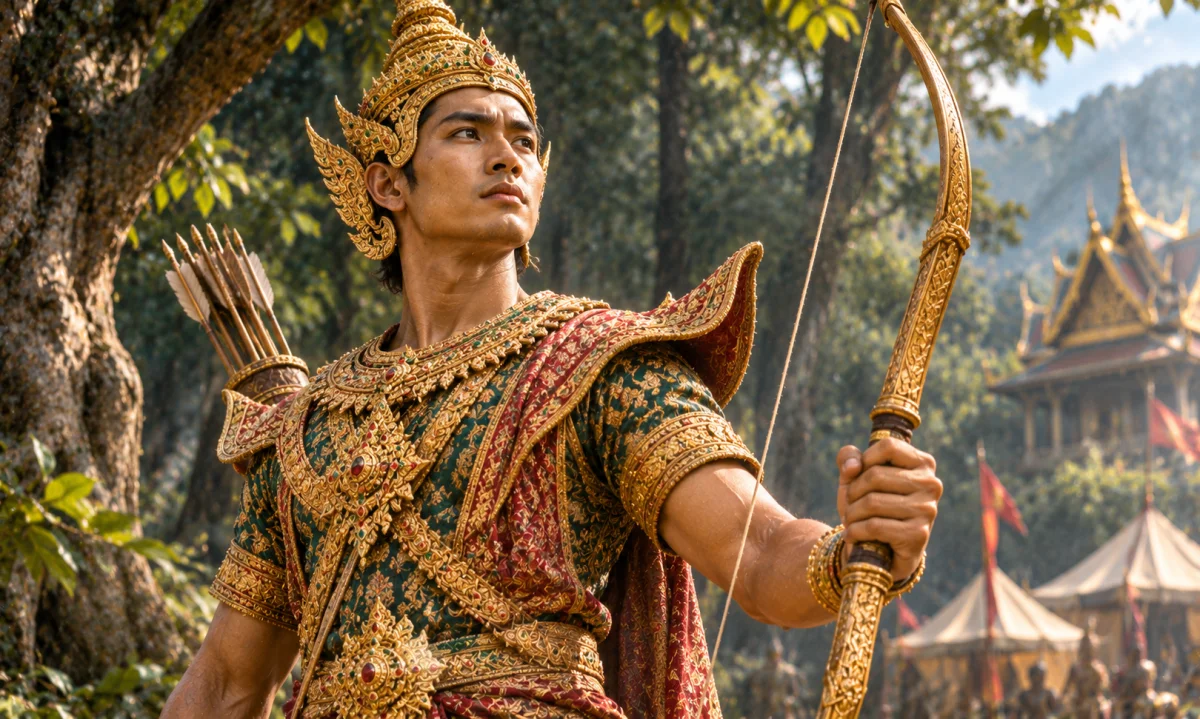
Phra Angkarn is usually imagined as a powerful male deity with a martial or royal bearing. He may wear the clothing and crown associated with Thai divine figures, including a tall pointed headdress and elaborate ornaments. His expression can be stern or commanding, reflecting Mars’s connection with force and confrontation.
Thai representations may show him with weapons, especially a spear or another implement associated with warfare. Such attributes identify him with the warrior aspect of Mars, but they do not mean that every image must include the same weapon. Planetary iconography has been adapted by individual artists, temple traditions, and regional styles.
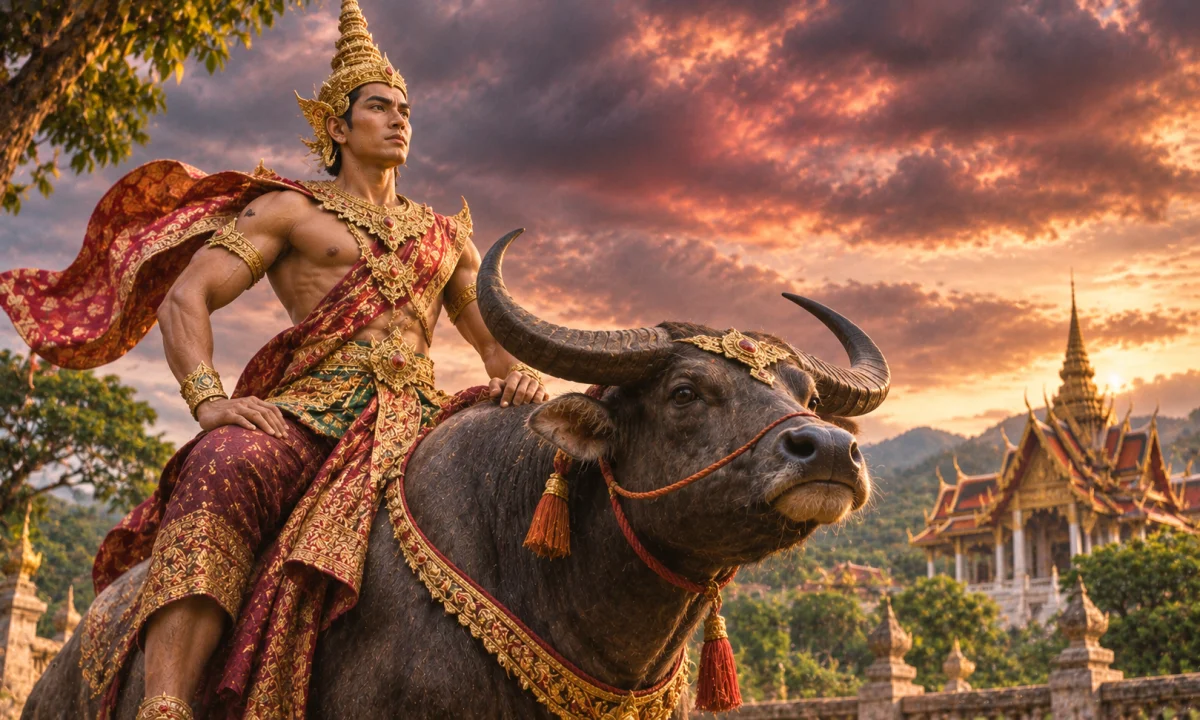
Some Thai iconographic traditions depict Phra Angkarn riding a buffalo. The buffalo gives the figure a strong, earthy, and formidable appearance, appropriate to a deity associated with physical power and aggression. This should be distinguished from many Indian representations of Mangala, in which Mars is associated with a ram or with a chariot drawn by animals. The difference illustrates how a shared planetary concept can acquire local visual forms.
His coloration is also variable. Artists may use red or reddish tones to express the fiery nature of Mars, while astrological charts and Thai weekday customs may associate Tuesday with pink. An image’s color should therefore be interpreted in relation to its particular artistic or ritual context rather than treated as an unchanging identifying feature.
Functions and Symbolism
Phra Angkarn represents the active and combative side of celestial power. His traditional symbolism includes:
- Courage and physical strength: the ability to act decisively and withstand danger.
- Conflict and warfare: military force, rivalry, competition, and struggles between opposing sides.
- Heat and passion: fiery emotion, sexual vitality, anger, and intense desire.
- Discipline and endurance: the energy required for difficult work, dangerous tasks, or prolonged effort.
- Injury and disruption: the harmful effects of uncontrolled aggression, accidents, bloodshed, and rash action.
These meanings are not simply moral judgments. Mars can be beneficial when a person needs courage, stamina, or the will to defend others. The same power can become harmful when it is expressed through cruelty, impulsiveness, or needless violence. Thai astrological interpretation often treats planetary influence as something that can be balanced through conduct, ritual, timing, merit-making, and awareness.
In broader South Asian astrology, Mars may also be connected with land, property, engineering, weapons, younger siblings, and the body’s muscular or energetic functions. Some of these associations appear in Thai astrological practice, while others depend on the astrologer and the specific horoscope. They should not be presented as universally fixed attributes of Phra Angkarn in every Thai tradition.
Tuesday and the Buddha Image of the Day
Thai culture associates each day of the week with a particular posture of the Buddha. The Buddha image for Tuesday is generally the reclining Buddha, representing the Buddha lying on his right side. This image is connected with the Buddha’s passing into parinibbana, although its use as the standard image for Tuesday belongs to Thai and wider Southeast Asian weekday traditions rather than to a direct statement in the earliest Buddhist texts.
The Tuesday Buddha is not Phra Angkarn. The two belong to different levels of religious symbolism: the reclining image represents the Buddha, while Phra Angkarn represents Mars. They are linked because Tuesday is associated both with the planetary deity and with a particular Buddha image in Thai devotional practice.
People born on Tuesday may visit a temple’s Tuesday Buddha image, make offerings, pray for protection, or seek balance in areas of life symbolically governed by Mars. Such practices vary widely. They may be understood as religious devotion, cultural custom, personal astrology, or a combination of all three. There is no single officially required ritual for everyone born on Tuesday.
Stories and Relationships
Phra Angkarn has fewer widely known independent stories in Thai folklore than many gods and heroes. His importance comes mainly from his place within a celestial order. In ritual and artistic contexts he may appear with the other planetary deities, forming a divine assembly that represents the forces governing time, fate, and the human world.
Indian mythology sometimes gives Mars a genealogical identity as the child of the Earth goddess, commonly called Bhumi or Prithvi, or connects him with Shiva in other accounts. These stories belong to varied Indian traditions and should not automatically be treated as standard Thai myths about Phra Angkarn. Thai religious culture has known Indian-derived narratives, but the Thai planetary figure is more often encountered through astrology, temple art, and weekday observance than through a single local birth story.
Likewise, Phra Angkarn should not be assigned every myth told about Roman Mars or Greek Ares. The resemblance between these figures is largely comparative: each is associated with warfare or martial energy, but they come from distinct religious systems. Mars in Roman religion had civic, agricultural, and military roles that do not correspond exactly to the Thai planetary deity.
Cultural Significance
Phra Angkarn illustrates how Thai mythology can include beings that are not central characters in a narrative but remain important through ritual classification and cosmic symbolism. His significance depends on the relationship between the heavens and human life. A planet is observed in the sky, named through an inherited sacred vocabulary, and then interpreted as a power affecting temperament, fortune, danger, and opportunity.
His presence also demonstrates that Thai religious categories do not always fit modern Western distinctions between “mythology,” “religion,” “astrology,” and “folklore.” A person may regard planetary deities as part of inherited culture, consult astrology for practical decisions, make merit at a Buddhist temple, and still distinguish these practices from formal Buddhist teachings. The same figure can therefore be treated as a deity, an astrological force, an artistic subject, or a symbol of a day of the week.
For Tuesday-born people, Phra Angkarn may serve as a focus for reflection on how strength is used. The positive expression of his power is not simply aggression. It can mean courage in adversity, loyalty in defence of others, perseverance, and the ability to act when hesitation would cause harm. His difficult aspect warns against anger that overcomes judgment, competition that becomes cruelty, and energy without restraint.
Distinction from Similar Figures
- Mangala: the Sanskrit planetary deity of Mars in Indian astrology. Mangala and Phra Angkarn are closely related through the history of planetary tradition, but their iconography and local religious meanings are not identical.
- Ares: the Greek god of violent warfare. He is not the Greek equivalent of Phra Angkarn in a strict historical sense.
- Mars: the Roman god of war. The English word “Mars” can refer either to the planet or to the Roman deity, whereas Phra Angkarn is the Thai planetary personification within a different cultural system.
- Phra Athit: the Thai solar deity associated with Sunday. Phra Athit represents the Sun, not Mars or Tuesday.
- Phra Chan: the Thai lunar deity associated with Monday. Phra Chan represents the Moon, while Phra Angkarn represents Mars.
- The Tuesday Buddha: the reclining Buddha image associated with Tuesday in Thai weekday tradition. This is a representation of the Buddha, not an image of Phra Angkarn.
Modern Thai references may present Phra Angkarn through horoscope columns, almanacs, temple murals, amulets, planetary statues, and explanations of weekday birth. These forms keep his name familiar, but they do not necessarily preserve one ancient, uniform portrait. The continuing tradition is best understood as a living combination of South Asian planetary inheritance, Thai astrological practice, Buddhist devotional culture, and local artistic interpretation.