WORLD
WORLD
Oni
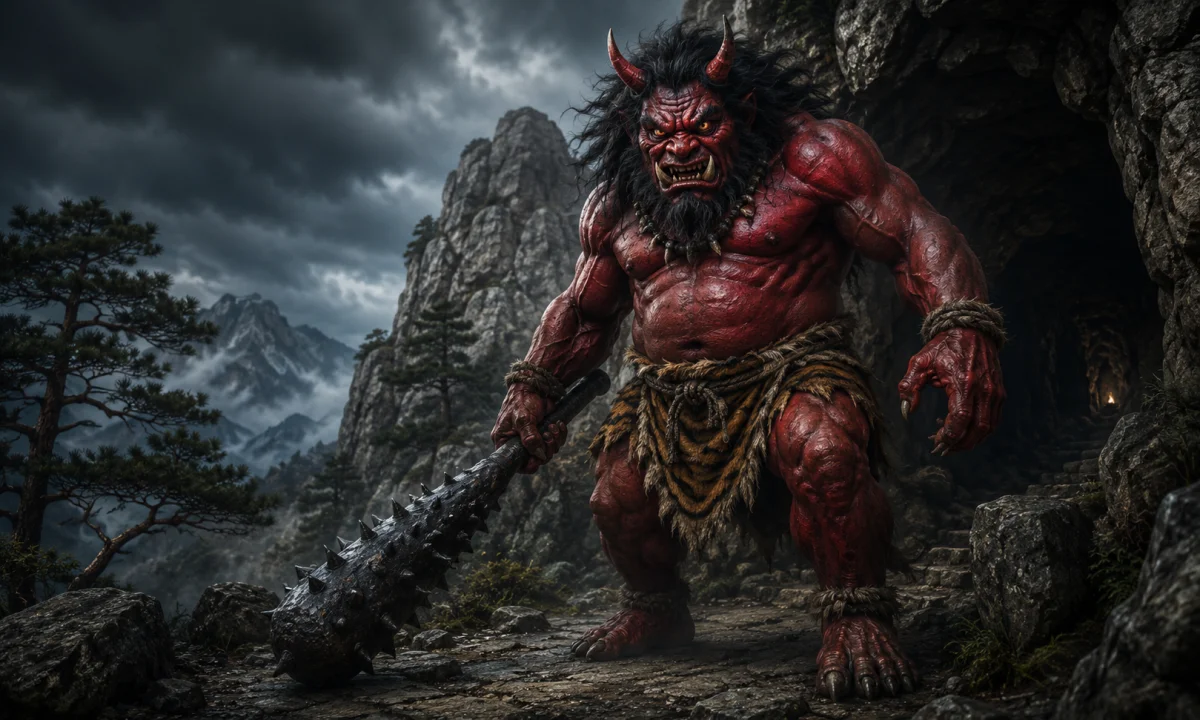
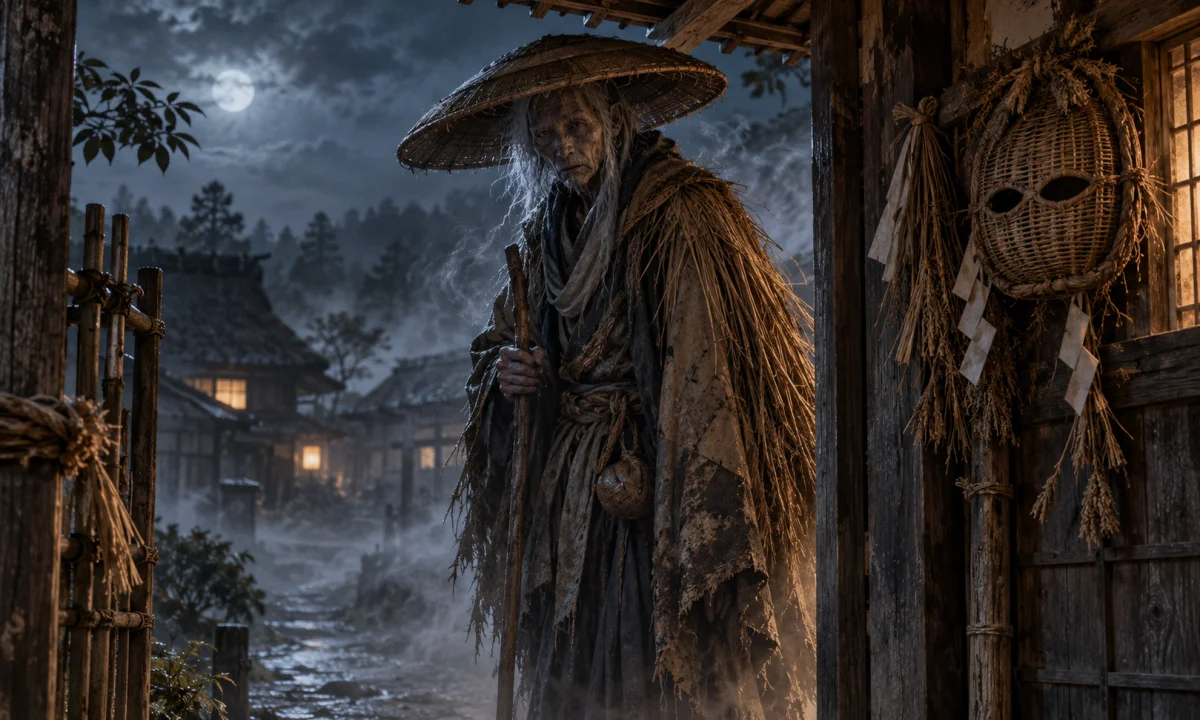
Oni are frightening supernatural beings in Japanese mythology, folklore and religious imagination. They are often portrayed as large, muscular humanoids with horns, brightly coloured skin, sharp fangs and an iron club, but no single description applies to every oni. Depending on the period and source, an oni may be an evil spirit, a demon associated with Buddhist hell, a destructive monster, a transformed human being or a figure used to represent illness, disaster and social disorder.
The familiar horned “ogre” is therefore only one part of a much broader tradition. Oni have appeared in Japanese court chronicles, Buddhist tales, medieval legends, local folktales, seasonal rituals, theatre, festivals and modern entertainment. Their character is usually threatening, yet their cultural meaning can be more complicated than a simple opposition between good and evil.
Origins and cultural setting
The Japanese word oni is written with the character 鬼, which is also used in Chinese for a ghost or spirit. The history of the Japanese term is not completely settled. Chinese ideas about ghosts, malignant spirits and supernatural beings clearly influenced Japanese religious and literary culture, but Japanese beliefs about dangerous spirits developed through several overlapping traditions rather than through a single imported source.
Early Japanese texts use the character 鬼 for beings that are difficult to see, feared for their harmful powers or associated with death and calamity. The Nihon Shoki, completed in the early eighth century, includes reports of strange beings and ominous supernatural encounters described with this character. Such early references do not necessarily describe the horned, club-wielding creature familiar from later illustrations. In older contexts, an oni could be an unseen presence, a ghostly force or a dangerous supernatural person.
Buddhism added further meanings. Buddhist stories described demons and tormentors in the various hells, often serving the lord of judgement, Enma. These beings became associated with punishment, death and the consequences of immoral actions. Buddhist art and preaching helped establish images of terrifying guardians and executioners, while older ideas about harmful spirits continued alongside them.
Another important influence was onmyōdō, a system of divination, calendrical science and ritual that drew on Chinese cosmology and developed in Japan. In this tradition, the northeast could be called the kimon, or “demon gate,” a dangerous direction through which harmful influences were believed to enter. The northeast was associated with the zodiac signs of the ox and tiger. Later visual traditions sometimes connected these associations with the oni’s horns and tiger-skin loincloth. This explanation is influential, but it should not be treated as proof that every feature of the oni originated from one formal system.
Name and classification
“Oni” is often translated as demon, ogre or devil, but none of these English words corresponds exactly to the Japanese category. The term can cover beings that would be separated in English-speaking traditions into ghosts, demons, monsters, ogres and malevolent spirits. It is best to retain the Japanese word when precision matters.
Oni are commonly discussed as a type of yōkai, a broad modern term for unusual, uncanny or supernatural beings. Historically, however, the categories were not always sharply defined. A medieval writer might describe a being using religious, literary or local vocabulary rather than a systematic classification. Some oni are clearly presented as spirits; others have bodies, families, lairs and physical possessions much like monsters in folktales.
The category also includes different degrees of individuality. Some oni are anonymous crowds of tormentors in hell or faceless forces of disease. Others have proper names and detailed biographies, such as Shuten-dōji or Ibaraki-dōji. A human being may also become oni-like through death, rage, jealousy or attachment, especially in Buddhist and literary narratives.
Appearance and attributes
The standard image of an oni usually combines several features:
- one or more horns, most often two;
- bright red, blue, green or dark skin;
- large teeth or tusks and a fierce expression;
- unkempt hair or a mane-like appearance;
- a tiger-skin loincloth;
- an iron club called a kanabō or tetsubō;
- great physical strength and a threatening size.
These attributes became especially recognizable through medieval and early modern storytelling, painting, printed books, theatrical performance and festival imagery. They should not be projected unchanged into the earliest references to oni. Early descriptions are often brief, and some portray the beings as shadowy or invisible rather than as fully formed ogres.
The iron club is a symbol of brute force and destructive power. In popular sayings, the phrase “oni with an iron club” expresses the idea of giving a powerful person an additional advantage. Horns, fangs and vivid skin colours make the oni immediately legible as dangerous, while the tiger-skin garment fits later associations between oni and the northeast direction.
Colour can also carry symbolic or ritual meaning, particularly in images connected with exorcism and Setsubun. Red oni are commonly associated with anger, desire or aggression, while blue oni may represent other forms of harmful passion or misfortune. These meanings are not universal rules governing every image. Artistic conventions vary by period, region and purpose.
Oni in religious thought and ritual
In Buddhist contexts, oni may embody the consequences of wrongdoing or act as agents of punishment. They appear in stories about hell, where they torture the dead or enforce the judgements of the underworld. Such images supported moral teaching: violence, greed, deception and other harmful actions could be represented through the physical torment inflicted by demons.
Oni were also linked with disease, famine, natural disaster and other forms of collective danger. Before modern understandings of infection and epidemiology, illness could be imagined as the work of invisible spirits or hostile beings. Rituals of purification and exorcism sought to remove these influences, although the practices and beliefs varied widely across time and locality.
The most widely known living tradition involving oni is Setsubun. In the best-known form of the ritual, people scatter roasted soybeans while shouting “Oni wa soto, fuku wa uchi”, usually translated as “Demons out, good fortune in.” A household member or performer may wear an oni mask and act as the threatening figure driven away. The ritual is associated with purification and the expulsion of misfortune at the seasonal turning point traditionally linked with the beginning of spring.
Setsubun developed from older court and religious rites for removing pollution and harmful forces. The tsuina ceremony, a form of exorcistic observance influenced by Chinese practices, is an important historical background. The modern household custom of scattering beans took shape over time, and its details differ among regions and institutions. Setsubun does not mean that oni are worshipped as gods in a single uniform religion; rather, the oni functions as a ritual embodiment of danger that can be expelled.
Famous legends and literary figures
Shuten-dōji
Shuten-dōji is one of the most famous named oni in Japanese literature. His story is preserved in several versions, with important differences in detail. He is generally described as the ruler of a band of oni based at Mount Ōe, often identified with a location near Kyoto. The gang abducts people, especially women, and commits acts of violence and cannibalism.
The warrior Minamoto no Yorimitsu, also known as Raikō, is ordered to destroy Shuten-dōji. He travels with a group of companions traditionally called the Four Heavenly Kings. Disguised as mountain ascetics, they approach the oni stronghold and use a drugged drink to weaken its inhabitants. After Shuten-dōji is incapacitated, Raikō kills him, although the demon’s severed head is said to remain dangerous.
The tale combines warrior heroism, Buddhist morality, courtly anxiety and the fear of the wild spaces beyond the capital. Its surviving versions were transmitted in picture scrolls, illustrated books, performances and other forms. The story should not be treated as one fixed ancient account, since its details changed across retellings.
Ibaraki-dōji and the Rashōmon stories
Ibaraki-dōji is another prominent oni associated with the capital. In a well-known episode, the warrior Watanabe no Tsuna encounters an oni at the Rashōmon gate of Kyoto and cuts off its arm. The oni later recovers or reclaims the limb through deception, depending on the version. Some accounts connect Ibaraki-dōji with Shuten-dōji, while others present the figure differently.
The legend reflects a recurring pattern in Japanese storytelling: a supposedly controlled urban boundary becomes a place where the human world meets the dangerous supernatural realm. Gates, bridges, crossroads and mountain passes frequently serve as settings for such encounters.
Momotaro
In the popular folktale of Momotaro, the hero travels to an island inhabited by oni and defeats them with the help of a dog, a monkey and a pheasant. The companions receive millet dumplings in exchange for their assistance. After the battle, the oni surrender stolen goods and other treasures.
Modern versions of Momotaro often present the story as a clear tale of heroic national unity, particularly because it was used in educational and political contexts in the modern period. Older and regional versions are more varied. The oni of the story can be monstrous enemies, distant island inhabitants or figures onto whom fears of outsiders and disorder are projected. It is therefore important not to read every version as a direct description of religious belief.
Human transformation and emotional oni
Not all oni begin as nonhuman monsters. In literary, theatrical and religious narratives, intense human emotion can produce an oni or a being described as oni-like. Jealousy, resentment, rage and attachment may be imagined as forces that deform the body and spirit. The famous Hannya masks of Japanese Nō theatre represent women transformed by jealousy into horned supernatural beings.
A hannya is not simply another word for oni. The mask belongs to a specific theatrical and symbolic tradition, and it represents a woman whose overwhelming emotions have made her demonic. Nevertheless, the image shares the oni’s horns, fangs and association with destructive passion. The transformation expresses both the suffering of the character and the danger of uncontrolled emotion.
Other stories describe people who become oni after death because of hatred, betrayal or attachment to the world. These narratives belong to a wider Buddhist concern with the effects of karma and the difficulty of release from powerful desires. They also show why the oni cannot be understood only as a species of physical monster.
Meaning and cultural significance
Oni often represent what lies outside the boundaries of ordinary social life: wilderness beyond the capital, foreign or distant places, night, disease, criminal violence and uncontrolled emotion. Their defeat can symbolize the restoration of order, but the boundary between “inside” and “outside” is not always morally simple. Some stories portray the oni as enemies; others invite sympathy for a being treated as monstrous because it is different, exiled or driven by suffering.
Oni imagery has also been used to criticize human behaviour. A cruel ruler, violent warrior or greedy person may be described as oni-like. Conversely, a frightening appearance does not always guarantee wickedness. Folktales sometimes depict oni who keep promises, aid humans, marry into human families or suffer from prejudice. These variations prevent the category from being reduced to a single moral definition.
Local traditions preserve many distinctive oni-related beliefs. Mountain spirits, guardian figures, festival masks and beings connected with particular temples or villages may be called oni in one setting but given another name elsewhere. Regional storytelling often matters more than a universal “oni mythology,” because Japanese supernatural traditions are highly diverse.
Distinctions from similar figures
Oni are frequently confused with several other supernatural beings:
- Tengu are mountain-associated beings known for supernatural powers, long noses or avian features in later representations. They are not simply a type of oni, even though both can be dangerous to humans.
- Yūrei are ghosts of the dead, often represented as spirits unable to move on because of attachment, injustice or unfinished business. An oni may be a spirit, but the two categories are not equivalent.
- Gaki, or hungry ghosts, are beings tormented by insatiable hunger in Buddhist cosmology. Their emaciated bodies and ritual context differ from the muscular ogre image of an oni.
- Akuma is a term often used for a devil or demon, particularly in Buddhist or Christian-influenced contexts. It can overlap in translation with oni but has a different history and range of use.
- Hannya refers specifically to a Nō theatrical mask and the female demon represented by it, not to all horned supernatural beings in Japan.
English-language descriptions sometimes call oni “Japanese demons” without qualification. That translation can be useful when discussing their role as tormentors or harmful spirits, but it can also suggest a precise Christian equivalent that does not exist. The meaning depends on the text, period, ritual and local tradition in which the term appears.
Later reception and modern popular culture
Oni remain highly visible in Japanese festivals, temple events, children’s books, manga, animation, games, films and commercial design. Their horns, club and tiger-skin garment make them especially effective visual shorthand for danger. Modern stories may portray them as villains, comic characters, misunderstood outsiders, romantic figures or members of an imagined supernatural society.
These adaptations often borrow names and motifs from older legends while changing their moral roles. A modern oni character may have little connection with Setsubun, Buddhist hell imagery or medieval tales beyond appearance and vocabulary. Popular fiction can therefore preserve traditional symbols while also creating new interpretations.
The enduring power of the oni lies partly in this flexibility. It can embody an external monster, an internal emotion, a religious warning, a seasonal danger or a humorous figure chased away by beans. Its long history is not a single continuous portrait but a collection of changing ideas about spirits, disorder, punishment, fear and the boundaries of the human world.