 WORLD
WORLD
Greek mythology
Articles about Greek mythology within Mediterranean & Near East.
Last articles

Andromeda
Andromeda is a mortal princess in Greek mythology, best known for being rescued from a sea monster by the hero Perseus. She is the daughter of Cepheus, king of Aithiopia, and Cassiopeia. In the best-known versions of her…
Ananke
Ananke is the Greek personification of necessity, compulsion and the forces that cannot be avoided. Her name, written Ἀνάγκη in Greek and often transliterated as Anankē, can refer either to an abstract condition—somethin…
Amymone
Amymone is a figure in Greek mythology, best known as one of the fifty daughters of Danaus and as the mortal woman associated with the spring of Lerna. In the most familiar version of her story, the god Poseidon rescues …
Amphitryon
Amphitryon is a mortal king and heroic figure in Greek mythology, best known as the husband of Alcmene and the social father of Heracles. His place in the myth is shaped by a deception: while Amphitryon is away from home…
Amphitrite
Amphitrite is a goddess of the sea in Greek mythology, best known as the wife and queen of Poseidon. In early Greek tradition she belongs to the Nereids, the fifty sea nymphs born to the ancient sea god Nereus and the Oc…
Amphion
Amphion is a legendary musician, prince and culture hero of Greek mythology, best known from the Theban cycle. He is traditionally the twin brother of Zethus and the son of Zeus and Antiope. His music was said to possess…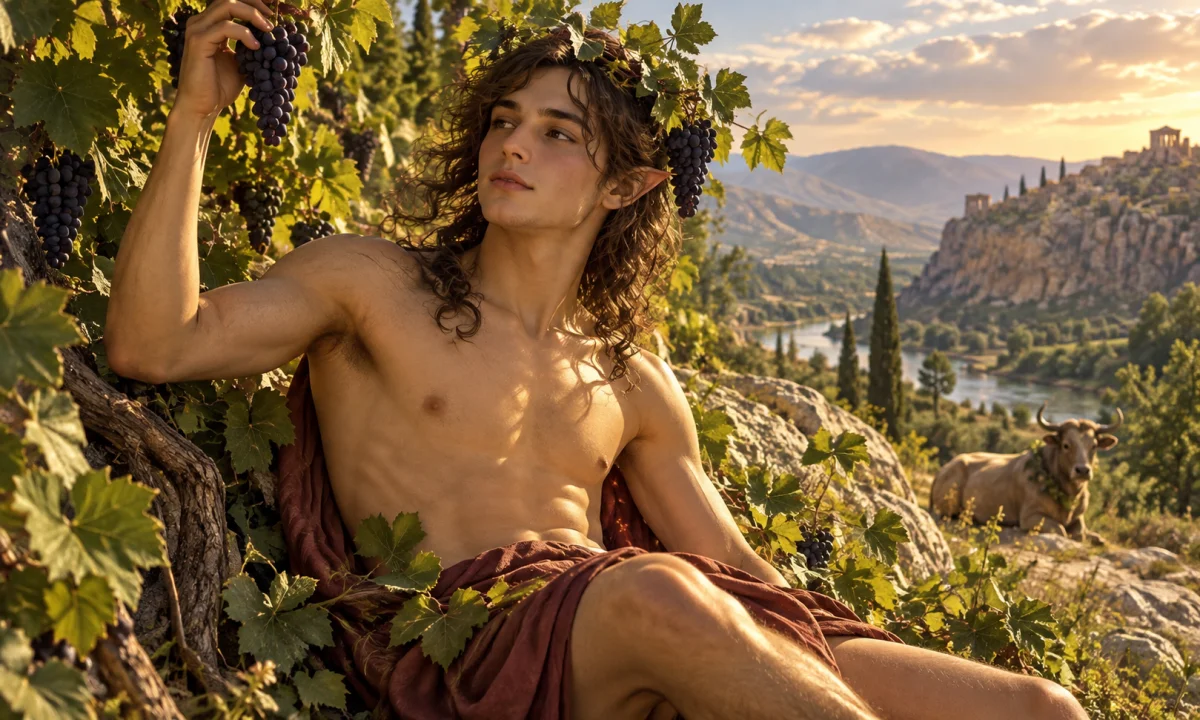
Ampelos
Ampelos is a beautiful young companion of Dionysus in Greek mythology, best known from the late antique epic Dionysiaca by Nonnus. His story explains, in mythic form, the origin of the grapevine and connects love, loss, …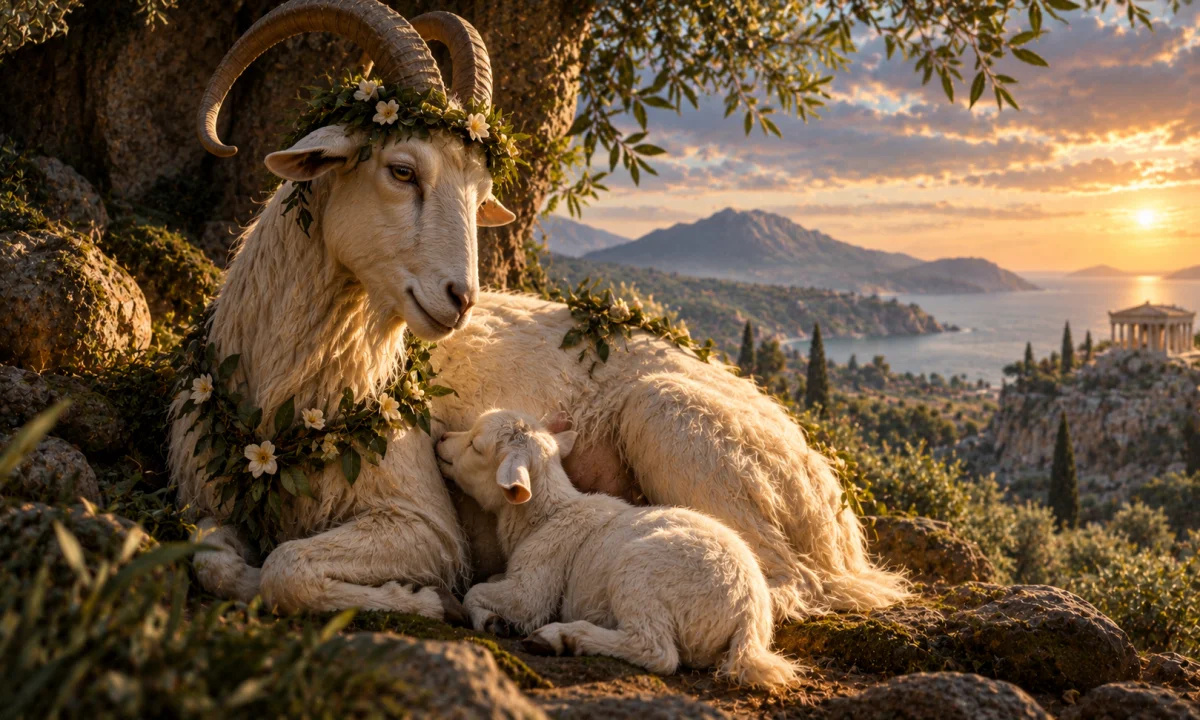
Amalthea
Amalthea is a figure of Greek mythology associated with the infancy of Zeus. In the most familiar version of the story, she is the goat whose milk nourished Zeus while he was hidden from his father, Cronus. Other ancient…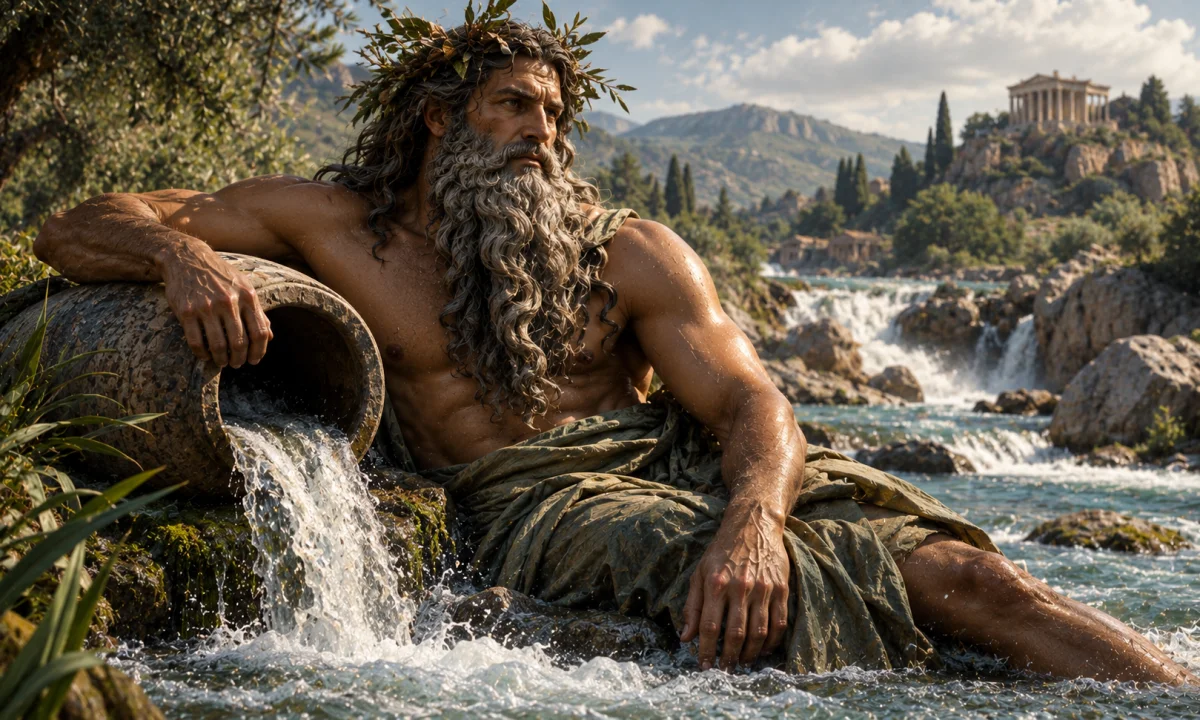
Alpheus
Alpheus is a river god of Greek mythology, identified with the Alpheus River in the western Peloponnese. In Greek, his name is written Alpheios (Ἀλφειός), while “Alpheus” is the usual Latin and English form. He belongs t…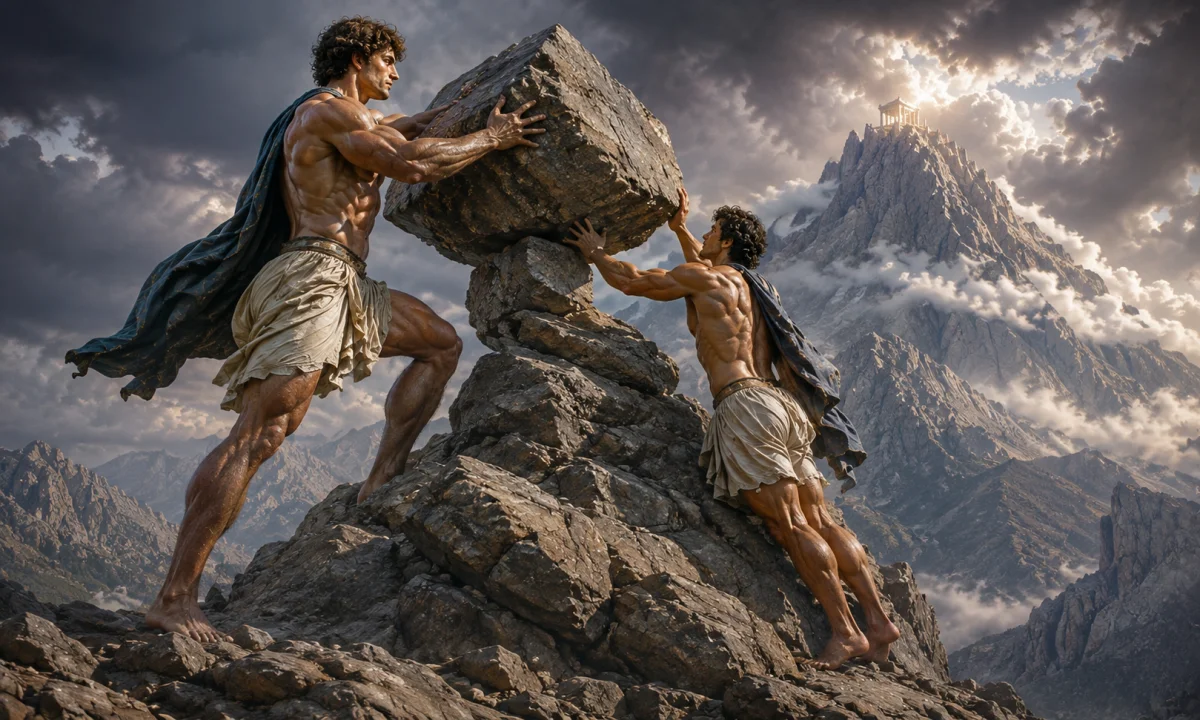
Aloadae
The Aloadae were Otus and Ephialtes, gigantic twin brothers in Greek mythology. Their name means the “sons of Aloeus,” although several ancient traditions identify Poseidon rather than Aloeus as their biological father. …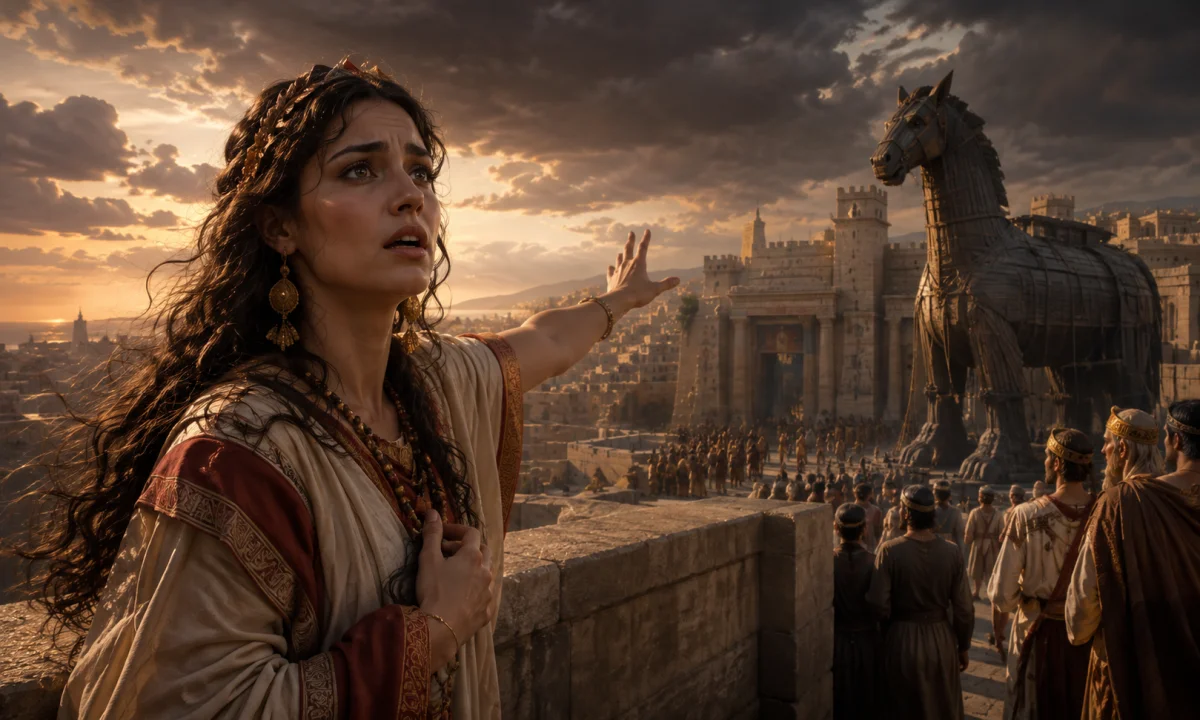
Cassandra
Cassandra is a Trojan princess and prophetess in Greek mythology, best known for foreseeing catastrophe while being unable to persuade anyone to believe her. Daughter of King Priam of Troy, she belongs to the cycle of st…
Alectrona
Alectrona is a little-known female figure connected with the Greek mythology of Rhodes. She belongs to the family of Helios, the sun god, and is described in ancient tradition as the daughter of Helios and the Rhodian pr…Greek mythology: myths, traditions and legends
Greek mythology encompasses the sacred narratives, divine genealogies, heroic legends and supernatural beings associated with the ancient Greek-speaking world. Its stories concern the origins of the cosmos, struggles among generations of gods, the foundations of cities, the adventures of heroes and the relationship between mortals and divine powers. Greek mythology was not a single fixed system with one authoritative scripture. Traditions varied between regions, sanctuaries, poets and historical periods, while the same deity or hero could possess different names, family relationships and religious functions in different communities.
The word mythology refers here to culturally significant narratives rather than stories automatically regarded as false. Myths existed alongside sacrifice, festivals, prayer, divination, civic identity and household religion. The surviving literary accounts are essential, but they do not describe every form of ancient Greek belief or ritual. Poetry, drama, local cult, philosophy, visual art and later Roman interpretation all shaped the material now recognised as Greek mythology.
Scope and historical setting
Greek mythology developed across mainland Greece, the Aegean islands, Crete, western Anatolia, southern Italy, Sicily and the wider Mediterranean communities founded or influenced by Greek-speaking peoples. These regions were politically divided into independent cities and kingdoms rather than united as one nation for most of antiquity.
Local identity strongly affected religious tradition. Athena held exceptional importance at Athens, Hera at Argos and Samos, Apollo at Delphi and Delos, and Artemis at Ephesus. A deity worshipped under a local title could possess characteristics that differed from those presented in epic poetry.
Greek religion also developed through contact with Minoan, Mycenaean, Anatolian, Egyptian, Phoenician and other Mediterranean traditions. Some divine names and ritual practices have deep Bronze Age roots, while others changed through later exchange. Similarities may indicate contact, shared inheritance or independent development and must be assessed individually.
Sources and transmission
The earliest extensive literary sources are the epic poems traditionally attributed to Homer and the works of Hesiod. The Iliad and Odyssey preserve heroic narratives set around the Trojan War and its aftermath. They portray gods intervening in human conflict, but they are poems shaped by oral tradition rather than complete manuals of Greek religion.
Hesiod’s Theogony presents a genealogy of divine beings and the rise of Zeus. His Works and Days includes the stories of Prometheus, Pandora and successive human ages. These accounts became influential without eliminating alternative versions.
Other evidence comes from hymns, lyric poetry, tragedy, comedy, historical writing, philosophical works and mythographic collections. Vase paintings, sculpture, inscriptions, temples and offerings reveal figures or episodes that literary sources may treat differently or omit entirely.
Many surviving texts were copied centuries after their composition. Some works are known only through fragments or summaries, and much local storytelling has been lost. No single source should be treated as the definitive version of every myth.
Creation and the first divine generations
Hesiod begins with Chaos, followed by primordial beings including Gaia, the earth, Tartarus and Eros. Chaos in this context does not mean random disorder in the modern sense. It is a primordial gap or opening from which further beings emerge.
Gaia produces Uranus, the sky, and together they generate the Titans, Cyclopes and Hundred-Handers. Uranus confines some of his children, provoking Gaia to assist the Titan Cronus in overthrowing him. Cronus then becomes ruler but fears that his own children will replace him.
Cronus swallows the children born to Rhea, but she saves the youngest, Zeus, through deception. Zeus eventually forces Cronus to release his siblings and leads a war against the Titans. The victory of the Olympian gods establishes a new divine order.
This sequence does not describe creation from nothing. The cosmos emerges through birth, separation, violence and changing sovereignty. Other Greek traditions offered different accounts, especially those associated with Orphic poetry and local cult.
The Olympian order
The Olympians are the gods associated with Mount Olympus and the divine order led by Zeus. Modern lists usually speak of twelve Olympians, but ancient sources do not always agree on the membership. Hestia and Dionysus may alternate in later lists, while Hades is usually excluded because his realm is the underworld.
The gods are immortal and extraordinarily powerful, but they are not morally perfect in the modern sense. They experience anger, desire, rivalry and partiality. Their myths explore the consequences of divine power and the difficulty of maintaining boundaries between gods and mortals.
Divine identities overlap. Apollo may be associated with prophecy, music, healing and plague; Artemis with hunting, wilderness, childbirth and transitions in female life; Athena with war, intelligence, craftsmanship and civic protection. These connections developed through different cults and narratives rather than through a rigid system of exclusive domains.
Zeus and divine sovereignty
Zeus is the leading god of the Olympian order and is associated with the sky, thunder, justice, hospitality, oaths and political authority. His thunderbolt represents destructive power, while his protection of guests and suppliants reflects the social importance of hospitality.
Myths describe Zeus defeating Titans, giants and the monstrous Typhon. These victories establish and defend cosmic sovereignty. Yet his rule depends not only on force but also on negotiation, distribution of honours and recognition of fate.
Zeus’s many relationships with goddesses and mortal women produce gods, heroes and royal lineages. These narratives often legitimise communities or families by connecting them with divine ancestry. Later retellings frequently treat them as romantic adventures, but many ancient stories involve disguise, coercion and unequal power.
Hera, marriage and royal authority
Hera is queen of the gods and is associated with marriage, women, legitimate succession and royal dignity. She was worshipped independently at major sanctuaries and cannot be understood only through her literary role as the jealous wife of Zeus.
Epic and later myths frequently portray Hera persecuting Zeus’s lovers and children, including Heracles. These stories reflect conflict within the divine household, but they represent only part of her religious importance.
Her cult involved festivals, processions and rituals connected with marriage and community identity. At Argos and Samos, she possessed deep local significance that cannot be reduced to one universal biography.
Athena and the ordered city
Athena is associated with strategic warfare, wisdom, weaving, craftsmanship and civic protection. Her relationship with Athens is expressed through the Parthenon, the Panathenaic festival and the myth in which she competes with Poseidon for patronage of the city.
She is born from the head of Zeus in a fully armed form after he swallows her mother Metis. The story connects Athena with divine intelligence while also expressing Zeus’s attempt to control a prophecy concerning succession.
Athena assists heroes such as Odysseus, Perseus and Heracles. Her support usually favours planning, self-control and technical skill rather than uncontrolled violence.
The story of Arachne, best known through the Roman poet Ovid, describes a mortal weaver transformed after challenging Athena. Its familiar form is later than classical Greek literature and should not be assumed to represent one universal ancient Greek account.
Apollo, Artemis and divine siblings
Apollo and Artemis are children of Zeus and Leto. Apollo is associated with prophecy, music, poetry, healing, plague, archery and the ordering of civic and religious life. His sanctuary at Delphi became one of the most important centres of consultation in the Greek world.
The Delphic oracle delivered responses through the Pythia, a priestess whose words were interpreted within an established sanctuary. Ancient visitors consulted Apollo on warfare, colonisation, law and purification. The oracle did not function simply as a source of vague personal fortune-telling.
Artemis is associated with hunting, wild animals, wilderness and the protection of young people. She is also connected with childbirth, despite remaining a virgin goddess. This combination reflects her authority over dangerous transitions rather than a contradiction.
The Artemis worshipped at Ephesus possessed distinctive imagery and local history. She should not be treated as identical in every respect to the youthful huntress familiar from later European art.
Poseidon and the unstable sea
Poseidon rules the sea and is also associated with earthquakes, horses and destructive natural force. Sailors and coastal communities sought his favour because the sea offered trade and livelihood while remaining unpredictable and dangerous.
In the Odyssey, Poseidon opposes Odysseus after the hero blinds his son Polyphemus. The conflict prolongs the voyage home and demonstrates the consequences of offending divine and familial honour.
Poseidon competes with other gods for control of cities and territories. These contests may reflect local traditions concerning political identity, resources and sacred patronage rather than a single chronological history of the gods.
Demeter, Persephone and seasonal loss
Demeter is associated with grain, agriculture and the nourishment of human communities. Her daughter Persephone becomes queen of the underworld after Hades takes her from the upper world.
The Homeric Hymn to Demeter describes the goddess’s grief and refusal to allow crops to grow. A settlement is eventually reached in which Persephone spends part of the year with Hades and part with her mother.
The story is often explained as a simple myth of the seasons. Agricultural renewal is important, but the hymn also concerns marriage, separation, maternal grief, mortality and the establishment of the Eleusinian Mysteries.
Persephone is not merely a passive spring maiden. In underworld traditions she acts as a powerful queen who receives the dead and participates in judgments or supernatural encounters.
Aphrodite and the power of desire
Aphrodite governs sexual attraction, beauty, fertility and the social power of desire. Hesiod describes her emerging from sea foam after the mutilation of Uranus, while Homeric tradition presents her as the daughter of Zeus and Dione.
These differing genealogies were preserved without requiring one to eliminate the other. They connect Aphrodite respectively with primordial generative power and with the Olympian family.
Her relationships with Ares, Hephaestus, Adonis and mortal lovers explore desire as a force that can create pleasure, humiliation, conflict and loss. Aphrodite is not simply a benevolent goddess of romantic love.
Her cult developed through Greek and eastern Mediterranean contexts, and scholars have long examined possible relationships with Near Eastern goddesses. Historical contact is well established, but Aphrodite’s Greek identity developed within its own religious and poetic traditions.
Dionysus and transformed identity
Dionysus is associated with wine, ecstasy, theatre, altered identity and the breakdown of ordinary social boundaries. His followers include maenads and satyrs, but their roles differ between ritual, literature and visual art.
Myths describe resistance to Dionysus by rulers who refuse to recognise his divinity. In Euripides’ Bacchae, King Pentheus attempts to suppress his worship and is destroyed after being drawn into the god’s ritual world.
Dionysian religion could involve procession, music, masks and ecstatic performance, but popular descriptions of uncontrolled drunkenness oversimplify its ritual complexity. The god represents both liberation and danger.
Hades and the world of the dead
Hades is both the ruler of the underworld and, in later usage, a name for his realm. He is stern and distant but not equivalent to the Christian devil. The underworld receives the dead rather than serving only as a place of punishment for moral evil.
Greek traditions describe several regions and conditions after death. Ordinary shades inhabit a diminished existence, while exceptional wrongdoers such as Tantalus and Sisyphus endure specialised punishments. Heroes or favoured individuals may reach Elysium or the Isles of the Blessed.
Descriptions vary between Homer, mystery traditions, philosophical texts and later literature. There was no single Greek doctrine of the afterlife accepted unchanged in every period.
Heroes and the boundary between human and divine
Greek heroes are extraordinary mortals or descendants of gods whose deeds establish families, cities and sacred customs. They are not always moral examples. Their strength and ambition may protect communities while also causing suffering.
Heracles completes labours involving monsters, dangerous animals and impossible journeys. His myths concern endurance, servitude, purification and eventual divine status. Different cities claimed connections with him, producing numerous local traditions.
Perseus defeats Medusa with divine assistance, Theseus overcomes the Minotaur and becomes associated with Athenian identity, while Jason leads the Argonauts in search of the Golden Fleece. Each hero depends upon allies, divine favour and specialised knowledge rather than strength alone.
Hero cults honoured some figures at tombs or local sanctuaries. A literary hero and a religiously worshipped hero could overlap, but not every famous character received the same type of cult.
The Trojan War and heroic memory
The Trojan War forms the central setting of a vast body of Greek heroic tradition. The Iliad covers only a short period near the end of the war, focusing on the anger of Achilles and its consequences.
Archaeology confirms that a major settlement existed at Hisarlik and that it experienced destruction during the Bronze Age. This evidence does not prove every event or individual described in later epic poetry.
The poems combine memories of a distant past with institutions, weapons and social values from later periods. Helen, Achilles, Hector, Agamemnon and Odysseus belong to literary tradition shaped through generations of oral performance.
The gods participate openly in the conflict, favouring different sides and protecting chosen individuals. Their intervention transforms warfare into a struggle involving fate, divine honour and the limitations of human glory.
Monsters and divine boundaries
Greek mythology contains many beings described in modern language as monsters, including the Hydra, Chimera, Gorgons, Sirens, Cyclopes and Minotaur. These figures do not form one biological category.
Some are offspring of ancient divine families associated with threatening forces. Others guard boundaries or become obstacles in heroic quests. Cerberus protects the underworld, while the Sphinx tests those approaching Thebes.
Medusa is especially complex. Early sources present the Gorgons as monstrous beings, while Ovid’s later Roman account describes Medusa as transformed after an encounter in Athena’s temple. The Roman version became highly influential but should not replace all earlier Greek traditions.
Monstrous images could also protect. The Gorgon face appeared on shields, temples and objects as an apotropaic symbol intended to repel danger.
Fate, prophecy and human responsibility
Greek narratives frequently involve moira, fate or allotted portion. Even Zeus must sometimes recognise the limits imposed by destiny, although the relationship between divine will and fate differs among authors.
Oracles reveal what will occur but rarely provide an easy escape. Attempts to prevent prophecy often bring it about, as in the stories of Oedipus, Perseus and Cronus.
Fate does not remove responsibility. Characters remain accountable for pride, violence, broken oaths and failures of judgment. Greek tragedy explores how limited knowledge and inherited circumstances interact with meaningful human choices.
Ritual, sacrifice and civic religion
Ancient Greek religion was practised through offerings, sacrifice, festivals, processions, prayer and communal feasting. Animal sacrifice could establish reciprocity between worshippers and gods, while portions of meat were distributed among participants.
Different deities received different forms of worship according to place and occasion. Household religion, civic festivals, mystery cults and consultations at sanctuaries existed alongside the myths preserved in poetry.
Myth could explain the origin of a ritual or sacred site, but ritual practice did not always depend upon one standard narrative. Communities could honour the same god through significantly different ceremonies.
Mystery traditions and restricted knowledge
The Eleusinian Mysteries, Dionysian rites and traditions associated with Orpheus offered forms of initiation and sacred knowledge. Their teachings were restricted, which means that modern reconstructions remain incomplete.
Initiates at Eleusis participated in ceremonies connected with Demeter and Persephone and were promised a more hopeful relationship with death. Ancient writers respected the secrecy of the rites, leaving only indirect evidence.
Orphic texts present distinctive accounts of divine genealogy, human nature and purification. They do not represent a single organised church but a varied body of religious poetry and practice.
Roman adaptation and later transmission
Roman authors identified Greek gods with Roman deities, producing familiar pairings such as Zeus with Jupiter, Hera with Juno and Aphrodite with Venus. These identifications were influential but did not make Greek and Roman religion identical.
Ovid, Virgil and other Roman writers reshaped Greek narratives for new political and literary settings. Many widely known versions of myths survive most fully in Roman sources rather than earlier Greek texts.
Christian writers later interpreted the gods as false deities, demons, allegories or historical humans mistakenly worshipped. Medieval manuscripts preserved classical stories while changing their religious significance.
Modern reception and common misconceptions
Renaissance art, Romantic poetry, psychology, fantasy, film, comics and games have continually reinterpreted Greek mythology. Modern adaptations frequently give the gods fixed personalities, powers and family structures derived from selected ancient sources.
The Twelve Olympians were not worshipped everywhere as one standard council, and Greek gods were not simply immortal humans assigned to natural domains. Their identities emerged through ritual titles, local cults, poetry and historical change.
Another misconception presents Greek mythology as a dead collection separated from religion. Modern Hellenic religious movements worship Greek deities through reconstructed and contemporary practices. These communities are living religions, though they are not unchanged institutional survivals from antiquity.
Greek mythology remains influential because its narratives examine divine power, human ambition, family conflict, hospitality, justice, fate and the search for lasting honour. Its stories survive not as one fixed canon but as a network of competing versions shaped by poets, worshippers, cities and generations of interpreters.