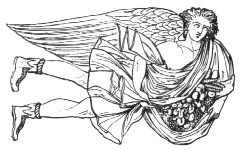
Astraeus, in Greek mythology, is a fascinating figure often associated with the stars and the night sky. He is one of the lesser-known Titans, a group of powerful deities that preceded the Olympian gods. Astraeus is specifically linked to the astrological aspects of the universe, embodying the celestial phenomena that humans observe in the night sky. His role in mythology emphasizes the connection between the divine and the cosmos, illustrating how ancient Greeks understood their world through the lens of astrology and astronomy.
The Origins of Astraeus
Astraeus is often depicted as the son of the Titan Crius and the Titaness Eurynome. As part of the Titan generation, he was born in an era before the Olympian gods came to power. The Titans were known for their immense strength and dominion over various aspects of the natural world. Astraeus, in particular, represents the personification of the dusk and the stars, which are crucial elements of the Greek understanding of time and nature.
 Atalanta
In Greek mythology, the Titans were often at odds with the Olympian gods, leading to the famous Titanomachy, a great battle between the two groups. Astraeus, however, is not usually portrayed as a direct antagonist in this conflict. Instead, he is more often associated with the peaceful aspects of the night and the stars, suggesting that he had a more harmonious role in the mythological narrative.
Astraeus and His Role in the Cosmos
Astraeus is primarily known for his connection to the stars and the constellations. His domain includes the celestial bodies that adorn the night sky, as well as the winds that blow across the earth. This connection to the natural elements emphasizes his role as a deity who governs the balance between night and day, light and darkness. He is often depicted as a figure who observes the cosmos, watching over the celestial movements that guide the seasons and the passage of time.
As the god of the dusk, Astraeus represents the transition between day and night. This transition is significant in many cultures, including ancient Greece, where it was often seen as a time of reflection and introspection. The dusk is a moment when the day’s activities wind down, and the world begins to quiet. This symbolism is an essential part of Astraeus’s character, as he embodies the peacefulness and beauty of the night sky.
 Ate
AteAstraeus and the Winds
In addition to his connection with the stars, Astraeus is also associated with the winds. The ancient Greeks believed that the winds were powerful forces that could influence both the weather and human activities. Astraeus, as a deity of the winds, held a significant position in their mythology. He was often invoked in prayers and rituals to ensure favorable weather conditions for farming and sailing.
The winds were personified in Greek mythology by the Anemoi, the gods of the winds, each representing a different direction and season. Astraeus’s association with the winds highlights his role in the natural world, where he influences not only the celestial phenomena but also the earthly elements that sustain life. His ability to control the winds symbolizes his power and importance in the Greek pantheon.
The Children of Astraeus
 Athamas
Astraeus is often mentioned as the father of several significant deities in Greek mythology. His union with the goddess Eos, the personification of dawn, produced the four Anemoi—the wind gods. These children include Boreas (the North Wind), Notus (the South Wind), Eurus (the East Wind), and Zephyrus (the West Wind). Each of these deities has their unique characteristics and domains, further expanding Astraeus’s influence in the mythological world.
The Anemoi were crucial in Greek culture, especially for sailors who relied on the winds for their journeys across the Mediterranean Sea. By understanding and honoring the winds, the ancient Greeks believed they could navigate the waters safely. Astraeus’s lineage through the Anemoi illustrates how he is interconnected with both the celestial and terrestrial elements of Greek mythology.
Astraeus in Art and Literature
The figure of Astraeus appears in various works of ancient Greek literature and art. While he may not be as prominent as other deities, his presence can be felt in texts that discuss the cosmos and the natural world. Poets like Hesiod and Homer referenced celestial bodies and their movements, often invoking Astraeus as a symbol of the night sky’s beauty and mystery.
In art, Astraeus is sometimes depicted alongside his children, emphasizing his role as a father figure within the pantheon of gods. His portrayal often includes elements that signify his connection to the stars and the winds, such as stars surrounding him or gusts of wind flowing through his hair. These artistic representations serve to reinforce his significance in the Greek understanding of the universe.
Astraeus and Astrology
Astraeus is closely linked to the practice of astrology, which was an essential part of ancient Greek culture. The Greeks believed that the positions of celestial bodies could influence human affairs and natural events. Astraeus, as the god of the stars, symbolizes the astrological principles that governed their understanding of fate and destiny. This connection highlights the importance of celestial observation in their daily lives.
Astrology in ancient Greece was not merely a practice for predicting the future; it was deeply intertwined with religion and philosophy. The movements of the stars and planets were seen as reflections of divine will. Astraeus, therefore, embodies the belief that the cosmos is a living entity that interacts with human life. His role in astrology underscores the ancient Greeks’ desire to find meaning and order in the universe.
The Legacy of Astraeus
Despite being a lesser-known figure in Greek mythology, Astraeus’s legacy endures in various aspects of modern culture. His connections to the stars and the winds resonate with contemporary interests in astronomy and meteorology. The fascination with the night sky, the movements of celestial bodies, and the natural elements can be traced back to the ancient Greeks, who laid the groundwork for our understanding of these phenomena.
Moreover, Astraeus’s influence can be seen in the continued interest in astrology and its role in popular culture. Many people today still look to the stars for guidance and insight, echoing the ancient practices that Astraeus represents. His character serves as a reminder of the enduring human desire to connect with the cosmos and seek understanding in the mysteries of life.
Astraeus in Comparative Mythology
Astraeus can be compared to similar figures in other mythologies around the world. Many cultures have deities that represent the night sky, stars, and celestial phenomena. For example, in Roman mythology, the god Caelus embodies the sky, while in Hindu mythology, Chandra is the moon god. These figures share similarities with Astraeus in their connections to the cosmos and their roles in governing the natural world.
Such comparisons highlight the universal themes found in mythology, where different cultures seek to explain and understand the same natural phenomena. The existence of similar deities across various mythologies suggests that humanity has always looked to the stars for guidance, inspiration, and understanding of the universe’s mysteries. Astraeus stands as a representative of this timeless human quest.
Astraeus in Modern Interpretations
In modern interpretations of Greek mythology, Astraeus has gained renewed interest among scholars and enthusiasts. His connections to astrology and the cosmos make him a relevant figure in discussions about ancient beliefs and their impact on contemporary thought. Many modern works of fiction and art draw inspiration from Astraeus, depicting him as a powerful yet gentle deity who watches over the night sky.
Additionally, Astraeus has found a place in popular culture, appearing in various forms of media, including literature, film, and video games. These modern adaptations often emphasize his celestial nature, showcasing his influence over the stars and the winds. Such portrayals contribute to a broader understanding of Greek mythology and its relevance in today’s world.
The Significance of Astraeus in Greek Mythology
Astraeus holds a unique position in Greek mythology as a representation of the celestial and natural forces that govern life. His connections to the stars and the winds illustrate the ancient Greeks’ understanding of their world and their place within it. As a Titan who embodies the beauty and mystery of the night sky, Astraeus serves as a reminder of the interconnectedness of all things in the universe.
His role as a father to the Anemoi further emphasizes the importance of understanding the natural elements and their influence on human life. Astraeus represents the balance between light and darkness, day and night, highlighting the cyclical nature of existence. In this way, he embodies the ancient Greeks’ quest for knowledge and understanding of the cosmos.