WORLD
WORLD
Tsetse Bumba
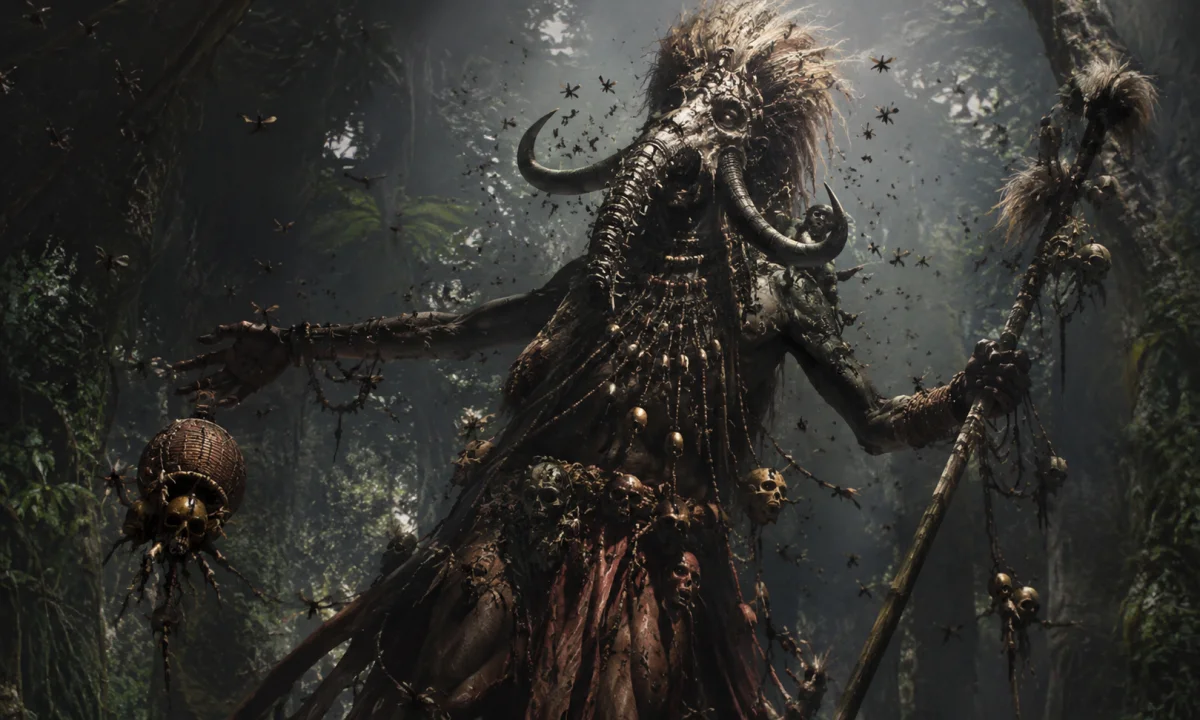
Tsetse Bumba is a name associated in some modern English-language compilations with the creator figure better known as Mbombo or Bumba in traditions attributed to the Bushoong (also written Bushongo), a Kuba-speaking people of the present-day Democratic Republic of the Congo. The spelling and identification are not consistent across sources. “Tsetse Bumba” is much less securely documented than “Mbombo” or “Bumba,” and it should not automatically be treated as the universally accepted name of a distinct deity.
Origins and cultural setting
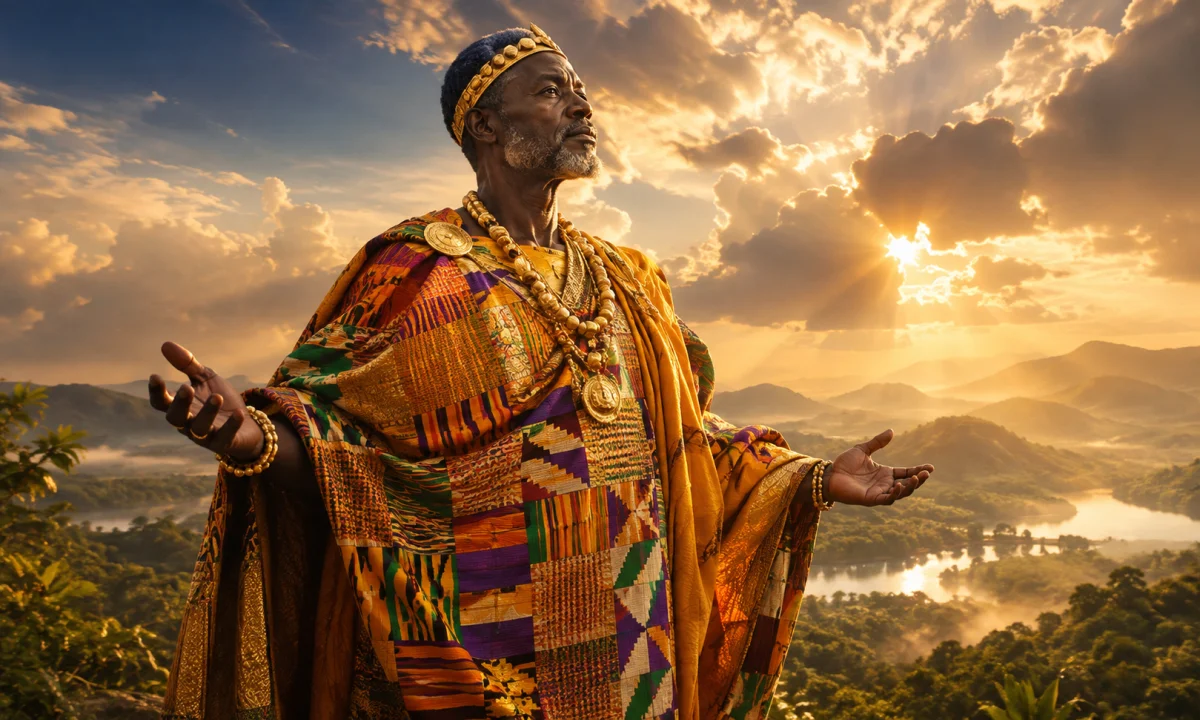
The traditions connected with Mbombo belong to the wider cultural world of the Kuba peoples of the Congo Basin. “Kuba” can refer both to a historical political kingdom and to a group of related peoples whose languages, institutions and artistic traditions developed in central Africa. The Bushoong formed the kingdom’s ruling group, although Kuba identity has always included several communities with their own histories and traditions.
Stories about Mbombo were preserved primarily through oral transmission. They were later recorded and translated by European visitors, missionaries and ethnographers, particularly during the colonial period. Such records are valuable, but they do not represent a single canonical scripture. Different narrators, translators and editors could use different spellings, arrange episodes differently or emphasize different characters.
This background is important when interpreting Tsetse Bumba. Many short modern lists of “African gods” take a name from one source, attach details from another and present the result as a fixed mythology. The surviving evidence does not always justify that level of certainty. The best-attested body of material concerns Mbombo or Bumba, a primordial creator associated with the Bushoong and Kuba traditions. The exact status of “Tsetse” may reflect a variant spelling, a title, a transcription issue or a later attempt to distinguish one form of the name.
Name and identity
The names Mbombo and Bumba are commonly treated as names or forms of the same creator figure. The spelling “M’Bombo” also appears in older English and French presentations. “Tsetse Bumba,” however, is not as stable a designation. Some secondary accounts list it as an alternative name for Bumba, while others use it without explaining whether “Tsetse” is a personal name, an honorific or a separate element.
There is no reliable basis for claiming that every community using the name “Tsetse Bumba” understood the figure in exactly the same way. Nor is it safe to assume that the name belongs to every Kuba-speaking people. African religious traditions are often incorrectly presented as if the continent shared one mythology. In reality, beliefs vary greatly between regions, languages and communities.
For that reason, Tsetse Bumba is best described cautiously as a name associated with the Mbombo-Bumba creator tradition, rather than as an independently documented pan-African god. When the name appears in popular reference works, its accompanying stories usually derive from the Bushoong creation account.
The creation account
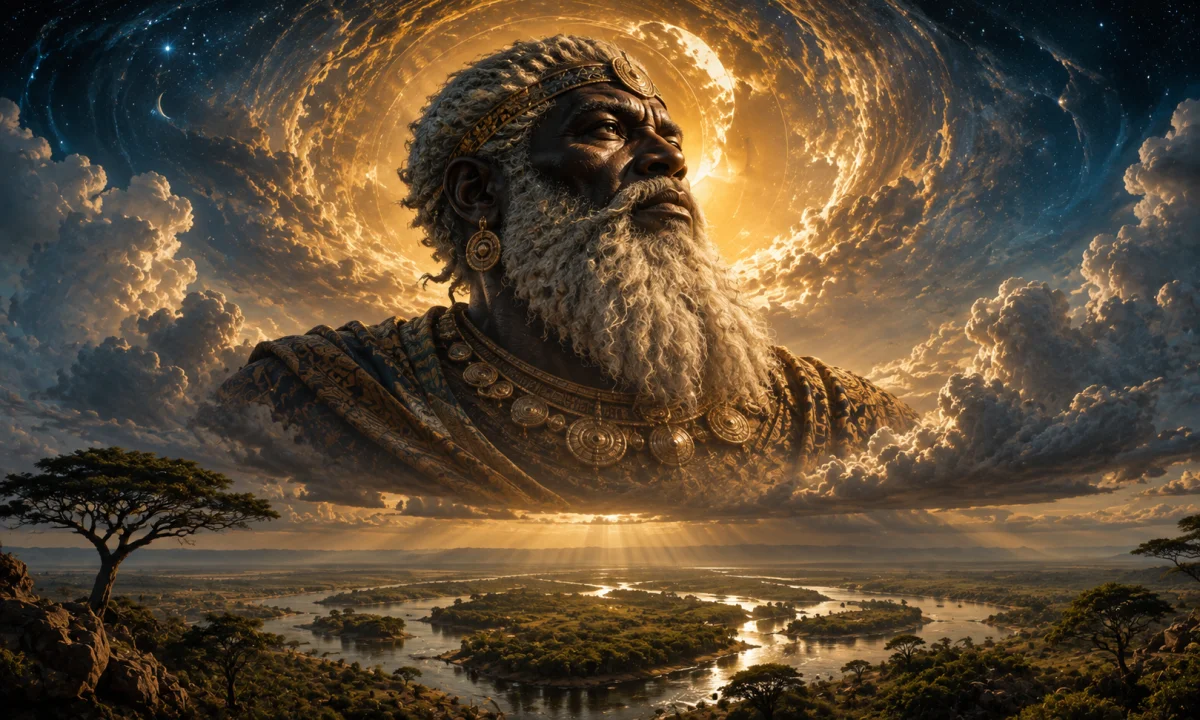
In the best-known version of the story, the beginning of existence is covered by darkness and water. Mbombo is alone in this primordial world. He is often described as an enormous, powerful and pale or white-coloured being. The tradition does not present this appearance in the same way that a modern fantasy story might describe a human character. His unusual colour and immense size mark him as extraordinary and primordial.
Mbombo eventually suffers severe pain in his stomach. In a series of violent acts of creation, he vomits out the sun, the moon and the stars. The arrival of the sun changes the original watery darkness. Light and heat dry portions of the world, allowing land to appear and making further creation possible. In some versions, the moon and stars are formed after the sun; in others, the story is told more as a sequence of bodily expulsions than as a carefully ordered chronology.
Mbombo then vomits out animals and other parts of the natural world. The lists vary, but commonly mentioned creatures include the leopard, eagle, crocodile, fish and tortoise. Some versions also include other animals, plants or natural phenomena. The purpose of the story is not to provide a biological catalogue. It explains how the ordered world emerged from a condition of darkness and water, and it places animals within a sacred history of beginnings.
The creation of humanity is also described differently. In some retellings, human beings emerge from Mbombo or are made after the animals. In others, Mbombo’s descendants or assistants complete parts of creation. This variation is typical of orally transmitted mythology. A change in the sequence does not necessarily indicate that one narrator “misunderstood” the story; it may reflect a different local version or a different emphasis within the tradition.
Mbombo’s sons and the completion of creation
Several versions of the account introduce sons or descendants of Mbombo who help establish the world. Names commonly found in English retellings include Nyonye Ngana, Chonganda and Chedi Bumba, although spelling varies considerably.
Nyonye Ngana is often said to vomit white ants. He then dies, and the ants spread across the earth. In this episode, the ants are not merely insects in a naturalistic sense. They participate in the extension and ordering of the newly formed land. The story also gives an origin to a creature that may have been especially familiar or significant in the local environment.
Chonganda is commonly connected with the creation or spreading of vegetation. This places plants alongside animals and celestial bodies as essential elements of the created world. In a forest environment, vegetation is not a decorative background to human life. It provides food, materials, shelter and medicine, while also shaping the boundaries between settlement and wilderness.
Other accounts include Chedi Bumba or additional descendants in the work of completing creation. Their exact roles are not consistent in English summaries. Some versions also describe a troublesome or destructive force associated with lightning, fire or disorder. In these narratives, the creator’s task is not simply to produce things but to bring a potentially unstable world into an inhabitable arrangement.
Because the names and roles of the creator’s children differ between retellings, claims about a fixed family tree should be treated carefully. A list of divine relatives found in a modern mythology database may combine details from separate translations rather than preserve one universally recognized genealogy.
Appearance and powers
Mbombo’s most striking attribute is his enormous size. He is frequently described as a giant who exists before ordinary human beings and before the familiar structure of the world. His body is the instrument through which creation occurs: the sun, moon, stars, animals and other elements emerge from him.
The recurring description of Mbombo as white or pale has attracted attention from later writers. It should not be interpreted automatically as evidence that the tradition arose from European ideas, nor should it be read as a straightforward description of a human ethnic identity. Mythic colour symbolism can indicate otherness, brilliance, age, visibility or separation from ordinary humanity. The available accounts do not provide enough evidence for a single definitive interpretation.
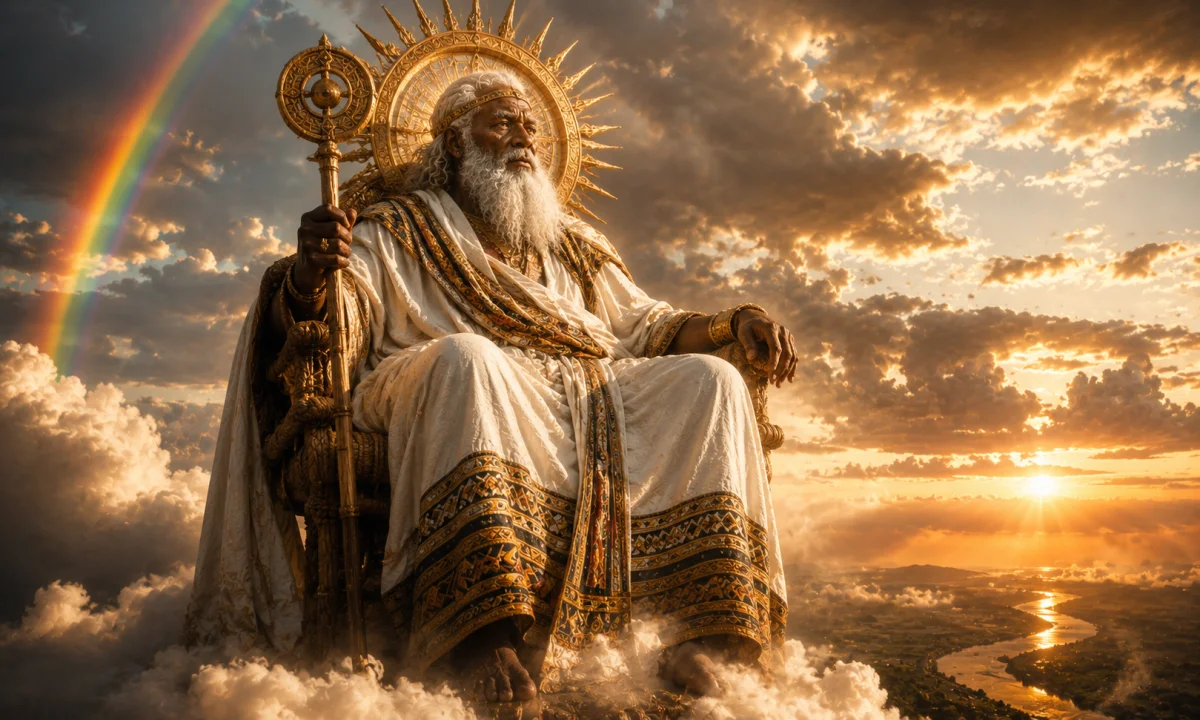
Mbombo is therefore not simply a god of one natural feature, such as the sun or rain. He is a cosmogonic creator: a figure associated with the emergence and organization of the universe. His powers include bringing celestial bodies into being, producing living creatures and enabling the transition from primordial darkness to a world containing land, light and life.
Symbolism of bodily creation
The use of vomiting as a creative act may seem unusual when judged by categories taken from European classical mythology or modern religious language. In the story, however, creation is physical, forceful and transformative. The world is not fashioned from a distant position by an abstract architect. It comes out of the creator’s own body, following pain and upheaval.
This imagery links the formation of the cosmos with processes that are both threatening and generative. A stomach is associated with nourishment and the transformation of matter, but illness turns it into a source of danger. Mbombo’s pain becomes the means by which the universe is released. The story can consequently be understood as presenting creation as an event that involves disorder before stability.
The account also gives a close relationship between cosmology and the natural environment. Sunlight dries the primordial waters. Animals populate the new world. Ants extend across the earth, and plants establish the conditions for life. These episodes do not separate the sacred from the material world; they explain the material world through sacred action.
Religious and social significance
It would be misleading to treat the Mbombo tradition as a “belief” isolated from everyday life. Among the Kuba peoples, religious ideas have historically existed alongside systems of kingship, ancestry, ritual authority, artistic practice and relations with the natural world. A creation story forms part of a broader cultural framework rather than functioning as a creed with one official wording.
The Kuba kingdom developed elaborate institutions of royal power and court ceremony. Modern interpreters sometimes connect creator traditions with the explanation of social order, but such interpretations must not be stated as direct proof unless a particular community or historical source makes the connection. The existence of a supreme creator in a myth does not by itself prove that the story was invented to justify monarchy.
In general terms, the creation narrative affirms that the visible world has an origin and an underlying order. Light, land, plants, animals and human life are related through a chain of sacred events. The story also recognizes that creation is not complete in a single effortless moment. Different beings contribute to the world’s development, and some of those contributions involve death, conflict or the management of dangerous powers.
Oral tradition and the problem of fixed versions
There is no single ancient book called the “myth of Tsetse Bumba.” The stories were transmitted orally and recorded later in changing linguistic and political circumstances. Names written in European alphabets can represent sounds imperfectly, and the same name may acquire several spellings when it passes through different languages.
Translation creates further difficulties. A word translated as “god,” “spirit,” “ancestor” or “creator” may not correspond exactly to the categories familiar from Greek, Christian or Norse mythology. Likewise, a narrator’s description of a giant, chief, ancestor or supreme being may be flattened into the generic term “deity” by a later compiler.
For this reason, “Tsetse Bumba” should not be used to make broad claims about all African religions, all Bantu-speaking peoples or all traditions of the Congo. The safest identification is local and comparative: the name is linked in secondary material to the Bushoong/Kuba creator figure known more widely as Mbombo or Bumba, but the precise relationship between the names remains uncertain.
Distinction from similar names and figures
Tsetse Bumba should not be confused with every figure called Bumba in modern writing. “Bumba” can be a personal name, a place name or an element in names from different African languages. Similar spellings do not establish a shared mythological identity.
The figure should also be distinguished from Bombyx or other insect-related names that may appear in loose comparisons of world mythology. The white ants in the creation story are part of a particular episode; they do not make Mbombo an insect deity. Nor is he simply a personification of the sun. The sun is one of the entities he brings into the world.
Finally, the term “African mythology” is a geographic classification, not the name of a single religious system. Tsetse Bumba belongs to a specific Central African context, and that context should remain visible whenever the figure is discussed.
Later reception
Today, Mbombo and Bumba frequently appear in online encyclopedias, mythology lists, educational pages and comparative discussions of creation myths. In these settings, the name “Tsetse Bumba” may be repeated as though it were a universally established alternative. Such presentations often omit the distinction between a recorded local tradition and a later English-language compilation.
The figure has also been used occasionally in modern fantasy, comics, games and illustrated retellings. These works may expand Mbombo’s appearance, powers or relationships for dramatic purposes. Such inventions belong to modern popular culture and should not be treated as evidence for the historical Bushoong tradition. The traditional material itself is most securely represented by the creator’s association with primordial darkness and water, the emergence of the sun, moon and stars, and the generation of animals, plants and human life.