WORLD
WORLD
Rugaba

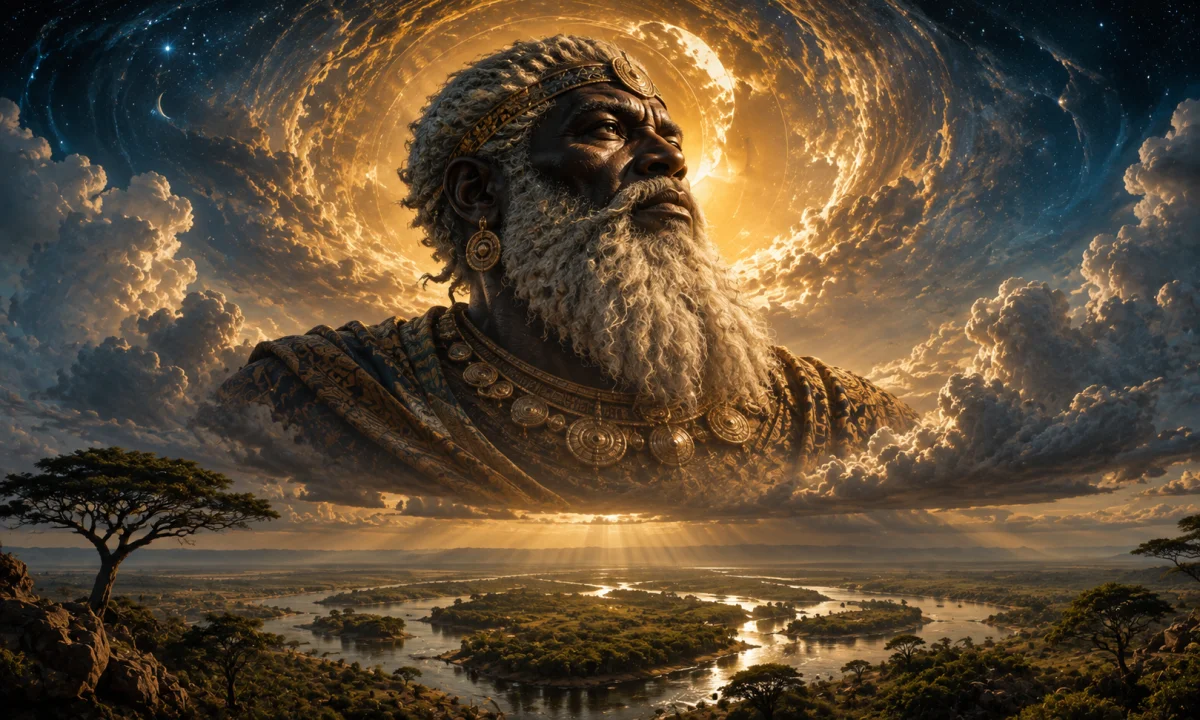
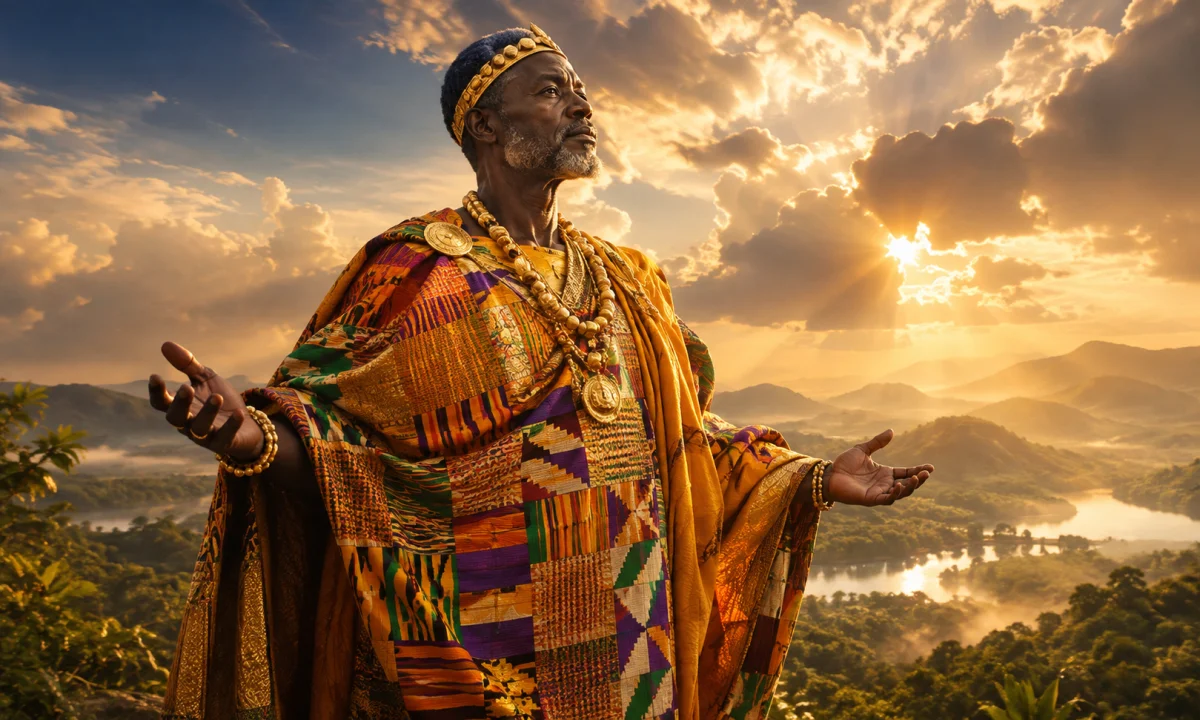
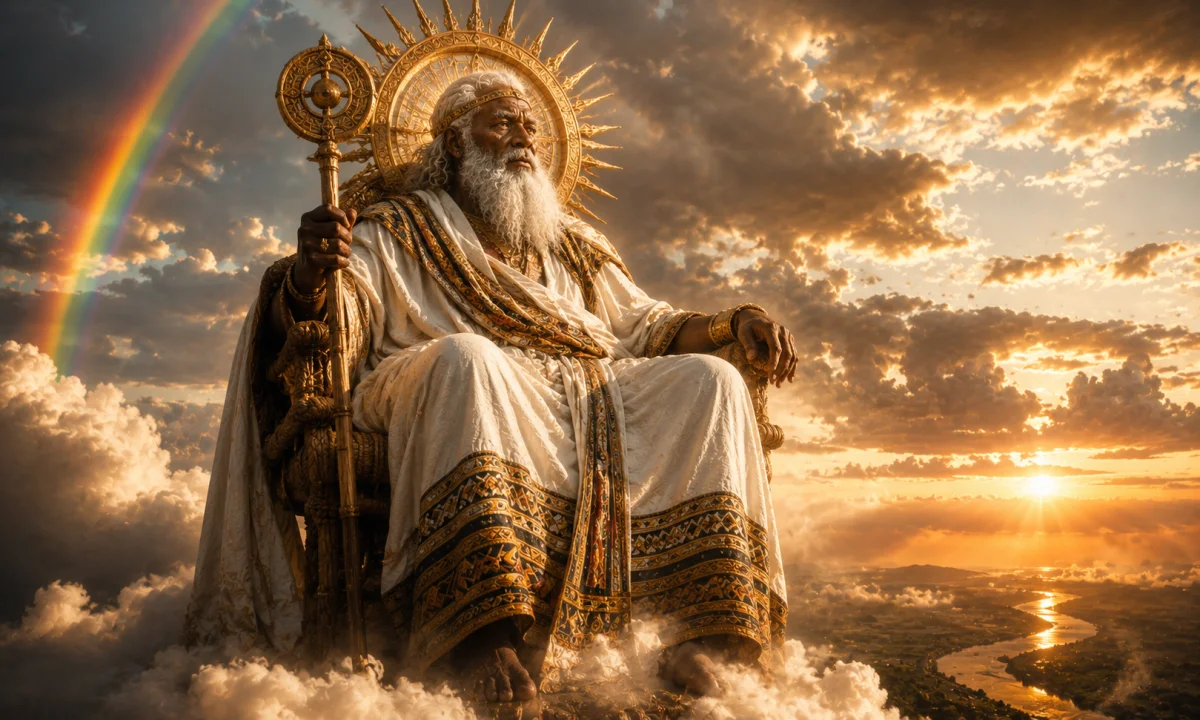
Rugaba is a name associated with a supreme or creator deity in traditions of the Great Lakes region of Africa, especially among communities in present-day Uganda and neighbouring areas. The name is not used with one completely uniform meaning: depending on the source, Rugaba may be described as a creator, a giver of life and prosperity, or a name connected with a wider conception of the high god. Information about Rugaba comes mainly through oral traditions, local religious vocabulary and older ethnographic descriptions, so interpretations should be treated with care.
Origins and cultural setting
Rugaba belongs to the religious world of the interlacustrine Great Lakes region, a culturally connected area surrounding lakes such as Victoria, Albert and Edward. The region includes several Bantu-speaking peoples whose histories, languages and institutions developed through long contact with one another. These communities include the Banyoro, Banyankole and other peoples of western Uganda, as well as neighbouring groups in Rwanda, Tanzania and the eastern Congo region.
Religious traditions in this area were not always organised around a single fixed creed or canonical scripture. Beliefs were transmitted through oral teaching, ritual practice, family memory, royal institutions, praise language and stories associated with particular communities. Names for the high god could therefore vary between languages and regions. A divine name might also have several forms in English-language writing because of differences in spelling, pronunciation and transcription.
Rugaba is consequently difficult to describe as though he belonged to one fully standardised mythology. Some accounts identify Rugaba as a supreme creator deity, while others use related names, including Ruhanga, Katonda or forms such as Lugaba, for the high god. These names should not automatically be treated as exact equivalents. In some traditions they may refer to distinct local usages; in others they may be titles or regional expressions for a similar divine concept.
The name Rugaba
The name Rugaba is often connected by interpreters with ideas of giving, provision or generosity. That interpretation fits descriptions of Rugaba as a deity who gives life, fertility, cattle, rain or the conditions necessary for human prosperity. However, the exact linguistic history of the name is not equally clear in every community, and a simple translation should not be presented as certain for all traditions using the name.
Spelling is another source of confusion. English-language records may write the name as Rugaba, Lugaba or occasionally relate it to other divine names from the region. Initial consonants can be represented differently when words move between local languages and European writing systems. A spelling difference may reflect pronunciation, orthography or a genuinely different local tradition; it does not by itself prove that all such names designate the same being.
For this reason, Rugaba is best understood as a regional religious name whose meaning depends on the community and source in which it appears. Descriptions that present a single, elaborate biography for Rugaba often go beyond what the surviving traditional evidence securely establishes.
Rugaba as a creator and high god
Where Rugaba is identified as a creator deity, he occupies the highest level of the divine order. He is associated with the origin of the world, human life and the natural conditions that sustain society. Such a role places Rugaba among the high gods found in many African religious traditions: remote or transcendent in relation to ordinary human life, yet understood as the ultimate source of existence.
The word creator should not be understood only in the narrow sense of a deity who forms the universe in a single creation episode. In many African religious systems, creation is also expressed through ideas of giving, ordering, blessing and maintaining life. A high god may be recognised as the source of the land, people, animals, crops, rain and social well-being without being the central figure in every ritual.
Rugaba’s importance is therefore likely to be found less in a fixed set of physical attributes than in the functions associated with divine sovereignty. He may be described as the giver of life, fertility, protection or abundance. These associations connect religious belief with agriculture, cattle keeping, family continuity and the health of the community.
Attributes and religious functions
Source of life and fertility
As a creator or giver, Rugaba is associated with the continuation of life. Fertility in this setting has a broad meaning. It can refer to the birth of children, the reproduction of livestock, the growth of crops and the renewal of the natural world. The idea of divine generosity links human prosperity with the wider balance of land, weather, animals and community.
Rain and material well-being
Rain is especially important in the religious imagination of agricultural societies, and high gods in the Great Lakes region are often connected with rain, harvests and general prosperity. It would be too definite to assign every rain ritual or weather belief in the region specifically to Rugaba, since different communities have their own ritual specialists, spirits and divine names. Nevertheless, descriptions of Rugaba as a giver naturally place him within concerns about rain, food and the well-being of households.
Supreme authority
Rugaba’s position as a high god also gives the name a political and moral dimension. In societies with kingship or chiefly authority, divine sovereignty could provide a religious framework for social order. This does not mean that Rugaba functioned simply as a royal god or that every political institution was directly dedicated to him. Rather, belief in a supreme giver could support ideas that life, land and authority ultimately depended on a power greater than any human ruler.
Distance and mediation
High gods in many African traditions are sometimes described as distant from everyday ritual, while more immediate religious attention is directed towards ancestors, spirits, local powers or intermediaries. This pattern should not be imposed mechanically on every Rugaba tradition, but it helps explain why a supreme deity may be highly important in theology without appearing in a large cycle of surviving stories.
People could approach the sacred through prayer, offerings, ritual specialists, family observances or appeals associated with ancestors. The precise relationship between Rugaba and these other religious figures varied among communities. There is no sound basis for assuming one universal system of intermediaries shared by all groups that use the name.
Stories and variants
Rugaba does not have a single widely preserved body of myths comparable to the narrative cycles surrounding figures such as Anansi or the Yoruba Orisha. Accounts that mention him often focus on his status and attributes rather than on a long sequence of adventures. This may reflect the nature of the tradition itself, the selective interests of early recorders or the loss of oral material through social and religious change.
Some modern summaries describe Rugaba as the maker of the earth and humanity. Such statements may accurately express the deity’s general role in a particular local account, but they should not be expanded into detailed stories unless the relevant tradition actually preserves them. It is unsafe to attach famous creation episodes from Buganda, Bunyoro, Rwanda or other neighbouring cultures to Rugaba merely because the communities are geographically close.
Creation traditions in the Great Lakes region can involve first ancestors, the arrival of cattle, the separation of heaven and earth, the establishment of kingship or the origin of particular clans. These narratives belong to specific peoples and should be identified by their own cultural setting. They should not automatically be treated as episodes in a universal “Rugaba mythology.”
Rugaba and related divine names
Confusion is particularly likely because the Great Lakes region contains several names for high gods that can appear similar in translation or function.
- Ruhanga is a major name for a creator or supreme god in traditions associated with several peoples of western Uganda and the wider region. It is sometimes compared with Rugaba, but comparison does not prove that the names have exactly the same history or ritual use.
- Katonda is commonly associated with the Baganda and is widely described as a creator deity. Some accounts connect forms such as Lugaba with Katonda, while others treat them separately. The local context is essential.
- Imana is a name for the high god in Rwandan and related traditions. Its presence in the same broad cultural region does not make Imana another name for Rugaba.
- Nyame is the supreme god in Akan traditions of West Africa. Nyame is not a Great Lakes deity and should not be merged with Rugaba simply because both may be described in English as creator gods.
Titles such as “creator,” “father,” “lord” or “giver” can be applied by translators to different African deities. Shared descriptions reflect comparable religious functions, not necessarily a common person or a single pan-African mythology.
Religious and cultural significance
The idea of a divine giver carries important social meanings. Life is understood not merely as an individual possession but as something received within a network of relationships: family, clan, ancestors, land, animals and the wider community. A deity such as Rugaba can therefore represent the dependence of human beings on forces they do not control.
This dependence is particularly visible in subsistence activities. Crops require rain and fertile soil; cattle require pasture and protection; children ensure the continuation of families; and communities depend on cooperation during hardship. The image of Rugaba as a giver expresses gratitude for these conditions while also acknowledging their vulnerability.
Rugaba can also be considered in relation to the moral idea that prosperity should be used responsibly. A giver is not simply a supernatural source of wealth. Divine generosity may imply obligations to maintain social harmony, respect elders and ancestors, care for dependants and observe community customs. The exact moral teachings attached to Rugaba differ between traditions and should not be reduced to a single code.
Sources and historical limitations
Knowledge of Rugaba is limited by the nature of the evidence. Oral traditions change as they are retold, and religious names may be translated or interpreted differently by speakers, missionaries, colonial officials, folklorists and later popular writers. Early written records often grouped distinct peoples together or treated local religions through categories borrowed from European theology.
Christianity, Islam, colonial administration, formal education and later political changes also affected the transmission of indigenous religious knowledge. A name may survive in language or folklore even when the rituals and institutions once associated with it have changed. Conversely, a written description may preserve an interpretation that was never accepted uniformly across the communities concerned.
These limitations do not make Rugaba unreal or insignificant. They mean that responsible discussion must distinguish between a securely documented local belief, a comparative interpretation and a modern reconstruction. The safest description is that Rugaba is a regional name associated in some traditions with the supreme creator or giver of life, while the details vary according to language, community and source.
Rugaba in modern culture
Rugaba appears occasionally in online lists of African gods, fantasy writing and popular discussions of mythology. These treatments often simplify the name into a single “African creator god,” sometimes adding powers, symbols or stories that are not clearly documented in traditional sources. Such presentations can make the figure easier to recognise, but they may erase the regional and linguistic distinctions that are essential to understanding Rugaba.
There is no internationally standardised modern fictional portrayal of Rugaba comparable to the versions of major figures adapted in films, comics or large game franchises. When the name is used in contemporary fiction, its portrayal should be regarded as an adaptation rather than evidence for the historical religious tradition. Traditional references remain best interpreted within the specific Great Lakes communities and languages in which the name occurs.