WORLD
WORLD
Ruhanga
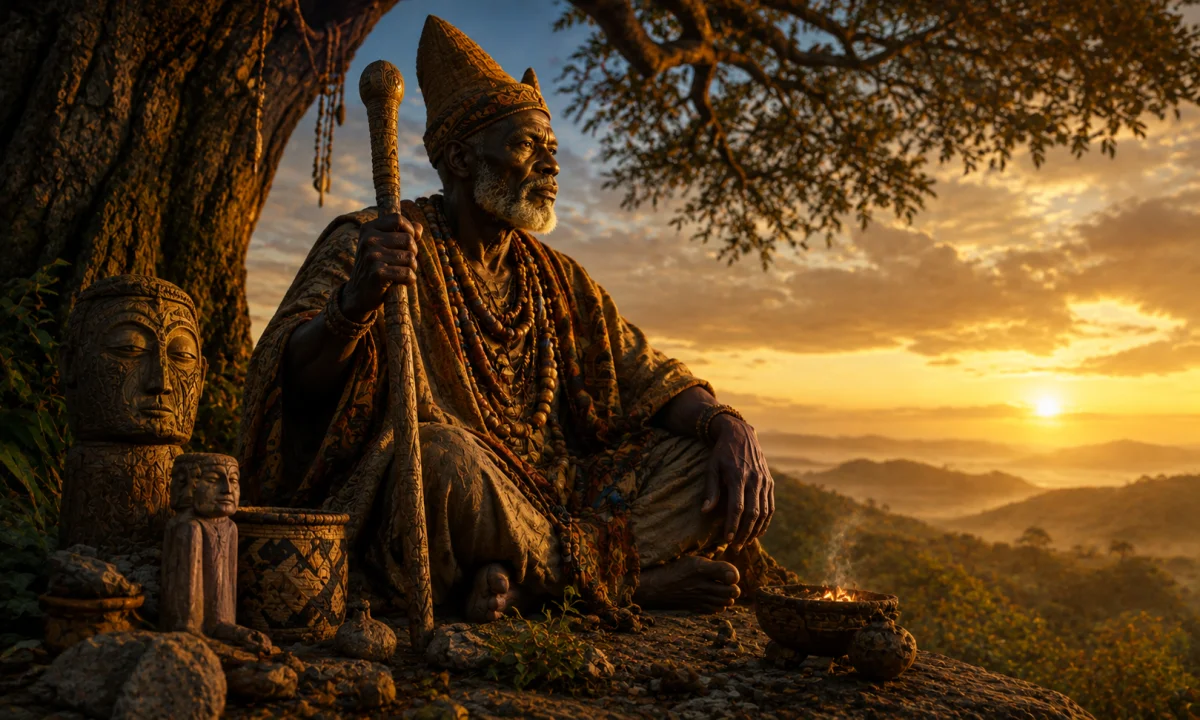
Ruhanga is a creator deity associated especially with the Banyankore (also called Banyankole) and related peoples of the Great Lakes region of East Africa, particularly in present-day southwestern Uganda. In traditional religious understanding, Ruhanga is connected with the origin of the world, human beings, animals and the social order. The name is also used in several modern Bantu-language Christian contexts as a word for God, so its meaning today may reflect both older religious traditions and later Christian usage.
Cultural setting
The traditions concerning Ruhanga belong to a wider religious environment shared, in different forms, by communities around the Great Lakes. These include the Banyankore, Bahororo, Bakiga and neighbouring peoples whose languages and histories have been closely connected, although their religious traditions are not identical. Oral accounts differ from one community, clan or narrator to another. It is therefore more accurate to speak of Ruhanga traditions rather than a single fixed mythology.
The Banyankore traditionally lived in the kingdom and cultural region of Ankole, in what is now southwestern Uganda. Their society included different historical communities and status groups, among them pastoralist Bahima and agricultural Bairu. Cattle, land, rain, fertility and the continuity of the lineage were central concerns in religious life. Stories about the creator consequently tend to place human beings within a living relationship with animals, the land and the ancestors.
Much of the available information about Ruhanga was recorded by missionaries, colonial officials and ethnographers during the nineteenth and twentieth centuries. Earlier traditions were transmitted primarily through oral performance, family teaching, ritual practice and the authority of elders. Written accounts may preserve important material, but they can also reflect the vocabulary, assumptions and religious comparisons of the people who recorded them. Some descriptions may also have been influenced by the use of Ruhanga as a translation of the Christian word “God.”
Name and identity
In Runyankore-Rukiga and related languages, Ruhanga is commonly understood as the creator or the one who brings things into being. The name is often connected with words for creating, making or forming, although the precise linguistic explanation and the religious significance assigned to the name can vary. In contemporary speech, Ruhanga may simply mean God, especially in Christian prayer, Bible translation and church teaching.
In older religious interpretation, Ruhanga is generally presented as a supreme or remote creator rather than as a deity with a human-like biography. He is not usually described through a long sequence of adventures, romantic relationships or battles with rival gods. The traditions instead emphasise his role in establishing the world and the conditions under which people, animals and communities live.
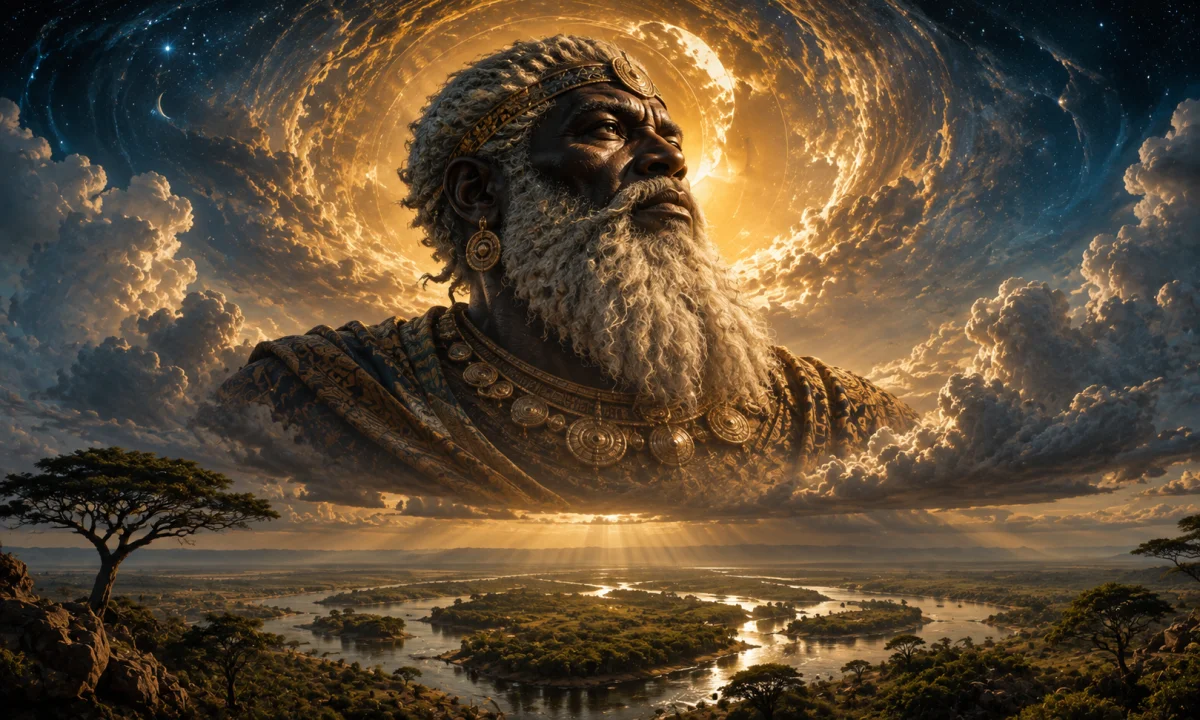
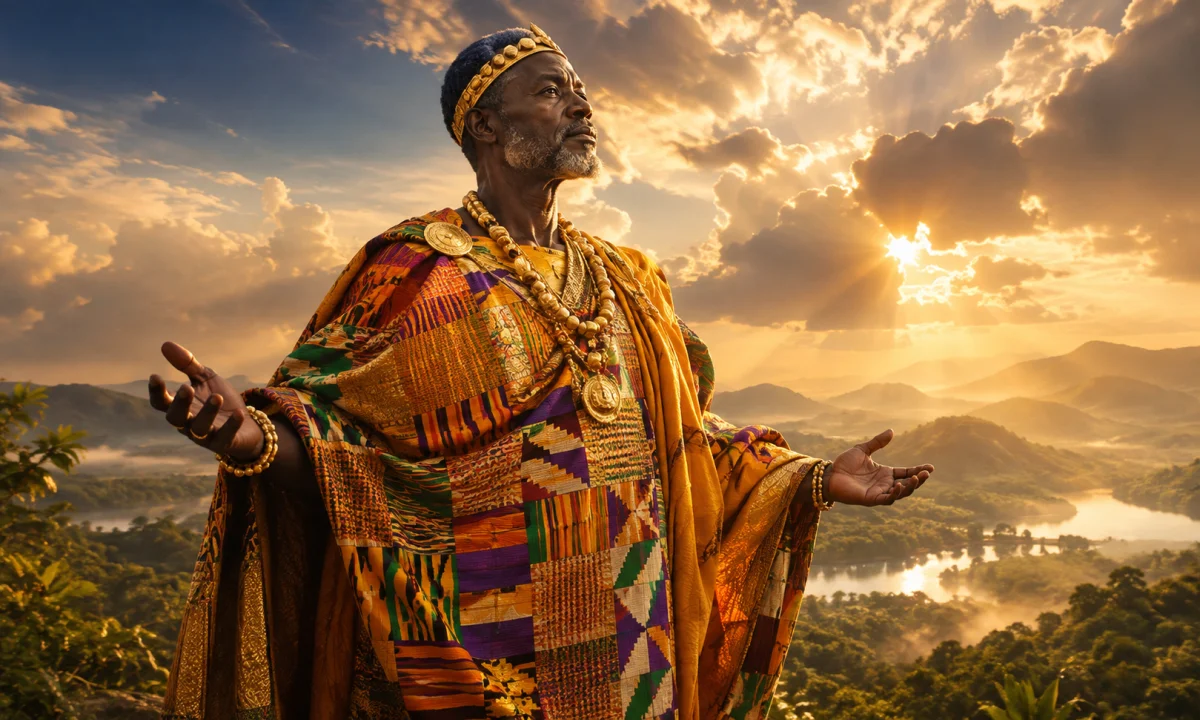
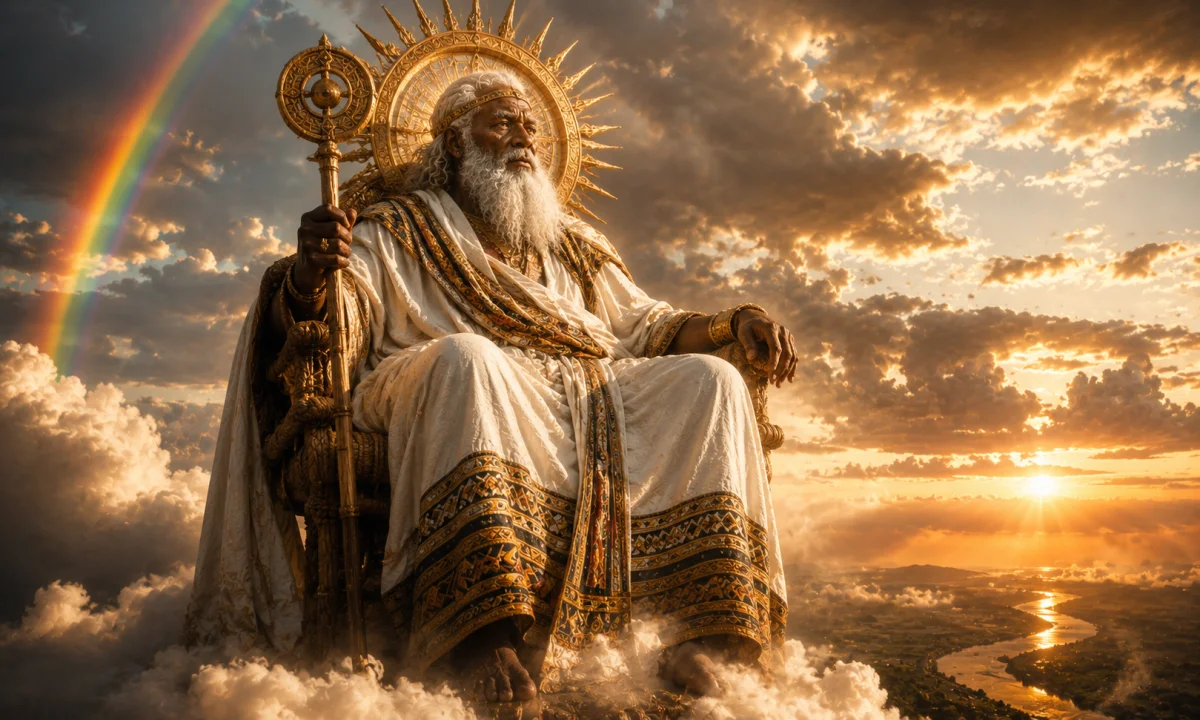
Descriptions of Ruhanga as a male deity reflect the grammar and terminology used in many accounts, but traditional conceptions of a creator need not correspond exactly to the anthropomorphic gods of classical mythology. Ruhanga's importance lies primarily in creative power, authority and the origin of life. There is no universally accepted ancient image or standard physical appearance for him.
Ruhanga as creator
Creation traditions associated with Ruhanga commonly describe him as the source of the natural and human world. He may be credited with making the earth, the sky, people, cattle, wild animals and plants. In some accounts, creation is not represented as a single, detailed event. Instead, the creator's work is expressed through the existence and ordering of everything that sustains life.
Some narratives describe Ruhanga as creating the first human being, often called Kintu in accounts connected with the Banyankore and neighbouring traditions. Kintu is generally presented as an ancestral first man or culture hero rather than as a god equal to Ruhanga. The details vary considerably. In one version, Kintu appears as the first human and is associated with cattle and the beginning of organised human life. In another, the story focuses on tests, food, marriage or the conditions that allow human beings to remain in a blessed relationship with the creator.
Because Kintu is also a major figure in creation traditions among other peoples of the Great Lakes region, names and episodes should not automatically be transferred from one culture to another. The Baganda, for example, have their own Kintu traditions, and the Kintu of Buganda should not simply be treated as identical with every Kintu mentioned in Ankole or western Uganda. Similar names can reflect shared regional themes, linguistic connections or later comparison, but they do not prove that all versions belong to one unchanged myth.
Cattle occupy a particularly important place in many Ankole traditions. Their value is economic, social and religious: they provide milk, represent wealth, mark relationships and form part of inheritance and bridewealth practices. As a result, stories in which Ruhanga gives cattle to humanity can express more than the origin of an animal species. They may explain why cattle are esteemed and why responsible relations between people, herds and the land are morally significant.
Human beings, order and responsibility
Ruhanga's creative role is often linked with the establishment of social order. The world is not merely a collection of physical objects; it is a structured realm in which people have obligations to family, community, animals and the powers associated with the unseen world. Myths and traditional teachings can therefore explain why certain customs, forms of respect and patterns of inheritance are treated as important.
In some versions of Great Lakes creation narratives, an original human being receives food, cattle or other blessings under specific conditions. A failure to observe those conditions may explain hardship, separation from the creator or the arrival of death. Such episodes should not be read as a single universally agreed account of “the fall” in the Christian sense. They are better understood as traditional reflections on obedience, dependence, scarcity and the fragile boundary between blessing and misfortune.
The relationship between Ruhanga and humanity is often described as one of dependence. Rain, fertility, health and the continuation of life ultimately belong to the creator's power. At the same time, everyday religious practice has often focused on more immediate spiritual beings, ancestors and local powers. A high creator may be acknowledged as the source of existence without receiving the same kind of regular ritual attention as beings thought to influence particular families, places or events.
Worship and religious practice
There was no single universally standardised Ruhanga cult comparable to the temple systems known from some ancient civilisations. Traditional religious life in the Great Lakes region was embedded in the household, clan, court and community. Prayer, sacrifice, vows, thanksgiving and requests for protection could be directed toward the supreme creator, ancestors or other spiritual powers according to the situation and the custom of the group.
Accounts of Banyankore religion often describe ancestors as important intermediaries or members of the continuing moral community. Ancestors were not necessarily regarded as creators or as equal to Ruhanga. Rather, they could remain involved in the welfare of descendants and might be approached through family ritual. Misfortune could be interpreted in several ways, including broken social obligations, offended ancestors, witchcraft, spiritual attack or the will of a higher power. These explanations were not always mutually exclusive.
Ruhanga's remoteness in some interpretations should not be confused with irrelevance. A supreme creator can remain the ultimate source of life while practical religious attention is directed toward beings considered closer to human affairs. This pattern appears in a number of African religious traditions, although the details differ from culture to culture. It also warns against describing African religions as either simple monotheism or straightforward polytheism without examining local beliefs and practices.
Stories and regional variations
There is no single canonical scripture containing a definitive account of Ruhanga's deeds. The traditions survive in oral narratives, praise language, proverbs, personal names, ritual explanations and later written descriptions. As a result, one account may emphasise creation, another the origin of cattle, and another the relationship between the creator and the first ancestors.
Names used for other supreme or creator beings in neighbouring cultures include Nyamuhanga, Katonda and Imana, but these names should not be treated as interchangeable in every context. Some may have been translated or compared with Ruhanga because neighbouring languages and religious ideas overlap. Others belong to distinct cultural traditions with their own histories. Similar functions—such as creation, control of rain or ultimate authority—do not by themselves establish that the figures are the same deity.
Likewise, Ruhanga should not be merged with every spirit or legendary figure from western Uganda. Ryangombe, for instance, is a prominent figure in religious traditions of the Great Lakes region, especially among communities connected with the kubandwa healing and possession movement. Ryangombe is generally understood as a powerful spirit or culture-associated religious figure, not simply another name for the creator Ruhanga. The relationship between local traditions can be historically complex, but the two should be distinguished.
Symbolism and interpretation
Ruhanga can be interpreted as a symbol of origin, order and the dependence of life on powers greater than human beings. His association with creation gives religious meaning to the land, animals, fertility and ancestry. Within a pastoral and agricultural society, the creator's relation to cattle and the natural environment could also reinforce ideas about stewardship, kinship and the proper use of resources.
Scholars have approached Ruhanga in different ways. Some have compared him with the “high god” found in many African religious systems: a supreme creator who is acknowledged widely but not always approached through a large institutional priesthood. Others have warned that this category was shaped partly by European theories of religion and may flatten important local distinctions. The term can be useful for comparison, but it does not replace close attention to Banyankore and neighbouring concepts.
The separation between “traditional” and “Christian” meanings is also not always complete. Christian missionaries working in Uganda often used established local names for the biblical God. In modern Runyankore-Rukiga, Ruhanga is therefore a normal Christian term for God, and many speakers encounter the name primarily through church worship. This does not prove that pre-Christian ideas were identical to Christian theology. It shows instead how older vocabulary, oral tradition and new religious teaching became connected over time.
Ruhanga in modern cultural memory
Ruhanga remains relevant chiefly through language, religious identity, cultural education and the preservation of oral traditions. He is not a major figure in globally distributed popular culture, and there is no well-established modern fictional canon comparable to the adaptations surrounding Greek, Norse or Egyptian deities. Contemporary references may appear in discussions of Banyankore heritage, African traditional religion, regional history and Christian life in Uganda.
Modern retellings often present Ruhanga as simply “the African creator god.” That description identifies an important aspect of the tradition but can obscure regional differences and the continuing use of the name in Christian contexts. A careful account distinguishes the precolonial and oral religious ideas associated with creation from later theological translations, while recognising that both now form part of the name's living cultural history.
Distinguishing Ruhanga from similar names
- Ruhanga and Nyamuhanga: These names can appear in related Great Lakes contexts and may share associations with creation, but local usage varies. They should not automatically be treated as identical.
- Ruhanga and Katonda: Katonda is especially associated with the Baganda and the Ganda religious tradition. The two names may perform a comparable “creator” role in broad comparisons, but they belong to different cultural settings.
- Ruhanga and Imana: Imana is a major divine name in Rwanda and neighbouring traditions. Its history and interpretation require separate treatment rather than simple identification with Ruhanga.
- Ruhanga and Ryangombe: Ryangombe is associated with regional spirit traditions and the kubandwa movement. He is not merely an alternative name for the supreme creator.
- Ruhanga and the Christian God: In present-day Runyankore-Rukiga, Ruhanga commonly means God in Christian contexts. The modern linguistic equivalence should not erase the differences between Christian doctrine and older Banyankore religious concepts.