WORLD
WORLD
Oghene

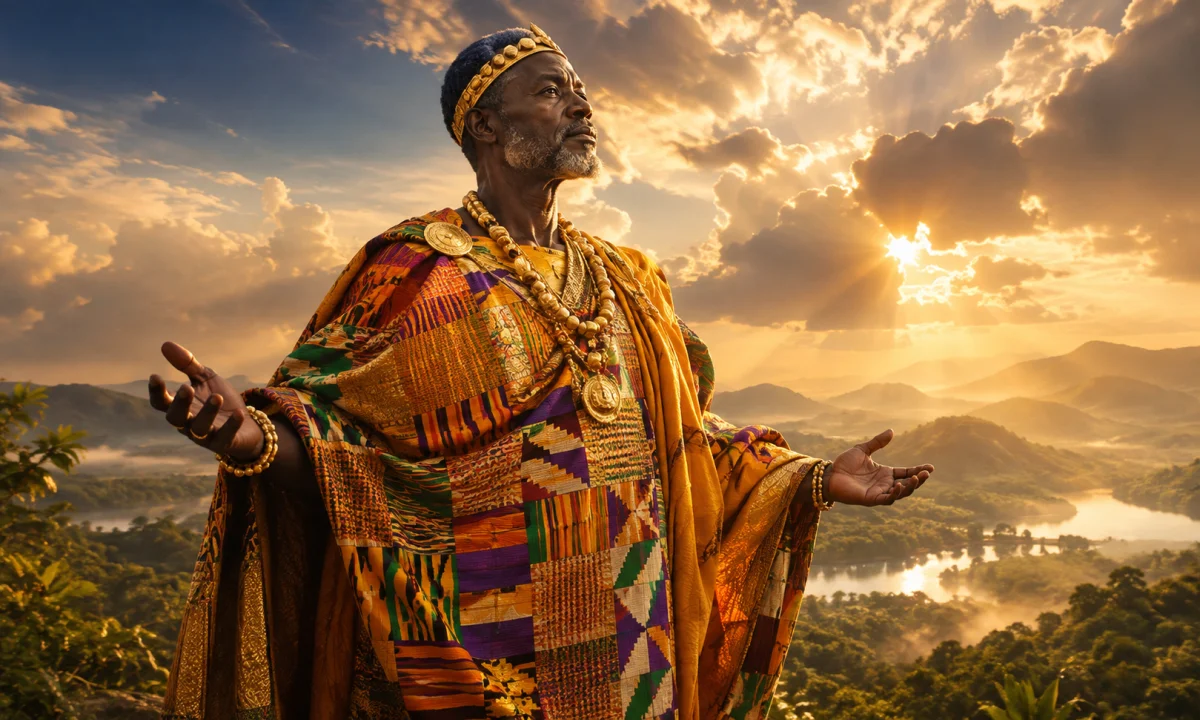
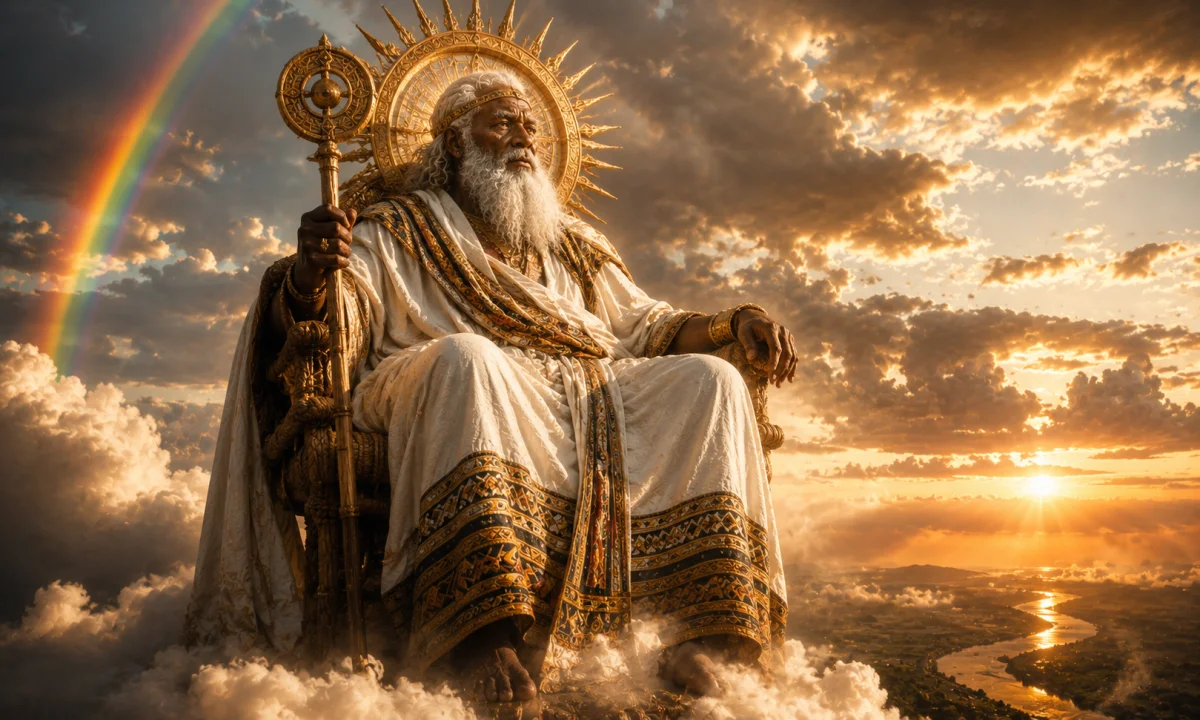
Oghene is the name used for the supreme deity in several traditions of southern Nigeria, especially among Urhobo and Isoko-speaking peoples of the Niger Delta. In these contexts, Oghene is generally understood as the creator and ultimate source of life, power and moral order. The name does not always refer to a character with a detailed mythological biography. Rather, it commonly identifies a high god whose nature is expressed through oral tradition, prayers, personal names, ritual language and the activities of lesser spiritual beings.
Oghene belongs to the religious traditions of specific African communities, not to a single, uniform system called “African mythology.” Beliefs differ between peoples and even between neighbouring communities. Some descriptions of Oghene are also influenced by Christian translations and by the work of early missionaries and later scholars, who often used the word as the local equivalent of “God.” It is therefore important to distinguish the traditional conception of Oghene from later Christian usage, even though the two have sometimes become closely connected.
Cultural setting
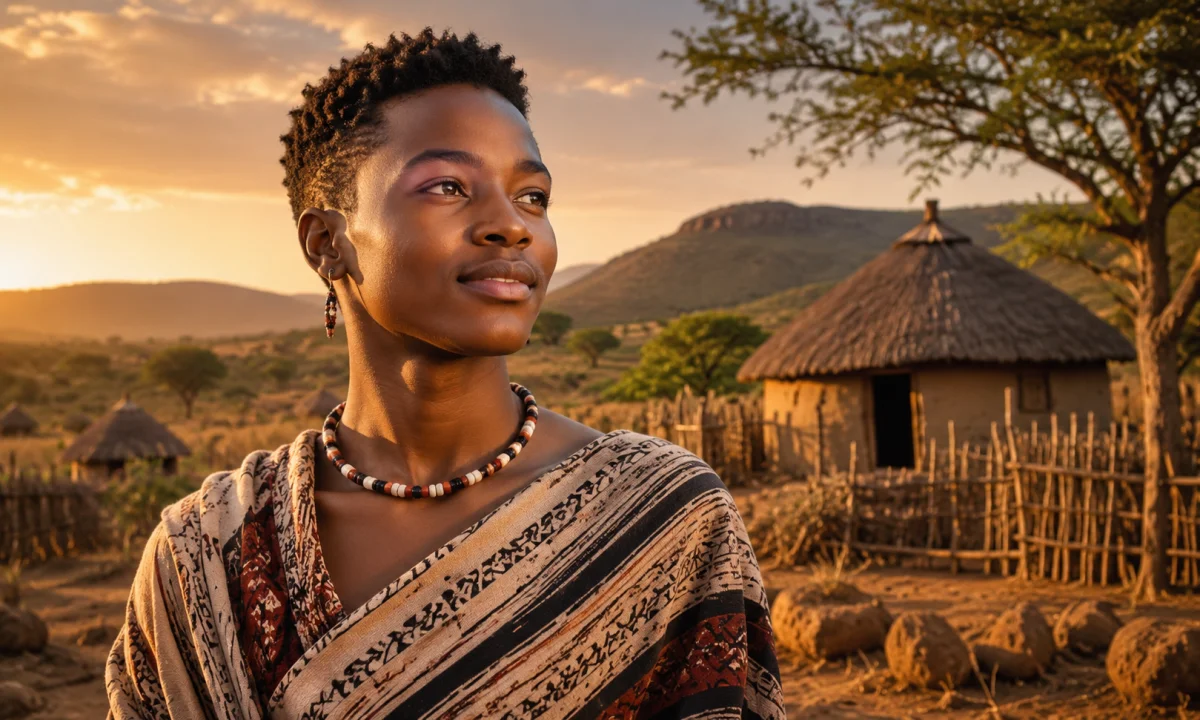
The Urhobo and Isoko peoples live mainly in present-day Delta State in southern Nigeria, in a region shaped by the Niger River and its extensive network of creeks and wetlands. Their religious worlds have traditionally included a supreme creator, spiritual powers associated with particular places and functions, ancestors, and forces connected with health, fertility, prosperity, danger and social conduct.
Within this setting, Oghene occupies the highest position. Other spiritual beings may be approached for particular needs, but Oghene is understood as greater than all of them. The relationship between the supreme deity and the more immediately accessible powers varies in description. In some accounts, divinities or spirits act as intermediaries or administrators of particular aspects of the world. In others, the emphasis falls on Oghene’s direct authority over life, destiny and the natural order.
Traditional religion in the region was not based on one canonical scripture. Knowledge was transmitted through oral histories, praise language, ritual practice, proverbs, songs, family traditions and the teaching of religious specialists. As a result, accounts of Oghene are less likely to present a sequence of adventures than to describe the deity’s position in the structure of existence.
The name Oghene
Oghene is primarily a religious name and title rather than the personal name of a human-like mythological hero. In Urhobo and Isoko contexts, it is commonly translated into English as “God,” “the Supreme God” or “the Creator.” The exact spelling may vary when words from the region are written in English. Forms using diacritics or different vowel conventions can appear in linguistic, religious or ethnographic writing.
The word is also found in personal names, particularly names formed during periods of Christian expansion and in communities where indigenous religious vocabulary was used to express Christian beliefs. A name containing Oghene does not, by itself, demonstrate that the bearer follows traditional religion; it may simply preserve a local word for God in a Christian name.
Translations should be treated carefully. When missionaries rendered Oghene as “God,” the translation made communication possible, but it could also encourage readers to assume that every feature of the Christian God and every feature of the indigenous supreme deity were identical. Some communities and religious teachers have made that identification openly, while historical descriptions of traditional religion may present Oghene within a different network of spirits, rituals and social obligations.
Identity and classification
Oghene is best classified as a supreme creator deity, rather than as an ancestor, nature spirit or specialized divinity. Traditional descriptions commonly associate the deity with creation, sovereignty, life, judgment and the continued maintenance of the world. Oghene is often portrayed as transcending ordinary physical form and as being too great or remote to be represented in the same way as local spirits or ancestors.
This does not mean that Oghene is necessarily irrelevant to everyday religious life. The supreme deity may be invoked in blessings, oaths, personal prayers and statements about destiny or misfortune. At the same time, ritual attention in traditional communities could be directed more immediately toward ancestors, household powers, sacred places and divinities associated with particular concerns. A high god may be acknowledged as the source of all power without receiving the same kind of regular shrine-based attention as a more localized spiritual being.
Descriptions of Oghene often include attributes such as omnipotence, wisdom, authority over life and death, and knowledge of human conduct. Some of these terms reflect comparative religion or Christian theological vocabulary rather than direct traditional formulations. They are useful as approximations, but they should not be mistaken for evidence that all Urhobo or Isoko communities expressed their beliefs in exactly those categories.
Oghene as creator and source of life
The most consistent role associated with Oghene is that of creator. Oghene is understood as the origin of the world, human life and the powers that sustain existence. Creation is not always narrated in a single, fully developed story. Instead, the deity’s creative role may be expressed through statements, prayers, proverbial language and explanations of why life, fertility and the natural world possess sacred importance.
As creator, Oghene stands above the many forces encountered in the human environment. Rivers, forests, farmland, storms, animals and places of unusual power may have their own spiritual associations, but these do not generally displace the supreme authority of Oghene. The relationship resembles a hierarchy in which the creator is ultimate while other beings exercise more limited or specialized influence.
Oghene’s connection with life also gives the name importance in personal and family contexts. Names that refer to God may express gratitude for a child’s birth, recognition of divine protection, or a belief that human existence is held within a larger sacred order. Such names are not merely decorative religious references; they can preserve a family’s interpretation of difficult events, hopes and obligations.
Authority, morality and destiny
Oghene is frequently associated with moral authority. Human beings are expected to observe proper conduct toward relatives, neighbours, elders, ancestors and the spiritual powers recognized by their community. Wrongdoing may disturb social relationships as well as the wider balance between humans and the unseen world. In this framework, morality is not confined to private belief. It is embedded in kinship, promises, ritual responsibilities and communal life.
Accounts of Oghene may also connect the deity with destiny and the boundaries of human power. People can act, make choices and seek assistance, yet they remain dependent on forces greater than themselves. Prayer and ritual may acknowledge this dependence, especially during illness, journeys, agricultural difficulties, family crises or disputes.
It would be misleading, however, to describe Oghene simply as a remote judge who rewards and punishes individuals in a narrowly individualistic sense. Traditional religious systems in the Niger Delta place strong emphasis on communal relationships and inherited responsibilities. Consequences may affect households, lineages and communities, not only isolated persons. Moreover, explanations of misfortune can involve several levels: human action, social conflict, ancestral displeasure, a local spiritual power and the will of the supreme deity may all be considered relevant.
Relationship with other spiritual beings
The religious universe associated with Oghene includes beings often described in English as divinities, spirits or gods. Terminology varies, and no single English label perfectly matches every local category. Some powers are linked to rivers, land, fertility, healing, warfare, protection or particular settlements. Ancestors may also remain active within the moral and spiritual life of their descendants.
These beings should not automatically be treated as rival gods equal to Oghene. In many descriptions, they are subordinate, dependent or specialized powers. They may be approached because they are considered more directly involved in a particular area of life, while Oghene remains the supreme source of authority. The precise relationship differs among communities and religious specialists.
It is also important not to merge Oghene with every supreme deity in West African religion. Many cultures have a high god, but similar theological roles do not prove that the names refer to the same being. Yoruba Olodumare, Akan Nyame, Igbo Chukwu or Chineke, and Edo Osanobua belong to different linguistic and cultural traditions. Comparisons can be useful when studying ideas about creator gods, but Oghene remains specifically grounded in the traditions of the Urhobo, Isoko and related communities where the name is used.
Stories and oral tradition
There is no universally accepted cycle of myths about Oghene comparable to the extensive narrative traditions surrounding some better-known African deities. This absence should not be interpreted as a lack of religious depth. A supreme deity may be known chiefly through worship, proverbial statements, prayers and the ordering of the cosmos rather than through stories about journeys, marriages or battles.
Some oral accounts discuss creation, the origin of human conditions, the relation between the visible and invisible worlds, or the reasons why human beings depend on spiritual powers. The details can vary by locality and by the person recording them. Narrators may also explain Oghene through concepts shaped by later education, Christianity, Islam or comparative scholarship.
Written accounts of Urhobo and Isoko religion were produced in different historical circumstances, including missionary activity, colonial administration, academic fieldwork and local religious writing. Each setting affects how indigenous terms were translated and categorized. A description that calls Oghene “the Supreme Being” may be accurate in broad terms while still leaving out the ritual and social meanings that the name carries in everyday life.
Worship and religious expression
Traditional religious practice concerning Oghene was not necessarily organized around a single central temple or a standardized priesthood. Religious expression could occur through prayer, sacrifice, vows, blessings, oaths and rituals conducted within households, lineages or local communities. The form and frequency of these practices varied, and surviving descriptions do not justify one universal account.
Oghene could be invoked in solemn speech and in situations requiring truthfulness or divine witness. The name might appear in blessings for children, appeals for protection, or expressions of thanks after survival and success. In a society where spoken commitments carry social and spiritual weight, invoking the supreme deity can emphasize the seriousness of a promise or declaration.
Many communities also maintained relationships with ancestors and localized spiritual powers. These practices should not be described as evidence that Oghene was ignored. Rather, they reflect a layered religious structure in which different beings and institutions have different roles. A person might acknowledge Oghene as creator while seeking immediate help from an ancestor, family shrine or specialized divinity.
Christianity and changing interpretations
Christian missionaries working among Urhobo and Isoko speakers adopted Oghene as a local term for the Christian God. This made the word prominent in Bible translation, preaching, hymns, church names and Christian personal names. For many contemporary speakers, Oghene now refers straightforwardly to the Christian God, and the word is part of ordinary religious language.
That modern usage does not erase the older cultural history of the term. It does mean that the meaning of Oghene can depend strongly on context. In a church service, Oghene may carry specifically Christian meanings concerning the Bible, Jesus, the Holy Spirit and Christian salvation. In an ethnographic discussion of indigenous Urhobo or Isoko religion, the same word may refer to the supreme creator within a pre-Christian or broadly traditional religious framework.
There is no single answer to whether these are “the same” deity. Some believers regard the Christian God and the traditional supreme deity as identical, with Christianity providing a new theological interpretation. Others emphasize important differences between the traditions. A careful account should preserve both the continuity of the local name and the changes introduced by conversion, translation and religious debate.
Modern cultural significance
Oghene remains culturally visible through personal names, family identity, religious speech and the continuing use of Urhobo and Isoko languages. The name may appear in Christian and non-Christian contexts, so its presence is not a reliable marker of one particular religious affiliation. It can express local heritage as well as belief in God.
Oghene has not become a major figure in internationally established fantasy franchises or mainstream popular culture. Occasional references in fiction, online discussions or general lists of African gods may simplify the name into a character with fixed powers and a standardized mythology. Such presentations should be treated cautiously. They may reflect modern creative invention or broad comparison rather than a documented traditional narrative.
The most accurate understanding of Oghene keeps the deity within the cultural settings where the name has meaning. Oghene is chiefly a name for supreme divine authority among Urhobo and Isoko-speaking peoples, expressed through creation, life, moral order and dependence on a power greater than humanity. The richness of the tradition lies not only in dramatic myths, but also in the way the name connects theology with language, family, community and changing religious history.