WORLD

Rhpisunt

Rhpisunt is a little-documented name associated in modern reference works with Native American mythology, especially with the Blackfoot peoples of the North American Plains. It is usually described as a dangerous water being or “sea monster.” The surviving information is extremely limited, however, and the name does not belong to a well-documented cycle of stories comparable to the major figures of Blackfoot tradition. Details about Rhpisunt’s appearance, powers, gender, and individual legends vary considerably or are absent altogether.
Origins and cultural setting
The name Rhpisunt is commonly connected with the Blackfoot Confederacy, whose members traditionally include the Siksiká, Kainai, and Aapátohsipikáni. Their historical homelands lie in the northern Plains, in areas that are now part of Alberta, Saskatchewan, and Montana. Blackfoot religious life and storytelling include powerful beings connected with the sky, the earth, animals, weather, places, and bodies of water.
The English label “Native American mythology” covers many distinct Indigenous religious and storytelling traditions. It should not be understood as a single system. Blackfoot traditions have their own languages, ceremonial practices, sacred histories, and cultural categories, and these cannot automatically be explained through concepts borrowed from Greek, European, or other mythologies.
Water is important in Plains traditions, both as a source of life and as a potentially dangerous environment. Rivers, lakes, springs, and other places may be understood as spiritually significant rather than as neutral scenery. Encounters with unusual animals or beings can therefore carry religious, moral, and practical meaning. Even so, it is not possible to reconstruct a specific traditional interpretation of Rhpisunt with confidence from the small amount of information attached to the name.
The name and its uncertain identity
Rhpisunt is an unusual spelling, and its pronunciation and linguistic meaning are not securely established in widely available English-language material. It may represent a transcription, a spelling adopted by a particular writer, or a name reproduced through successive secondary sources. Without a reliable account in the original language, it is unsafe to assign a literal translation or to claim that the word means “monster,” “serpent,” or “spirit.”
Modern lists generally classify Rhpisunt as a water monster, sometimes using the broader expression “sea monster.” That wording may reflect the vocabulary of the modern writer rather than a precise Indigenous category. The Blackfoot homelands are inland, so “sea monster” can be misleading if it suggests a being from an oceanic tradition. A creature associated with a lake or river may have been placed under the convenient English heading “sea monster” by a compiler who was grouping legendary aquatic beings from many cultures.
It is also uncertain whether Rhpisunt was traditionally understood as a named individual, a type of supernatural animal, or a figure created or reshaped by a later retelling. Some brief entries treat the name as though it referred to a clearly defined mythological being, but they do not preserve a full narrative or explain the cultural context in which the name was used. For that reason, descriptions should remain qualified rather than presented as established fact.
What can be said about the being
The most consistent description attached to Rhpisunt is that of a threatening aquatic being. Beyond this broad classification, the evidence is too thin to support a fixed portrait. There is no securely established traditional description that gives Rhpisunt a particular size, colour, anatomy, habitat, or set of supernatural abilities.
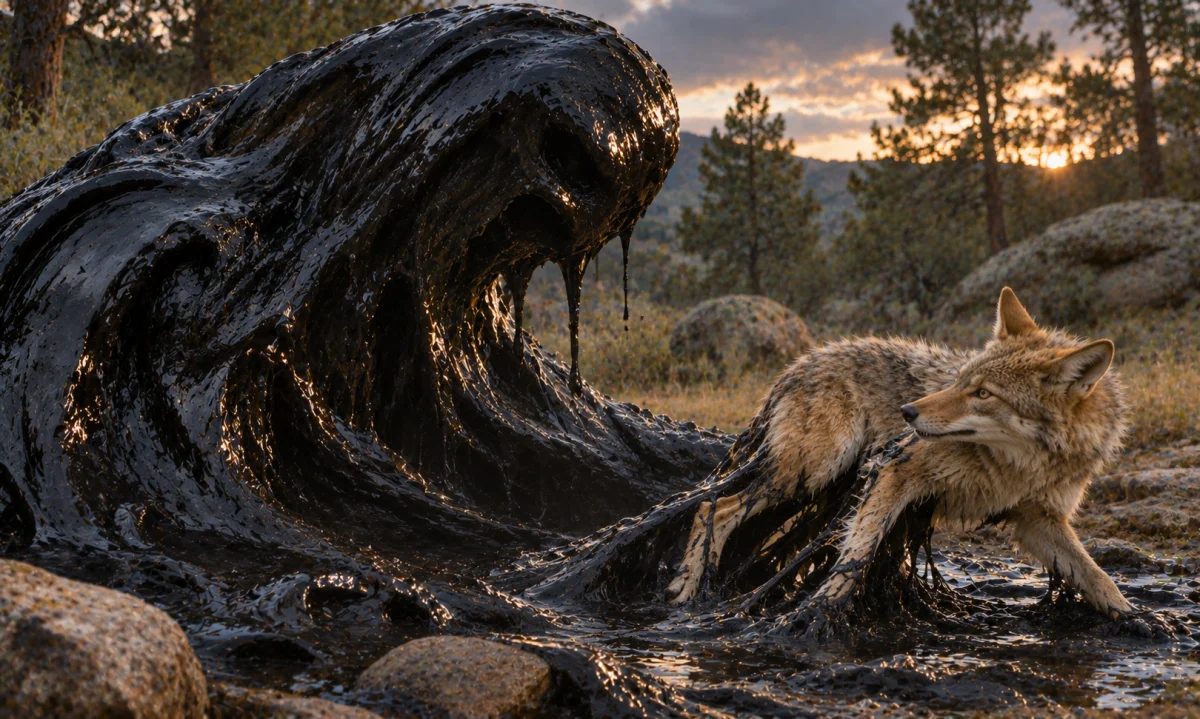
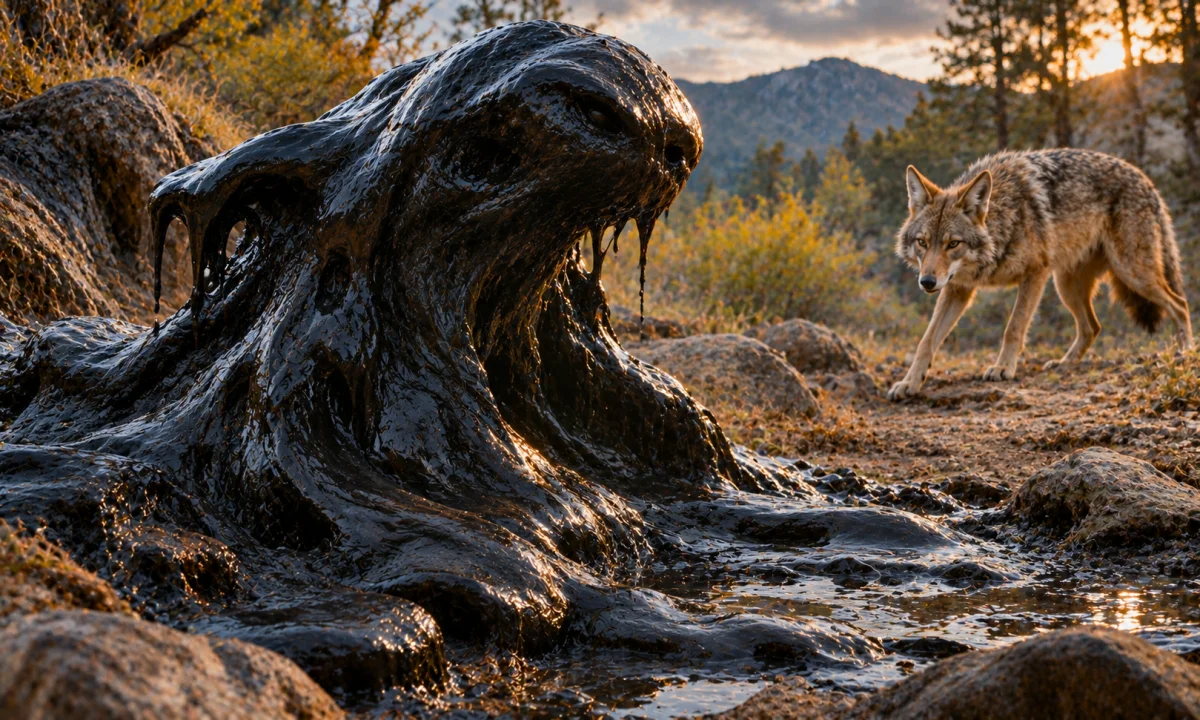
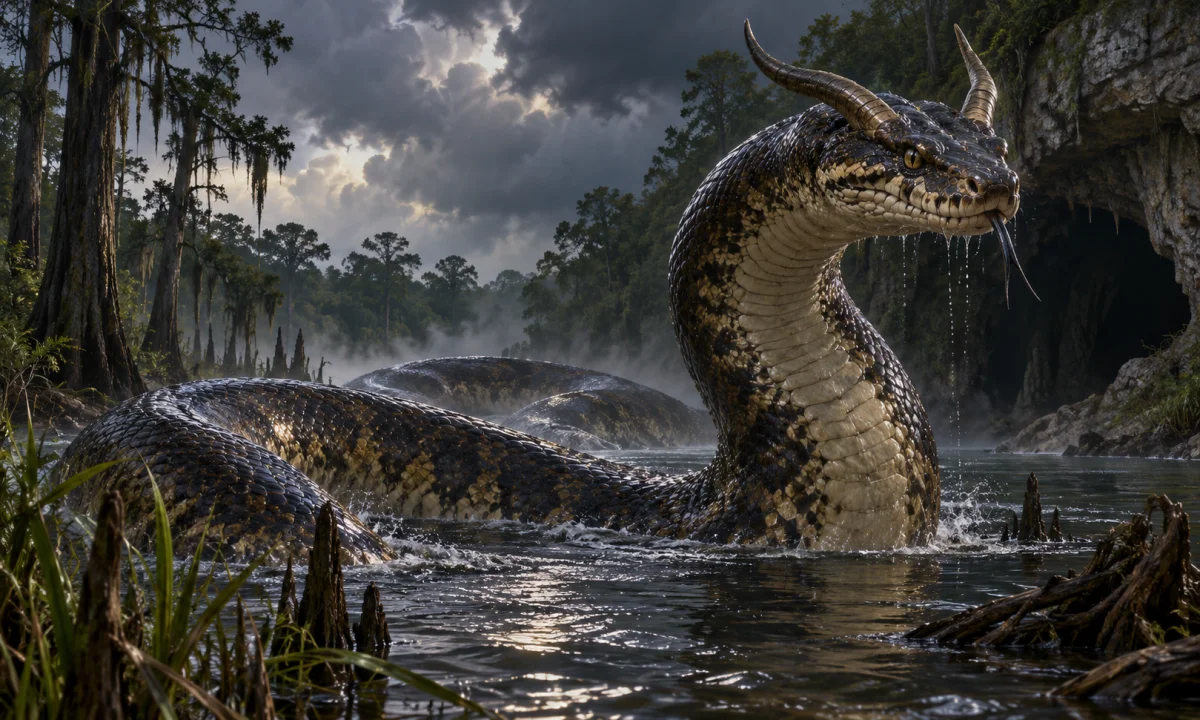
Some modern retellings may imply a giant fish, serpent, or other large water animal, but these forms should not be treated as equally ancient or equally authentic. They may result from an illustrator’s choice, a compiler’s assumption, or the tendency of folklore summaries to fill an obscure name with familiar monster imagery. A depiction of Rhpisunt with horns, multiple heads, fins, scales, or a serpent’s body therefore belongs to a particular modern representation unless it can be tied to a specific traditional account.
Likewise, Rhpisunt should not automatically be called a god, demon, or spirit in the strict sense. “Monster” is the most common modern classification, but that word is itself a broad English category. Indigenous traditions often distinguish among sacred powers, animals, ancestors, dangerous beings, helpers, and other entities in ways that do not map neatly onto European ideas of monsters or deities.
No dependable account establishes that Rhpisunt was worshipped, offered sacrifices, summoned by ritual, or associated with a particular ceremony. Nor is there sufficient evidence to assign the being a moral purpose, such as punishing wrongdoing or guarding a sacred place. Such interpretations might be reasonable possibilities for an aquatic danger figure, but they remain interpretations rather than documented attributes.
Stories and surviving tradition
A major difficulty in discussing Rhpisunt is the lack of a stable body of stories. Widely repeated short descriptions identify the being but do not preserve a complete narrative involving named heroes, relatives, enemies, or a decisive encounter. There is no securely established cycle in which Rhpisunt plays the role of creator, culture hero, trickster, ancestor, or ruler of other supernatural creatures.
This absence matters. A name appearing in a modern catalogue is not the same as a complete oral tradition. Indigenous stories were transmitted in living communities and in particular linguistic and ceremonial settings. Written records, especially those made by outsiders, may omit context, alter spellings, translate key concepts imperfectly, or record only a fragment of a larger tradition. Later reference books may then repeat the fragment without preserving its original uncertainty.
It is therefore not possible to responsibly provide a detailed “legend of Rhpisunt” as though one universally recognized story existed. Claims that Rhpisunt attacked a particular settlement, swallowed travellers, fought a named hero, or was killed in a specific manner should be treated cautiously unless they are supported by a clearly identified traditional account. These details are often associated with generic water-monster narratives and may be wrongly attached to obscure names.
Possible significance of an aquatic monster
Although Rhpisunt’s own symbolism is not well documented, aquatic beings can have several kinds of significance in Indigenous storytelling. Water may represent nourishment, danger, transformation, distance, and the boundary between familiar and unfamiliar spaces. A large or mysterious being in the water can express the real hazards of crossing rivers, travelling near deep lakes, or approaching places regarded as spiritually powerful.
Such a being need not be simply “evil.” In many traditional systems, dangerous powers are not equivalent to moral villains. They may demand caution, respect, correct conduct, or knowledge of how to approach a particular place. A story about a water being can teach listeners to recognize limits, observe the behaviour of animals, avoid reckless actions, and respect the powers present in the landscape.
These broader observations should not be mistaken for a confirmed Blackfoot teaching about Rhpisunt specifically. They provide cultural context for why an aquatic figure might matter, but they do not establish the meaning of this particular name. The available evidence does not reveal whether Blackfoot storytellers understood Rhpisunt as a guardian, predator, omen, ancestral power, or something else.
Rhpisunt and better-documented water beings
Rhpisunt is sometimes confused with other Indigenous water creatures because modern mythology lists place many unrelated beings together under headings such as “water monsters,” “lake monsters,” or “serpent spirits.” This grouping is convenient but culturally imprecise.
Rhpisunt should not be identified with Mishipeshu, also written Mishibizhiw or Mishi Peshu, a powerful underwater being in traditions of several Algonquian-speaking peoples around the Great Lakes. Mishipeshu is often represented as a horned or feline-like underwater power and has a much more substantial and recognizable traditional presence, though accounts vary among nations. It is not simply another name for a Blackfoot being.
Nor should Rhpisunt be merged with Unktehi or Unk-Tehi, a major water-associated being in Lakota and related traditions. Unktehi appears in stories involving cosmic conflict and the relationship between water and other powerful forces. The Lakota tradition is distinct from Blackfoot tradition, and similarity in the use of an aquatic monster category does not establish a historical connection.
Rhpisunt is also not the same as Sedna, the well-known sea woman of Inuit traditions, or as the many serpent and lake beings found in the traditions of the Pacific Northwest, the Southeast, and the Great Lakes. Each belongs to a particular cultural and linguistic setting. Treating all of them as versions of one pan-Indigenous “water monster” erases important differences.
Evidence, transmission, and uncertainty
The uncertain status of Rhpisunt illustrates a broader problem in popular writing about Native American mythology. Names are sometimes detached from the communities that used them and placed in alphabetical lists alongside gods and monsters from unrelated nations. Brief entries may offer no indication of whether a name comes from an oral account, an ethnographic record, a translation, a modern invention, or a spelling error.
For Rhpisunt, the safest description is consequently a limited one: the name is associated in modern sources with a Blackfoot or broadly Plains-related aquatic monster, but its original form, traditional status, and narrative setting are not securely documented in the material usually available to general readers. It is better to preserve that uncertainty than to turn a doubtful identification into a detailed fictional biography.
This caution is especially important when discussing living Indigenous cultures. Blackfoot peoples are not merely the subjects of an ancient mythology; their languages, communities, religious perspectives, and cultural responsibilities continue in the present. A short catalogue entry cannot stand in for community knowledge, and the lack of accessible documentation does not prove that a figure had no meaning. It may instead reflect the limits of surviving records, the privacy of sacred material, or the distortion caused by later publication.
Modern reception
Rhpisunt has little presence in widely known literature, film, television, or mainstream games. Its modern visibility comes mainly from compilations of mythological names, supernatural-creature databases, and websites that collect obscure legendary beings. In these settings, the name is often presented with greater certainty than the evidence warrants.
Modern artwork or fiction may portray Rhpisunt as a giant serpent, an enormous fish, or a lake-dwelling beast. Such portrayals can use the name creatively, but they should be identified as adaptations rather than treated as recovered traditional descriptions. There is no broadly established canonical appearance or personality that modern creators are required to follow.
Rhpisunt is therefore best approached as a poorly documented, possibly transcription-dependent name associated with an aquatic monster in modern accounts of Native American mythology. The most responsible treatment keeps the Blackfoot attribution qualified, avoids inventing a legend or appearance, and distinguishes the limited information attached to Rhpisunt from the richer and separate traditions of other Indigenous water beings.