WORLD

Sedit

Sedit is a name associated in some modern accounts with a serpent-like or sea-monster figure from the Indigenous traditions of northeastern North America. The identification is uncertain, however. Unlike well-documented figures such as Gluskabe, Nanabozho, or the Mi'kmaq horned serpent, Sedit does not have a clearly established body of traditional narratives, a securely identified cultural community, or a widely agreed spelling. Descriptions of Sedit should therefore be treated cautiously, especially when they present the being as though it were a universally recognized figure of “Native American mythology.”
Origins and cultural setting
The name Sedit is usually placed, without consistent documentation, within the wider cultural world of the northeastern Woodlands. This region includes the Wabanaki peoples—among them the Mi'kmaq, Wolastoqiyik (Maliseet), Passamaquoddy, Penobscot, and Abenaki—as well as neighbouring Indigenous communities. These peoples have distinct languages, histories, and ceremonial traditions, although they also share certain broad narrative themes because of geographical proximity and long-standing cultural contact.
Stories from the northeastern Woodlands commonly include powerful animals, underwater beings, giants, dangerous spirits, culture heroes, and forces associated with weather, illness, hunting, and the boundaries between the human and non-human worlds. Water is especially important in the region. Rivers, lakes, coastal waters, and the sea are not merely settings for stories; they can be inhabited by beings with agency and spiritual power. A serpent associated with water would therefore belong to a meaningful traditional pattern, even if the specific name Sedit cannot be confidently assigned to one community.
Traditional knowledge in these cultures was preserved primarily through oral transmission, ceremonial practice, family teaching, and community memory. Older written records were often produced by missionaries, colonial officials, travellers, or folklorists who did not fully understand the languages or religious contexts they recorded. Names could be written in several different ways, and a recorder might describe a sacred being as a “monster,” “devil,” “spirit,” or “animal” according to European categories. These problems make it difficult to establish the identity of a poorly documented figure from a name alone.
The name Sedit
The spelling Sedit is not a stable, widely standardized term across the better-known Algonquian languages of the Northeast. It may represent an English-language transcription, a shortened form, a spelling error, or a name taken from a secondary compilation rather than from a directly recorded traditional narrative. Without a reliable linguistic analysis, the meaning of the word cannot be stated with confidence.
Some modern lists and popular reference works describe Sedit as a giant serpent or sea serpent. Those descriptions are repeated often enough to explain why the name is now associated with a reptilian water being. Repetition, however, does not by itself establish that the figure was broadly recognized in the traditional religion of a particular nation. In many online and commercial mythology compilations, short entries are copied from one another, while the original community, language, storyteller, and historical record remain unidentified.
It is consequently more accurate to say that Sedit is a disputed or weakly documented name for a purported northeastern Indigenous serpent being than to present a detailed biography as established tradition. Claims about a precise homeland, a fixed appearance, or a single canonical story require evidence that is not consistently available in accounts of Sedit.
Possible identity as a water serpent
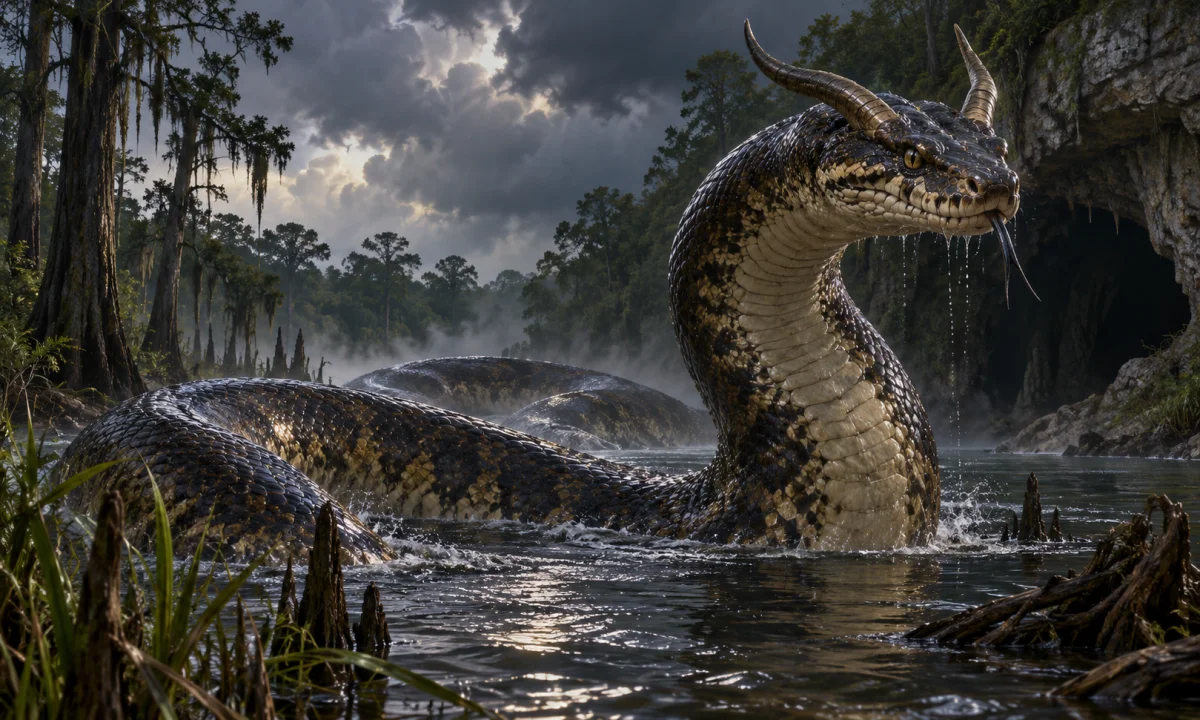
When Sedit is described in modern sources, it is generally presented as a large serpent living in a lake, river, coastal inlet, or the open sea. Some accounts characterize it as a sea serpent, while others use the broader category of water monster. These descriptions may reflect a genuine regional motif, but they do not demonstrate that all such references concern the same being.
A large serpent in an Indigenous story should not automatically be equated with a European dragon or with a zoological sea-serpent report. In many Indigenous traditions, serpentine beings are part of a spiritual and ecological understanding of water. They may be guardians, adversaries, dangerous owners of particular places, or manifestations of powers that humans must approach with respect. Their significance is often determined by the story and by the community's religious concepts, rather than by a fixed catalogue of physical traits.
The phrase “water monster” can also be misleading. It is a convenient English label, but it may flatten important distinctions between a dangerous animal, a spirit, a giant, a guardian, and a being associated with a sacred place. There is no secure basis for assigning Sedit a single role such as villain, guardian, demon, or creator figure.
Attributes and reported appearance
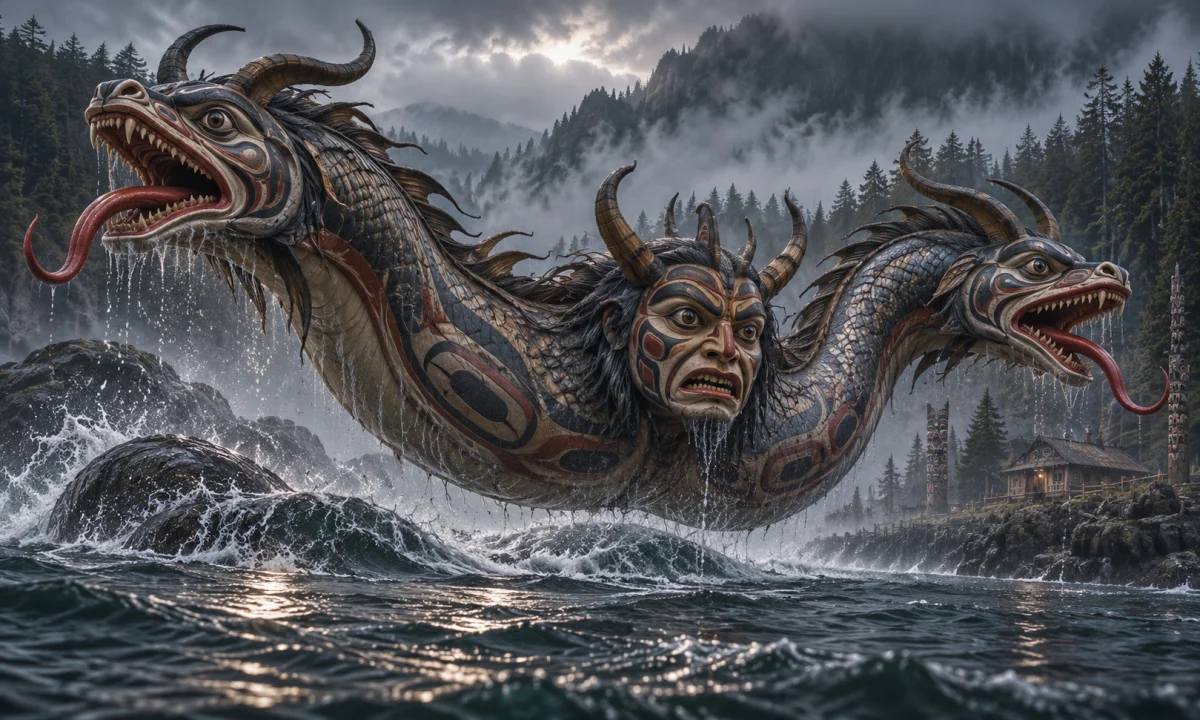
Descriptions attributed to Sedit usually emphasize great size and a serpentine form. The being is sometimes said to resemble a gigantic snake or eel. Other details found in modern retellings—such as horns, multiple heads, a specific colour, glowing eyes, scales, or the ability to produce storms—are not consistently attached to the name and should not be treated as traditional attributes without stronger documentation.
Nor is there a dependable traditional account establishing that Sedit had wings, legs, antlers, magical breath, or the power to swallow boats. Such features often appear when different monster traditions are combined in popular retellings. A dramatic illustration may also influence later descriptions, giving a loosely defined name a standardized appearance that it did not possess in earlier oral tradition.
If Sedit represents a water being in a genuine local narrative, its power may have been expressed through the environment rather than through a list of supernatural abilities. Unusual waves, dangerous currents, disappearing animals, sudden storms, or unexplained sounds could be interpreted within a cultural framework involving powerful non-human persons. That does not mean that every reported sighting was understood as an encounter with one named creature.
Stories and narrative tradition
No single, widely accepted traditional story about Sedit is available in the way that major Wabanaki narratives are available for Gluskabe, also known in related forms as Glooskap or Kuloskap. There is no securely established cycle describing Sedit's birth, family, home, enemies, or defeat. Stories sometimes repeated in modern summaries tend to be brief statements that a giant serpent lived in a body of water or threatened people who travelled there.
Such statements may preserve a fragment of local folklore, but they may also be the result of later cataloguing. A short entry can detach a creature from the story that gave it meaning. It can also turn a descriptive word—such as “serpent” or “water being”—into the apparent name of an individual character. For this reason, it is not possible to identify a canonical encounter between Sedit and Gluskabe, nor to claim confidently that Sedit was defeated by a named hero.
It is equally unsafe to assign Sedit a relationship with Malsumis, the destructive or contrary figure who appears in some Wabanaki traditions, or with particular horned serpents known from other Algonquian-speaking communities. Similar narrative functions do not prove identity. A serpent killed by a culture hero in one nation's tradition may be entirely unrelated to a serpent mentioned in another community's stories.
Serpents and underwater beings in northeastern traditions
The uncertainty surrounding Sedit should not be mistaken for a lack of Indigenous serpent traditions. Powerful serpentine beings are present in several Indigenous cultures of eastern North America, but their names, forms, and meanings vary considerably.
In Mi'kmaq tradition, for example, Jipijka'm is commonly described in English-language discussions as a large horned serpent or powerful underwater being. Accounts of Jipijka'm are connected with Mi'kmaq cultural knowledge and should not be relabelled as stories of Sedit. Other Algonquian-speaking peoples also have traditions concerning underwater monsters, horned serpents, or dangerous beings associated with lakes and rivers. These figures may have overlapping themes while remaining culturally distinct.
The well-known Underwater Panther, or Mishipeshu in Anishinaabe contexts, is another example of a powerful water being that is sometimes confused with generic “sea monsters.” Mishipeshu is usually represented as a feline or composite creature, not simply as a serpent, and belongs to a different cultural and geographic tradition. Likewise, the Uktena of Cherokee tradition is a powerful horned serpent, but Cherokee traditions come from the southeastern Woodlands and should not be merged with uncertain northeastern references to Sedit.
These distinctions matter because “Native American mythology” is a broad modern category covering hundreds of nations and many unrelated languages. A shared motif—especially a giant serpent or water guardian—does not establish a shared character. Names should remain connected to the communities and languages in which they are actually documented.
Religious and cultural interpretation
In Indigenous religious traditions, stories about powerful beings often carry practical, ethical, and geographical knowledge. They may teach people how to behave near dangerous waters, how to respect animals and places, or how human actions affect relationships with the non-human world. A being associated with water need not function as a simple embodiment of evil. Fear, respect, obligation, and reciprocity may all be involved.
European collectors frequently interpreted unfamiliar Indigenous beings through Christian or classical categories. A powerful spirit might be labelled a devil; a guardian might be called a monster; and a sacred narrative might be reduced to a superstition. Later popular culture often repeated these labels without preserving the original context. The word “monster” can therefore describe the attitude of an outside recorder rather than the way the community understood the being.
For Sedit specifically, the limited evidence does not support a detailed symbolic interpretation. It is reasonable to discuss the broader importance of water beings in northeastern Indigenous cultures, but it is not responsible to claim that Sedit definitely symbolized storms, death, sexuality, seasonal change, or a particular religious principle. Those interpretations belong to documented traditions only when supported by community knowledge or reliable historical evidence.
Sedit and modern popular culture
Sedit has little established presence in major modern popular culture. The name appears chiefly in mythology lists, encyclopedic websites, fantasy-oriented discussions, and illustrations of alleged Native American monsters. These modern presentations often give Sedit a highly specific form—usually a gigantic serpent—and may place the being in a particular lake or coastal region without identifying a dependable traditional source.
Such portrayals should be recognized as modern reception rather than treated as direct windows into Indigenous religion. A fantasy game, creature catalogue, or internet article may use the name creatively, but that use does not confirm the figure's historical status. Images that combine horns, fangs, fins, claws, and dragon-like features are especially likely to reflect contemporary monster design rather than a documented Indigenous representation.
The most responsible description of Sedit is therefore a limited one: the name is associated in some secondary accounts with a powerful serpent or water monster of the northeastern part of North America, but its precise origin, community affiliation, meaning, and traditional narrative remain uncertain. It should not be presented as a universally recognized Native American being, and it should not be conflated with better-documented serpents or underwater powers from Mi'kmaq, Anishinaabe, Cherokee, or other Indigenous traditions.