WORLD

Quaayayp
Quaayayp is a name associated in modern mythology references with the Chumash people of coastal central and southern California, especially with death or the realm of the dead. The identification is not as firmly documented as that of better-known Chumash figures such as Hutash, the earth goddess, or Xoy, the coyote. Spellings and descriptions vary, and the surviving evidence does not establish a single, widely shared traditional account of Quaayayp across all Chumash communities.
Cultural setting
The Chumash are Indigenous peoples whose traditional homelands extend along the coast of California, from the area around Malibu and the Santa Monica Mountains northward toward the lower Salinas Valley. Their territory also included the Northern Channel Islands, particularly Santa Cruz, Santa Rosa, and San Miguel islands. Chumash communities spoke several closely related languages and maintained distinct local traditions, even when they shared broad religious ideas.
Chumash religious life included relationships with powerful beings, animal persons, ancestors, ritual specialists, and forces associated with the earth, sky, sea, illness, dreams, and death. Stories were not simply a fixed mythology belonging to a single pantheon. They formed part of an oral and ceremonial world in which knowledge could differ according to community, family, ritual responsibility, and the circumstances in which a story was told.
This setting matters when considering Quaayayp. A short entry in a modern list of mythological figures can make the name appear to represent a clearly defined god with a universally agreed role. The historical record is more complicated. Much of what is known about Chumash traditions comes from accounts recorded after sustained colonial and mission contact. Those accounts were produced by outsiders, translated through European languages, and often gathered unevenly from particular communities. They do not provide a complete record of precolonial Chumash religious thought.
The name and its identification
The spelling Quaayayp is not standardized. Related or alternative spellings may appear in secondary works, online mythology catalogues, and adaptations of Indigenous names. Differences can result from attempts to represent Chumash sounds with Spanish or English alphabets, from transcription practices used by different researchers, or from copying errors in later reference material. A variant spelling should not automatically be treated as the name of a separate being.
In many modern summaries, Quaayayp is described as a Chumash deity or spirit connected with death. Some accounts place the figure in relation to the dead or to a lower spiritual realm. These descriptions are useful for identifying how the name is commonly presented today, but they should not be confused with a securely preserved, detailed Chumash narrative. There is no dependable basis for assigning Quaayayp a complete biography, a fixed appearance, or a large collection of traditional myths.
The uncertainty is partly a matter of documentation. Well-known Chumash traditions contain extensive material about creation, the origins of people, the earth goddess Hutash, the sky world, the underworld, powerful animals, and the activities of shamans. Yet a name appearing in a modern summary does not necessarily represent a figure that occupied the same place in every Chumash community. It may reflect a local tradition, an early transcription, an interpretation by a collector, or a later attempt to organize diverse beliefs into a familiar category such as “god of death.”
Possible role in the world of the dead
When Quaayayp is described as a death-related being, the title should be understood cautiously. “God of death” is a broad European-style classification and may not accurately express the original religious concept. Indigenous traditions often treat death through several interconnected ideas: the fate of a person’s spirit, the condition of the corpse, mourning practices, dangerous or beneficial contact with the dead, and the continuing presence of ancestors. A being associated with one of these areas would not necessarily rule over death in the manner of a monarch or underworld god in classical mythology.
Chumash cosmological traditions commonly describe a universe with multiple regions or levels, including the human world, a sky realm, and an underworld or world beneath the earth. These regions were not merely geographical locations. They were connected with spiritual power, celestial bodies, illness, ritual knowledge, and the movement of beings between worlds. Stories about journeys, transformations, or the origins of death could therefore involve several supernatural figures without assigning all responsibility to one deity.
Within that broader framework, Quaayayp may be interpreted as a name linked to the boundary between life and death. However, surviving descriptions do not justify confidently stating that Quaayayp judges the dead, causes every death, rules a specific underworld, or transports souls. Those familiar features belong to underworld figures in many different traditions and should not be added to Quaayayp without evidence.
Attributes and appearance
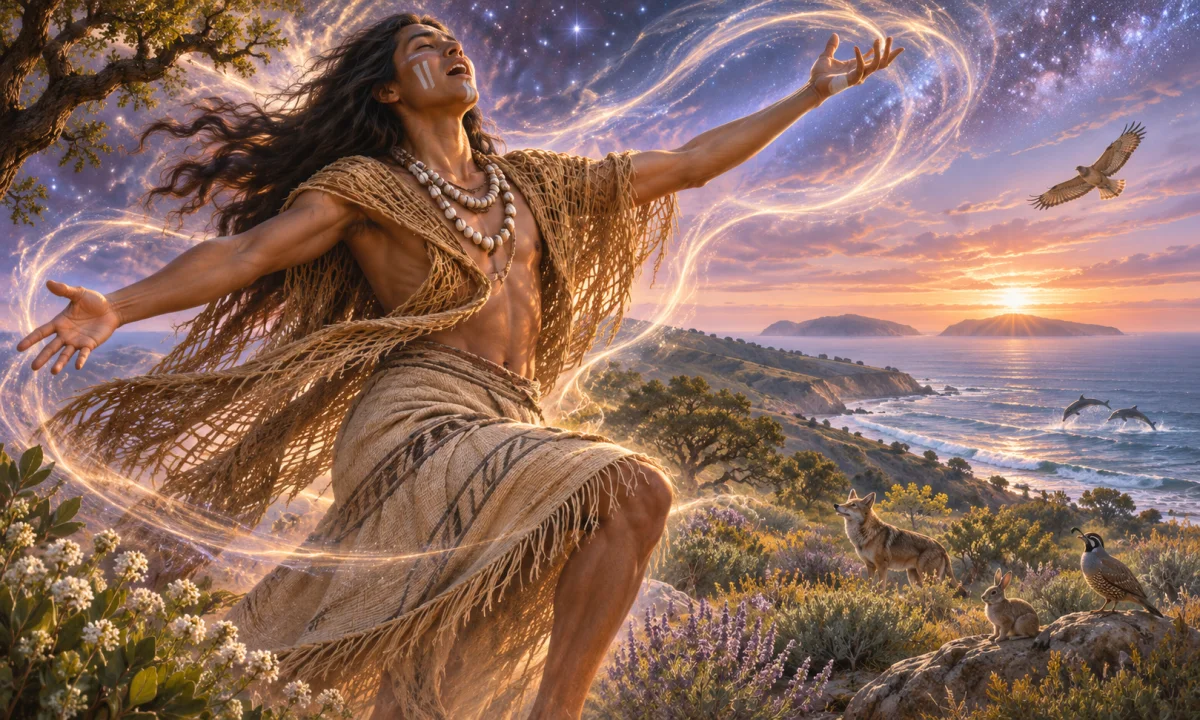
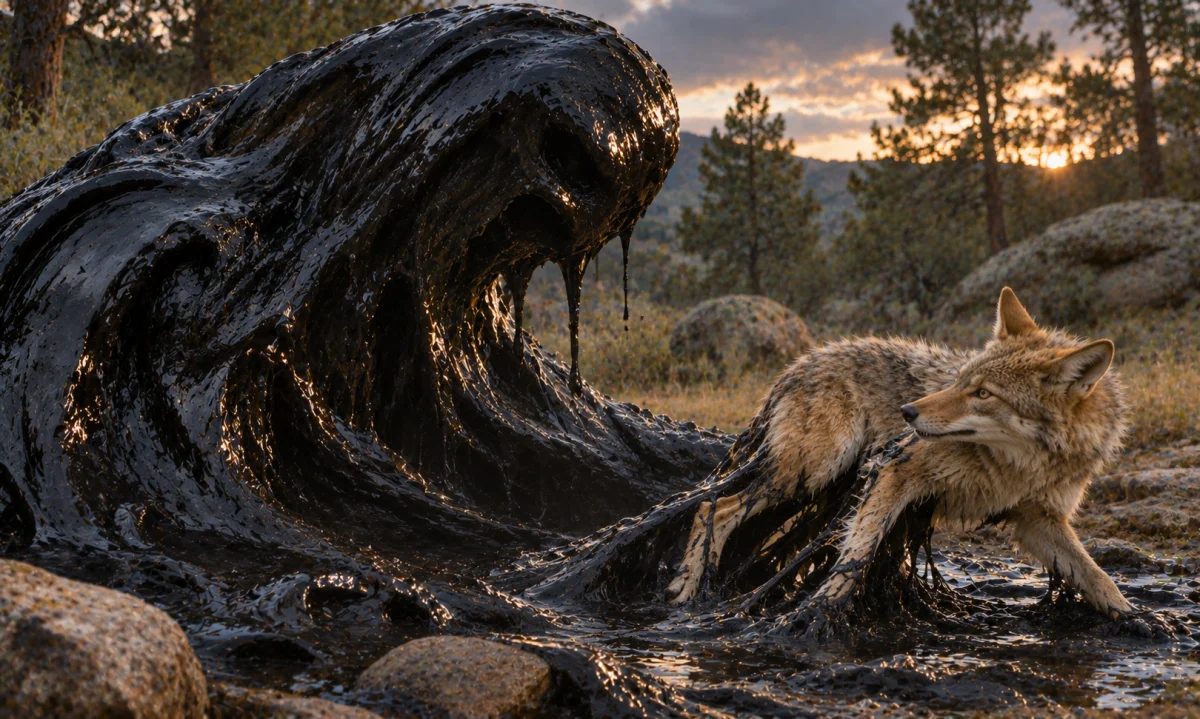
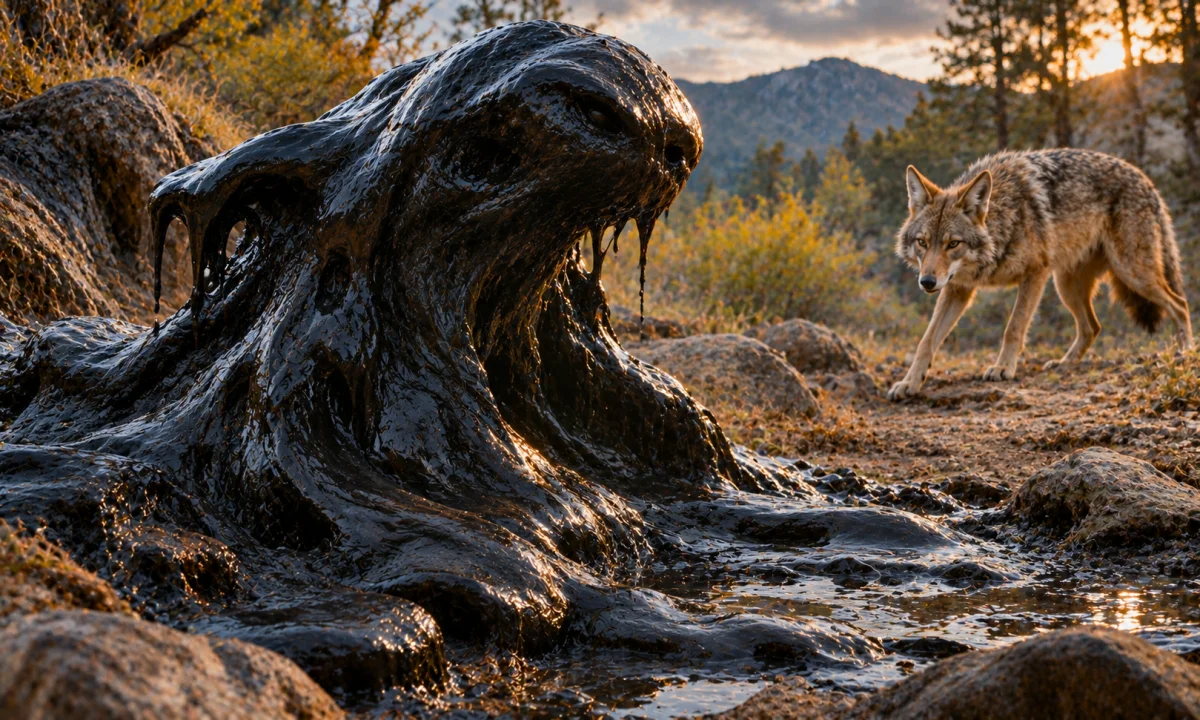
No consistently attested traditional description gives Quaayayp a particular body, costume, animal form, weapon, dwelling, or set of powers. Illustrations that portray the figure as a skeletal spirit, a robed ruler, a shadowy monster, or a horned being are modern visual inventions unless they can be traced to a specific Chumash tradition. The name itself does not establish any of these characteristics.
Likewise, there is no secure evidence for assigning Quaayayp a spouse, parent, rival, servant, or offspring. Modern mythology websites sometimes expand short entries into elaborate profiles, but the addition of family relationships and dramatic attributes can create a false impression of antiquity. In the case of an obscure and inconsistently documented name, restraint is more accurate than a detailed but unsupported portrait.
The same caution applies to powers. A death-associated figure might be credited in secondary sources with causing disease, collecting souls, guarding a passage, or punishing wrongdoing. Such claims should be treated as unverified unless they belong to a clearly identified oral account or historical record. It is safer to say that Quaayayp has been associated with death in modern presentations than to claim a complete supernatural jurisdiction.
Chumash ideas about death and spiritual power
Understanding the wider Chumash setting helps prevent the name from being reduced to a generic “grim reaper.” Chumash traditions recognized a world filled with spiritual forces, many of which could be encountered through dreams, ritual, illness, initiation, or the work of a shaman. Power was not limited to anthropomorphic gods. Animals, plants, celestial bodies, places, and objects could possess or convey extraordinary potency.
Death was consequently part of a larger religious system rather than an isolated mythological office. The dead could remain important to the living through memory, kinship, mourning, and the continuing effects of their actions. Accounts of the afterlife and the movement of spirits also belonged to a cultural context in which ritual specialists mediated between ordinary human experience and unseen powers.
Chumash ceremonial life included major communal observances, dances, songs, and ritual performances. The meaning of these practices cannot be reconstructed solely from a catalogue of named supernatural beings. A name such as Quaayayp, even if genuinely connected with a particular tradition, would have gained its significance from the community’s religious practices and concepts of relationship, not from an isolated list of attributes.
Stories and variants
There is no single, widely established Quaayayp story comparable in recognition to major Chumash narratives about the creation of people or the exploits of powerful culture heroes. This absence does not prove that no story ever existed. Oral traditions may have been local, restricted, lost through disruption, or recorded under a different spelling. It does mean that confident retellings presented as an ancient canonical myth should be viewed critically.
Some modern accounts may also confuse a name associated with death with broader Chumash stories about the underworld. A narrative involving the lower world, a dangerous spirit, or the fate of the dead is not automatically a story about Quaayayp. Similar confusion can arise when a translator or compiler converts a complex spiritual concept into the name of a single “deity.”
Variants of the name should therefore be handled individually. A form that resembles Quaayayp may represent a different word, a place name, a personal name, a spirit in another Indigenous tradition, or simply a different transcription of the same term. Without a documented linguistic or ethnographic connection, these possibilities should not be merged.
Distinction from other Chumash figures
Quaayayp should not be confused with Hutash, who is widely identified in Chumash traditions as an earth goddess and a creator figure in important accounts. Hutash is associated with the earth, the origin of people, and the shaping of the world. Her role is much more extensively represented in published discussions of Chumash mythology.
Quaayayp is also distinct from Xoy, the coyote figure found in Chumash storytelling. Xoy is a trickster, transformer, and culture-bearing character whose actions can explain features of the human world. Coyote figures elsewhere in California have their own traditions, but they should not be treated as interchangeable with Chumash Xoy or with a death-related figure named Quaayayp.
The name should further be kept separate from Chinigchinich, a powerful figure associated primarily with the Luiseño and related peoples of southern California. Chinigchinich became especially prominent in mission-era descriptions and later discussions of Indigenous religion. Geographic proximity between Chumash, Luiseño, Tongva, and other California peoples has sometimes encouraged the uncritical blending of their traditions. Similar themes do not demonstrate that the beings are identical.
Interpretation and cultural significance
Quaayayp is best treated as a poorly documented or variably transmitted name associated with Chumash death traditions, rather than as a fully defined deity with an agreed mythology. This interpretation respects both parts of the evidence: the name has a recurring association with death in modern reference material, but the surviving record does not support a detailed, universal profile.
The uncertainty also illustrates a wider problem in the study of Indigenous mythology. European and later popular classifications often arranged diverse spiritual beings into categories such as creator, sun god, trickster, or god of death. These labels can be convenient, but they may flatten distinctions between local traditions, ritual powers, ancestors, and narrative characters. They can also make a living cultural tradition seem like a closed pantheon from the ancient past.
For the Chumash, cultural continuity is not limited to the survival of old stories in written form. Contemporary Chumash communities continue to address language revitalization, ancestral knowledge, cultural education, ceremonial life, and the protection of sacred places. A cautious treatment of an uncertain name is therefore preferable to an imaginative reconstruction that presents speculation as inherited tradition.
Later reception
Quaayayp has little established presence in widely known novels, films, games, or other major forms of popular culture. Where the name does appear in modern media or online mythology collections, it is commonly presented through the simplified image of a death spirit. Such portrayals may draw on the name’s modern association with death while supplying visual details and powers not found in securely documented Chumash material.
Modern adaptations should consequently be identified as reinterpretations rather than as direct representations of a fixed traditional character. The most responsible use of the name preserves the distinction between a limited historical record, scholarly or popular classification, and creative invention.