WORLD
WORLD
Mama Allpa
Mama Allpa is a little-known female fertility figure associated with Inca mythology and the wider religious traditions of the Andes. Her name is commonly interpreted from Quechua as “Mother Earth” or “Earth Mother”: mama means “mother,” while allpa refers to earth, soil, or cultivated ground. In modern summaries, she is usually described as a goddess of fertility, agriculture, and the abundance of the land.
Information about Mama Allpa is limited, and her place in the Inca religious system is less securely documented than that of figures such as Inti, Viracocha, Pachamama, Mama Quilla, or Mama Sara. Many descriptions of her come through later lists of Inca deities rather than through a long, clearly preserved myth. As a result, details about her appearance, powers, relationships, and rituals should be treated with caution. Some modern accounts may also expand a brief reference into a more elaborate portrait than the surviving evidence supports.
Name and identity
The name Mama Allpa is generally understood as a descriptive title rather than the name of a character known from a large cycle of stories. In Quechua, allpa can mean earth, soil, or land, especially land considered in relation to cultivation. The combination with mama presents the earth as a maternal power: a source of food, fertility, nourishment, and continuing life.
Spelling varies according to the system used to write Quechua and according to the language of the source. Forms such as Mama Allpa, Mama Allpa with different capitalization, and occasional simplified spellings may appear in secondary material. These variations do not necessarily indicate different beings. The term should not automatically be treated as a personal name with a single fixed biography.
Mama Allpa is normally classified as a female earth or fertility deity. That classification reflects the meaning of her name and the attributes assigned to her in later accounts. It does not mean that every Andean tradition recognized an identical goddess under that name. Andean religious practices varied across regions, languages, communities, and historical periods, and the Inca state incorporated local sacred beings into a wider imperial religious order.
Religious setting in the Andes
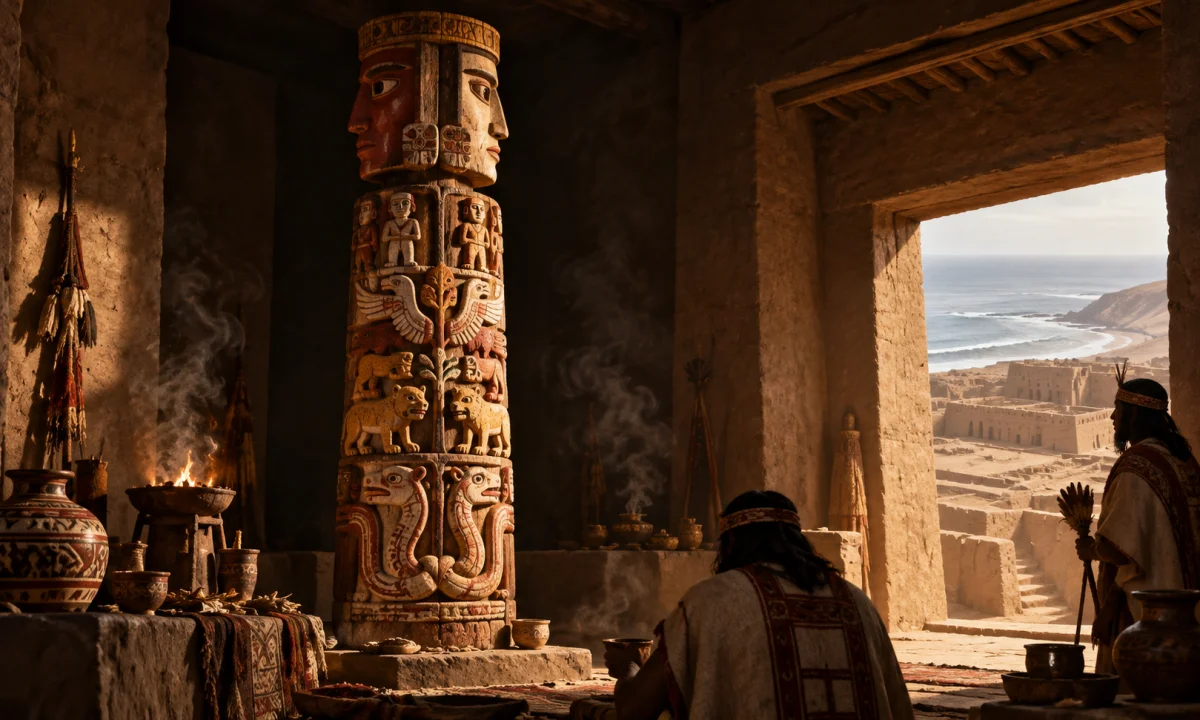
Inca religion did not consist of a single, uniform pantheon comparable to a modern catalogue of gods. It included major state cults, local sacred places, ancestral powers, natural forces, and beings associated with particular communities, occupations, or forms of prosperity. Mountains, springs, caves, stones, fields, and cultivated plants could all possess religious significance. The Quechua term huaca was used for many kinds of sacred beings and places, although it is not simply equivalent to the word “god.”
Agriculture was central to life in the Andes. Communities depended on careful cultivation across difficult terrain, including high-altitude valleys, steep slopes, and regions subject to drought, frost, and irregular rainfall. Religious attention therefore focused on rain, water, sunlight, soil, seeds, crops, livestock, and the fertility of people and animals. Offerings and communal ceremonies were ways of maintaining reciprocal relations with the powers believed to sustain life.
Within that setting, an earth-mother figure had an understandable religious role. The ground was not merely an inert resource. It received seed, produced crops, supported settlements, and was connected to the ancestors and the living community. A title such as Mama Allpa expresses this relationship in maternal language. The earth nourishes human beings, but human beings must also care for it and honour the powers associated with it.
The importance of the earth did not make Mama Allpa the sole or universal Andean earth deity. Different communities had their own sacred traditions, and the same agricultural concerns could be expressed through several divine or ancestral figures. The Inca state also gave particular prominence to its imperial cults, especially the worship of Inti, the Sun. A fertility figure connected with the soil could exist alongside solar, lunar, water, mountain, and crop powers rather than replacing them.
Attributes and representations
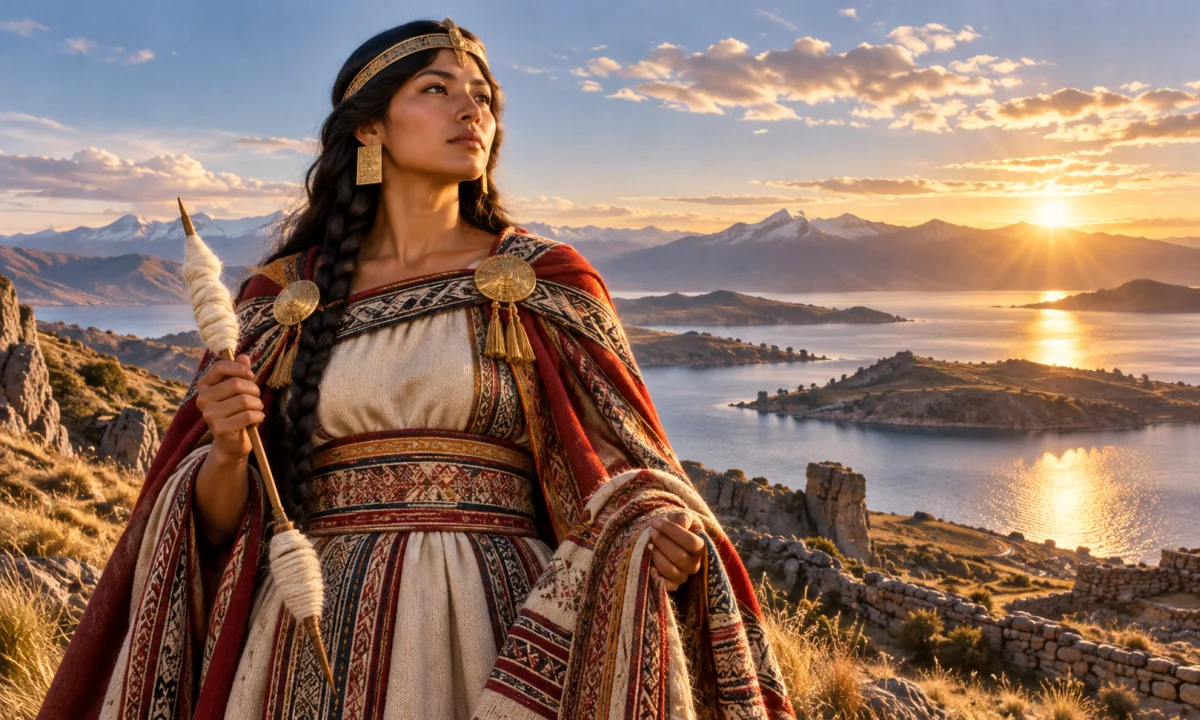
Modern descriptions commonly portray Mama Allpa as a woman associated with abundant fertility. One frequently repeated image shows her with several breasts or with children in her arms. Such imagery presents her as a provider of nourishment and as a personification of the earth’s capacity to feed many people. It is important, however, to distinguish a recurring modern description from a securely identified ancient statue or universally attested iconographic type.
No single surviving representation can confidently be identified as the standard image of Mama Allpa across the Inca world. Much of what is said about her appearance comes from short entries in later compilations and from interpretations of her name. Claims that she always carried particular objects, wore a specific costume, or had a fixed family relationship are not equally well supported.
The attributes most often connected with her are:
- Fertility: the reproductive power of people, animals, plants, and the land.
- Cultivated soil: the earth as the ground in which seeds are planted and crops grow.
- Abundance: a successful harvest and the food needed by households and communities.
- Motherhood: the image of the land as a nourishing and sustaining parent.
- Renewal: the return of growth after planting, seasonal change, or periods of scarcity.
These associations are closely related rather than separate areas of authority. Agricultural fertility, human reproduction, nourishment, and the continuity of the community were often understood through connected ideas. A mother who feeds her children and a field that produces food could be described with similar symbolic language.
Mama Allpa and agriculture
There is no well-preserved canonical myth in which Mama Allpa performs a clearly defined sequence of deeds comparable to the stories of some better-known Inca figures. Her significance is therefore best approached through the agricultural concerns attached to her name and classification.
Planting and harvesting were practical activities, but they also involved obligation and ceremony. Farmers worked within a world of reciprocal exchange, often described by the Quechua concept of ayni, in which assistance and benefits were returned over time. Religious offerings could include food, drink, coca leaves, chicha, textiles, or other valued substances, depending on the context. Such acts were not necessarily directed to Mama Allpa alone. They formed part of broader relationships with the earth, local sacred powers, ancestors, mountains, and other beings connected with agricultural success.
The earth-mother image also conveys vulnerability. Soil can be exhausted, crops can fail, and the community can suffer when rain does not come or frost destroys plants. A fertility deity was not simply a magical guarantee of abundance. Religious practice acknowledged that human survival depended on maintaining a proper relationship with forces beyond human control.
In an Inca context, agricultural fertility was also tied to political organization. The state managed labour, storage, redistribution, and the cultivation of land in different ecological zones. Crops such as maize, potatoes, quinoa, and many other plants supported communities in varied environments. A sacred conception of productive land could therefore have both local and wider social importance, even when the evidence does not show that Mama Allpa had a major imperial cult of her own.
Relationship to Pachamama
Mama Allpa is often compared with Pachamama, the better-known Andean earth mother. The comparison is reasonable because both names are associated with the earth, fertility, cultivation, and nourishment. They should not nevertheless be treated as automatically identical.
Pachamama is commonly translated as “World Mother” or “Earth Mother,” although the meaning and religious use of the term are more complex than a simple dictionary equivalent. Pachamama has remained an important figure in many Andean traditions, including living Indigenous and rural practices. Her character varies by region and historical context. Mama Allpa, by contrast, is a much less extensively documented name in accounts of Inca mythology.
Some writers use the two names almost interchangeably, especially when presenting a general account of Andean earth worship. That may reflect overlapping functions, later interpretation, or the tendency of broad summaries to combine related traditions. It is safer to say that Mama Allpa and Pachamama share an earth-mother sphere of meaning, while recognizing that they are not proven to be the same figure in every tradition.
Distinction from other “Mama” figures
The word mama appears in the names of several important female figures associated with the Inca and wider Andean religious world. Shared wording does not establish a family relationship or a common identity.
- Mama Quilla was associated with the Moon and with matters connected to the lunar cycle, calendrical time, and marriage in descriptions of Inca religion.
- Mama Sara was linked with maize, one of the most important cultivated plants in the Andes. Her name is often translated as “Mother Maize” or “Maize Mother.”
- Mama Cocha was associated with the sea, lakes, or bodies of water, particularly in traditions concerning water and its life-giving power.
- Mama Ocllo is a culture hero and ancestral founding figure in Inca origin traditions, not simply another name for an earth goddess.
- Pachamama is an earth-mother figure with a continuing presence in many Andean religious and cultural contexts.
Mama Allpa may overlap symbolically with Mama Sara because both can be connected with agricultural abundance. The distinction is still useful: Mama Sara is specifically associated with maize, while Mama Allpa is generally described in broader terms as the fertile earth or the land that produces food.
Evidence and uncertainty
Accounts of Inca religion were recorded largely after the Spanish invasion, by writers working through translation, Christian categories, colonial institutions, and information supplied by Indigenous informants. These records are valuable, but they are not transparent transcripts of pre-conquest belief. They may preserve local traditions, reinterpret older practices, or organize diverse sacred beings into a pantheon that resembles European ideas about mythology.
Mama Allpa illustrates the difficulty of working with brief names in such material. A short reference may indicate a recognized sacred power, a regional title, or a term used by later compilers to describe a broad religious concept. It does not by itself prove the existence of a large temple cult, a complete set of myths, or a standardized image throughout the Inca Empire.
For that reason, confident claims about Mama Allpa’s husband, parents, children, temple, festivals, or detailed adventures should be treated skeptically unless supported by strong evidence. Popular mythology websites sometimes provide such details without explaining their origin. The most defensible description presents her as a poorly documented earth and fertility figure whose name expresses the maternal productivity of the soil.
Cultural significance
Mama Allpa represents an important feature of Andean religious thought: the close connection between human communities and the living landscape. Fertility was not limited to human reproduction. It included the ability of fields to yield crops, animals to multiply, water to sustain life, and society to continue across generations.
The maternal language associated with her also emphasizes dependence and reciprocity. People receive food from the earth, but they are expected to respond with respect, labour, offerings, and responsible communal practice. This relationship differs from an idea of nature as an entirely passive object. The land is a participant in social and religious life.
At the same time, Mama Allpa should not be used as a generic label for all Indigenous South American beliefs about nature. The Andes contain many peoples, languages, histories, and religious traditions. Quechua terms and Inca categories cannot automatically describe every community in the region. Careful treatment preserves the distinction between a specifically attested name and the much broader modern idea of an “earth goddess.”
Later reception
Mama Allpa has had far less presence in modern popular culture than Pachamama, Inti, or other Inca-associated figures. She appears mainly in encyclopedic lists, mythology databases, educational summaries, and modern retellings of Inca religion. These treatments often make her more visually definite than the historical evidence allows, sometimes presenting the multiple-breasted mother as though it were a universally established ancient icon.
Such representations can communicate her association with nourishment and fertility, but they should be labelled as interpretations rather than assumed to be an unchanged survival of a single Inca image. Contemporary Indigenous communities may maintain living relationships with the land and with earth-mother traditions, yet those living practices should not be reduced to the brief, uncertain figure called Mama Allpa in modern mythological catalogues.