WORLD

Catequil
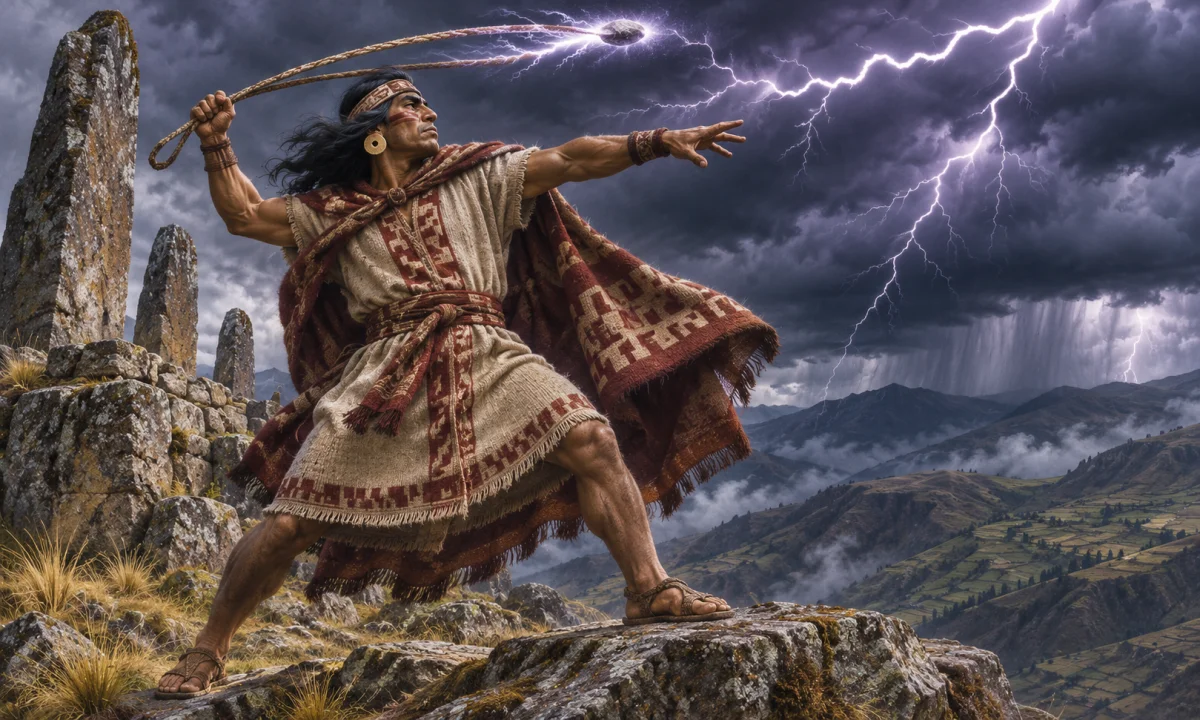
Catequil was a powerful Andean deity associated with thunder, lightning, rain and divination. His principal cult belonged to the Huamachuco region of northern Peru, rather than to the Inca heartland alone. Colonial accounts describe Catequil as a major huaca—a sacred being, object or place—and as the patron of a famous oracle. The surviving information comes mainly from Spanish-era reports written after the conquest, so details of his mythology, appearance and relationship to other gods remain uncertain.
Origins and cultural setting
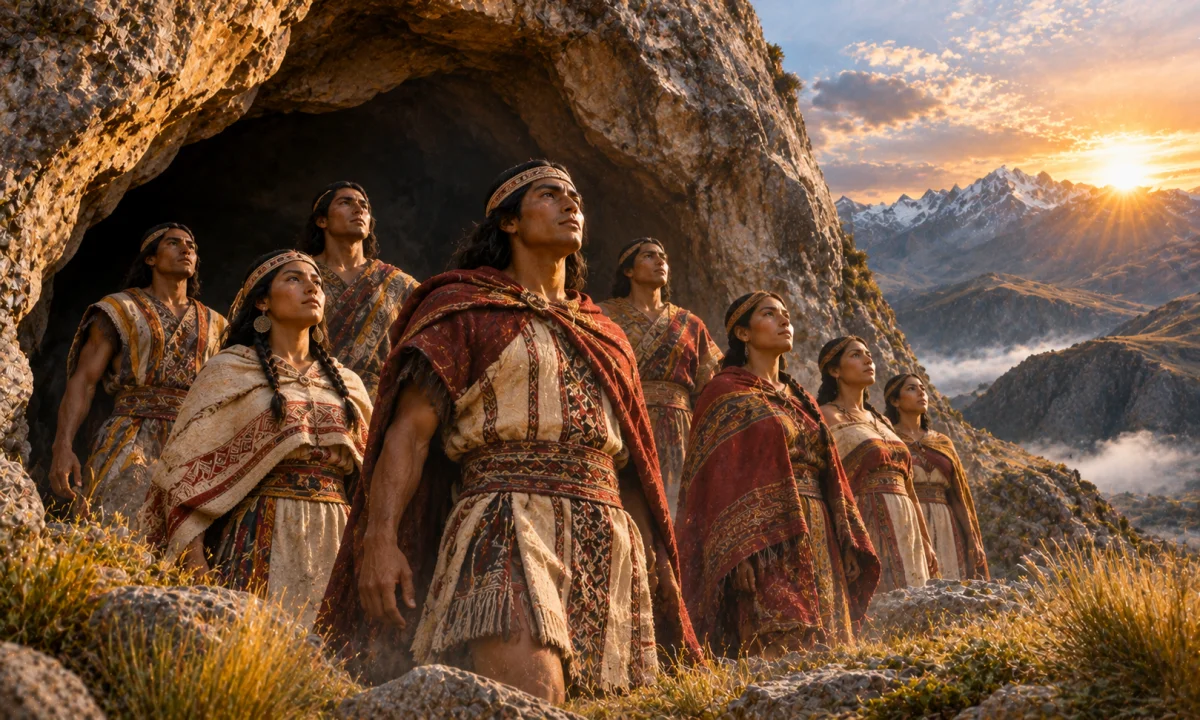
Catequil was especially connected with the people of Huamachuco, an Andean region in what is now the La Libertad area of Peru. Huamachuco had its own political traditions, ritual centres and religious institutions before its incorporation into the Inca Empire. Its culture was not simply a local version of religion from Cusco. Like many Andean communities, it maintained sacred places and beings with identities rooted in particular mountains, springs, settlements and ancestral territories.
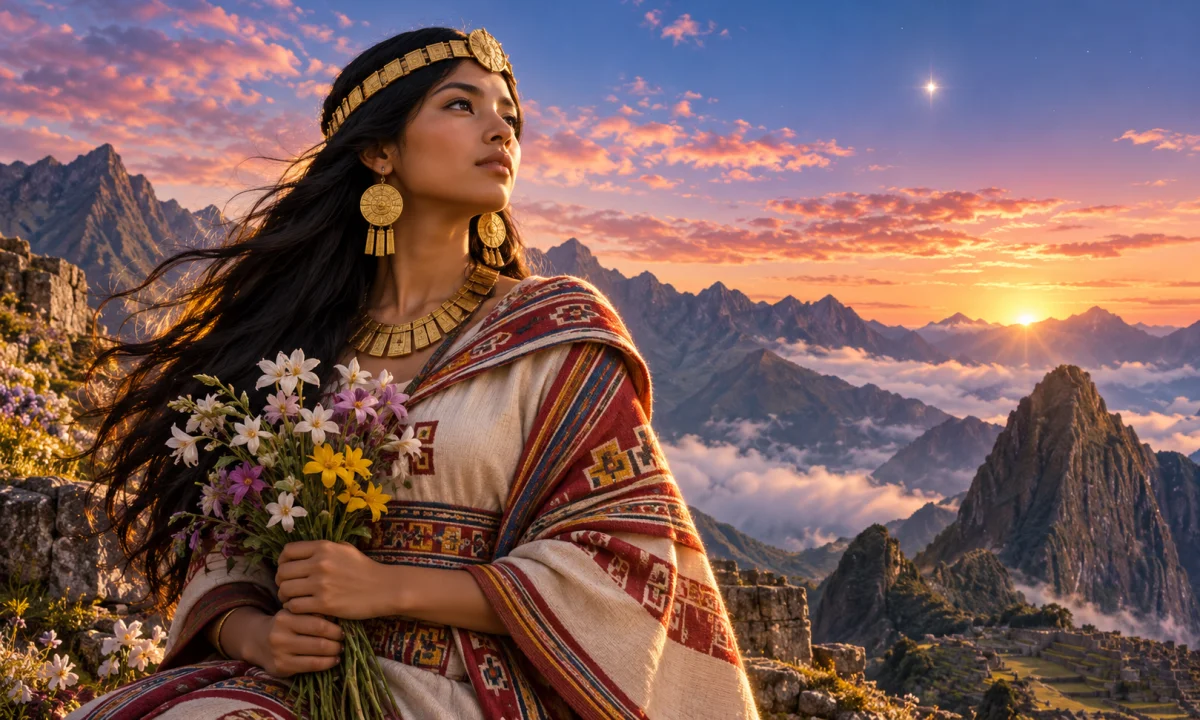
The best-known sanctuary of Catequil stood on or near Cerro Catequil, a prominent mountain associated with the ancient Huamachuco region. The sanctuary functioned as a place of pilgrimage and consultation. People reportedly travelled there to ask for predictions, guidance or explanations of important events. In Andean religious practice, a huaca could be both a local sacred presence and a source of authority. A mountain deity was not merely imagined as living on a mountain; the mountain itself could be regarded as the deity's material manifestation.
Catequil's importance therefore extended beyond storms. His control of atmospheric forces gave him significance for agriculture, travel, warfare and political decision-making. Thunder and lightning were signs that could be interpreted by ritual specialists. A deity who controlled such phenomena could also serve as an oracle whose pronouncements affected rulers and communities.
Surviving sources and their limitations
No pre-conquest book written by the people of Huamachuco survives to provide a complete account of Catequil. Knowledge of him comes largely from colonial observers, including Spanish missionaries and chroniclers who recorded local traditions while attempting to suppress or reorganise Indigenous religion. These accounts are valuable, but they were produced in a period of conquest and Christian evangelisation.
Missionaries commonly described Indigenous sacred beings as idols, demons or false gods. They sometimes translated unfamiliar religious concepts into categories that made sense within European Christian culture. A report may therefore preserve the name of a deity and some details of his cult while presenting the tradition through hostile or heavily simplified language. Different writers also used different spellings, and some accounts probably confused local religious practices with those of neighbouring regions.
The most detailed colonial descriptions of Catequil are associated with accounts of Huamachuco and with Augustinian efforts to destroy Indigenous shrines. These records indicate that the cult was influential and that its sanctuary was important enough to attract attention from both local authorities and the expanding Inca state. They do not provide a single, uncontested biography of the deity.
Name and identity
The name appears in several forms, including Catequil, Catiquil and related colonial spellings. Spanish writers did not always represent Indigenous sounds consistently, and the original pronunciation cannot be established with complete confidence from the surviving records. The meaning of the name is also not certain. It is often connected in modern descriptions with thunder or lightning, but an exact linguistic interpretation should not be presented as settled fact.
Catequil is generally classified as a Huamachuco thunder deity or storm god. This classification is useful, but it should not imply that the people who worshipped him placed him in a fixed pantheon equivalent to the pantheons of classical Greece or Rome. Andean religious traditions often centred on networks of huacas rather than on a single uniform hierarchy. A sacred being might be simultaneously a mountain, an ancestral power, a political protector and a force of nature.
Some colonial traditions place Catequil within a wider mythic genealogy involving a creator or high deity called Ataguju. In these accounts, Ataguju is associated with the creation of the world or with the origins of important beings. The surviving versions differ in their details, and it is difficult to determine whether they preserve an old Huamachuco myth, a missionary reconstruction, or a combination of local traditions. Catequil's place in this genealogy should therefore be treated as a reported tradition rather than as a universally accepted account.
Storm powers and sacred authority
Catequil's principal powers were connected with violent and life-giving aspects of the sky. Thunder and lightning could destroy buildings, frighten animals and threaten crops, but rain was also essential to Andean agriculture. A storm deity was consequently not simply a hostile force. He could be feared, honoured and petitioned as a power on which human survival depended.
Colonial descriptions associate Catequil with thunderbolts and with the use of slings. One reported image represented him as a human-like figure holding or using two slings, one in each hand. This detail is often repeated in modern summaries, although the wording and interpretation of the original account require caution. The sling was a familiar weapon in the Andes, and the sound of a projectile released through the air offered an understandable symbolic connection with thunder. Whether this image was a literal portrait, a ritual object or a Spanish interpretation of a more complex representation is not known.
Some descriptions also connect Catequil with weapons or stones identified as thunderbolts. In Andean religious traditions, unusual stones could be regarded as having fallen from the sky and could acquire sacred status. A thunderbolt was not necessarily treated as an abstract bolt of energy. It could be understood as a powerful object, a manifestation of a deity or a tangible sign of celestial action.
The deity's most important practical role may have been his function as an oracle. Reports describe people seeking answers at his sanctuary and treating the pronouncements associated with the cult as authoritative. Oracles in the Andes could involve priests, ritual specialists, sacred images, sounds, movements, offerings or interpretations of signs. The available sources do not explain precisely how Catequil's oracle operated, so claims about a single method of divination would be speculative.
Catequil and the Huamachuco region
The prominence of Catequil reflects the political and environmental importance of Huamachuco. Religious centres could help bind together communities across a mountainous territory. Pilgrimage to a major huaca created relationships among settlements and allowed ritual specialists to exercise influence beyond their immediate locality.
A sanctuary with an oracle could also become politically significant. Leaders might consult it before military campaigns, during disputes or when interpreting unusual natural events. Its authority did not necessarily depend on direct political rule. A sacred centre could influence rulers precisely because its power was understood to come from an ancient and non-human source.
Archaeological remains in the Huamachuco area demonstrate that the region contained substantial ceremonial and settlement complexes. Archaeology can establish the scale, age and layout of ritual places, but it cannot by itself identify every deity worshipped there or reconstruct the exact myths associated with them. The connection between a particular ruin and Catequil must therefore be considered alongside the colonial evidence rather than treated as self-explanatory.
Relations with the Inca state
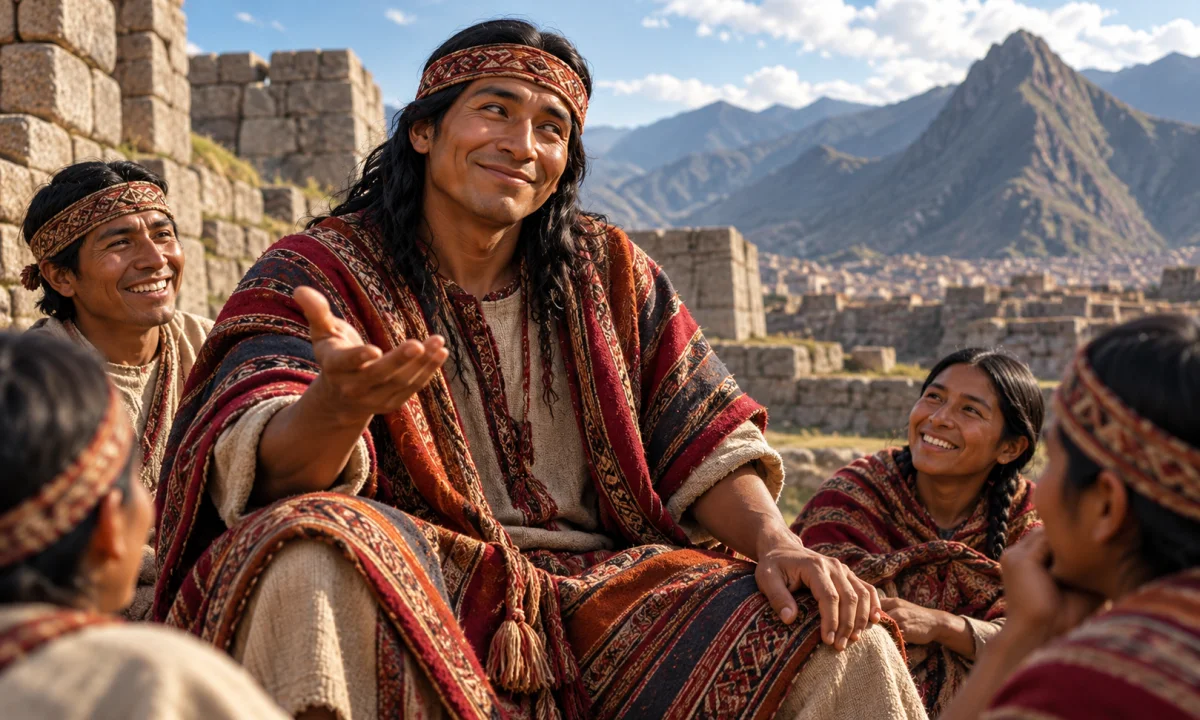
Huamachuco was eventually incorporated into the Inca Empire, but incorporation did not erase local religious identities. The Incas frequently adopted, honoured or reorganised regional cults while placing them within an imperial system centred on Cusco. A prestigious local deity could be given new relationships with Inca religious institutions, while the original community continued to regard the deity as its own protector.
Catequil appears to have retained considerable authority despite the spread of Inca power. Some accounts portray the sanctuary as a rival or independent source of legitimacy. This does not mean that the cult was permanently opposed to everything Inca. It does indicate that control of a major oracle could be politically sensitive. An empire might respect a local huaca, negotiate with its priests or attempt to subordinate the sanctuary to imperial authority.
Later traditions connect the destruction or suppression of Catequil's sanctuary with Inca rulers, and some versions specifically associate hostility toward the cult with Atahualpa. These accounts are not fully consistent, and the precise sequence of events is difficult to establish. They should not be turned into a simple story in which one ruler single-handedly destroyed a uniform religious institution. Political conflict, regional rivalry, military action and the later campaigns of Christian missionaries may all have contributed to the disappearance of the public cult.
Destruction of the shrine and colonial suppression
After the Spanish conquest, missionaries conducted campaigns against Indigenous huacas throughout the Andes. Sacred places were damaged, images were removed or destroyed, and ritual specialists were pressured to abandon their practices. Accounts of the Augustinian mission in Huamachuco present the cult of Catequil as an important target of Christian conversion.
These reports often describe the destruction of the deity in dramatic language. Such narratives served a religious purpose: they portrayed the missionaries as defeating a false or demonic power. They should not be read as neutral descriptions of what local people believed. The destruction of a shrine did not necessarily eliminate the traditions associated with it. Knowledge of sacred mountains, storm powers and local ritual obligations could continue in altered or concealed forms, even when the public institution of the cult was broken.
The colonial record also reflects a broader pattern in which Indigenous gods were recast as demons. This was not an original attribute of Catequil within Huamachuco religion. It was a judgement imposed by Christian writers who opposed the old ritual system. Distinguishing the deity's traditional role from missionary polemic is essential when interpreting the sources.
Relationship to Illapa and other Andean storm beings
Catequil is often compared with Illapa, the Inca thunder deity. Illapa is commonly described in colonial and later accounts as a powerful figure connected with thunder, lightning and rain. Because both beings have storm-related functions, modern writers sometimes treat Catequil as merely another name for Illapa. That identification is too simple.
Illapa belonged particularly to religious traditions associated with the Inca imperial sphere, although his worship and related storm beliefs were widespread. Catequil was strongly rooted in Huamachuco and had a distinct local sanctuary and oracle. The two deities may have been compared, associated or interpreted through one another during the expansion of the Inca Empire, but the surviving evidence does not prove that they were originally the same being.
Nor should Catequil automatically be equated with every Andean figure linked to lightning, rain or mountain power. Regional traditions used different names and gave different sacred beings overlapping responsibilities. Similar functions do not necessarily indicate a common identity. They may instead reveal shared environmental concerns and recurring religious ways of understanding the Andes.
Interpretation and cultural significance
Catequil illustrates how Andean religion joined landscape, weather and political authority. His identity was not limited to an invisible god who governed storms from a distant heaven. The cult was tied to a particular mountain and to a community that approached the sacred centre for knowledge and protection. The deity's power was therefore both environmental and territorial.
His association with an oracle is especially significant. In many societies, religious authority is expressed through rituals that predict the future or interpret events. In Huamachuco, Catequil's oracle appears to have been part of a wider system in which supernatural forces, sacred places and political decisions were closely connected. The authority of the sanctuary could affect how communities understood war, harvests, leadership and danger.
The story of Catequil also demonstrates why colonial descriptions must be read critically. They preserve names and fragments of traditions that might otherwise have been lost, but they were written during a campaign against the religions they described. The result is an uneven record: enough remains to identify Catequil as a major Huamachuco storm and oracle deity, while many details of his myths, rituals and images have disappeared.
Catequil in modern culture
Catequil occasionally appears in modern books, games, fantasy fiction and popular lists of mythological beings. These portrayals commonly turn him into a generic lightning god or a warrior who shoots thunderbolts. Such adaptations may draw inspiration from the reported connection with storms and slings, but they are creative interpretations rather than complete reconstructions of Huamachuco religion.
Modern discussions sometimes present Catequil as a member of a neatly organised Inca pantheon. That format is convenient for popular storytelling but can obscure his local origin and the importance of the Huamachuco sanctuary. The historical figure is better understood as a regional Andean huaca whose influence involved weather, sacred geography, divination and political authority.