WORLD
WORLD
Ignirtoq
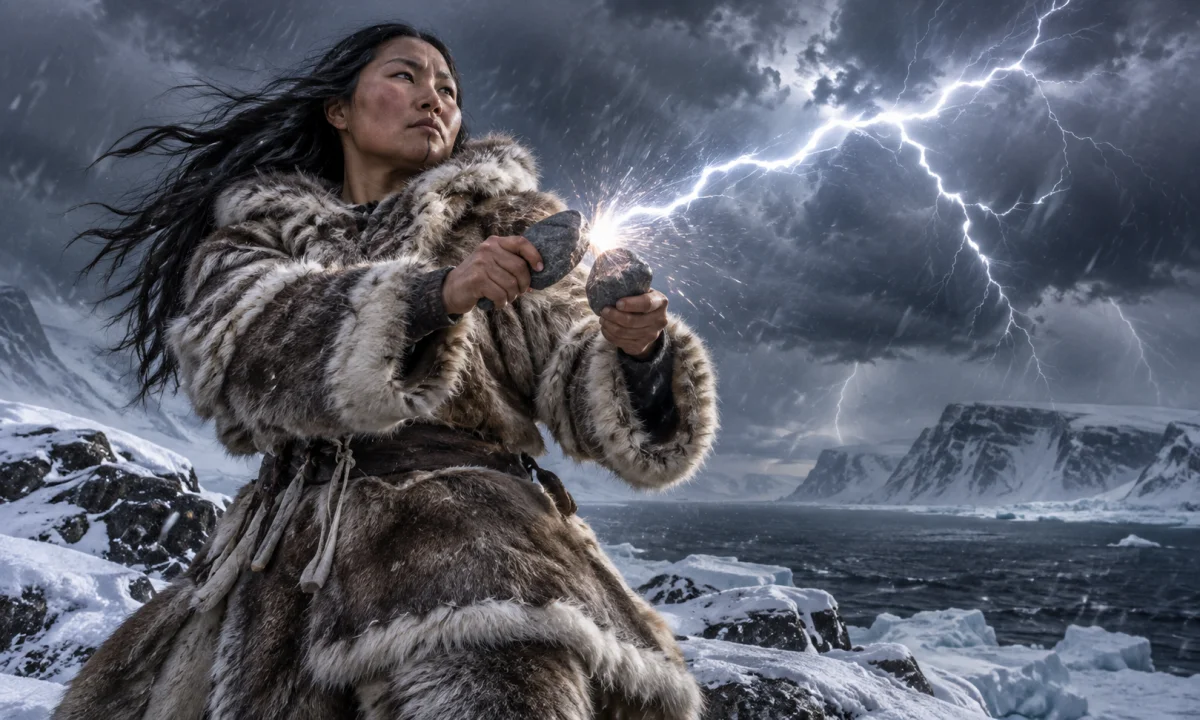
Ignirtoq is a name associated in some modern accounts with an Inuit fire spirit or fire goddess. The figure is not as widely documented as Sedna, the sea being often called Nuliajuk, or other major beings known from Inuit religious traditions. Information about Ignirtoq is also difficult to separate from later reference works, simplified mythology lists, and inconsistent spellings. For that reason, Ignirtoq should be treated as a regional or weakly documented figure rather than as a universally recognized Inuit deity.
Origins and cultural setting
“Inuit mythology” is a broad modern label covering the traditional religious knowledge of many related peoples across the Arctic. Inuit communities have lived, and continue to live, across parts of Greenland, Nunavut, the Northwest Territories, northern Quebec, Labrador, and Alaska. Their languages, local histories, and religious traditions are related but not identical. A being known in one community may be absent, differently named, or understood in another.
Traditional Inuit religious life did not generally depend on a single fixed pantheon comparable to the Olympian gods of ancient Greece. It included inua, or person-like spiritual presences associated with animals, places, weather, tools, celestial bodies, and other parts of the living world. The boundary between “god,” “spirit,” “guardian,” “master of animals,” and powerful supernatural person is therefore not always clear. European writers and later popular authors often forced these diverse beings into categories such as deity, demon, or elemental spirit.
Fire had an essential place in Arctic life. A flame provided warmth, light, cooked food, and protection during long periods of darkness and extreme cold. Traditionally, the qulliq, a shallow stone lamp fuelled by animal fat, was central to domestic life in many Inuit regions. The lamp was used for heating, cooking, drying clothing, and maintaining the household. Fire was therefore not merely a destructive force or a symbol of the sun. It was a practical necessity closely connected with survival, family life, and the orderly maintenance of a dwelling.
Within this cultural setting, a fire-associated being such as Ignirtoq can be understood as part of a wider Arctic way of recognizing agency in the natural and material world. The flame, its fuel, the person who tends it, and the household that depends on it all belong to relationships requiring care and proper conduct. However, the existence of fire-related spiritual ideas does not by itself prove that every community possessed a named goddess called Ignirtoq.
Name and identity
The spelling Ignirtoq appears primarily in modern English-language or generalized mythology references. Other spellings may occur, including forms using different vowels, consonants, or endings. These variations can result from attempts to represent an Inuit-language name in Latin letters, from differences between Inuit languages, or from errors repeated in secondary sources.
The name should not automatically be treated as a standardized Inuktitut word. Inuit languages use several orthographies, and a spelling created by an outside writer may not accurately show the original pronunciation or grammatical form. Without a securely identified community tradition and a reliable linguistic context, the meaning of the name remains uncertain. It is therefore safer to describe Ignirtoq as a fire-associated Inuit figure in some modern accounts than to offer a definite translation.
Descriptions of Ignirtoq commonly classify the figure as a goddess or spirit of fire. That classification may reflect the language of modern mythology encyclopedias rather than the terminology used by the people from whom a tradition was recorded. The word “goddess” can suggest a formal, human-like pantheon and a stable set of stories, neither of which can be securely established for Ignirtoq on the basis of the limited material available.
Association with fire
The most consistent feature attributed to Ignirtoq is an association with fire. In a general interpretive sense, this could include the flame used in a household lamp, the heat necessary for survival, the preparation of food, and the light that makes a winter dwelling habitable. It might also suggest the danger of fire when it is neglected or allowed to spread. These meanings arise naturally from the importance of fire in Inuit life, but they should not be presented as a complete traditional doctrine about Ignirtoq.
Many Inuit spiritual traditions emphasize respect for the materials and beings that sustain human life. Animals, tools, food, weather, and hunting places could all be treated as part of a network of obligations. A fire spirit, if recognized in a particular local tradition, would therefore not necessarily be a personification of an abstract element. The figure might instead express the living power of the hearth and the responsibilities involved in keeping it burning.
Fire also has a dual character. It gives warmth and nourishment, yet it can injure people, destroy shelter, or consume scarce fuel. This balance makes it suitable for stories about discipline, reciprocity, and the consequences of careless behaviour. Nevertheless, no securely documented cycle of tales about Ignirtoq’s rewards, punishments, appearance, or personal habits can be confidently supplied. Popular descriptions that give the figure a detailed biography should be treated with caution unless they can be connected to a specific Inuit oral tradition.
Appearance and powers
There is no consistently attested traditional portrait of Ignirtoq. Accounts that identify the figure as a fire goddess do not establish a standard appearance, gender presentation, dwelling place, weapon, animal form, or family relationship. Ignirtoq should not be illustrated or described as a red-haired woman, a flame-bodied monster, or a crowned goddess unless such details are clearly identified as later artistic invention.
The same caution applies to supernatural powers. A fire-associated figure might be imagined as kindling flames, protecting a lamp, withholding warmth, or controlling burning, but these are reasonable symbolic extensions rather than securely recorded attributes of Ignirtoq. The available evidence does not support a detailed list of powers comparable to the elaborate profiles sometimes given to better-known mythological characters.
In Inuit traditions more generally, spirits are not always confined to one visible form. A spiritual presence may appear as a person, an animal, a voice, a strange event, or an influence felt in a particular place. This flexibility makes it especially risky to assume that a name appearing in a modern list refers to a single figure with a fixed appearance across all Inuit regions.
Stories and relationships
No widely established story cycle about Ignirtoq survives in the commonly available English-language record. In particular, there is no reliable basis for assigning the figure a standard spouse, parent, child, enemy, or companion. Some secondary lists connect obscure Inuit names with better-known beings, but such combinations are often the result of compilation rather than evidence that the figures appeared together in traditional narratives.
Ignirtoq should not automatically be identified as a relative of Sedna. Sedna has many names and forms across Inuit communities, and stories about her vary considerably. In some traditions she is associated with marine animals, the sea, or the conditions governing hunting success. Other accounts name her as Nuliajuk or use another local designation. The parentage and personal history attached to her also vary. A claim that Ignirtoq is Sedna’s mother, wife, or companion requires a specific regional source and should not be generalized.
Nor should Ignirtoq be merged with Anguta, Tornarsuk, or other powerful beings simply because these names appear in broad surveys of Inuit religion. Anguta is associated in some accounts with the dead and with Sedna’s family, while Tornarsuk is a name whose meaning and use differ among sources and communities. Similar placement in a modern list does not demonstrate a relationship between these figures.
Religious significance of the hearth
Although Ignirtoq’s individual mythology is uncertain, the religious and cultural importance of the hearth can be discussed with greater confidence. In Arctic settlements, the lamp was part of the centre of domestic life. It produced heat and light, helped cook food, and assisted with the drying and repair of clothing and equipment. Keeping it burning was a practical task, but practical tasks in traditional Inuit life could also carry spiritual significance.
The lamp depended on suitable fuel, usually rendered animal fat, and on a wick that had to be trimmed and managed carefully. Its reliable operation reflected knowledge, cooperation, and respect for limited resources. An account of a fire spirit may therefore be read as expressing the relationship between humans and the sustaining powers of the household rather than as describing an isolated supernatural character.
This interpretation should remain distinct from the claim that all Inuit peoples worshipped a single fire goddess. Inuit religious traditions were local and varied, and the available evidence for Ignirtoq is too limited to establish such a universal practice. The figure may represent a name preserved in a narrow tradition, a transcription whose context has been lost, or a later consolidation of several fire-related ideas.
Sources and transmission
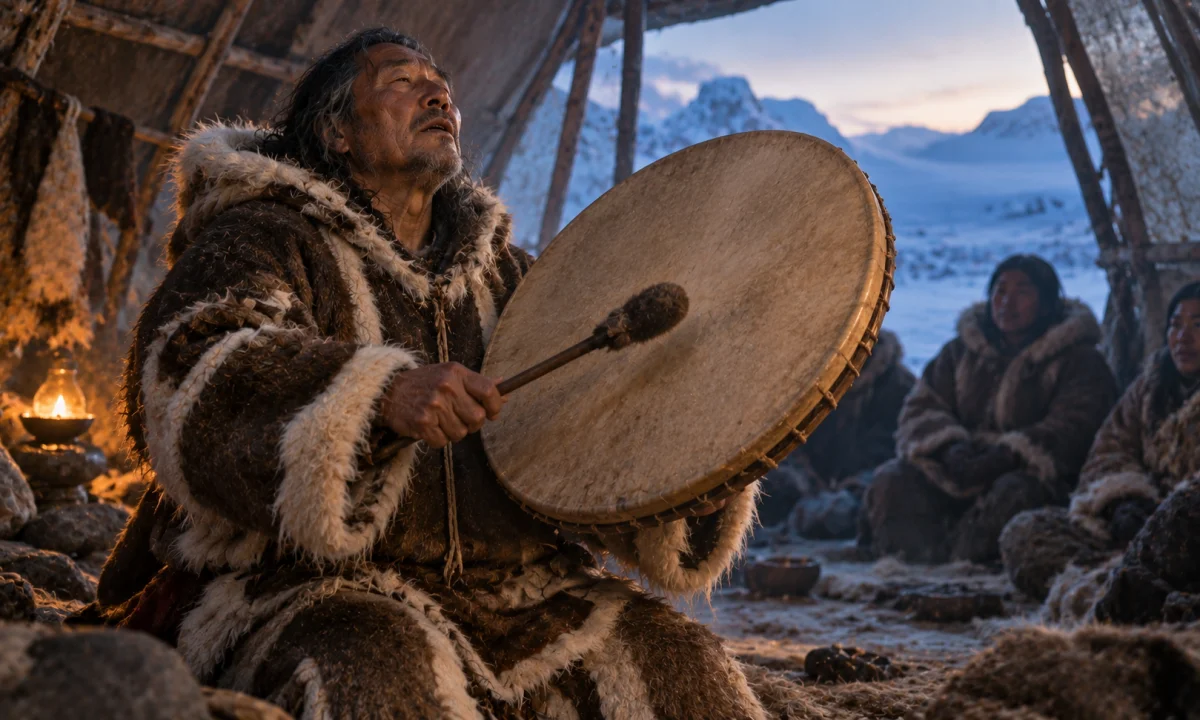
Much traditional Inuit knowledge was transmitted orally through stories, instruction, ritual practice, names, and everyday relationships with the environment. Oral traditions are not less historical because they were not originally written down, but they must be understood through the community, language, and circumstances in which they were preserved. A translated name without its original narrative setting may be impossible to interpret accurately.
Early written records of Inuit traditions were often produced by missionaries, explorers, ethnographers, administrators, or collectors from outside the communities they described. Such records can preserve valuable information, but they may also simplify local beliefs, replace Indigenous terms with Christian categories, or treat one regional account as representative of all Inuit peoples. Later dictionaries and mythology websites may repeat these descriptions without making their origin clear.
Ignirtoq illustrates the problem particularly well. The figure is easy to describe in one sentence as an Inuit fire goddess, but the short description can conceal uncertainty about the name’s spelling, linguistic origin, geographic setting, and traditional status. A responsible account must preserve that uncertainty rather than filling the gaps with invented stories or attributes.
Distinguishing Ignirtoq from other fire figures
Ignirtoq should not be confused with fire deities from unrelated traditions. The Greek Hestia, Roman Vesta, Hindu Agni, and various fire beings from Mesoamerican, African, and East Asian religions belong to different cultural and historical contexts. Their myths, rituals, and theological meanings cannot be used to reconstruct Ignirtoq’s character.
Ignirtoq is also distinct from the sun and moon figures found in different Inuit traditions. The sun may be personified as a female figure, often opposed or related to a male moon, but a celestial being should not be identified with a fire spirit merely because both provide light. Likewise, a household lamp is not simply a piece of the sun in every Inuit tradition. Symbolic similarities do not establish identity.
Finally, the name should not be confused with unrelated names created for fantasy novels, games, or contemporary artwork. A modern character may borrow the spelling Ignirtoq and give it elemental powers, a detailed genealogy, or a dramatic visual design. Such uses belong to modern fiction, not to the limited traditional record.
Modern reception
Ignirtoq has little recognized presence in mainstream popular culture compared with figures such as Sedna or the Inuit giant Kiviuq. When the name appears today, it is more often in online mythology lists, encyclopedia-style summaries, neopagan material, or fictional settings inspired by Arctic traditions. These treatments may preserve the fire association, but they can also turn a poorly documented name into a fully developed fantasy character.
Modern creative work can use Inuit-inspired themes, but it should not present an invented biography as ancient tradition. Respectful adaptation requires attention to the diversity of Inuit peoples, consultation with Inuit voices where possible, and a clear distinction between a contemporary interpretation and inherited religious knowledge. For Ignirtoq especially, acknowledging the limits of the evidence is more accurate than supplying a dramatic but unsupported mythology.