WORLD
WORLD
Adlivun
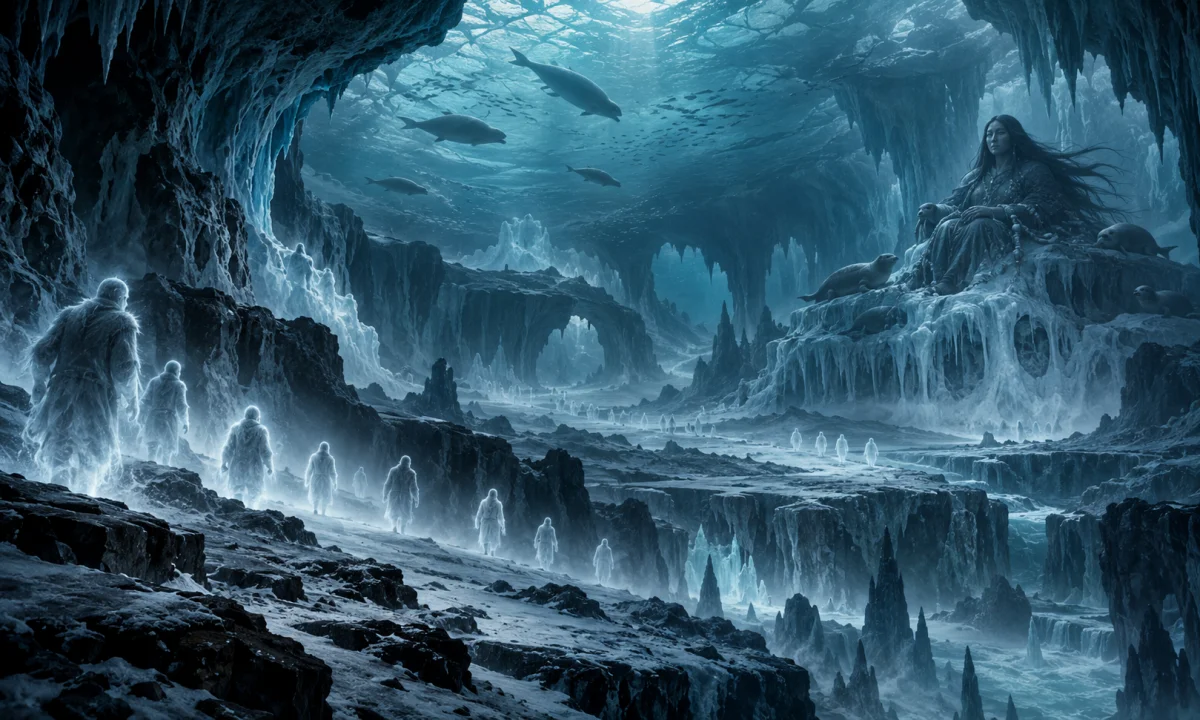
Adlivun is a name used in some accounts of Inuit religious tradition for the realm of the dead, often described as lying beneath the sea. It is not a single, universally defined place in all Inuit communities. Inuit peoples live across a vast Arctic region, and beliefs about death, the soul, the sea, and the destinations of the dead vary between cultural and linguistic traditions. In English-language writing, Adlivun is therefore best understood as a regional or source-dependent name for an underworld or land of the dead rather than as a fixed equivalent of the Christian Hell.
Origins and cultural setting
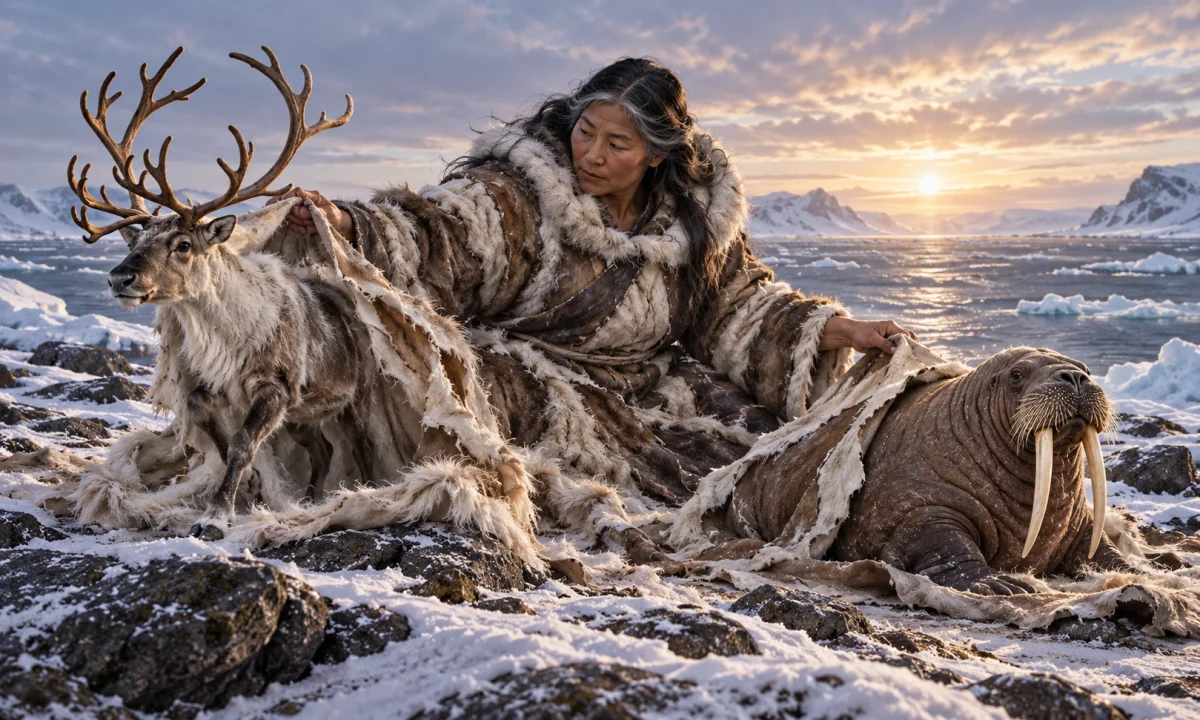
Inuit religious traditions developed within Arctic societies whose lives depended closely on marine animals, seasonal movement, weather, ice, hunting, and relationships with unseen powers. The boundary between the human world and the spirit world was not always imagined as a simple division between nature and the supernatural. Animals, places, ancestors, helping spirits, and powerful beings could all participate in a morally charged universe governed by obligations and ritual relationships.
Knowledge of these traditions was preserved primarily through oral teaching, storytelling, personal experience, ritual practice, and relationships with religious specialists. Much of what is now written in English comes from accounts recorded by missionaries, explorers, ethnographers, and other outsiders. These records are valuable, but they do not represent a single Inuit theology. They may also reflect the vocabulary, assumptions, and Christian comparisons of the people who recorded them.
Adlivun is especially associated with traditions from Greenland and the eastern Canadian Arctic in later written descriptions, although the exact geographical and cultural scope of the term is not always clear. Different communities use different names for the dead, their destinations, and the beings connected with the sea. A description that presents Adlivun as a standard Inuit underworld can therefore be misleading.
Name and identity
The spelling Adlivun is an English rendering of an Inuit term, and the form varies in historical and modern sources. Some accounts use Idlirvirissong or other related spellings. Transliteration from Inuit languages has changed over time, and older records often used writing systems that do not correspond neatly to modern standardized orthographies.
The name is generally treated as a place-name rather than the name of a god or monster. Adlivun is not usually an individual being with a stable appearance, personality, and biography. It refers instead to a realm associated with the dead, although descriptions of its location and function differ. In some presentations it is an underwater region; in others, the name is used more broadly for a realm beneath or beyond the human world.
The meaning sometimes given for the name is connected with the idea of those who are below or a place beneath. Such explanations should be treated cautiously, because the interpretation of an Indigenous term can depend on dialect, grammar, historical spelling, and the context in which it was recorded. The name’s broad association with a lower realm is more secure than any single literal translation.
Adlivun as a realm of the dead
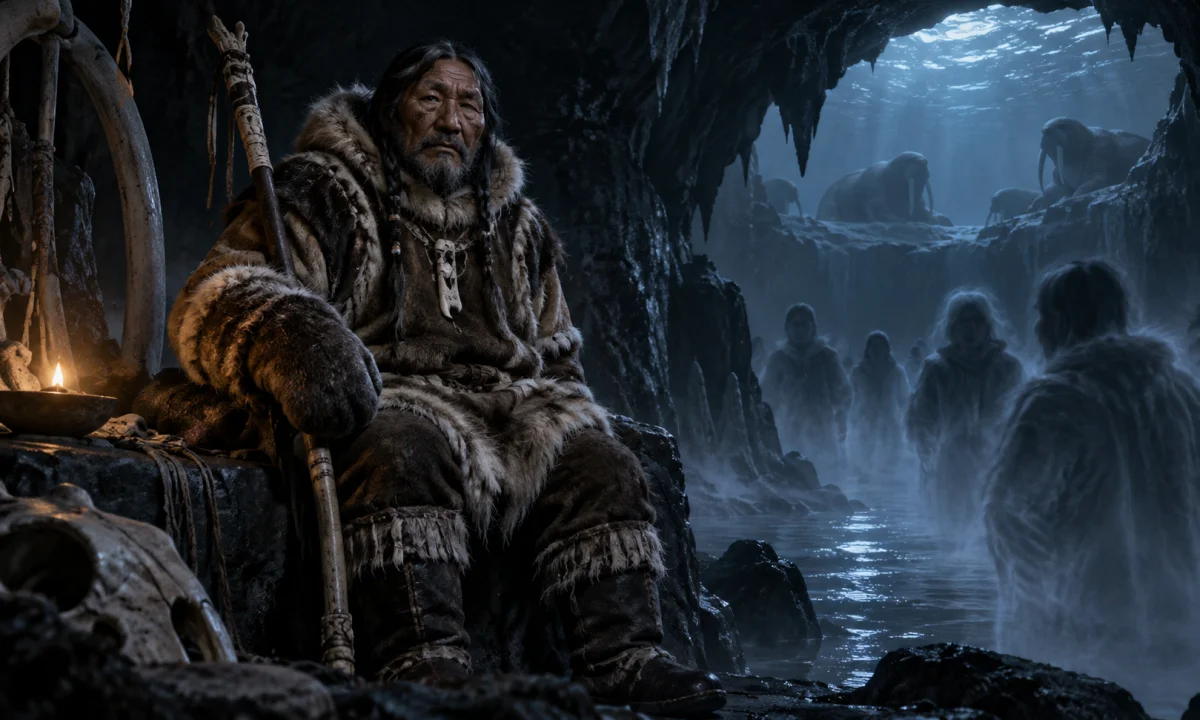
In the accounts that use the name, Adlivun is a destination for the dead rather than a place of eternal moral punishment. The dead may be understood as continuing to exist in another condition, and their passage there forms part of a larger cycle linking human beings, animals, spirits, and the forces that sustain life.
Descriptions often place Adlivun beneath the sea. This setting reflects the central importance of the ocean and marine animals in Inuit life, as well as the danger and mystery of the deep. The sea was a source of food but also a domain of powerful beings and unpredictable forces. A realm of the dead beneath the water consequently belongs to a wider religious landscape in which the ocean is neither simply hostile nor merely physical.
Some written accounts portray Adlivun as cold, dark, or difficult to reach. These qualities should not automatically be interpreted as signs of punishment. Arctic ideas about death may involve hardship, separation, darkness, or a demanding journey without defining the dead as sinners undergoing eternal torment. The condition of the dead could depend on the manner of death, ritual circumstances, moral conduct, social relationships, or the nature of the destination to which a person was believed to travel.
In several popular summaries, the dead remain in Adlivun for a period before moving elsewhere. A period of one year is sometimes mentioned, and the stay has been described as a time of rest, cleansing, or preparation. Such details do appear in some recorded versions, but they should not be presented as a universal Inuit doctrine. Inuit beliefs about the soul and the afterlife are diverse, and the evidence does not support treating every detail associated with Adlivun as common to all Inuit communities.
Souls and different destinations after death
Inuit traditions do not reduce the afterlife to a single destination. Accounts from different regions describe more than one possible realm for the dead. Some souls may be associated with the sea, while others may travel toward the sky, the moon, or another distant place. The distribution of the dead can be connected with the circumstances of death, the person’s way of life, or the special nature of the destination.
Written sources sometimes distinguish between a more desirable place and a harsher or less desirable one. The details vary considerably. In one account, the sea realm may be difficult while another destination is associated with abundance; in another, an underwater realm may be a normal stage in the journey of the dead rather than a negative fate. These variations show why simple comparisons with heaven and hell are unreliable.
Ideas about the dead could also overlap with beliefs about reincarnation, return, naming, and continuity between generations. In some Inuit communities, names and personal qualities could be connected with deceased relatives, and a newborn might receive the name of someone who had died. This does not mean that all Inuit traditions shared one formal theory of reincarnation, but it does show that death was not necessarily understood as complete disappearance. The dead could remain socially and spiritually significant.
Relationship with Sedna
Adlivun is frequently linked in modern reference works with Sedna, the powerful being associated with marine animals. Sedna is known by different names in different Inuit traditions, including names such as Nuliajuk or Taleelayuk in some regional accounts. Her stories also vary widely. In many versions she is a woman whose transformation, mutilation, or descent into the sea explains her authority over seals, whales, walruses, and other animals essential to human survival.
Some accounts describe Sedna as ruling or inhabiting an underwater realm of the dead, and Adlivun is consequently presented as her domain. This association is influential, but it is not a uniform feature of every Inuit tradition or every version of Sedna’s story. Sedna’s principal role may concern the animals of the sea and the restoration of hunting success, while her connection with the dead appears more strongly in particular regional or recorded interpretations.
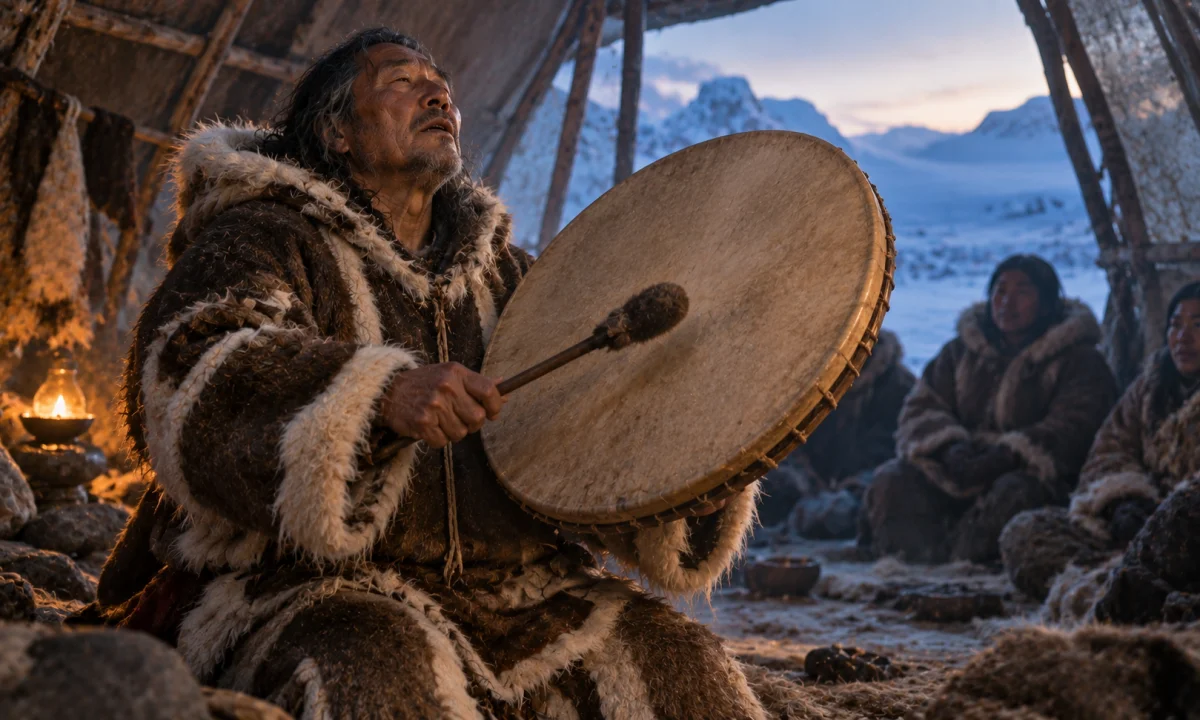
In stories about Sedna, a shaman or angakkuq may travel to her dwelling when marine animals have become unavailable. Sedna is often portrayed as angry because human beings have violated moral or ritual obligations, and her tangled hair must be combed or arranged before the animals can be released. The exact story differs between communities. These narratives are primarily concerned with the relationship between people, animals, conduct, and survival; they should not automatically be treated as descriptions of Adlivun itself.
Anguta and the journey of the dead
Another figure sometimes connected with Adlivun is Anguta, who appears in certain Greenlandic accounts as a powerful male being and, in some versions, as Sedna’s father. These accounts may describe him as accompanying or dragging the dead toward the realm beneath the sea. His role is not consistent across all Inuit traditions, and the relationship between Anguta, Sedna, and the dead depends on the source.
Stories involving Anguta and Sedna are often combined in modern retellings into a single standardized mythology. That combination can obscure important differences between regional traditions. It is more accurate to say that some recorded accounts place these figures within the same sacred narrative world, while others emphasize different beings, names, or explanations for death and the sea.
Ritual and moral meaning
Beliefs concerning the dead were connected with practical and ethical duties. Inuit religious life included rules concerning hunting, treatment of animals, food, childbirth, illness, clothing, tools, sexuality, mourning, and relations between people. Breaking such rules could disturb the balance between humans and the nonhuman powers on which survival depended.
The dead were not necessarily viewed as passive occupants of a distant afterlife. Ancestors and recently deceased people could remain relevant to the living through memory, names, dreams, taboos, and ritual conduct. The treatment of a body, the handling of personal belongings, and the behavior of mourners could carry religious significance, although customs differed greatly from one community to another.
Within this framework, an underworld such as Adlivun can be interpreted as part of a continuing exchange rather than simply as a final prison. The journey of the dead reflects the movement of people through a world filled with powers and obligations. It may also express the risks of crossing between land, sea, life, and death—boundaries that were especially meaningful in Arctic societies.
Adlivun and similar figures or places
Adlivun should be distinguished from Sedna. Sedna is a being or personified power associated with the sea and marine animals, whereas Adlivun is a place or realm in accounts that use the term. They may be connected, but they are not interchangeable.
Adlivun should also not be confused with Qallupilluk, a frightening being in some Inuit traditions said to threaten people near sea ice or open water. Qallupilluk is generally treated as a monster or dangerous spirit, not as the underworld itself. The spelling and description of this figure vary, as they do for many beings transmitted through different Inuit languages.
Nor is Adlivun simply another name for all Inuit ideas about the afterlife. Terms for the dead, the soul, the moon, the sea, and other spiritual destinations differ between communities. English-language summaries sometimes combine elements from Greenlandic, Canadian, and other traditions without identifying their origins. Such combinations can create a mythology that appears more uniform than the historical evidence allows.
Interpretation and cultural significance
Adlivun is significant because it illustrates how Inuit religious traditions can represent death through the geography of the Arctic environment. The sea is a place of nourishment, danger, travel, and transformation. Locating a realm of the dead beneath it gives spiritual meaning to the same environment that shaped everyday survival.
The concept also challenges the assumption that every underworld is a place of condemnation. Adlivun may be dark, distant, or difficult in some accounts, but those qualities do not make it a direct counterpart to Hell. Inuit traditions frequently describe relationships and consequences rather than a single universal system of sin, judgment, and eternal punishment.
Modern scholarship generally treats Inuit religion as a collection of related but locally distinct traditions rather than one centralized belief system. The name Adlivun is therefore most useful when its regional and textual limitations are kept visible. It identifies a recurring idea—a realm of the dead associated in some accounts with the sea—without claiming that every Inuit community shared the same name, story, or theology.
Later reception
Adlivun has appeared in modern encyclopedias, mythology websites, fantasy fiction, role-playing games, and other popular treatments of supernatural traditions. These adaptations often turn it into a clearly defined underworld with a single ruler, fixed geography, and standardized set of inhabitants. Such features may be creative inventions or combinations of material drawn from different sources.
When used in modern fiction, Adlivun may function as a dramatic name for an icy afterlife or underwater realm. That use belongs to popular culture rather than to Inuit tradition itself. Traditional accounts are more varied, more closely tied to particular communities, and less likely to present the realm as a self-contained fantasy location with one universally accepted description.