WORLD
WORLD
Anguta
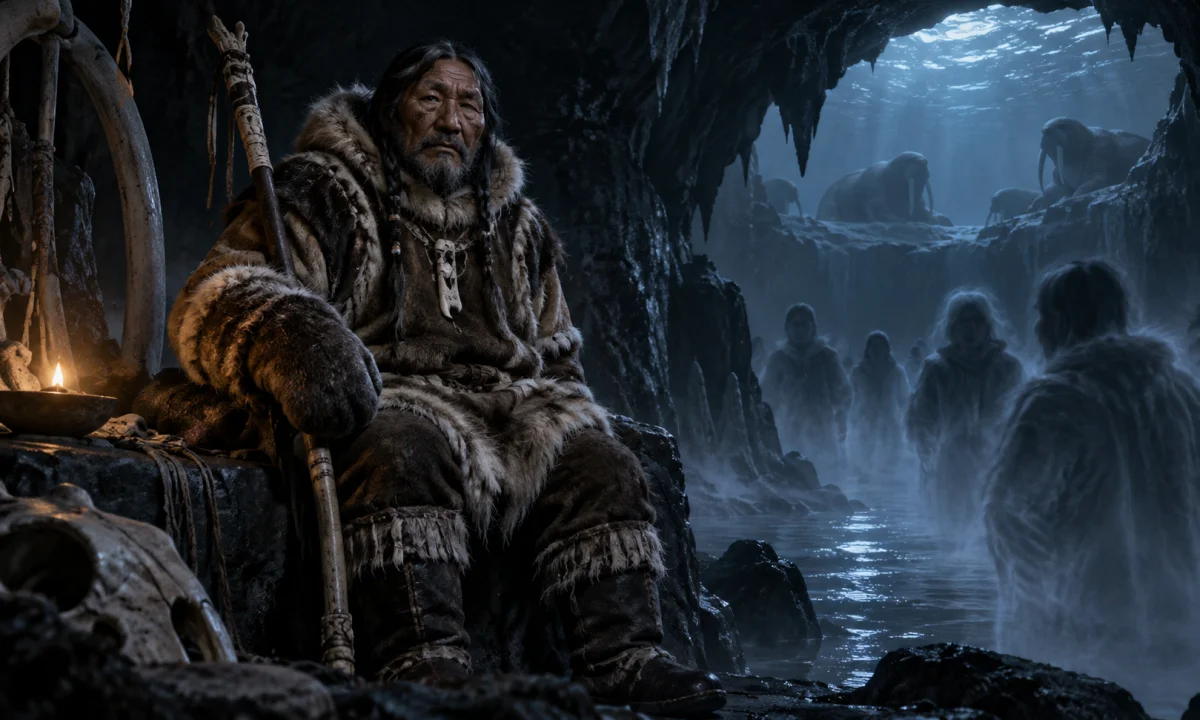
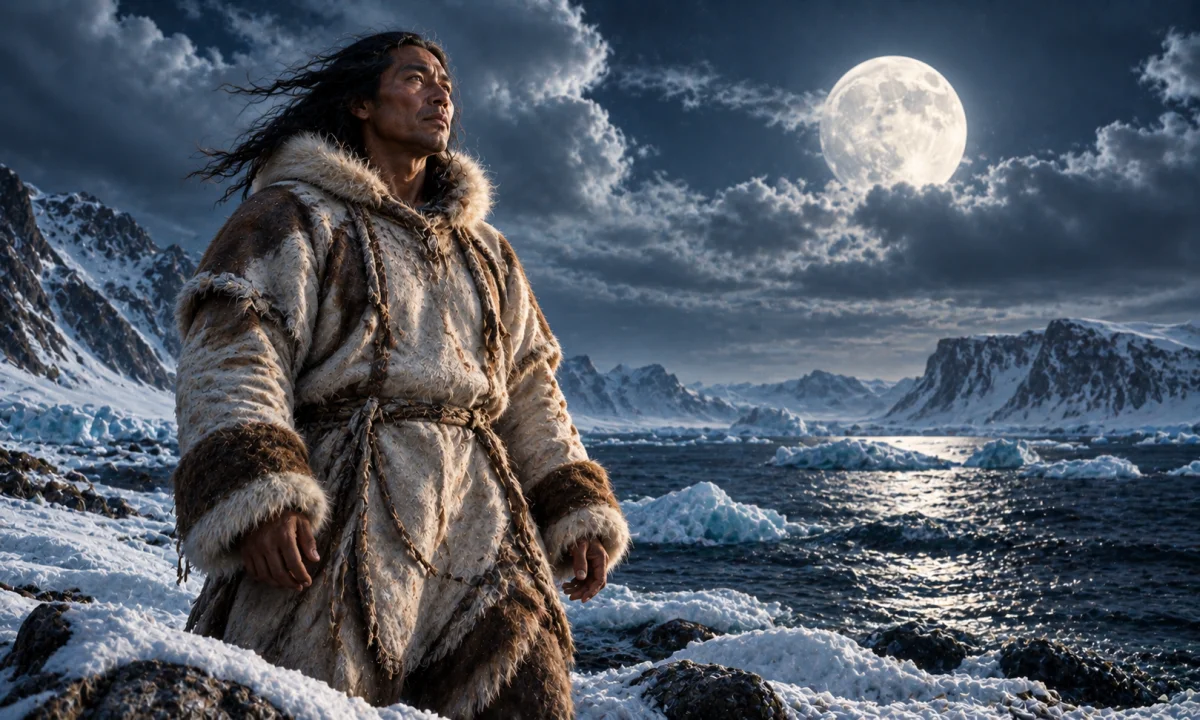
Anguta is a figure associated with Inuit traditions, especially stories from Greenland and parts of the eastern Arctic. He is best known as the father of Sedna, the powerful woman who becomes connected with the sea animals and the realm of the dead. In the most familiar versions of the story, Anguta is involved in the violent event that transforms his daughter into Sedna. His role, however, is not identical in every Inuit community, and the surviving traditions do not form one universal mythology with a single, fixed account of his identity.
Cultural setting and surviving traditions
Inuit religious traditions were transmitted primarily through oral storytelling, ritual practice, personal names, relationships with animals, and the knowledge of specialised ritual figures such as shamans. Inuit peoples live across a vast region including Greenland, northern Canada, and Alaska, and communities have developed distinct languages, histories, and narrative traditions. As a result, characters who are grouped together under one name in modern reference works may have different names, functions, or degrees of importance in particular regions.
Accounts of Anguta were recorded by explorers, missionaries, ethnographers, and other outsiders at different times. These records preserve valuable information, but they are not identical to a complete traditional canon. Transliteration from Inuit languages can also produce several spellings, while translators may use terms such as god, spirit, father, or underworld ruler for concepts that do not fit neatly into European religious categories.
For this reason, Anguta should not be treated as a universally recognised Inuit equivalent of a creator god or devil. In many accounts his main importance comes from his relationship with Sedna and from his place in one of the major stories explaining the origin of marine animals.
Name and identity
The name is commonly written Anguta, although spelling and pronunciation can vary according to language, region, and the system used to write Inuit words. Proposed translations of the name also differ. It is sometimes connected with ideas such as pulling, taking, or cutting, but the precise meaning should not be stated with complete certainty without identifying the relevant Inuit language and linguistic analysis.
Anguta is usually described as a human father or father-like figure rather than as an independent cosmic power with a large body of mythology. In several Greenlandic traditions, he is the father of a daughter who later becomes Sedna. In other versions of the Sedna narrative, the father is unnamed, or his role and character differ substantially. Some retellings also assign Anguta an association with the land of the dead, but that connection is not consistent across all Inuit traditions.
Calling Anguta a “sea god” can therefore be misleading. Sedna, rather than Anguta, is the figure most strongly associated with marine animals, the condition of the hunt, and the underwater realm. Anguta’s importance lies primarily in the family tragedy that precedes Sedna’s transformation.
Anguta in the story of Sedna
The best-known narrative begins with a young woman who refuses or rejects a number of possible husbands. The details vary widely. In some versions she marries a bird or another animal, while in others her marriage is arranged under troubling circumstances. The husband fails to provide adequate food, shelter, or protection, and the woman’s father eventually comes to rescue her.
Anguta takes his daughter into a boat and attempts to bring her home. During the journey, the husband or the husband’s allies may pursue them, or a violent storm may arise. The exact cause differs from one telling to another. In many versions, Anguta becomes afraid that the supernatural danger will destroy everyone in the boat. He throws his daughter into the sea, or pushes her overboard in an attempt to save himself and the other passengers.
The daughter clings to the side of the boat. Anguta then cuts or chops off her fingers. As the severed fingers fall into the ocean, they become seals, whales, walruses, and other sea creatures. The daughter sinks beneath the water and becomes the powerful being known in many traditions as Sedna. The story thus explains both her authority over marine animals and the terrible separation between her and the human world.
This episode is not told in exactly the same way everywhere. The daughter may be known by different names, including names later rendered in English as Sedna, Nerrivik, or Takannaaluk. These names are sometimes treated as interchangeable in popular books, but they can reflect regional traditions with different details and meanings. The father may likewise be Anguta, another named figure, or simply an unnamed parent.
The cutting of the fingers
The cutting of the fingers is the most recognisable action associated with Anguta. It is also the event that makes his role morally and emotionally complex. He is not simply a villain who attacks his daughter for no reason. In the story, he acts under extreme fear and pressure, but his decision is still an act of betrayal that has enormous consequences for both the human and spirit worlds.
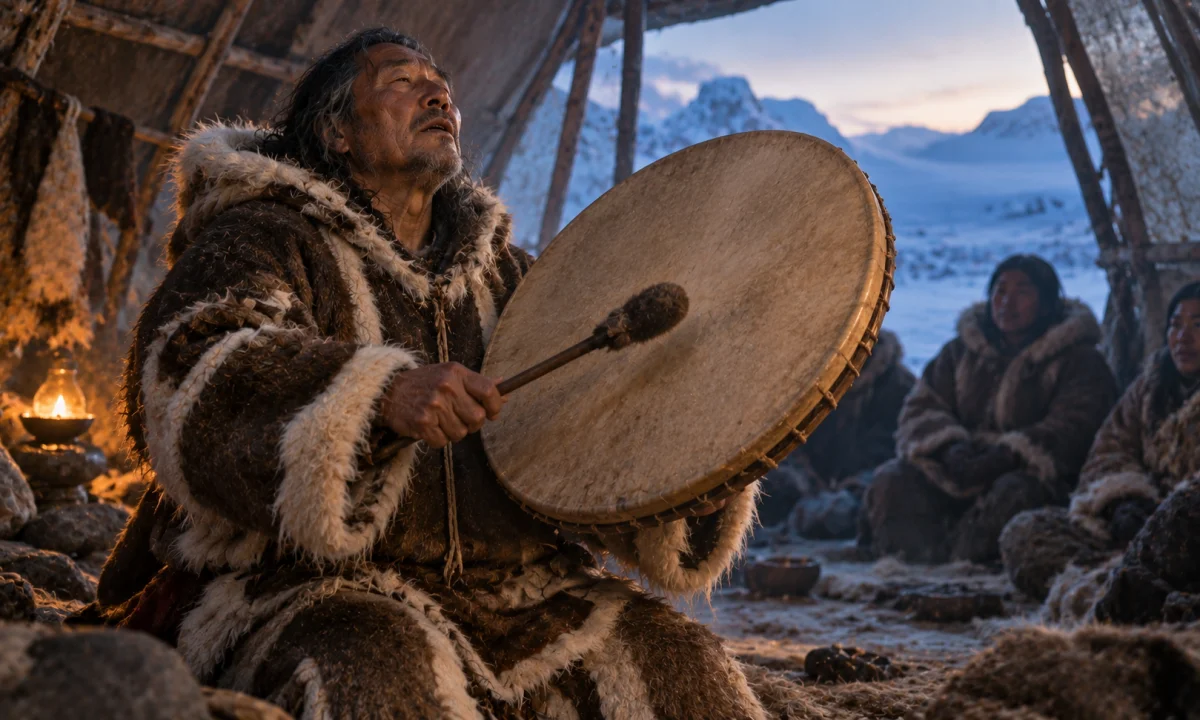
Once transformed, Sedna controls access to many of the animals on which Arctic communities depend. When she is angry, offended, or burdened by spiritual pollution, the animals may remain away from hunters. A shaman must then journey to her underwater dwelling and restore balance. In many versions the shaman untangles or combs Sedna’s hair, which she cannot manage because she has lost her fingers. The ritual care given to her allows the animals to become available again.
Anguta’s cutting of the fingers therefore belongs to a larger narrative about the origin of a difficult relationship between humans and the animals of the sea. The event is not merely a monstrous transformation scene. It establishes a continuing obligation: people must observe customary rules, treat animals with respect, and respond properly when the relationship between humans and the non-human world has been damaged.
Relationship with Sedna
Anguta and Sedna are connected by one of the most disturbing parent-child relationships in Inuit mythology. He is at once her rescuer, her betrayer, and the person whose action brings about her supernatural status. In the story, the father’s attempt to protect himself does not end the danger. Instead, it creates a new order in which his daughter becomes more powerful than the human family that failed her.
Some interpretations emphasise the story’s themes of abandonment, broken trust, and the consequences of violence within a family. Others focus more on the ritual explanation: Sedna’s transformation accounts for the origin of sea animals and for the need to communicate with the being who controls them. These interpretations are not mutually exclusive, but no single symbolic reading should be presented as the definitive traditional meaning.
The narrative also challenges simple divisions between victim and supernatural threat. Sedna’s anger can endanger human communities, yet her authority is necessary because it governs the animals that make life possible in the Arctic. Anguta’s fear is understandable within the crisis of the story, but the result of his decision is catastrophic. The tale presents the natural and social worlds as linked by obligations that cannot be escaped through betrayal.
Possible connection with the realm of the dead
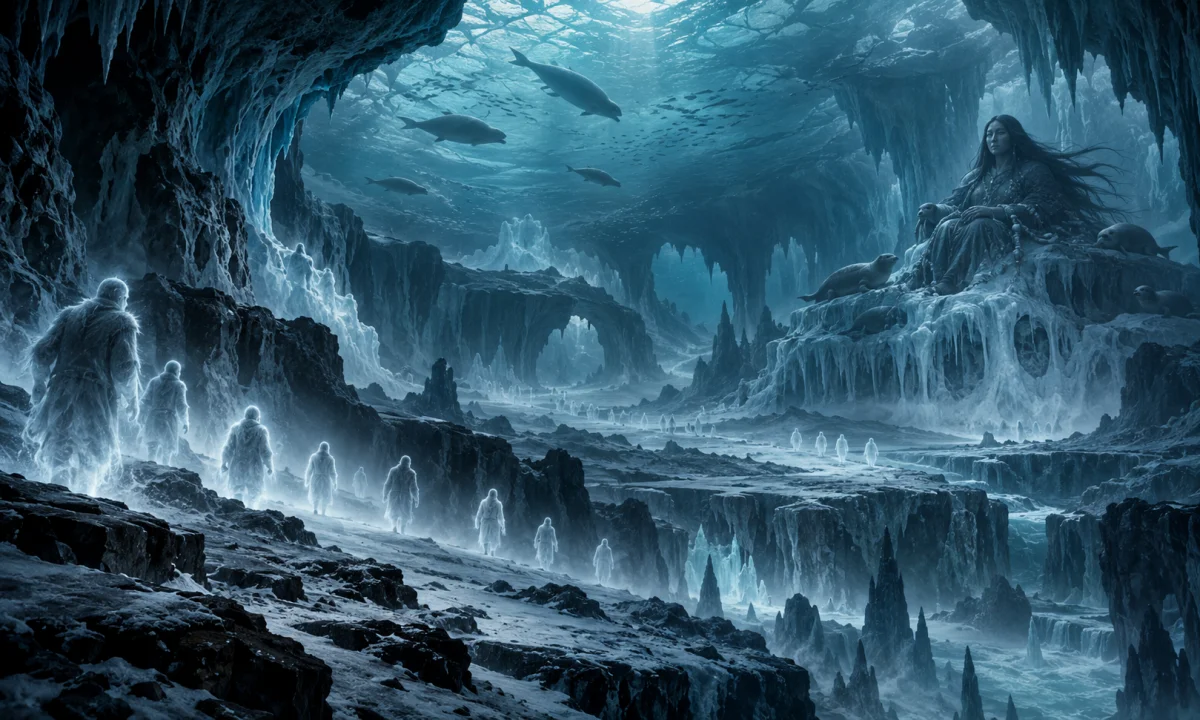
Modern descriptions sometimes call Anguta a ruler of the underworld or say that he carries the dead to Adlivun, a realm associated with the dead beneath the sea. These claims reflect some recorded or later synthesised accounts, but they should be treated cautiously. Across Inuit traditions, the roles of Sedna, other spiritual beings, and the guides of the dead are not uniform.
In many familiar accounts, Sedna herself is the central authority of the underwater realm and the one who controls the sea animals. Other figures may be associated with death, the journey of the soul, or the condition of the dead. Anguta’s connection with this realm may therefore represent a regional tradition, a translation choice, or an attempt by later writers to organise several related stories into a single system.
There is no reliable basis for treating every statement about Anguta as equally widespread. A careful description identifies the underworld association as a variant rather than as an unquestioned defining attribute.
Attributes and classification
- Father of Sedna: Anguta is most consistently recognised in popular accounts for his relationship with the woman who becomes Sedna.
- Human or human-like figure: He is generally presented as a father involved in a family and marriage story, not as a universal creator in every Inuit tradition.
- Participant in Sedna’s transformation: His cutting of his daughter’s fingers is the act that leads to the origin of the sea animals in many versions.
- Association with the dead: Some sources connect him with Adlivun or with the passage of the dead, but this role varies by tradition and should not be generalised.
- Regional and linguistic variation: His name, status, and narrative function may change across Inuit communities and recorded sources.
Descriptions that give Anguta a fixed appearance, a standard set of weapons, or a clearly defined divine genealogy are usually modern elaborations or summaries of a particular version. Traditional narratives do not provide a single agreed portrait comparable to the standardised images of many figures in classical mythology.
Cultural significance
The story involving Anguta and Sedna belongs to a body of Inuit traditions concerned with the reciprocal relationship between people, animals, and the spiritual world. Hunting was not understood simply as the mechanical taking of resources. Animals were beings with their own significance, and successful hunting depended on proper conduct, ritual knowledge, and respect for customary rules.
Within this setting, Sedna’s control of the sea animals expresses the idea that human survival depends on maintaining relationships beyond the human community. When animals become unavailable, the problem is not necessarily solved by greater force or technical skill. It may require confession, ritual attention, and the restoration of an injured relationship. The image of the shaman grooming Sedna’s tangled hair conveys the need to care for the being whose anger has disrupted the hunt.
Anguta’s part in the story introduces an equally important social dimension. His action is driven by fear, but fear does not erase responsibility. The narrative links a personal betrayal to consequences affecting an entire community. It can therefore be read as a story about the danger of abandoning kin, the cost of broken promises, and the way private acts may alter the relationship between humans and the wider living world.
Distinction from related figures
Sedna is not another name for Anguta. She is the daughter in the best-known family relationship and becomes the powerful mistress or guardian of marine animals in many traditions. Her names and attributes vary by region, but her role is much more prominent than Anguta’s in stories about the sea and hunting.
Nerrivik and Takannaaluk are names or forms associated with a sea-mother figure in different Inuit traditions. They are sometimes equated with Sedna in general reference works, but regional usage may distinguish them. They should not automatically be treated as separate universal deities or as exact equivalents in every community.
Pinga, in traditions where she is recognised, is associated with hunting, healing, and the spiritual welfare of people. She is not Anguta, even though modern summaries may place many Inuit spiritual beings together under broad labels such as “gods” or “goddesses.” Likewise, Anguta should not be confused with animal spirits, shamans, or the tupilak, a manufactured or magically created being in Greenlandic tradition.
Later representations
Modern encyclopedias and popular retellings often reduce Anguta to a single sentence: the father who cuts off Sedna’s fingers. Other accounts expand him into a fully defined underworld ruler or a general Inuit god of death. Such presentations can make the story easier to classify, but they may conceal the regional differences and the uncertainty of the surviving records.
In contemporary discussions, Anguta is best understood through his relationship to the Sedna narrative rather than through an imagined universal character profile. The story remains significant not because every Inuit community tells it in precisely the same form, but because its recurring themes—kinship, betrayal, transformation, animal life, ritual responsibility, and the consequences of human action—belong to a wider Arctic religious and cultural context.