WORLD
WORLD
A’akuluujjusi
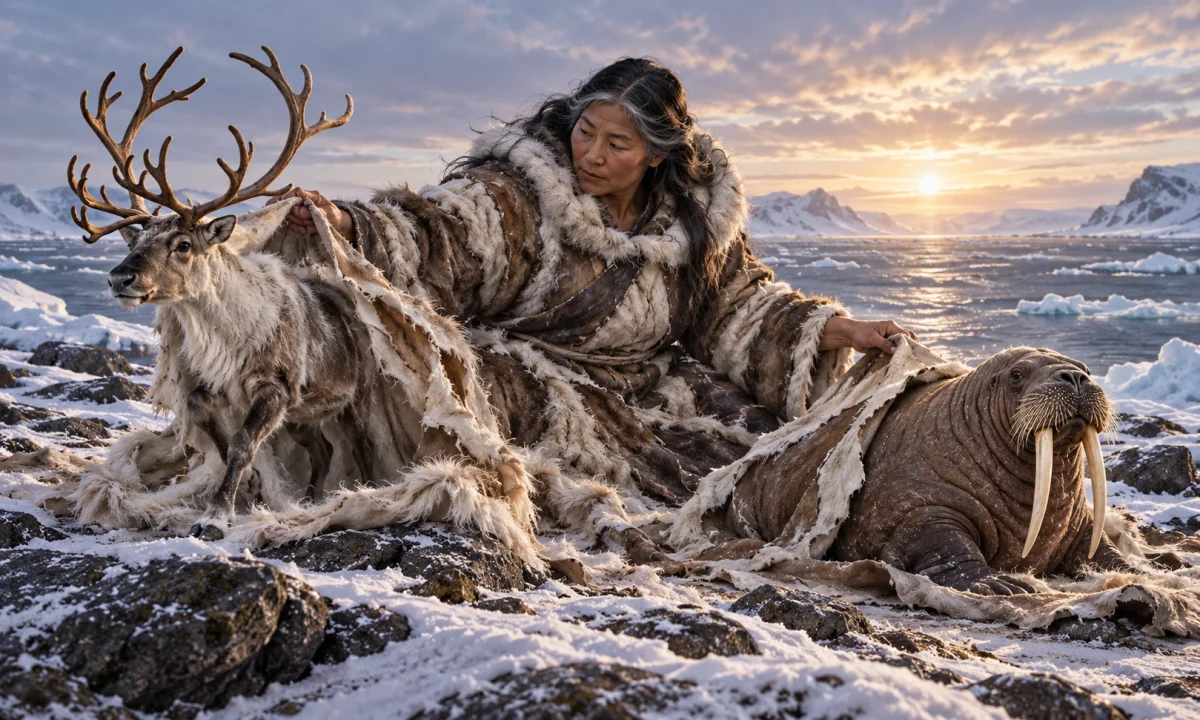
A’akuluujjusi is a creator figure associated with Inuit traditional narratives, especially stories recorded from Inuit communities in the eastern Arctic and Greenlandic cultural region. She is commonly described as a powerful female being connected with the making of animals, people, or living things. The surviving information about her is limited and uneven, however. Inuit traditions are not a single uniform mythology, and accounts of A’akuluujjusi differ in spelling, detail, and interpretation.
Origins and cultural setting
Inuit religious traditions developed across a vast region including Alaska, Canada, and Greenland. Communities in these areas share related languages and cultural histories, but they have never possessed one universally fixed mythology. Stories were transmitted primarily through spoken performance, teaching, ritual practice, and family or community memory. As a result, a figure known in one region may be absent, differently named, or understood in another.
A’akuluujjusi belongs to the group of beings sometimes described in English as creator figures. That description should be used carefully. In many Inuit traditions, the origins of animals, humans, weather, death, and social customs are explained through several stories and powerful beings rather than through one systematic creation narrative. A’akuluujjusi is therefore not necessarily equivalent to a single all-powerful creator in the sense found in some other religious traditions.
Much of what is now written about her comes through the recording and translation of oral traditions. Written forms of Inuit languages also vary by region, and older ethnographic spellings may not represent the orthography preferred by Inuit speakers today. Short reference accounts often combine details from separate communities or present a single interpretation as though it were universal. Such summaries should not be treated as evidence that every Inuit group tells the same story.
Name and spelling
The name appears in several forms, including A’akuluujjusi and Aakulujjuusi. Differences may result from regional spelling conventions, the representation of sounds in older systems of transliteration, or the way a name was recorded by a non-Inuit writer. The apostrophe and the number of repeated vowels or consonants are not, by themselves, evidence that the names refer to different beings.
The meaning of the name is not securely established in a form that can be applied across all sources. It is sometimes glossed broadly as referring to making, forming, or bringing things into being, which supports her classification as a creator figure. Exact translations of traditional names can be difficult because meaning depends on dialect, grammatical structure, context, and the circumstances in which a name was recorded. A confident single-word translation should therefore be treated with caution.
Identity and classification
A’akuluujjusi is generally presented as a female supernatural being, often with the status of a goddess in modern English-language writing. “Goddess” is a convenient label, but it can impose categories that do not map neatly onto Inuit religious concepts. Inuit traditions include spirits, animals with extraordinary powers, ancestral beings, culture heroes, and other non-human persons. Their status may depend on a story, a community, or a particular relationship rather than on membership in a fixed pantheon.
Her most consistent association is with creation or generation. In general descriptions, she is said to have brought animals and other forms of life into existence, or to have played a central part in shaping the living world. Some retellings connect her with the origin of human beings as well. These details should be identified as elements found in particular accounts rather than as a universally documented doctrine of all Inuit peoples.
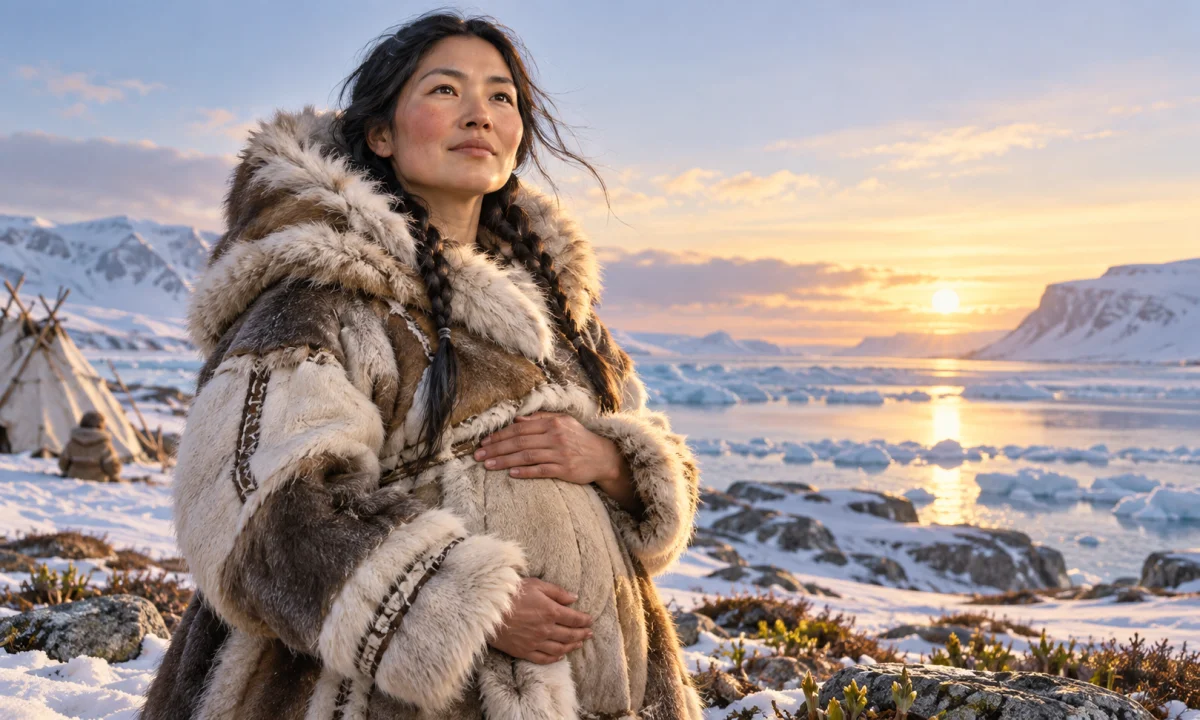
Descriptions of A’akuluujjusi’s physical appearance are also not consistent. She is commonly treated as a woman or motherly figure, but the available material does not establish one standard visual form, costume, dwelling, or set of sacred objects. Illustrations that show her in a particular style are modern interpretations unless they are explicitly based on a documented regional tradition.
Creation and the making of life
The central theme associated with A’akuluujjusi is the making of living beings. Some summaries describe her as creating animals or forming them from materials associated with clothing, sewing, or other domestic work. This imagery is significant because it presents creation not as an abstract act of command but as a practical process of assembling, shaping, and caring for bodies. It also connects the origin of life with activities traditionally essential to Arctic survival.
Details of these accounts vary too greatly to support one definitive version of a “A’akuluujjusi creation myth.” In one telling, a creator may fashion beings directly; in another, the emphasis may fall on transformation, reproduction, or the release of beings already present in potential form. A short written summary can also make a symbolic action appear more literal than it was in the original storytelling context.
When humans are included in stories about A’akuluujjusi, she may be described as a progenitor or maker rather than simply a distant creator. This places her within a pattern found in many traditional narratives in which the boundaries between birth, craft, transformation, and creation are fluid. The same story may explain where a species came from while also teaching obligations toward animals, the land, or other people.
It is important not to infer from the creator label that A’akuluujjusi governs every aspect of existence. Inuit cosmologies generally recognize many powers and relationships. Animals possess agency and may have spiritual counterparts; the sea, weather, ancestors, and other beings can affect human life; and proper conduct is often more important than belief in an abstract universal deity. A’akuluujjusi’s role is best understood within this relational world rather than through a strictly hierarchical pantheon.
Relationships with animals and humans
A’akuluujjusi’s reported connection with animals is especially important. Inuit life has historically depended on intimate knowledge of animal behaviour, seasonal movement, sea ice, weather, and hunting conditions. Animals were not merely resources in traditional thought. They could be treated as persons, could respond to human conduct, and could be connected with spiritual rules surrounding hunting and food.
A being who makes or brings forth animals therefore has significance beyond the question of biological origins. She can represent the dependence of human life on other species and the responsibilities that follow from that dependence. Her stories may be read as placing animals within a moral and familial order, rather than presenting them as objects created solely for human use.
Where she is connected with the origin of humanity, the relationship is likewise more than genealogical. Creation stories can explain why people share a world with animals, why certain forms of behaviour are necessary, and why arrogance or carelessness may produce disorder. The surviving descriptions do not provide a single, detailed ethical system attributed exclusively to A’akuluujjusi, but the creator motif allows her to be associated with kinship among living beings.
Symbolism and interpretation
Modern interpreters often view A’akuluujjusi as a symbol of female creative power, maternal authority, and the knowledge required to sustain life in the Arctic. Such interpretations can be meaningful, particularly when they draw attention to women’s skilled work in clothing production, food preparation, child-rearing, and the maintenance of households. Sewing and the preparation of skins were not minor decorative activities: properly made clothing could determine whether a person survived extreme cold.
At the same time, it is misleading to reduce her to a universal “mother goddess.” That phrase comes from comparative mythology and modern popular writing, and it can flatten important differences among Inuit communities. A’akuluujjusi is not securely documented as the supreme female deity of all Inuit peoples, nor is there evidence that every community recognized her under this name. Her significance must remain connected to the specific traditions in which she appears.
The limited documentation also makes it difficult to distinguish clearly between an indigenous interpretation and later explanatory language supplied by collectors, translators, or reference writers. Terms such as “goddess,” “creator,” and “mother of all animals” may summarize a story accurately enough for general use while still leaving out the original narrative setting. They should not be treated as proof of a standardized Inuit theological system.
Distinction from Sedna and other Inuit figures
A’akuluujjusi is sometimes confused with Sedna, also known in different regions as Nuliajuk or by other names. Sedna is one of the best-known marine beings in Inuit traditions and is widely associated with sea animals, hunting success, and the consequences of violations of ritual or social rules. Her stories often involve her transformation into a powerful being of the sea. A’akuluujjusi, by contrast, is principally identified in available summaries with creation or the making of life.
The two figures should not be merged simply because both are female supernatural beings connected with animals. Their names, stories, and regional distributions are not interchangeable. Nor should A’akuluujjusi automatically be identified with other major figures such as the moon spirit, powerful shamans, animal masters, or local guardian beings. Similar functions—giving life, controlling animals, or affecting human fortune—can occur among different figures without proving that they are versions of one character.
Sources, variation, and limits of the evidence
There is no single ancient Inuit book that sets out A’akuluujjusi’s mythology in a complete and authoritative form. The tradition survives through oral knowledge and through records made at different times by missionaries, explorers, folklorists, anthropologists, linguists, and Inuit cultural workers. Each record reflects the language, location, purpose, and relationship of the person who recorded it.
For that reason, apparently precise claims about her family, personal history, dwelling, weapons, animals, or exploits should be checked carefully. Some details repeated in online lists may come from unsourced modern compilations rather than from a distinct traditional narrative. A short account may also assign her attributes belonging to another figure or may translate a regional name as though it were a pan-Inuit title.
The most responsible description is therefore a limited one: A’akuluujjusi is a female Inuit creator figure whose name and stories vary by source, and who is associated especially with the formation of animals and other life. Her tradition illustrates how Inuit narratives can connect creation with craft, kinship, subsistence, and ethical relations between humans and the more-than-human world.
Modern reception
A’akuluujjusi has appeared mainly in encyclopaedic lists, mythology websites, educational discussions, and modern retellings of Inuit figures. She is far less prominent in global popular culture than Sedna, and there is no broadly established modern franchise or single visual canon devoted to her. Contemporary artwork or fiction may portray her as a universal earth mother, an animal-maker, or a heroic ancestral woman, but those portrayals should be distinguished from the regional oral traditions in which the name is recorded.
Modern retellings can help keep an unfamiliar name in circulation, but they also risk turning a varied tradition into a fixed character with standardized powers and a single biography. Respectful treatments identify the regional and interpretive limits of the material, preserve variant spellings where appropriate, and avoid presenting one reconstructed story as the belief of all Inuit communities.