WORLD
WORLD
Eeyeekalduk
Eeyeekalduk is a name associated in some modern English-language references with Inuit mythology, usually as a female power connected with childbirth, fertility, or motherhood. The identification is uncertain, however. Eeyeekalduk is not a universally recognized pan-Inuit deity, and detailed traditional narratives about the figure are difficult to verify. The name may reflect a localized tradition, a transcription from an Inuit language, or a later classification that treated a particular spiritual being as a goddess.
Origins and cultural setting
“Inuit mythology” is a broad modern term covering traditions from many Inuit communities across the Arctic, including regions of Kalaallit Nunaat (Greenland), Nunavut, Nunavik, Nunatsiavut, the Inuvialuit Settlement Region, and parts of Alaska and Chukotka. These communities have distinct languages, histories, ceremonial practices, and oral traditions. A being known in one region might be unknown, differently understood, or represented by another name elsewhere.
For that reason, Inuit religious traditions are not best understood as a single mythology with one fixed pantheon. Stories describe powerful beings, animal masters, ancestors, spirits of places, the dead, and forces associated with weather, hunting, illness, birth, and the sea. The boundaries between “god,” “spirit,” “personified force,” and “supernatural being” are also not always equivalent to categories used in European mythology.
Traditional knowledge was transmitted primarily through oral teaching, performance, ritual practice, family instruction, and relationships with the land and animals. Many accounts were recorded by outsiders, sometimes in forms shaped by missionary assumptions, ethnographic terminology, or the expectations of collectors looking for named gods. A short entry in a modern mythology list can therefore give a figure a neat identity that is not representative of how the being was understood within its community.
The name Eeyeekalduk
The spelling Eeyeekalduk is an English transcription rather than a universally standardized Inuit form. Inuit languages use writing systems and sound patterns that differ from English, and the same name may be represented differently when transcribed by different writers. A spelling without information about its original language, community, or recording context cannot establish the figure’s precise pronunciation or etymology.
No securely established translation of the name can be given. It is therefore safer not to treat the name as if it transparently meant “mother,” “birth,” or another specific concept. The association with childbirth and fertility comes from the way some secondary references classify Eeyeekalduk, not from a widely available body of traditional texts explaining the name.
The limited documentation also makes it difficult to determine whether Eeyeekalduk was originally understood as an individual female spirit, a regional title, a sacred aspect of motherhood, or a figure later separated from a larger narrative tradition. These possibilities should remain open rather than being combined into an invented biography.
Identity and classification
Modern summaries commonly describe Eeyeekalduk as a goddess of childbirth, sometimes adding fertility or motherhood. That description may be useful as a brief indication of the figure’s reported sphere, but it should not be treated as evidence of a single Inuit-wide belief. There is no well-established pan-Inuit doctrine in which Eeyeekalduk occupies a fixed position comparable to the role assigned to Sedna in many popular accounts of the sea and marine animals.
The word “goddess” can also be misleading when applied without qualification. Inuit spiritual traditions include beings of immense power, but these beings are not always organized into a family of gods with clearly defined offices. A spiritual figure associated with childbirth might be approached through personal observance, midwifery knowledge, ritual restrictions, family tradition, or a local account of the origin of life rather than through a standardized temple cult.
Consequently, Eeyeekalduk is best described cautiously as a name reported in some sources for a female supernatural figure associated with childbirth or fertility. The available evidence does not support a detailed universal profile, a definite genealogy, or a complete set of rituals.
Association with childbirth and fertility
Birth held profound social and spiritual importance in Arctic communities. It marked the arrival of a new member of a family and community, and traditional understandings of birth could involve names, kinship, relationships with deceased relatives, bodily restrictions, food practices, and the protection of the mother and child. These matters varied considerably between communities and historical periods.
In a setting where survival depended on cooperation, health, skilled care, and knowledge of the environment, childbirth was not merely a biological event. It connected generations, family responsibilities, gender roles, naming practices, and ideas about the continuity of human life. A being associated with childbirth would therefore represent more than physical fertility alone. Such a figure could be interpreted in relation to protection, successful delivery, the continuation of the community, and the proper relationship between the human world and the spirit world.
It is important not to turn this general cultural context into specific claims about Eeyeekalduk. There is no securely documented set of universally recognized prayers, offerings, symbols, or ceremonies that can confidently be assigned to the figure. Nor is there sufficient evidence to say that Eeyeekalduk controlled all births, ruled a distinct realm, or acted as the spouse or child of another named being.
Attributes and representation
Reliable traditional descriptions of Eeyeekalduk’s appearance are not well established. Popular mythology directories sometimes present named figures as though each must possess a standard physical form, animal companion, weapon, dwelling, or emblem. No such fixed iconography can safely be attributed to Eeyeekalduk on the basis of the name alone.
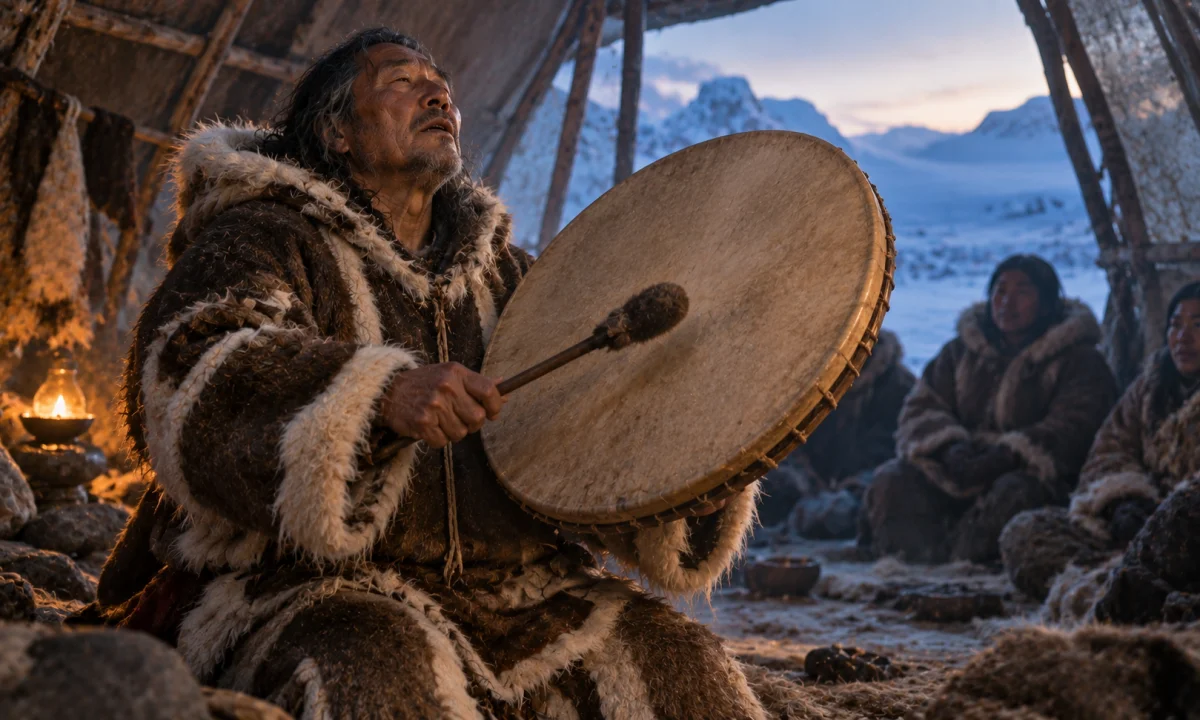
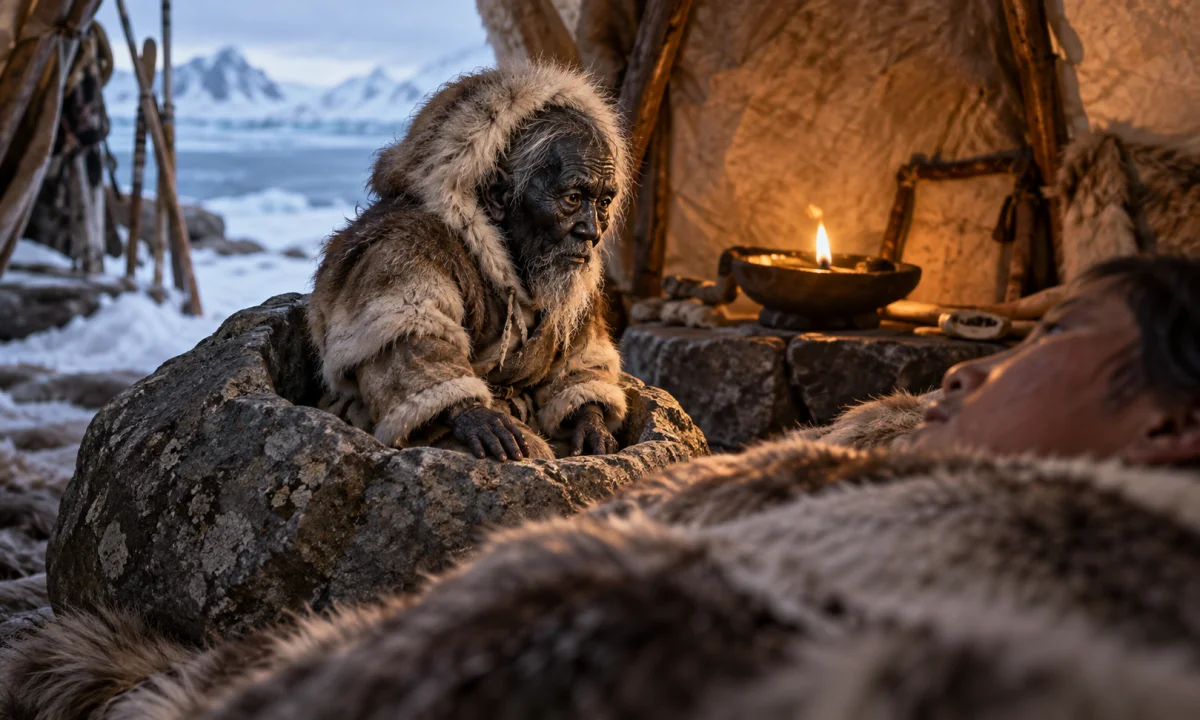
There is likewise no secure evidence for a characteristic animal, costume, sacred object, or visual symbol. An image created for a modern publication, game, illustration, or online directory should not be mistaken for an inherited Inuit representation. The absence of a known image is not unusual: many Inuit spiritual beings were preserved through oral traditions rather than through a canonical system of religious sculpture or written scripture.
If Eeyeekalduk was understood locally as a power connected with birth, the figure’s significance may have been expressed through practice and social knowledge rather than through a recognizable portrait. In Inuit traditions, spiritual meaning can be embedded in names, relationships, conduct, restrictions, songs, narratives, and the respectful treatment of animals and places. These forms of significance are not easily reduced to a list of attributes.
Stories and relationships
No single, widely attested myth about Eeyeekalduk can be identified with confidence. In particular, there is no firmly established narrative describing the figure’s creation, marriage, parentage, conflict with another deity, or descent from a celestial or underworld realm. Accounts that supply such details without identifying a specific community or tradition should be treated cautiously.
The lack of a surviving story does not demonstrate that no story ever existed. Oral traditions can be local, restricted, altered through transmission, or recorded only in forms that are difficult to identify today. It does mean that a responsible account should distinguish between what the name is associated with and what can actually be reconstructed about the figure.
Confusion can arise when broad descriptions of female powers are brought together. A figure connected with childbirth might be compared with other Inuit beings associated with motherhood, fertility, the sea, or the protection of animals, but comparison is not proof of identity. Similar functions do not necessarily indicate that the figures were originally the same being.
Distinction from other Inuit figures
Sedna and Nerrivik
Eeyeekalduk should not automatically be identified with Sedna, one of the best-known Inuit figures in modern writing. Sedna is associated in many traditions with the sea, marine animals, hunting success, and the maintenance of respectful relationships with the ocean. Her name, story, and role vary between communities, and even the familiar account of her transformation is not universal in every detail.
Nerrivik, also known by other regional names and often described as a provider or mother of marine animals, is another figure frequently grouped with sea-related traditions. Neither Sedna nor Nerrivik should be substituted for Eeyeekalduk merely because all may be described using maternal language in secondary sources.
Akna and other maternal figures
Akna is sometimes presented in English-language sources as a mother goddess or a figure associated with fertility. Her name and attributes are themselves subject to regional variation and uneven documentation. The similarity between a fertility association attributed to Akna and the childbirth association attributed to Eeyeekalduk does not establish that the names refer to one figure.
Other named beings, including Pinga and Qailertetang, have also been assigned roles involving human welfare, animals, hunting, weather, or fertility in different summaries. These classifications often simplify complex local traditions. Eeyeekalduk should remain a separate entry unless a specific traditional source demonstrates an identification or connection.
Interpretation and cultural significance
The reported association of Eeyeekalduk with childbirth reflects an important theme in Arctic religious thought: human life exists within a network of obligations linking family, community, animals, ancestors, and the environment. Birth is not isolated from these relationships. It introduces a person into a system of names, responsibilities, memories, and reciprocal care.
At the same time, interpreting the figure only as a generic “fertility goddess” can impose a model borrowed from ancient Mediterranean or European mythology. Inuit traditions do not need to be arranged according to the same categories as Greek, Roman, or Norse religion. A spiritual being related to birth may not have been imagined as an abstract ruler of fertility, nor may the figure have belonged to a formal hierarchy of deities.
The most accurate interpretation therefore combines two points. First, Eeyeekalduk is reported in some sources as a female power associated with childbirth or fertility. Second, the evidence is too limited to reconstruct a single, pan-Inuit doctrine around that association. The uncertainty is part of the historical record, not a reason to fill the gaps with invented stories.
Sources and modern reception
Much of the information now circulated about Eeyeekalduk appears in modern English-language compilations of mythology, encyclopedic lists, and websites that collect names of deities from different cultures. Such works can preserve traces of obscure names, but they do not all distinguish between community-specific traditions, scholarly records, reconstructed meanings, and modern editorial summaries.
There is no widely known body of modern popular culture devoted specifically to Eeyeekalduk. The figure has not achieved the broad recognition given to Sedna or to other mythological beings adapted into novels, films, games, and comics. When Eeyeekalduk does appear in contemporary lists or fictional works, the portrayal should be understood as a modern interpretation unless it is explicitly grounded in a documented Inuit tradition.
For cultural and historical accuracy, the name is best presented with its uncertainty intact: Eeyeekalduk is a little-documented figure associated in some accounts with childbirth, fertility, and motherhood, but the available evidence does not justify treating her as a universally recognized Inuit goddess with a fixed appearance, mythology, or set of relationships.