WORLD

Dubiaku
Dubiaku is an obscure and uncertain name associated in some modern English-language lists with African mythology. Its identity, cultural origin and traditional meaning are not securely established. Unlike well-documented figures such as Anansi, Mami Wata, Eshu, Nyami Nyami or the orishas, Dubiaku does not have a clearly traceable body of stories, a consistently recorded appearance or a confirmed connection with a particular African people.
The name should therefore be treated cautiously. It may represent a rare local term, an alternative spelling, a mistaken transcription, or a modern cataloguing of a legendary being whose original cultural setting has not been preserved. There is not enough reliable information to describe Dubiaku as a single, universally recognised creature or spirit throughout Africa.
Africa does not have one mythology
The label “African mythology” covers a vast range of religious traditions, oral literatures and local systems of belief. These traditions developed among hundreds of peoples speaking many different languages, and their ideas about gods, ancestors, spirits, monsters and sacred places are not interchangeable.
A figure belonging to an Akan, Yoruba, Igbo, Kongo, Maasai, Somali, Malagasy or San tradition would have a different cultural setting, vocabulary and religious history. Even within one broad cultural group, stories may vary between communities and may be transmitted through oral performance rather than through a single authoritative scripture.
This context matters in the case of Dubiaku because the name is often presented without a firmly identified people, language or region. A bare classification as an “African monster” or “African demon” does not establish an authentic tradition. It also risks turning the diverse religious cultures of Africa into a single undifferentiated source of mysterious creatures.
The problem of the name
The spelling Dubiaku is not accompanied by a widely agreed pronunciation, etymology or meaning. African languages commonly use sounds and spelling conventions that have been represented in several ways by European-language writers. A name recorded in one colonial-era alphabet may appear differently in later publications, and oral names can be altered when they are copied by people unfamiliar with the source language.
For that reason, a rare name cannot automatically be assumed to identify a distinct being. It may be:
- an incomplete or inaccurate transliteration of an indigenous word;
- a regional spelling of another name;
- a personal, place or clan name rather than the name of a supernatural being;
- a term taken out of a longer story or ritual context;
- an error repeated in modern lists of mythological creatures; or
- a recent label created by a secondary writer.
No secure interpretation of the name’s linguistic elements can be offered without a reliable original-language record. In particular, the spelling should not be used as evidence for a connection with a specific African language or religious tradition.
Identity and classification
Dubiaku has sometimes been grouped generally with African legendary beings, but its classification remains uncertain. There is no well-established evidence allowing it to be identified confidently as a god, ancestor, nature spirit, demon, animal, giant, water being or benevolent household entity.
These categories are also imperfect when applied across African traditions. A spirit that protects a river, for example, may be revered in one context, feared in another and approached through offerings, taboos or ritual specialists. The European categories “monster” and “demon” often flatten distinctions between dangerous animals, offended ancestors, territorial powers, witches, possession spirits and morally ambiguous beings.
Calling Dubiaku a demon or monster without a documented traditional description would therefore be misleading. The most accurate classification at present is an obscure and insufficiently identified name connected in secondary material with African mythology. That description acknowledges its appearance in mythological catalogues without claiming a traditional identity that cannot be demonstrated.
Surviving traditions and evidence
Many African religious traditions were preserved primarily through speech, performance, initiation, ritual practice and relationships with sacred places. Written records often appeared much later, and early observers did not always understand the distinctions made by the communities they described. A story may also survive under several local names or in forms that change according to the storyteller and the audience.
At the same time, oral tradition should not be treated as an excuse for attaching unsupported details to a name. A figure can be historically important even when it has no ancient written text, but there should still be evidence linking the figure to a particular community, language, narrative, ritual or recorded testimony.
For Dubiaku, that chain of evidence is unclear. There is no broadly recognised cycle of myths that explains its origin, deeds, relationships or religious function. Nor is there a stable traditional description that would justify claims about its body, habitat, powers or behaviour. Statements that describe Dubiaku as a particular kind of animal or spirit should consequently be regarded as unverified unless they can be tied to a clearly identified cultural source.
Attributes and appearance
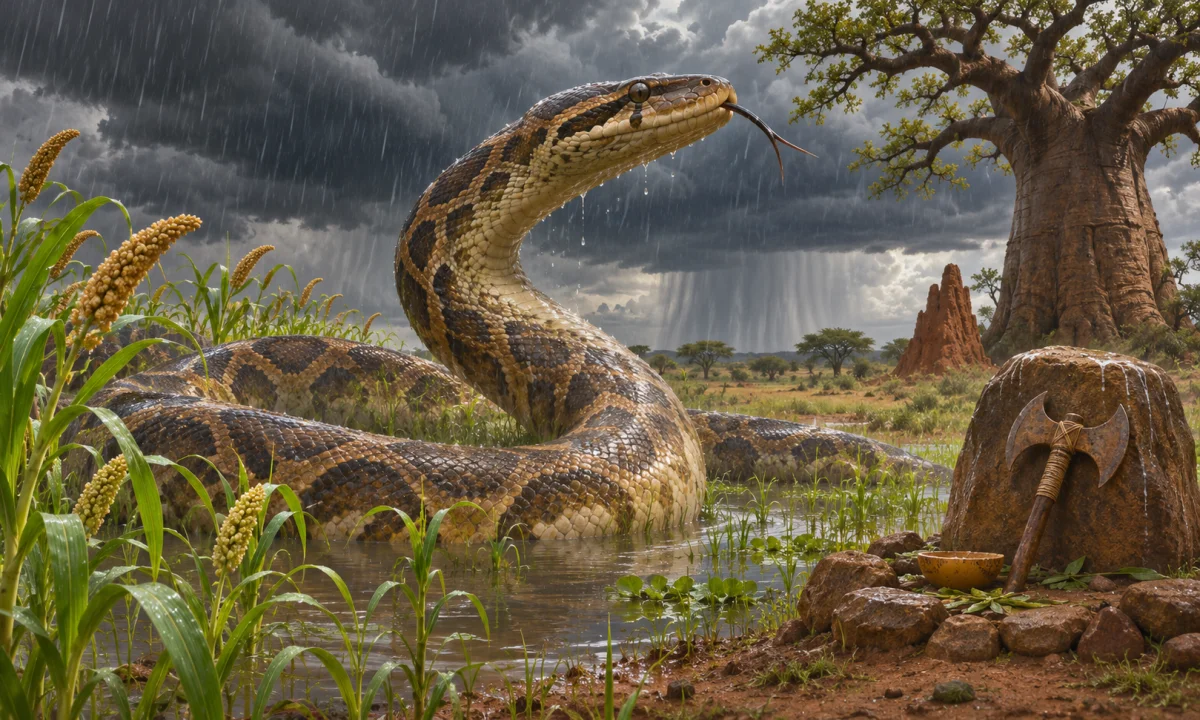
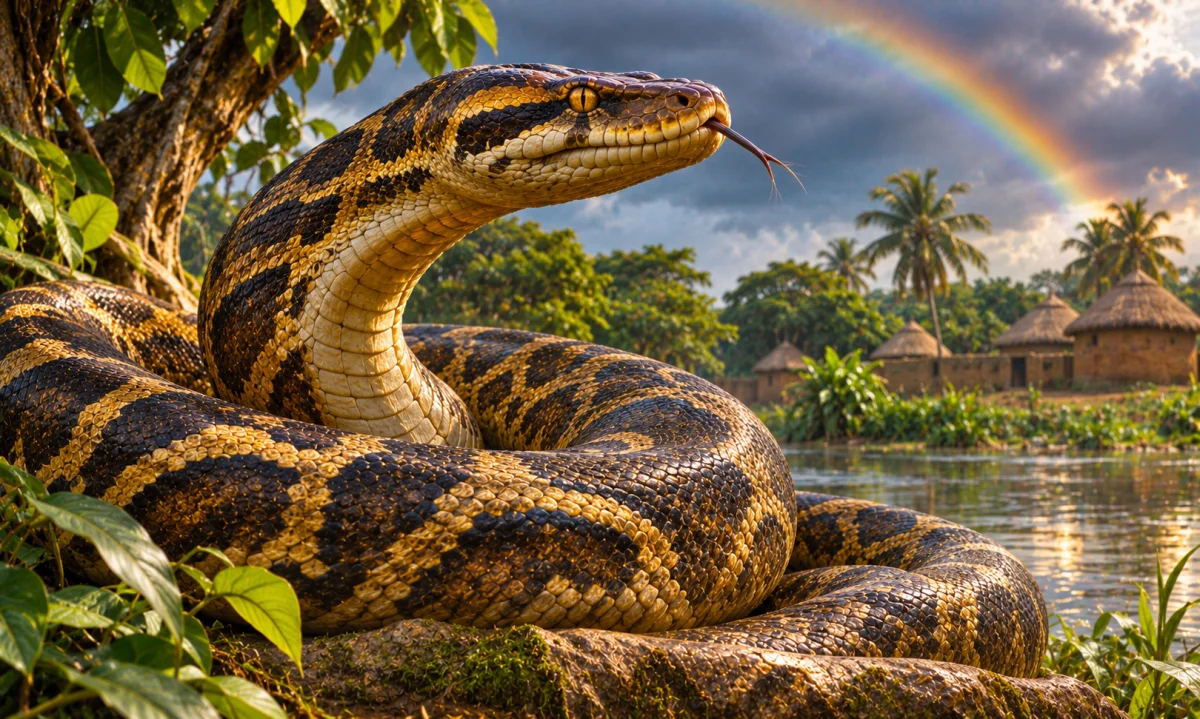
No consistent traditional appearance for Dubiaku can be established. Modern summaries may attach dramatic features to the name, but those details are not enough to prove that they belong to an indigenous narrative. Illustrations, fantasy encyclopaedias and websites that repeat one another can create the appearance of an old tradition even when all of them ultimately depend on the same unexplained entry.
There is similarly no secure basis for assigning Dubiaku a fixed habitat such as a forest, river, mountain or village. Africa contains extensive traditions concerning dangerous animals, wilderness beings, water spirits and nocturnal apparitions, but a general resemblance to one of those themes does not establish that Dubiaku belongs to it.
Descriptions should therefore remain limited to what can be supported. Dubiaku cannot responsibly be given a standard form, gender, size, diet, supernatural ability or moral character. These omissions are not signs that the subject is unimportant; they reflect the difference between a documented traditional figure and a poorly attested name.
Stories and relationships
No canonical story of Dubiaku is widely established. There is no securely documented account of its birth, family, adversaries, encounter with a hero or role in the creation of the world. Claims about relationships with African gods, spirits or legendary heroes should not be accepted merely because the figures appear together in a modern list.
This is especially important when names from different traditions are combined. A water spirit from West Africa, a creator deity from the Great Lakes region and a trickster from southern Africa do not become members of one shared mythology simply because they are all described in English as African beings. The same caution applies to Dubiaku: until its community and narrative setting are known, it should not be inserted into another tradition’s genealogy or cosmology.
Possible reasons for the uncertainty
The obscurity of Dubiaku may have several explanations. A local tradition may have been recorded only once, under an inconsistent spelling, and then disappeared from easily accessible reference works. Alternatively, the name may have been copied incorrectly from an older source. A word describing a ritual role, a place or a type of spirit may also have been mistaken for a proper name.
Another possibility is that Dubiaku belongs chiefly to modern comparative or popular writing rather than to a well-documented traditional corpus. Mythological lists frequently circulate without details about their origins. Once a short entry has been repeated, later writers may add an illustration or a set of attributes, making an uncertain name appear authoritative.
These possibilities cannot be resolved without locating a reliable early record and comparing it with evidence from the relevant language and community. They should remain possibilities, not presented as established explanations.
Cultural significance of careful identification
Careful treatment of Dubiaku reflects a broader principle in the study of mythology: names have meaning within cultures, not in isolation. A supernatural being’s identity may depend on the language used for it, the ritual setting in which it is invoked, the social group that tells its stories and the distinction between sacred teaching and entertainment.
Respectful interpretation therefore requires more than attaching an exotic description to an unfamiliar name. It involves asking who used the name, in which language, for what kind of being and in what circumstances. It also requires separating community tradition from the interpretations of missionaries, colonial administrators, collectors, novelists and later internet writers.
If future research identifies a specific language or community connected with Dubiaku, its classification may become clearer. Researchers would then need to examine variant spellings, local narratives, related terms and the difference between an older religious concept and later translations. Until such evidence is available, uncertainty is the most accurate conclusion about the name’s traditional significance.
Distinguishing Dubiaku from better-documented figures
Dubiaku should not be treated as another name for a famous African deity or spirit without evidence. It is not automatically an alternative form of Anansi, the Akan trickster associated especially with spiders and storytelling; Eshu or Elegba, the Yoruba and related West African trickster and messenger; Mami Wata, a broad and historically changing complex of water-spirit traditions; or Nyami Nyami, a river-associated being in traditions connected with the Zambezi Valley.
Nor should it be merged with frightening beings such as the Asanbosam or Sasabonsam simply because modern descriptions may place all of them under the heading of “African monsters.” Similarities in alleged danger, habitat or appearance are not proof of identity. Distinct traditions must remain distinct unless linguistic and historical evidence demonstrates a relationship.
Modern reception
Dubiaku has no widely recognised role in major modern religious movements, African literary traditions or popular films and games. Its modern presence appears to be chiefly connected with the circulation of short mythological and legendary-being entries. Such material can preserve clues about forgotten names, but it can also reproduce errors and detach names from their original contexts.
In fantasy or popular culture, a writer may freely reinterpret Dubiaku as a monster, spirit or antagonist. That creative use should be identified as modern invention rather than presented as an unchanged survival of African belief. A fictional depiction can draw inspiration from African folklore while still being a new creation, especially when it combines motifs from several unrelated cultures.
At present, the most responsible description of Dubiaku is therefore modest: it is an obscure name associated by some secondary sources with African mythology, but its cultural origin, traditional identity and attributes remain unverified. Further claims require specific evidence rather than repetition of an attractive but unsupported description.