WORLD
WORLD
Nyami Nyami
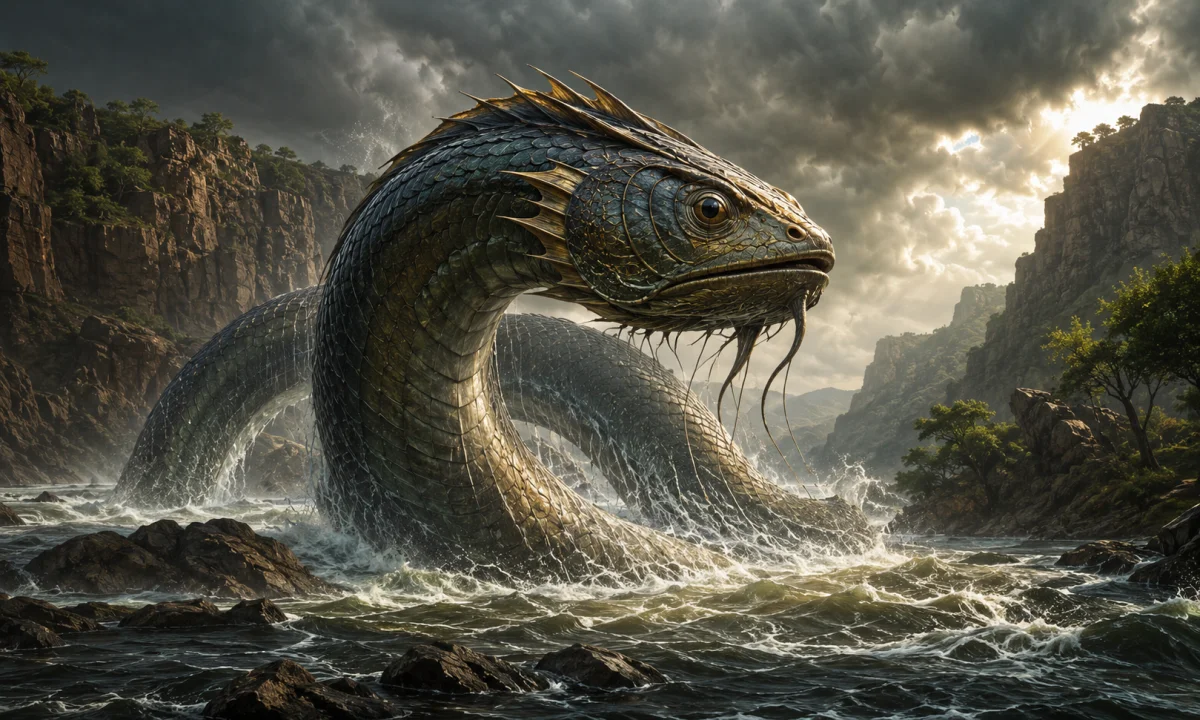
Nyami Nyami is a powerful river spirit associated with the Zambezi River and with the BaTonga people of southern Zambia and northern Zimbabwe. In English-language writing, the figure is often called the “Zambezi River God” or described as a great water serpent. Those labels are convenient, but they can oversimplify Tonga religious traditions: Nyami Nyami is more accurately understood as a major spiritual being of the Zambezi, whose identity and significance vary between communities and storytellers.
Origins and cultural setting
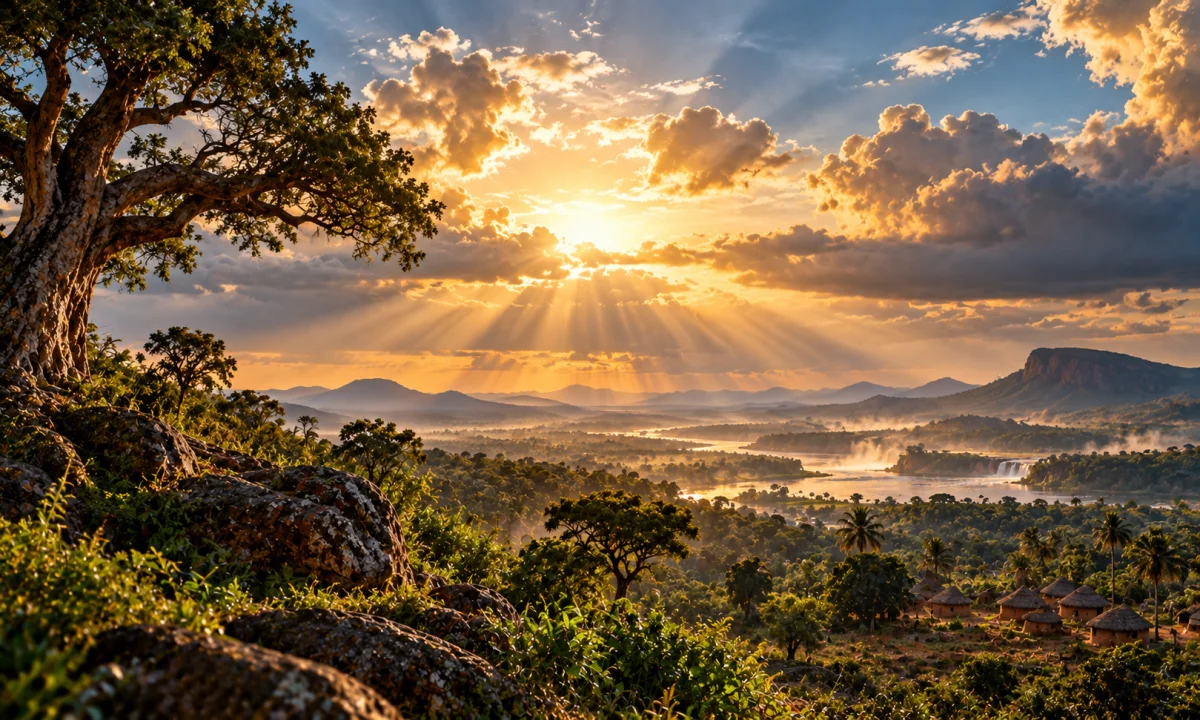
The BaTonga live in communities along both sides of the Zambezi, including the region that was later transformed by the construction of Kariba Dam. The river has long been central to local life, providing fish, water, transport routes and fertile areas for cultivation. It is also a dangerous and powerful environment, subject to floods, whirlpools, changing currents and seasonal hardship. In this setting, spiritual beings connected with the river could be understood as active forces rather than merely decorative characters in stories.
Tonga religious traditions have commonly included respect for ancestors, local spiritual powers and sacred places. Practices and beliefs are not identical in every Tonga community, and outside descriptions have often grouped complex traditions under broad terms such as “god,” “spirit” or “water monster.” Nyami Nyami should therefore not automatically be treated as the equivalent of a supreme creator deity, a devil or a dragon from European folklore. The figure belongs to a particular cultural landscape and is interpreted through Tonga understandings of the river, community, danger and spiritual authority.
Knowledge of Nyami Nyami has been preserved mainly through oral tradition, community memory, ritual understanding and later written accounts. There is no single ancient written scripture that provides a definitive biography or fixed description. Details differ according to the narrator, location and purpose of the telling. Some accounts emphasise Nyami Nyami as a guardian or provider; others focus on the being’s frightening power and association with disasters.
Name and identity
The name appears in several spellings, including Nyami Nyami and Nyaminyami. The variation reflects the difficulties of representing Tonga words in English and the fact that oral names may be written in more than one way. Proposed translations and explanations of the name also vary. Popular accounts sometimes gloss it as “the eater of meat” or “the meat eater,” but such translations should not be presented as universally agreed. The safest use of the name is as the proper name of the spiritual being rather than as a phrase with one certain English meaning.
Nyami Nyami is often classified as a river spirit or water spirit. In popular descriptions, it is frequently called a serpent, dragon or snake-like creature. These categories are useful comparisons, but they come from outside the original Tonga system. A Western reader may imagine a dragon as a winged, fire-breathing monster, while Nyami Nyami is generally connected with water, the river and the living powers of the Zambezi. It is not normally defined by the European dragon’s features.
Appearance
There is no single authoritative physical description. Nyami Nyami is commonly represented as a long, snake-like creature with a large head. Some images give it a rounded or fish-like body, while others portray it as resembling a crocodile, serpent or combination of aquatic animals. In modern carvings and souvenirs, the figure may have a broad open mouth, prominent teeth and a sinuous body.
These visual forms should not be assumed to reproduce one fixed traditional image. Artists, tourist businesses and popular storytellers have developed different ways of making an unseen or spiritually perceived being visible. The Zambezi itself supplies many of the creature’s imagined qualities: immense length, hidden depths, sudden movement and the ability to appear and disappear beneath the water. The lack of one standard appearance is a feature of the tradition’s varied transmission rather than evidence that one particular modern design is definitive.
Power and role
Nyami Nyami is associated with the strength and unpredictability of the Zambezi. Stories may connect the being with floods, violent currents, whirlpools, storms or other disturbances. At the same time, a river spirit is not necessarily evil simply because it can cause harm. A powerful spiritual presence may protect a community, sustain it through food and water, and punish disrespect or disruption.
Some accounts describe Nyami Nyami as a provider of food, especially in connection with the river’s fish. Others present the being as a guardian of the river or of the Tonga people living near it. These aspects can coexist with stories of anger and destruction. The figure’s power is often understood in relational terms: human beings must live appropriately within a landscape that cannot be treated as an inert resource.
Descriptions of rituals or religious specialists connected with Nyami Nyami are not uniform. In some popular accounts, a local spiritual leader or rainmaker is said to have had a special relationship with the river spirit. Such statements should be treated carefully, because English-language retellings sometimes turn a local tradition into a single standardized story. The precise role of Nyami Nyami in religious practice may differ across Tonga communities, and not every community gives the figure the same prominence.
The Kariba Dam stories
Nyami Nyami became internationally famous through stories associated with the construction of Kariba Dam on the Zambezi. The dam was built during the 1950s, and its reservoir eventually created Lake Kariba. The project displaced Tonga communities and radically altered the river landscape. It also brought large-scale engineering, wage labour, colonial administration and environmental change into a region where the river had long been a central part of life.
The best-known story says that Nyami Nyami and a female companion lived in the Zambezi gorge. When the dam was built, the rising waters or the concrete barrier separated them. Nyami Nyami became enraged and caused floods, storms or earthquakes in an attempt to destroy the dam or reunite with its companion. Another version says that the being lived beneath the river and objected to the interruption of its domain. The details vary, and some versions do not include a spouse or companion at all.
These narratives are often linked to severe flooding during construction. In 1958, unusually high water damaged temporary works at the construction site and caused deaths among workers. Later retellings presented the event as an attack by Nyami Nyami. The story of a flood destroying part of the dam project has therefore become central to the popular legend.
Historical evidence, however, explains the flooding through river conditions, engineering difficulties and the hazards of building a major structure in a flood-prone gorge. The disasters were real, but connecting them directly to the action of Nyami Nyami belongs to religious interpretation and oral tradition, not to an engineering explanation. Both dimensions matter: the project had physical causes and consequences, while the story expressed how many people understood the cultural and spiritual violence of the transformation.
Another well-known episode says that, during a period when food supplies were cut off, Nyami Nyami provided meat to the Tonga people. In some versions, the community survived by eating the body of the spirit’s companion, or Nyami Nyami supplied food until the waters receded. These details are especially variable and should not be treated as one established historical event. They are part of a cluster of oral narratives about separation, hunger, loss and the river’s power to sustain or punish.
Displacement and cultural significance
The Kariba project required the relocation of many Tonga people from areas that would be flooded by the new reservoir. The resettlement caused profound social, economic and cultural disruption. Communities were moved away from ancestral places, riverbank fields and sites associated with local memory and spiritual life. The dam also divided communities and changed patterns of fishing, farming and travel.
For this reason, Nyami Nyami is significant not only as a fantastic creature but also as a symbol of resistance, grief and cultural survival. The dam stories can express the experience of a powerful outside project imposed upon a river and its people. In that context, the spirit’s anger represents more than supernatural spectacle. It may communicate the sense that the river had been violated, that ancestral relationships with the landscape had been broken, and that the consequences could not be controlled by technical power alone.
Interpretations differ. Some people treat Nyami Nyami primarily as a traditional river spirit; others emphasise the figure as a symbol of Tonga identity and historical suffering. Tourism often presents the being as a dramatic monster of Lake Kariba, while community understandings may place greater importance on memory, land, spirituality and the effects of displacement. No single interpretation should be assumed to speak for every Tonga person.
Relationships and story variants
The most frequently repeated relationship is between Nyami Nyami and a female river companion or wife. The pair are said to have lived together in the Zambezi before the dam divided them. In some retellings, their separation explains the spirit’s fury; in others, the emotional relationship is a later elaboration that makes the dam legend easier to narrate.
Stories also vary in how they describe the spirit’s attitude toward humans. Nyami Nyami may be a generous provider, a guardian of the people, a being angered by interference or a dangerous power that must be respected. These roles are not necessarily contradictory. Folklore frequently gives natural and spiritual forces both benevolent and destructive capacities, depending on human conduct and circumstance.
Accounts that describe Nyami Nyami as regularly eating people or attacking anyone who enters the river should also be treated with caution. Such details may be influenced by the general idea of a dangerous water monster, by tourist storytelling or by the real dangers of the Zambezi. They do not establish a universal Tonga belief about the spirit.
Distinction from other water beings
Nyami Nyami is sometimes compared with African water spirits such as Mami Wata, but the figures should not be merged. Mami Wata is a broad and complex tradition found in many parts of Africa and the African diaspora, commonly associated with a female water spirit, beauty, wealth, sexuality, healing and danger. Nyami Nyami belongs specifically to the cultural setting of the Zambezi and the BaTonga, and is usually represented in a very different form.
Nyami Nyami is also not simply an African version of a European sea serpent or dragon. Comparisons can help readers picture a snake-like aquatic being, but they may obscure the spirit’s connection to Tonga history, the Zambezi landscape and the Kariba displacement. Nor should it be confused with an ordinary crocodile. Crocodiles are real animals of the region and may influence artistic representations, but Nyami Nyami is a supernatural figure.
Modern representation
Today, Nyami Nyami appears in carvings, pendants, necklaces, paintings, clothing, tourist displays and promotional imagery connected with the Zambezi and Lake Kariba. The figure has become an important emblem in regional tourism and a recognisable symbol of the river. Contemporary objects may be valued as souvenirs or as expressions of cultural identity, but their designs do not necessarily reproduce a traditional sacred image.
The figure is also used in popular retellings of the Kariba Dam story, where Nyami Nyami is presented as a giant monster capable of destroying modern engineering. This version has appeal as an environmental and anti-colonial legend, but it can reduce a complex cultural history to an adventure story. The most responsible interpretations keep the spiritual tradition connected to the people, places and historical experiences from which its modern fame developed.