WORLD

Coca-mama
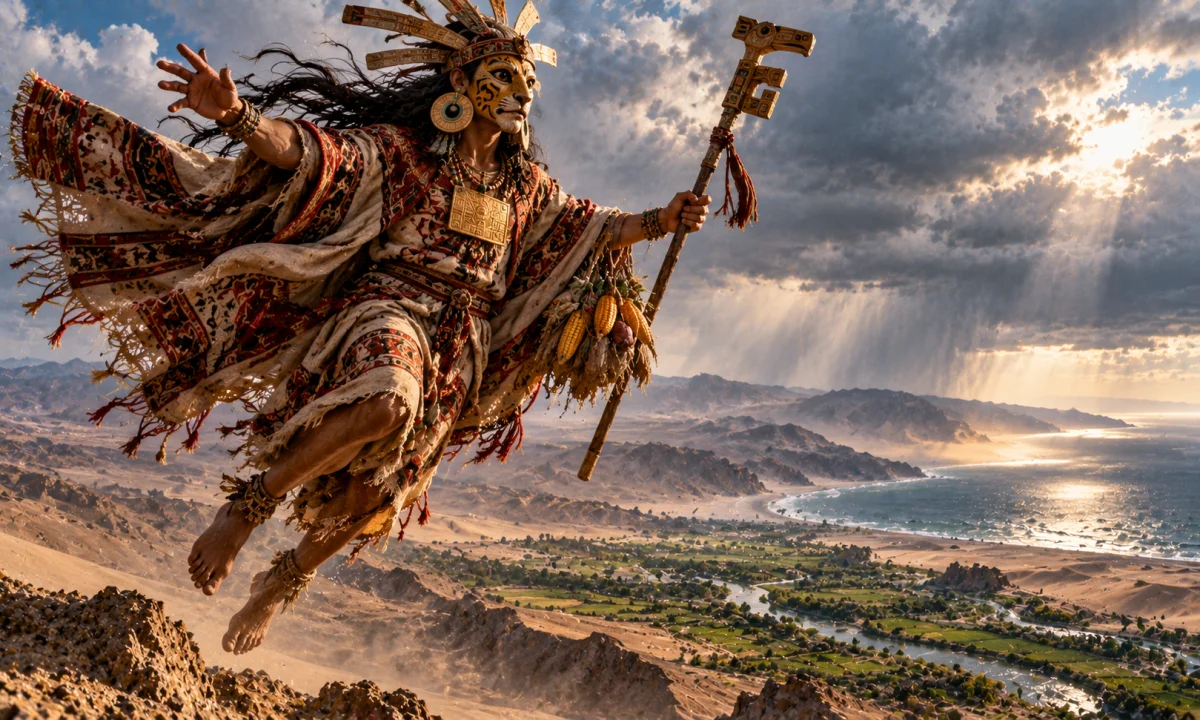
Coca-mama, also written Coca Mama or Mama Coca, is a figure associated in some accounts with the sacred coca plant of the Andes. She is often described as a feminine spirit, goddess, or personification of coca, but her status in traditional Inca religion is uncertain. Unlike major deities such as Inti, the Sun, or Viracocha, Coca-mama is not consistently documented as a distinct, centrally worshipped goddess in the surviving colonial records.
The name is best understood within the wider religious importance of coca in the Andes. Coca leaves were valued for their practical, medicinal, social and ritual uses, and they were closely connected with offerings to sacred places, communication with spirits and the obligations of community life. Later retellings sometimes turn the plant into a clearly defined mythological woman with a single biography. That form may preserve elements of Andean storytelling, but it should not automatically be treated as a universally shared Inca doctrine.
The coca plant in Andean religion
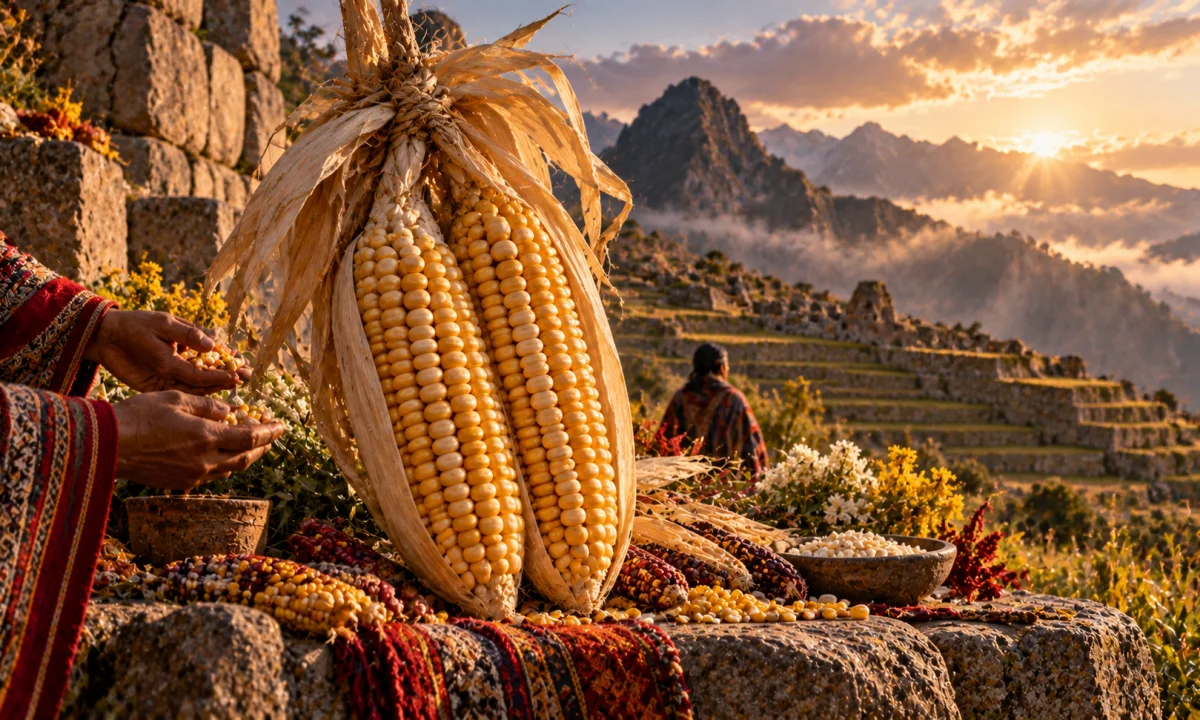
Coca refers principally to the leaves of plants in the genus Erythroxylum, especially Erythroxylum coca and related species native to the eastern slopes of the Andes. Coca was cultivated in warm valleys and forested foothills, while its leaves circulated widely through the highlands. The Inca state controlled or supervised some coca-growing regions, and coca formed part of systems of labour, exchange and political authority.
People traditionally chewed coca leaves with an alkaline substance, a practice that releases the plant's active compounds. The resulting mild stimulant effect can reduce sensations of fatigue and hunger and may help people work or travel at high altitude. Coca also had medicinal applications and was used in hospitality and social exchange. These uses do not make it equivalent to refined cocaine, which is a modern processed drug with very different concentration and effects.
Religiously, coca could be offered to huacas, the sacred places, objects and beings that inhabited the Andean landscape. Offerings could accompany prayers, divination, healing and ceremonies involving ancestors or local protective powers. Leaves might also be exchanged as signs of respect or used to mark important transitions. Such practices show why a maternal or feminine personification of coca could develop without requiring a single, standardized goddess named Coca-mama throughout the Inca Empire.
Name and identity
The name is usually explained as a combination of coca and mama. In Quechua and other Andean languages, mama can mean “mother,” but it can also form part of a respectful title for a female being, an ancestral power or a source of nourishment. “Coca-mama” may therefore be read as “Mother Coca” or “the mother of coca,” rather than necessarily as the proper name of a goddess with a fixed personality.
Spelling varies. English-language sources may use Coca Mama, Coca-mama, Mama Coca or, less commonly, forms that reflect Spanish or local orthographic conventions. These forms are not always used consistently. In particular, Mama Coca can mean the sacred or personified coca plant rather than a separate being from Coca-mama.
The figure is also difficult to classify. Some modern summaries call Coca-mama an Inca goddess of health, happiness, fertility or pleasure. Others describe her simply as the female spirit of the coca plant. These descriptions should be treated as interpretations rather than as evidence of a single official theological category. Andean religious traditions were locally varied, and the Inca state incorporated many regional sacred beings instead of replacing them with one uniform system.
Sources and historical uncertainty
No surviving Inca scripture gives a complete account of Coca-mama. Knowledge of Inca religion comes from archaeology, early Spanish descriptions, Indigenous testimony recorded during and after colonization, colonial dictionaries, and later Andean traditions. These sources differ in purpose and reliability. Spanish observers often interpreted unfamiliar religious practices through Christian categories, while many Indigenous traditions were recorded after political and religious disruption caused by the conquest.
Colonial writers clearly describe the importance of coca, including its cultivation, distribution, chewing and ritual use. They also record offerings made to sacred powers and the use of plants in religious practices. However, the existence of coca as a sacred substance does not by itself prove that all Inca communities worshipped a goddess called Coca-mama. The evidence supports the religious significance of the plant more securely than it supports a single, standardized biography for its personification.
Some stories attached to Coca-mama appear chiefly in later compilations, popular retellings and unsourced lists of Inca gods. Such accounts may draw on genuine Andean ideas about transformation, sexuality, fertility and sacred plants, but their exact antiquity is often impossible to establish. A careful description should therefore distinguish between well-attested coca practices and later mythographic narratives about a named goddess.
Attributes and symbolism
When represented as a feminine power, Coca-mama embodies the life-giving qualities of coca. Her symbolism can include nourishment, endurance, vitality, healing and the relationship between human beings and the cultivated landscape. The maternal element in her name suggests a source that gives strength and sustenance, although this does not prove that she had a formal role identical to that of better-documented Andean mother figures.
Coca is also connected with reciprocity. In Andean religious thought, humans were expected to give something back to the powers that sustained them. Food, chicha, textiles, coca and other offerings could express ayni, the principle of mutual obligation and reciprocal assistance. A personification of coca would therefore represent more than a plant with useful physical effects. She could stand for a relationship between people, cultivated nature, ancestors and the sacred landscape.
The plant's stimulating qualities contributed to its association with travel, labour and communication. Messengers and workers could carry coca, and people used it during demanding journeys and tasks. In ritual settings, coca could help establish a respectful exchange with a sacred place or spirit. These associations make strength, protection and mediation reasonable symbolic interpretations, but they should not be turned into a fixed list of supernatural powers without evidence for a particular tradition.
Stories of transformation
The most widely repeated modern story about Coca-mama presents her as a beautiful first woman or as a woman whose relationships led to her death. In versions of the tale, jealous or aggrieved lovers kill her, and her body becomes the coca plant. Men then chew the leaves, sometimes with the implication that they receive strength, pleasure or sexual vitality from her transformed body.
This narrative is frequently presented online as an ancient Inca myth, but its status is uncertain. It is not securely attested as a universal Inca story in the surviving early records, and versions differ considerably in their details. The story may reflect a genuine mythic pattern in which a murdered or dismembered person becomes a useful plant, yet the precise connection between that pattern and the historical worship of coca remains unclear.
Transformation myths are common in the religious traditions of the Andes. Plants may be understood as the continuing presence of an ancestor, a sacrificed being or a sacred power. Such stories explain why a plant possesses special qualities and why it must be approached with respect. They can also express complex attitudes toward fertility, desire, violence and the exchange between human life and the natural world.
Where the transformation story is used, it is best described as a later or variably attested tradition associated with Coca-mama, not as an uncontested central episode of Inca mythology. The absence of firm evidence does not make the story meaningless, but it does make its historical origin and original distribution uncertain.
Relationship to other Andean female powers
Coca-mama should not be automatically identified with every Andean goddess or female sacred being. The Inca religious world included several important maternal or feminine figures, including Pachamama, associated in many Andean traditions with the earth, fertility and the sustaining environment, and Mama Quilla, the Moon deity connected with time, ritual calendars and royal symbolism. These figures have different names, functions and histories.
Nor is Coca-mama simply another name for Mama Ocllo, the legendary ancestress of the Inca ruling dynasty. Mama Ocllo belongs to origin traditions concerning the establishment of Inca society and royal lineage. Coca-mama, where she appears as a distinct figure, is connected with coca and its sacred or personified qualities.
Terminology can create additional confusion. “Mama” is used widely in Andean religious names and titles, so two figures sharing that element are not necessarily related. Likewise, a local spirit of a coca-growing valley might be associated with the plant without being identical to a pan-Andean deity. Regional traditions and later Spanish-language accounts sometimes combine or simplify figures that originally had different identities.
Cultural significance of coca
The importance of coca cannot be reduced to the idea that it was merely a drug used by priests or rulers. It was part of ordinary social life as well as ritual practice. Sharing leaves could establish hospitality, cooperation or a respectful relationship. Coca could accompany work, journeys, healing and ceremonies, linking everyday activities with religious obligations.
The plant also reveals the environmental breadth of the Inca world. Coca grew in warmer eastern regions, while demand for it extended into the high Andes. Its movement depended on labour, roads, political administration and relationships between ecological zones. In this sense, the religious value of coca was connected to the larger Andean principle of complementarity: communities in different environments exchanged goods and depended on one another.
Colonial authorities and missionaries often viewed coca through hostile or suspicious frameworks, especially when it was used in Indigenous ceremonies. At the same time, colonial economies continued to exploit coca cultivation. Later debates have sometimes treated traditional coca use and the production of cocaine as though they were the same phenomenon. They are historically and pharmacologically different. Traditional coca chewing and coca-based ritual belong to long-standing Andean cultures; cocaine is a concentrated modern product developed through chemical processing.
Later reception
In modern books, websites and popular discussions of mythology, Coca-mama is often presented as a fully defined Inca goddess with a stable set of powers and a dramatic personal myth. These retellings can make her easier to recognize, but they frequently omit the uncertainty of the evidence. They may also treat “Inca mythology” as a single system extending across every Andean community, even though local traditions varied before, during and after Inca rule.
Contemporary Indigenous communities continue to use and value coca in ways that are not simply performances of an ancient myth. In parts of the Andes, coca remains important in social exchange, traditional medicine and ceremonies. Modern cultural and political discussions also emphasize the difference between the living cultural plant and the illegal international cocaine trade. Coca-mama, when invoked today, may therefore function as a symbol of Indigenous identity, ancestral continuity and respect for the coca leaf rather than as evidence of a uniform ancient goddess cult.
The most reliable understanding of Coca-mama keeps both aspects in view: coca was genuinely important in Andean life and religion, while the image of a single, clearly documented Inca goddess named Coca-mama is less certain. She is best treated as a personification or mythic figure associated with coca whose form varies across sources, regions and periods.