WORLD
WORLD
Arnakuagsak
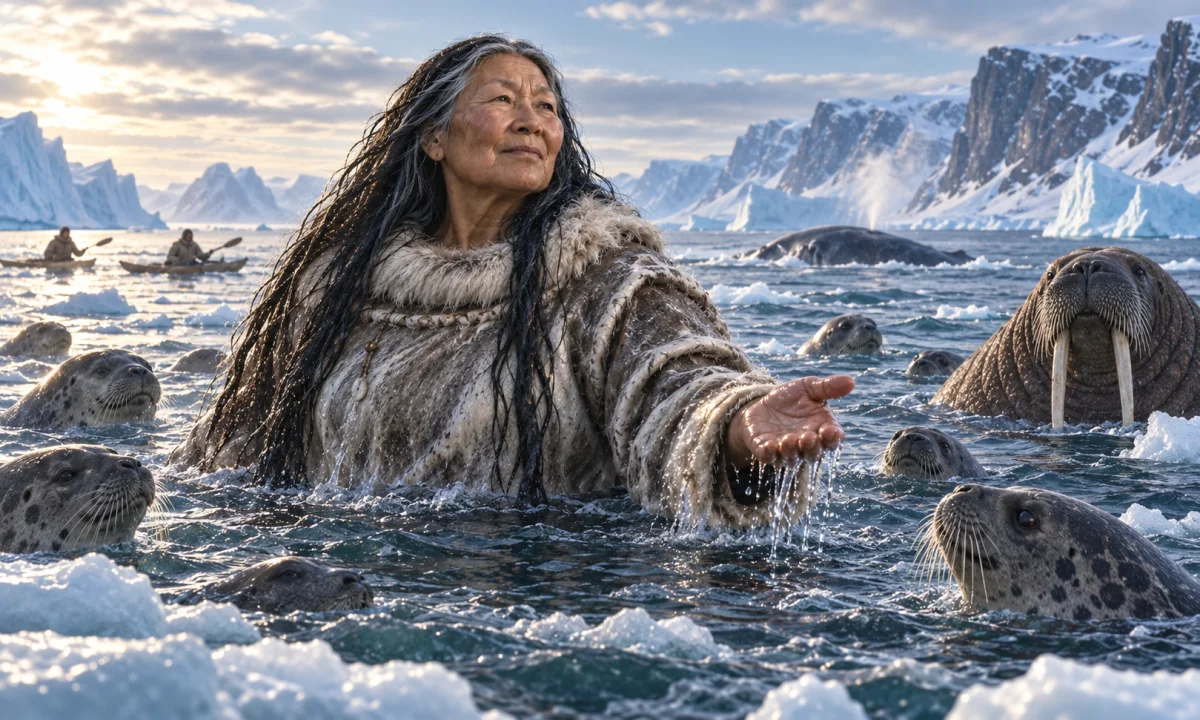
Arnakuagsak is a figure associated with Inuit religious tradition, especially traditions recorded in Greenland. She is commonly described as a powerful female being connected with food, hunting success and the continued availability of animals on which human communities depend. English-language references sometimes identify her with, or compare her to, Sedna, the better-known sea-mother of many Inuit traditions. That comparison can be useful, but it should not be treated as proof that every Inuit community understood Arnakuagsak and Sedna as exactly the same being.
Origins and cultural setting
Inuit religious traditions developed across a vast region of the Arctic, including Greenland, Arctic Canada and parts of Alaska. These communities shared certain broad ideas about animals, spirits, taboos, hunters and the obligations linking people to the non-human world. At the same time, traditions varied considerably from one region, language community and period to another. There was no single pan-Inuit mythology with one universally fixed pantheon.
Arnakuagsak belongs to a religious environment in which the success of hunting was more than an economic matter. Seals, whales, fish, caribou and other animals provided food, clothing, tools, fuel and materials for shelter. Their availability was therefore understood through relationships between human beings, animals and powerful spiritual beings. A poor hunt could be explained not only by weather or chance but also by a breach of ritual conduct, a failure to observe a taboo or a disturbance in the relationship between the community and the animals.
Descriptions of Arnakuagsak come primarily through recorded oral traditions and ethnographic accounts rather than through an ancient written scripture. Such records were made by outsiders as well as by Inuit knowledge holders, and they do not always preserve the same names, stories or classifications. Translations into English can also make a regional figure appear more uniform than the original traditions were.
Name and identity
The name appears in several spellings, including Arnarquagssak and Arnaqquassaaq. Differences in spelling reflect changes in orthography, transliteration and the languages used to record Inuit names. The form “Arnakuagsak” is widely used in English-language discussions, but it should not automatically be assumed that every spelling represents a separate mythological character.
The meaning and pronunciation of the name can be difficult to convey accurately in English. Inuit languages contain sounds and grammatical forms that older European transcription systems represented inconsistently. Popular websites sometimes provide confident literal translations, but such translations are not always supported by a clear linguistic explanation. It is safer to treat the name as a regional traditional name whose exact interpretation may depend on the language and source in question.
Arnakuagsak is generally classified as a female spiritual power or goddess-like being. The word “goddess,” however, is a comparative label rather than a perfect translation of Inuit religious categories. Inuit traditions include many kinds of beings: masters or mistresses of animals, human-like spirits, ancestors, monsters, helpers, local powers and beings associated with particular places or activities. Arnakuagsak is often presented as a goddess in English because she has authority over matters central to communal survival, but her traditional status should be understood within Inuit concepts rather than solely through the categories of classical mythology.
Role in food and hunting
Arnakuagsak is most often associated with the provision of food and the success of hunters. In some accounts, she is described as a being responsible for ensuring that people can obtain enough food to survive. Her importance therefore extends beyond a single animal species. She may be connected with the general abundance of game or with the proper relationship between human hunters and the animals they pursue.
This role reflects a central principle of Arctic religious thought: animals were not merely passive resources. They possessed power, intention and spiritual significance, and their willingness to appear before hunters could depend on how people behaved. Hunting required technical skill, but it also required respect. Rules concerning the handling of bodies, the use of tools, the treatment of menstrual blood, the separation of certain foods and the observance of seasonal practices could all be significant in particular communities.
It would be misleading to describe Arnakuagsak simply as a deity who “controls” food in the manner of a bureaucratic ruler. Her significance is better understood through reciprocity and obligation. The relationship between people, animals and spiritual powers had to be maintained. Ritual observance, generosity and correct conduct helped preserve the conditions under which animals would continue to be available.
Some accounts connect her especially with marine resources, while others give her a broader role in the food supply. This variation may result from differences between regional traditions and from the tendency of English-language summaries to combine related figures. Claims that assign her a single fixed domain should therefore be treated cautiously.
Relationship to sea-mother traditions
The closest comparison is often made with Sedna, a major female being in several Inuit traditions. Sedna is commonly associated with marine animals and with the difficulty or abundance of hunting. In stories told in various Arctic regions, a disturbance involving her hair, body or dwelling can prevent seals and other animals from becoming available to human hunters. A ritual specialist may then travel to her realm and restore the relationship by addressing the cause of the trouble.
Arnakuagsak is sometimes described as the Greenlandic equivalent of Sedna, particularly in concise reference works. In Greenlandic contexts, however, other names for a sea-mother or mistress of marine animals are also found, including Sassuma Arnaa in modern Greenlandic usage. The relationship among these names is not simple. They may represent regional forms of a broadly related religious idea, different names for a similar being, or distinct figures that later writers have grouped together.
For that reason, Arnakuagsak should not be treated as merely an alternative spelling of Sedna. Nor should every story told about Sedna automatically be assigned to Arnakuagsak. The figures overlap in themes of animal abundance, moral conduct and the dependence of human life on marine animals, but the names have different regional histories and may carry different meanings for the communities in which they occur.
Appearance and supernatural powers
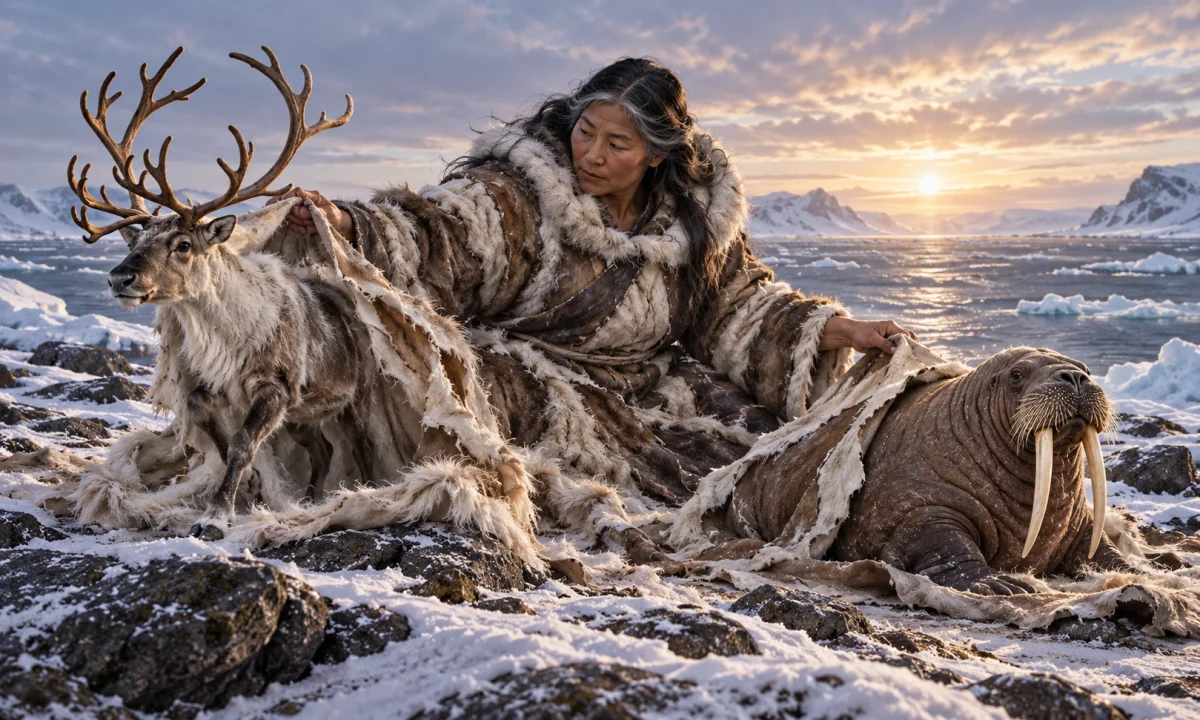
There is no universally established physical description of Arnakuagsak. Like many beings in Inuit oral traditions, she is not best understood through a single canonical portrait. Artistic and popular representations may show her as an elderly woman, a powerful sea spirit or a human-like figure associated with marine animals, but these images should not be confused with a standard traditional appearance.
The frequent portrayal of her as an old woman may be influenced by the role of an elder female being who possesses knowledge and authority. It may also result from the association of several Arctic sea-mother traditions with female figures who live apart from ordinary human communities. Without a specific regional account, it is not possible to say that Arnakuagsak always had one age, body or costume.
Her power is generally expressed through influence over food, animals and hunting conditions rather than through a list of spectacular magical abilities. She may be invoked or discussed in connection with abundance, scarcity and the consequences of broken rules. In this setting, “power” is relational: it concerns whether the bonds between hunters, animals and the spiritual world remain in balance.
Stories and narrative patterns
Unlike figures preserved in a single literary epic, Arnakuagsak does not have one universally recognized biography. Stories associated with her vary according to locality and source. Some summaries give her a central role as a provider of food; others fold her into narratives about the mistress of marine animals. This makes it difficult to identify a definitive set of adventures, parents, spouses or children.
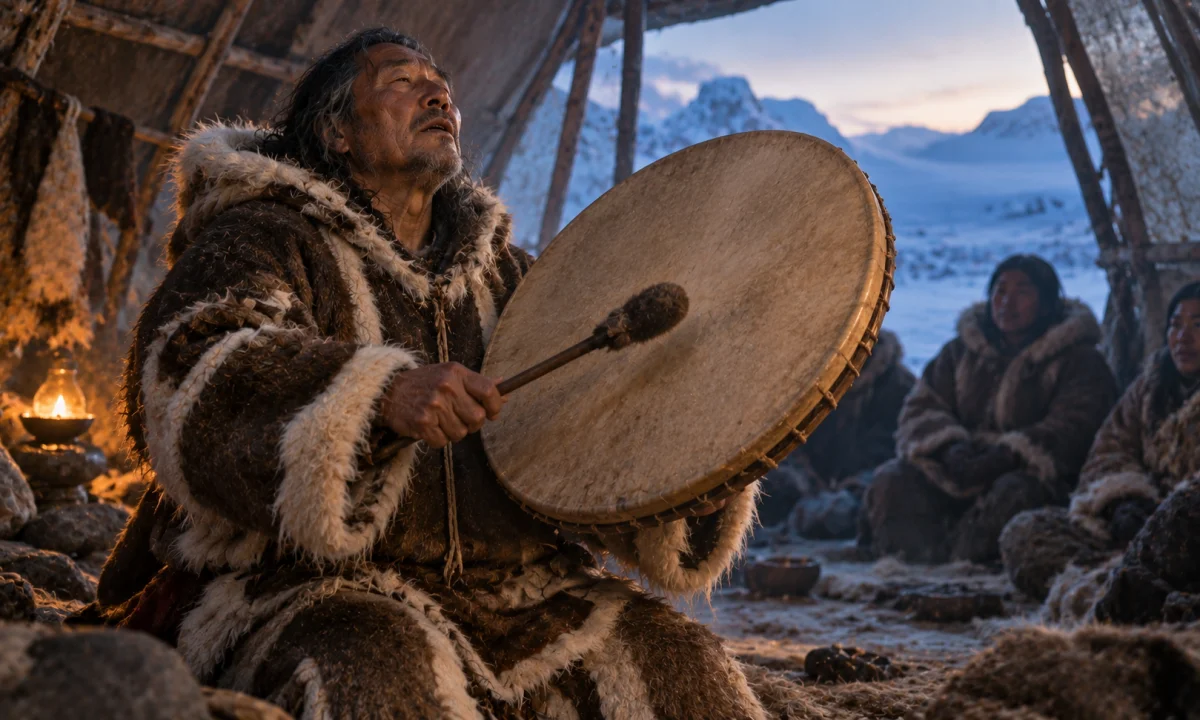
The best-known narrative pattern connected with related sea-mother figures involves the withholding of animals. When hunters have violated an important rule, the animals may remain in the spiritual being’s possession rather than presenting themselves to human hunters. A shaman or other ritual specialist then undertakes a dangerous journey to the being’s dwelling, learns what has caused the offence and restores the animals to the human world.
The famous episode in which a spiritual woman’s tangled hair must be combed is particularly associated with Sedna traditions. It is sometimes attached to Arnakuagsak in modern retellings, but doing so without identifying a particular Greenlandic version risks merging distinct traditions. The combing motif should therefore be presented as a related Arctic narrative pattern, not as an unquestioned defining episode of Arnakuagsak’s mythology.
Similarly, broad statements about her family relationships are unreliable. Some mythological summaries assign spouses, parents or children to Inuit beings because comparable figures occur in neighbouring traditions. Arnakuagsak does not have a single family tree accepted across Inuit communities. The absence of a fixed genealogy is not a gap that needs to be filled; it reflects the nature of the surviving material.
Religious and cultural significance
Arnakuagsak’s importance lies in the way she expresses the dependence of human life on the Arctic environment. In a hunting society, food was connected to ethics, community discipline and spiritual responsibility. A successful hunt supported everyone, while a prolonged failure could threaten the entire settlement. A being associated with food abundance therefore represented a fundamental condition of social survival.
Her traditions also illustrate the Inuit understanding that animals should be approached with respect rather than treated as spiritually empty objects. Hunters had to know the habits and habitats of animals, but practical knowledge alone was not enough. Appropriate conduct toward prey, tools, fellow community members and ritual obligations formed part of the complete skill of living in the Arctic.
These ideas should not be reduced to a modern ecological slogan. Inuit religious traditions are diverse, and their concepts do not map perfectly onto contemporary environmental language. Nevertheless, Arnakuagsak can help show how spiritual beliefs, subsistence practices and social ethics were closely connected. The question of whether food would be available was simultaneously a practical, moral and religious question.
Her prominence in some Greenlandic accounts also demonstrates why the label “Inuit mythology” needs regional precision. A figure may be central in one area, less prominent in another and absent under that name elsewhere. Greenlandic traditions have their own historical and linguistic development, even though they share broad cultural connections with other Inuit societies.
Distinguishing Arnakuagsak from similar figures
- Sedna: A widely known sea-mother figure in several Inuit traditions. Arnakuagsak is sometimes equated with Sedna, but the equivalence is regional and interpretive rather than universally established.
- Sassuma Arnaa: A Greenlandic name commonly translated as “Mother of the Sea.” The name is closely relevant to Greenlandic sea-mother traditions, but it should not be casually replaced with Arnakuagsak in every context.
- Nerrivik: A name associated with a sea-mother or mistress of marine animals in some Inuit traditions. It belongs to the wider family of related Arctic traditions, but its use does not prove that every Nerrivik story concerns Arnakuagsak.
- Arnapkapfaaluk: A female being known in some Iñupiat traditions, often connected in modern descriptions with frightening or dangerous encounters. Similar themes of animals and human conduct do not make her the same figure as Arnakuagsak.
These comparisons are useful because many reference works compress numerous local traditions into a short list of “Inuit gods.” They can also create confusion. Shared concerns—especially hunting, marine animals, hunger and ritual misconduct—do not necessarily indicate a single goddess worshipped under many interchangeable names.
Later reception
Arnakuagsak has had a relatively limited presence in global popular culture compared with Sedna. She appears mainly in encyclopedic discussions, mythology databases, educational material and works concerned with Greenlandic or Inuit religious traditions. Modern illustrations may give her a fixed appearance or combine her with Sedna, Sassuma Arnaa or other sea-mother figures.
Such representations can introduce the name to new audiences, but they are interpretations rather than evidence of a universal traditional image. A responsible portrayal should identify the regional context, acknowledge variation in spelling and tradition, and avoid presenting a single composite “Inuit goddess” as though Inuit communities shared one standardized mythology.