WORLD
WORLD
Antiope
Antiope is a name shared by more than one woman in Greek mythology. The best-known Antiope is an Amazon queen associated with Theseus and the birth of Hippolytus, while another Antiope is a Theban princess who became the mother of the twins Amphion and Zethus. These figures belong to different mythic traditions and should not be treated as the same person. Ancient authors also vary in their names, family relationships and versions of their stories.
Antiope in Greek mythology
Greek mythology was preserved through many local traditions, poems, plays, genealogies and later compilations rather than through a single authoritative account. As a result, the name Antiope, or Antiopē in Greek, can refer to distinct figures in different narratives. The name is commonly connected with ideas such as “opposing” or “facing,” although the exact significance of many Greek mythological names is uncertain.
The two principal mythological figures called Antiope are:
- Antiope the Amazon, a warrior queen or royal Amazon associated with Theseus, the Athenian hero, and usually described as the mother of Hippolytus.
- Antiope of Thebes, a daughter of Nycteus, or in some accounts of Asopus, who was loved by Zeus and became the mother of Amphion and Zethus.
Their stories involve different peoples, settings and mythic concerns. The Amazon Antiope belongs to legends of the Amazons and Athens, while the Theban Antiope belongs to the cycle of Thebes, especially the family history that precedes the stories of Oedipus.
Antiope the Amazon
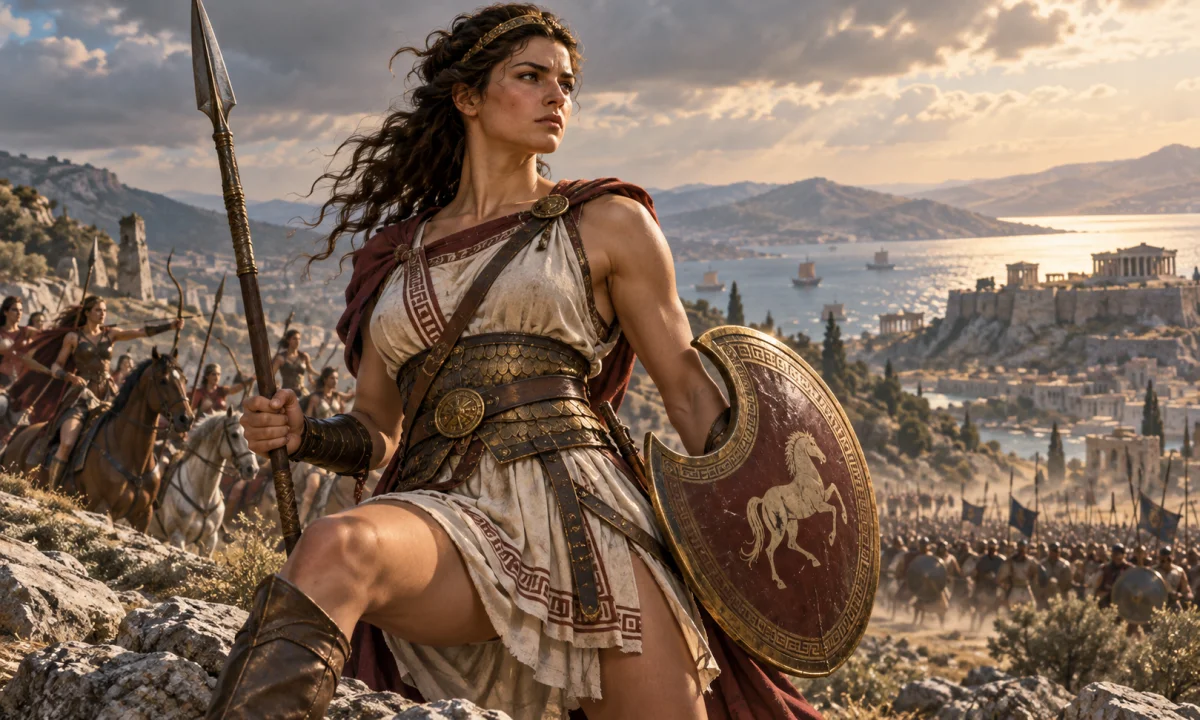
Antiope the Amazon appears in several versions of the legends concerning the Amazons, a people of formidable female warriors who lived at the edges of the Greek world in myth. Greek writers generally placed the Amazons somewhere around the Black Sea, although their location changes between sources. Their stories reflect Greek ideas about foreign peoples, warfare, gender roles and the boundaries between civilisation and the outside world.
Antiope is often presented as a daughter of Ares, the god of war, and as a sister of other important Amazons. Depending on the source, these include Hippolyta, whose famous girdle was sought by Heracles, and Melanippe. The exact family relationships are not consistent. Some traditions use Antiope, Hippolyta or Melanippe for the Amazon involved with Theseus, suggesting that later authors sometimes treated these names as alternatives or transferred episodes between them.
Unlike the Theban Antiope, the Amazon queen is defined primarily through her military identity and her connection with the conflict between the Amazons and Athens. She is not usually described through a distinctive physical appearance. Like other Amazons, she would be imagined as armed and mounted or prepared for battle, often carrying a spear, sword, shield or bow. These details belong to the broader Greek image of the Amazons and are not always specific attributes of Antiope herself.
Antiope, Theseus and Hippolytus
The most familiar account makes Antiope the woman taken by Theseus during an encounter with the Amazons. The circumstances differ in ancient and later retellings. In one influential version, Theseus accompanied Heracles on the expedition against the Amazons and carried Antiope away after the attack. In another, Theseus encountered and abducted her independently. Some traditions instead name Hippolyta as the woman taken by Theseus.
After Antiope was brought to Athens, she became Theseus’s partner and the mother of his son Hippolytus. This relationship links the Amazon stories with the tragic legend of Hippolytus, who was devoted to Artemis and rejected sexual love. When Phaedra, Theseus’s wife, fell in love with Hippolytus, her humiliation and accusation eventually led to his death. The tragedy of Hippolytus is best known through Euripides’ play Hippolytus, but that drama does not make Antiope its central character.
In some accounts, Antiope was still with Theseus when the Amazons attacked Athens. The invasion may be explained as an attempt to recover their queen, to punish Theseus for abducting her, or to oppose his marriage to her. The Amazons reach Athens and are defeated after a major battle. Ancient tradition located this conflict in several places around the city, and later Athenian monuments celebrated the supposed victory as an example of the city’s heroic past.
The Amazon attack is part of the wider Greek motif known as the Amazonomachy, the battle between Greeks and Amazons. It appears frequently in classical art, including sculpture, painted pottery and architectural decoration. The subject allowed artists and poets to portray a dramatic confrontation between familiar Greek heroes and powerful female outsiders. It was also used symbolically to represent the defeat of disorder, foreignness or a challenge to established social structures, although interpretations vary according to period and context.
Antiope’s own fate is uncertain because the sources do not agree. Some versions say that she died fighting beside Theseus against the Amazons. Others say that an Amazon named Molpadia killed her, perhaps unintentionally or as part of the conflict. In still other accounts, the woman associated with Theseus is Hippolyta rather than Antiope. These variations mean that there is no single ancient biography of the Amazon Antiope.
Names and identity among the Amazons
The relationship between Antiope, Hippolyta and Melanippe is one of the most difficult features of the tradition. In one narrative, Hippolyta is the Amazon queen whose girdle Heracles must obtain during his ninth labour. In another, Hippolyta is the woman taken by Theseus and the mother of Hippolytus. Elsewhere, Antiope occupies that role. Melanippe may appear as a sister, a queen or a woman involved in a separate episode with Heracles.
These differences do not necessarily indicate that ancient storytellers were careless. Mythological traditions were transmitted by different poets and communities, and names could be adapted to fit local genealogies or dramatic purposes. Later mythographers also attempted to reconcile conflicting accounts, sometimes treating separate names as alternate identities and sometimes keeping them distinct. The result is a network of related but incompatible traditions rather than a stable family tree.
For this reason, statements that Antiope was definitively the sister of a particular Amazon, or that she always had one specific fate, should be qualified. Her association with Theseus and Hippolytus is widespread, but the identity of the Amazon in that story varies among ancient sources.
Antiope of Thebes
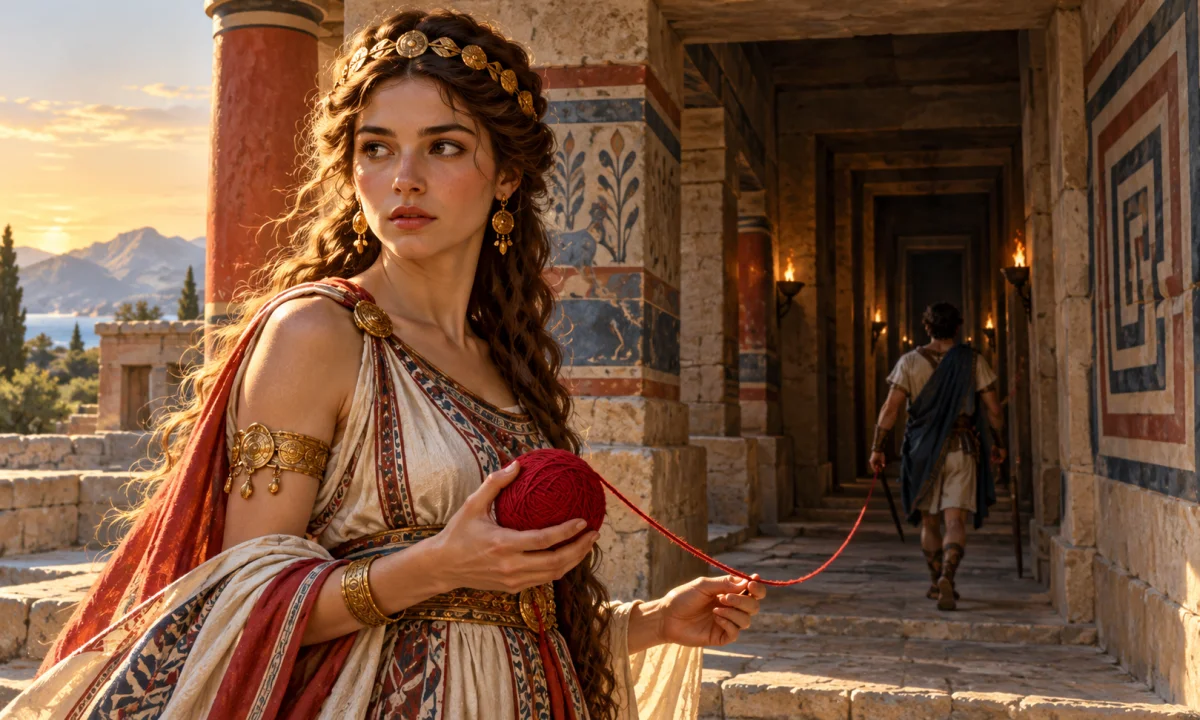
The second major Antiope belongs to the mythology of Thebes. She is generally described as the daughter of Nycteus, a ruler of Thebes, although some traditions give her a different parentage, including a connection with the river god Asopus. This Antiope is not an Amazon and has no necessary relationship to the woman associated with Theseus.
According to the central version of her story, Zeus desired Antiope and approached her in secret, sometimes in the form of a satyr. Antiope became pregnant with twins. The myth then introduces Epopeus, king of Sicyon, who carried Antiope away. The reason for the abduction varies, and the roles of Zeus and Epopeus are not identical in every account. Nycteus, distressed by the dishonour or disappearance of his daughter, either attacked himself or entrusted the recovery of Antiope to his brother Lycus.
Lycus led an expedition against Sicyon, killed Epopeus and brought Antiope back toward Thebes. During the journey, or shortly before her return, she gave birth to the twins Amphion and Zethus. In some versions the infants were exposed and later rescued by a shepherd. Antiope herself then suffered further abuse at the hands of Dirce, who was connected with Lycus and treated her as a rival or servant.
When Amphion and Zethus grew up, they learned of Antiope’s suffering and took revenge on Dirce. They tied her to a wild bull, which dragged her to death. The brothers then overthrew Lycus and established themselves at Thebes. Some accounts say that Dionysus punished Antiope for Dirce’s death by driving her mad, while another figure, Phocus, eventually cured her and married her. These later episodes are not equally prominent in all surviving versions.
Amphion and Zethus
Antiope’s importance in the Theban tradition comes largely from her role as the mother of Amphion and Zethus. The brothers represent contrasting forms of power. Zethus is associated with physical strength, practical labour and hunting, while Amphion is famous for music. According to a celebrated story, Amphion’s playing of the lyre caused stones to move into place and helped build the walls of Thebes. The myth presents music as a civilising and ordering power, complementing Zethus’s bodily strength.
The twins are linked with the foundation or fortification of Thebes, although the details of the city’s origins differ across traditions. Their story also establishes an early generation in the troubled genealogy of Thebes. Later Theban myths involve Laius, Oedipus, Eteocles and Polynices, but Amphion and Zethus belong to an earlier stage of the city’s legendary history.
The punishment of Dirce became an important subject in ancient and later art. The large sculptural group known as the Farnese Bull, a Roman-era copy of a Hellenistic composition, depicts Amphion and Zethus binding Dirce to a bull. The sculpture is not a portrait of Antiope, but the story is central to the scene’s meaning: Antiope’s sons avenge her persecution. The episode illustrates the recurring mythological themes of wrongful captivity, family recognition and violent retribution.
Antiope in ancient literature
The Amazon Antiope is associated with accounts of Theseus, the Amazons and Hippolytus. Versions of her story appear in mythographical writing and in narratives concerning Athens, though the surviving evidence is fragmentary and inconsistent. Plutarch’s life of Theseus gives an important account of Theseus’s relationship with an Amazon, naming her Antiope in the relevant tradition. Other ancient authors preserve different names or arrangements.
The Theban Antiope was the subject of a tragedy by Euripides, now lost except for fragments and testimonia. The play evidently treated her relationship with Zeus, the birth of the twins and the conflict involving Dirce. Since the complete drama has not survived, its precise structure and emphasis cannot be reconstructed with certainty. Other mythographers, including authors of later compilations, preserve versions of the story but often compress complicated traditions into short genealogical narratives.
These sources should be distinguished from later retellings. An ancient mythographer may record several conflicting accounts without resolving them, while a modern novelist, dramatist or filmmaker may select one version and present it as a unified biography. Neither approach makes the variants disappear; they remain part of the history of the myth.
Meaning and cultural significance
The two Antiope traditions explore different ideas. The Amazon Antiope stands at the intersection of Greek heroism, foreignness and gender. She is a powerful warrior who becomes entangled with Theseus through capture, conquest and marriage. Her story reflects the Greek literary pattern in which a male hero encounters and ultimately defeats or possesses a formidable female outsider. At the same time, the Amazon is not portrayed as powerless: Antiope and her fellow warriors challenge Athens militarily and occupy a prominent place in heroic legend.
The Theban Antiope represents a different pattern. Her story centres on sexual violence or divine seduction, abduction, captivity and the consequences of family injustice. She suffers under the actions of powerful men and the cruelty of Dirce, yet her sons later restore her honour through revenge. The myth therefore connects Antiope with themes that recur throughout Greek tragedy: unstable households, disputed parentage, inherited violence and the difficulty of achieving justice without creating further bloodshed.
Neither figure has a single universally accepted symbolic meaning. Their interpretation depends on the source, historical period and genre. The Amazon may be read as an image of resistance, a dangerous outsider or a figure shaped by Greek anxieties about women and warfare. The Theban princess may be understood as a victim of divine and human power, a mother whose suffering generates heroic founders, or part of the destructive cycle surrounding Thebes.
Distinguishing Antiope from similar figures
- Antiope the Amazon is connected with Theseus, the Amazons and Hippolytus. In some sources, the same role is assigned to Hippolyta.
- Antiope of Thebes is connected with Zeus, Nycteus, Dirce, Amphion and Zethus. She is not the Amazon queen of the Theseus story.
- Hippolyta is a separate Amazon name in many traditions, although some authors use it for the Amazon associated with Theseus or transfer Antiope’s episodes to her.
- Dirce is the woman punished by Amphion and Zethus in the Theban story. She is not another name for Antiope.
- Antiope in modern superhero fiction is generally based on the Amazon name but is not identical to either ancient mythological figure.
Antiope in modern popular culture
Antiope has gained renewed visibility through modern versions of the Amazons, particularly DC Comics and the Wonder Woman films. In these adaptations, Antiope is commonly portrayed as a senior Amazon warrior, military commander and relative of Hippolyta. The cinematic character, played by Robin Wright in the 2017 film Wonder Woman, is a modern fictional creation drawing on the ancient name and the broader image of Amazon warriors.
This portrayal should not be confused with the surviving Greek myths. Ancient sources do not establish Antiope as the universally recognised general or mentor of Diana, nor do they give her the complete biography found in modern superhero narratives. Modern adaptations combine names, motifs and relationships from several Amazon traditions to create a coherent fictional society.