WORLD
WORLD
Ansiel
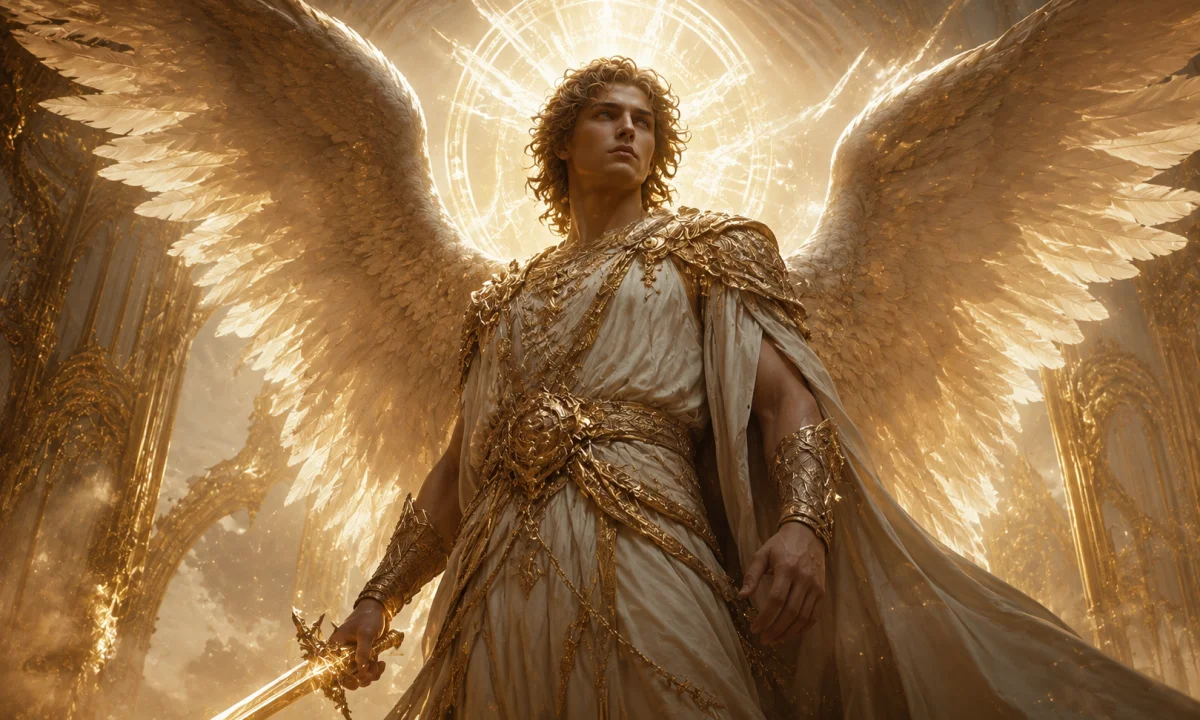
Ansiel is an obscure angelic name found in some later occult and angelological compilations. Unlike Michael, Gabriel, Raphael or Uriel, Ansiel does not have a clear role in the major scriptures of Judaism, Christianity or Islam, nor does the name belong to a widely shared body of religious stories. Its identity, meaning and classification vary according to the source in which it appears. Ansiel is therefore best treated as a name from esoteric angelology rather than as a universally recognised angel of established religious tradition.
Religious and cultural setting
Angelic traditions developed in several different cultural settings. In the Hebrew Bible, angels generally appear as messengers, agents of divine judgement, guardians or members of a heavenly court. Only a small number are named directly, most notably Michael and Gabriel in later biblical passages. Jewish writings from the Second Temple period and late antiquity expanded the range of named heavenly beings, while rabbinic literature, mystical texts and later magical traditions supplied additional names and functions.
Christian angelology inherited many of these traditions and developed them through biblical interpretation, theology, liturgy, visionary writings and later occult literature. Christian writers also classified angels into orders or choirs, although the systems used by different authors do not always agree. In Islam, angels are known as malāʾika and are important servants of God, but the names and attributes recognised in Islamic sources do not simply correspond to every figure found in Jewish or Christian magical catalogues.
Ansiel does not appear among the principal named angels of the Hebrew Bible, the New Testament or the Qur'an. The name is also not associated with a major feast, shrine, prayer tradition or continuous popular cult. Its surviving profile belongs mainly to the more fluid world of occult lists, ritual manuals and modern reference works that collect names from several periods and traditions.
Origins and surviving evidence
The exact origin of the name Ansiel is uncertain. It is encountered in lists of angelic or spiritual names, but those lists do not necessarily preserve a single ancient tradition. Names could be copied from manuscript to manuscript, altered by scribes, transliterated in different ways or reinterpreted by later authors. A name appearing in an occult compilation may therefore have a much more complicated history than a simple identification with a particular angel.
Some angel names circulated through Jewish mystical and magical writings, while others entered European esoteric literature through translations, compilations and ritual books. In these contexts, a name might be assigned to a particular hour, planet, direction, day, ritual office or spiritual quality. Such assignments were not standardised across all texts. An angel appearing in one list might be absent from another, or might receive a different function under a variant spelling.
Available references to Ansiel are too inconsistent to support a secure biography or a single traditional origin. Claims that place Ansiel in one definitive angelic hierarchy should therefore be treated cautiously unless they identify a specific historical text and its context. General internet lists often repeat one another without demonstrating that a particular attribution comes from an ancient or religious source.
The name Ansiel
The spelling Ansiel is not entirely stable. Related-looking forms may include Anziel, Aniel, Anael, Anauel or Anpiel, although these names should not automatically be treated as variants of one being. Angelic names were often transmitted through languages that used different alphabets and systems of pronunciation. A small change in spelling can represent either a genuine historical variant or a confusion introduced by a later compiler.
The final element -el occurs in many names associated with Jewish and Christian angelology. In Hebrew personal and angelic names, El can refer to God or to the divine name. However, the presence of this ending does not prove that Ansiel has a known Hebrew etymology. The first element, Ansi-, has no universally accepted interpretation in the sources that use the name. It is better to describe the meaning of Ansiel as uncertain than to assign it a confident translation.
Some modern name dictionaries provide a polished meaning for Ansiel, but such definitions are often detached from identifiable manuscripts or historical texts. A suggested meaning may reflect a translator's interpretation, a mistaken association with another angel or a later attempt to give every name a symbolic explanation. No single meaning can presently be regarded as authoritative.
Classification and status
Ansiel is sometimes described as an angel, but the word “angel” can have different meanings in different sources. In biblical and theological writing, an angel is generally a messenger or servant of God. In ceremonial magic, the term may refer to a named power invoked within a structured ritual system. In encyclopaedic lists, it may simply identify a figure included among celestial or spiritual names.
There is no secure evidence that Ansiel belongs to one of the classical Christian choirs, such as seraphim, cherubim, thrones, dominions, virtues, powers, principalities, archangels and angels. Those classifications are themselves later theological systems, and Ansiel is not consistently assigned to any of them. Nor is there a widely accepted indication that Ansiel is a guardian angel, archangel, fallen angel or ruler of a particular region.
In some occult catalogues, the name is connected with a specific period of the day or night, or with a particular ritual sequence. These associations should be understood as properties of individual magical systems rather than as universally recognised characteristics. When lists disagree, the disagreement is evidence of a varied textual tradition, not proof that Ansiel has several firmly established offices.
Attributes and appearance
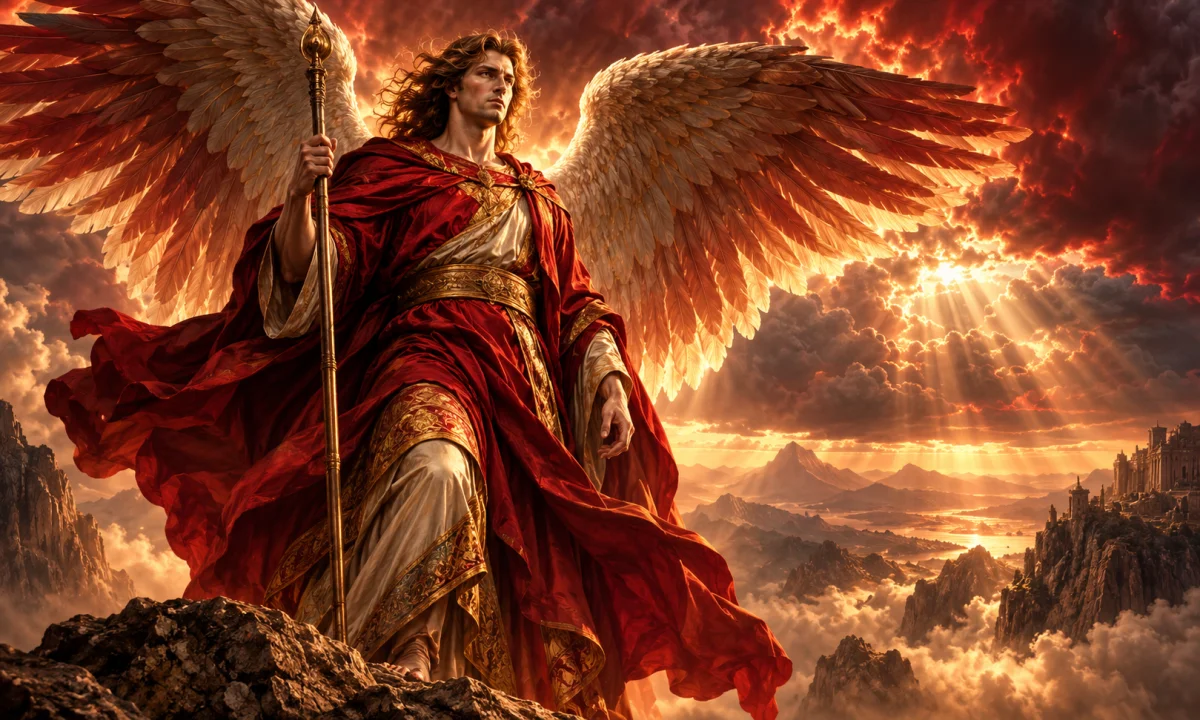
No traditional physical appearance for Ansiel is securely preserved. There is no well-established description of clothing, wings, colour, weapon, animal form, halo or celestial location. Images sometimes labelled “Ansiel” are generally modern inventions or adaptations of conventional angelic imagery. They may show a winged human figure, a luminous spirit or a figure holding a scroll, but these motifs do not demonstrate an ancient iconographic tradition.
The same caution applies to alleged powers and symbols. Ansiel is not consistently associated with healing, prophecy, protection, love, warfare, death, dreams, music or any other specialised function. A particular occult source may assign the name a ritual purpose, but that purpose should not be generalised to every use of the name.
The absence of a stable description is significant. Many famous angels have developed recognisable attributes through scripture, commentary, liturgy and art. Ansiel has not undergone the same process of cultural consolidation. Its profile remains dependent on the list or compilation where it is found.
Stories and relationships
There is no major narrative cycle centred on Ansiel. The name is not connected with a widely known creation story, heavenly battle, prophetic vision, appearance to a biblical patriarch or encounter with a saint. Nor is there a standard account of Ansiel's origin, duties, companions or opposition to demons.
Some angelic names appear in magical texts without any narrative at all. They function as names to be written, spoken or placed within a ritual diagram. In such cases, the name's importance lies in its position within the ritual system rather than in a story about the being. If Ansiel occurs in this kind of material, it should not be given invented adventures or relationships simply to make the figure resemble more famous angels.
Ansiel should also not be identified with a named angel merely because the two names sound similar. A compiler may have copied a name incorrectly, or a modern writer may have normalised different spellings. Without a clear textual connection, resemblance is not enough to establish identity.
Interpretation and cultural significance
Ansiel illustrates how angelology has never been limited to a single fixed catalogue. Alongside scriptural figures, religious communities produced commentaries, prayers, mystical speculations and protective formulas. Esoteric writers then reorganised names into systems designed for contemplation, astrology, ritual timing or ceremonial invocation. The result is a large and uneven body of material in which some names became widely recognised while others remained obscure.
The uncertain status of Ansiel also demonstrates the importance of distinguishing religious tradition from occult compilation. A name may be called an angel in a nineteenth- or twentieth-century dictionary without having a corresponding role in Jewish, Christian or Islamic worship. That does not make the name meaningless, but it changes the question being asked. The relevant history may concern the transmission of esoteric lists rather than the development of a popular religious cult.
For readers interested in comparative angelology, Ansiel is useful as an example of a marginal or unstable figure. It shows how names can move between manuscript traditions, languages and modern reference works. It also warns against treating every list of angels as equally old, equally authoritative or equally representative of a living religion.
Distinction from similar names
Confusion is particularly likely because several angelic names have similar spellings:
- Anael or Haniel is a better-known name in some Jewish, Christian and occult angelologies, though its identity and attributes also vary. It should not automatically be equated with Ansiel.
- Anauel appears in certain later systems connected with the seventy-two names of angels. Its presence in those systems does not establish that it is another spelling of Ansiel.
- Aniel is used in some occult lists and may be connected with a particular sequence of names. The similarity to Ansiel may result from transmission or copying, but the two names are not reliably identical.
- Anpiel is a separate name found in Jewish angelological material and later compilations. Similar spelling alone does not justify merging Anpiel with Ansiel.
- Azrael, sometimes spelled Izra'il or associated with the Angel of Death in Islamic and later popular traditions, has a much clearer and more influential identity. Ansiel has no equivalent established role.
These distinctions matter because modern lists frequently combine names drawn from different languages and historical systems. A catalogue may place Ansiel beside well-known archangels, but that arrangement does not prove that all the entries share the same origin, status or religious authority.
Later reception and modern usage
Ansiel has little established presence in mainstream literature, film, television, games or popular religious practice. When the name appears in modern fantasy or occult-themed works, it is usually available as an obscure angelic-sounding name rather than as a character with a widely recognised traditional mythology.
Modern writers may assign Ansiel a personality, appearance, powers or moral alignment. Such portrayals can be creative interpretations, but they should be distinguished from historical angelology. A fictional Ansiel may be a guardian, warrior, healer or fallen spirit according to the needs of a particular story; none of these roles is securely traditional.
In contemporary esoteric communities, the name may also be reused in meditation, ceremonial practice or personal spiritual systems. These uses belong to modern religious or occult creativity unless they can be traced to a specific older source. They should not be presented as evidence of an uninterrupted ancient cult.
What can be said with confidence
Ansiel is an obscure and poorly standardised angelic name. It is not a principal scriptural angel, and no single religious tradition provides a universally accepted account of its origin, meaning, appearance or duties. The name is most plausibly encountered in later angelological and occult lists, where its classification and associations may change from one source to another.
The most responsible description is therefore a limited one: Ansiel is a name attributed to an angelic or celestial being in some esoteric traditions, but its historical identity remains uncertain. Any detailed account of its powers, hierarchy or symbolism must be tied to a particular source rather than treated as a settled feature of angelic tradition.