WORLD
WORLD
Azrael
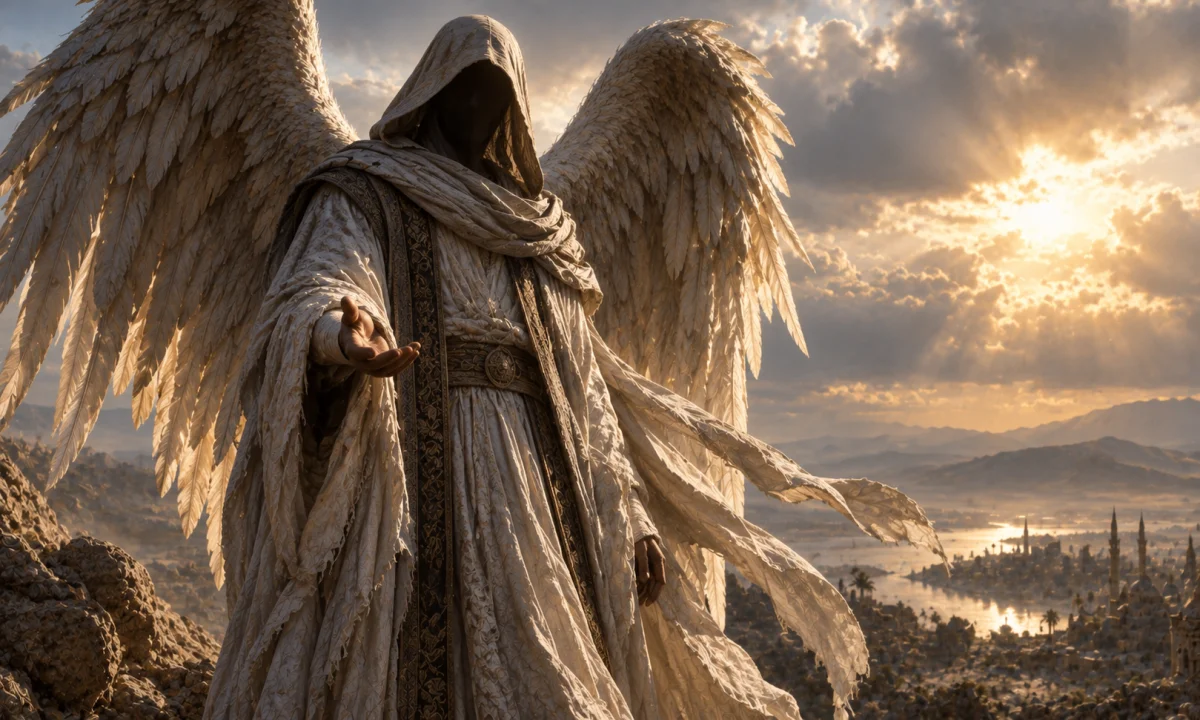
Azrael is the name commonly given to the angel of death in Islamic tradition. In Arabic, the name is usually written ʿAzrāʾīl or ʿIzrāʾīl, while “Azrael” is a familiar English form. His principal role is to receive or take human souls at the time of death, acting under God’s authority. The Qur’an refers to an “angel of death” but does not give that angel the name Azrael, so the identification belongs chiefly to later Islamic interpretation, theology and folklore rather than to the Qur’anic text itself.
Azrael in Islamic tradition
Islam teaches that angels are created beings who serve God and carry out divine commands. They are not gods, independent powers or objects of worship. Within this understanding, the angel of death performs a solemn function in the order of creation: separating the soul from the body when a person’s appointed time has arrived.
The Qur’an states that the angel of death is entrusted with taking souls:
“Say: The angel of death, who has been entrusted with you, will take your souls; then to your Lord you will be returned.” (Qur’an 32:11, in common English translation)
The verse identifies the figure by office rather than by personal name. Other Qur’anic passages describe angels or divine messengers taking souls, sometimes using the plural. This has led Muslim commentators to discuss whether the angel of death acts personally in every case, commands subordinate angels, or represents a larger angelic order. Interpretations differ, but the essential point remains that death occurs by God’s decree, not through an angel’s independent power.
Later Muslim writings commonly identify the angel of death as ʿAzrāʾīl. The name became especially prominent in works of Qur’anic commentary, theological discussion, devotional writing and popular storytelling. It is widely recognized among Muslims, but not every Islamic school or author gives the name the same importance. For many believers, “the angel of death” is the more directly scriptural designation.
The name and its uncertain origins
The exact origin and history of the name are not completely settled. Its Arabic form appears in several spellings because Arabic sources, transliteration systems and later languages represent the consonants and the initial vowel differently. English uses Azrael, but forms such as Azra’il, Azraeel and Izrail are also encountered.
The name resembles names found in Jewish and Christian angelic traditions, particularly Azriel, but resemblance does not by itself prove that all such figures are identical. Religious names often pass through languages and communities, changing their pronunciation and associations along the way. Scholars therefore distinguish between the Qur’anic office of the angel of death, the later Islamic name ʿAzrāʾīl, and other figures called Azriel or similar names in Jewish or Christian sources.
Some discussions connect the name with Semitic elements meaning “help” or “God is my help,” but the linguistic history is not sufficiently simple to treat one proposed etymology as certain. The name’s widespread use in Islamic tradition is more securely established than any single explanation of its earliest origin.
Sources and development
Azrael’s earliest and strongest Islamic foundation is the Qur’anic idea of a designated angel of death. The Qur’an does not provide a physical description, genealogy or narrative biography for this angel. It emphasizes instead God’s sovereignty over life, death and resurrection.
Additional details developed through later Islamic materials. These include Qur’anic commentaries, collections of reports, theological works, ascetic literature and stories about the unseen world. Such writings do not all have the same authority. A statement found in a popular tale should not automatically be treated as a Qur’anic teaching, and a report attributed to early religious authorities may be judged differently according to the methods of different Muslim scholars.
Islamic tradition also speaks of angels who take the souls of believers and unbelievers, with descriptions that can vary according to a person’s spiritual condition. Some accounts portray the death of a righteous person as gentle and peaceful, while the death of a wicked person is represented as difficult or terrifying. These themes reflect Qur’anic and devotional ideas about judgment, repentance and the consequences of human conduct. They do not necessarily describe separate gods or rival powers. All such angels remain servants acting within divine command.
Role and responsibilities
Azrael’s central responsibility is the taking of souls at death. In theological terms, this task does not mean that the angel causes death in opposition to God. A person dies when the appointed term has been reached, and the angel carries out the command associated with that moment.
Descriptions of the process differ. Some traditions present the angel of death as directly receiving the soul, while others describe groups of angels assisting in the event. Qur’anic language about “messengers” taking souls has encouraged interpretations in which Azrael is the chief of a wider company of death angels. This idea is especially common in later explanations, although details vary considerably.
The angel’s role is therefore both practical and symbolic. Azrael represents the unavoidable boundary between earthly life and the next stage of existence. He can also symbolize the limits of human control: wealth, rank and physical strength cannot prevent the moment appointed by God. In devotional contexts, reflection on the angel of death may encourage repentance, humility and awareness of accountability after death.
Appearance and powers
The Qur’an does not describe Azrael’s form. Nor is there one universally accepted physical image in Islamic theology. Later narratives and works of popular religious imagination sometimes portray him as an immense angel with numerous wings, eyes or other extraordinary features. Some accounts associate his vastness with the cosmic scale of his duty, while others imagine him recording the living and the dead or overseeing subordinate angels.
These elaborate descriptions should be treated as later traditional or folkloric motifs, not as details established by the Qur’an. Their status also varies within Islamic literature. Some reports are transmitted as early statements, while others appear in storytelling collections or devotional works without the same level of textual authority. Muslim scholars may accept, question or reject particular accounts according to their evaluation of the sources.
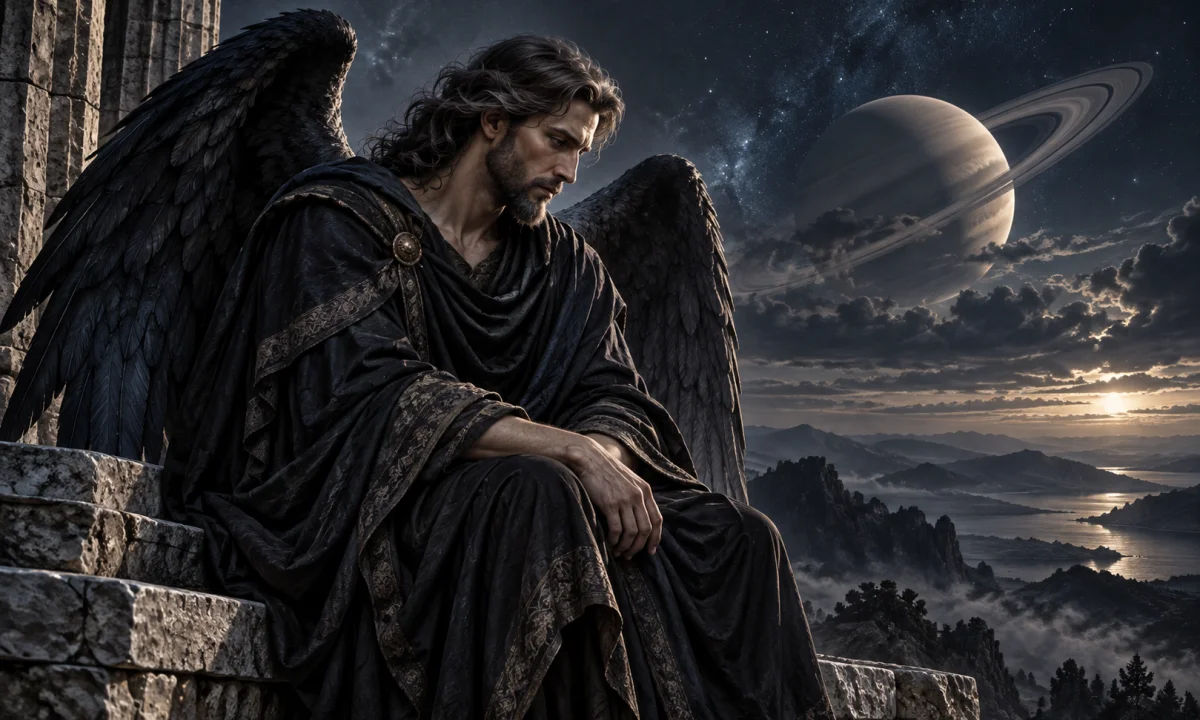
Angels in Islamic belief can appear in forms perceptible to human beings when God permits, but their true nature is part of the unseen world. This means that an artistic image of a winged figure with a sword, hood or skeletal face is not a standard Islamic description of Azrael. Such images often arise from later European art, modern fantasy or the influence of other death-related figures.
Azrael and the experience of death
In many Islamic interpretations, death is not annihilation. The soul enters an intermediate state, often called barzakh, before the resurrection and final judgment. Azrael’s task belongs to the transition from bodily life into that unseen stage. The angel is consequently associated with a moment of immense spiritual importance rather than merely with violence or destruction.
Accounts of the death of a faithful person often emphasize reassurance. Angels may greet the believer, promise peace or receive the soul gently. Other accounts describe the death of those who rejected divine guidance in terms of fear, difficulty and humiliation. These contrasts support a broader religious teaching: a person’s conduct and relationship with God matter beyond the present life.
At the same time, Islamic teachings generally warn against claiming detailed knowledge of the unseen without reliable revelation. Stories about what Azrael looks like, how many souls he takes at once or exactly how he carries out his duty may be meaningful within particular communities, but they should not be presented as universally binding doctrine.
Place among the angels
Azrael is frequently listed in popular Islamic accounts alongside Jibril, Mikail and Israfil. Jibril is associated with revelation, Mikail with provision and natural processes, and Israfil with the trumpet of resurrection. Azrael is associated with death. This fourfold arrangement is widespread in teaching and devotional culture, although the Qur’an does not present a single formal list of four archangels in these terms.
The word “archangel” itself is more familiar from Jewish and Christian classification systems than from the central vocabulary of the Qur’an. It can be useful in English as a broad comparison, but it should not imply that Islamic angelology has exactly the same hierarchy as Christian tradition. Islamic sources recognize angels of different functions and status, yet their organization is not always described through a fixed, universally agreed system of ranks.
Azrael, Azriel and other similar figures
Confusion often arises because the names Azrael and Azriel are similar. Azriel appears in Jewish religious and mystical traditions as an angelic name, but Jewish sources do not provide one single, universally accepted character matching the Islamic angel of death. In some later Jewish materials, Azriel is associated with the realm of the dead or with divine mercy, while in other contexts the name has different associations. The name also appears as a human personal name in Jewish history.
Christian traditions contain many different angels and beings associated with death, judgment or the passage of souls, but Azrael is not a central named angel in the Bible. Later Christian, occult and literary works sometimes use the name, often drawing from Islamic or Jewish material without preserving its original theological context.
Azrael should also not be confused with the Grim Reaper. The Grim Reaper is a personification of death that developed mainly in European medieval and early modern imagery, especially as a skeletal figure carrying a scythe. Azrael is an angel within a monotheistic religious framework. Although both may appear in modern fiction as supernatural agents of death, their origins and meanings are different.
Folklore and devotional imagination
Stories about Azrael have helped communities express ideas that are difficult to represent abstractly. A distant theological principle—the end of a human life—becomes a personified encounter with an obedient servant of God. This can make moral teachings more vivid, particularly stories about sudden death, repentance, the weakness of worldly power and the hope of mercy.
In popular storytelling, Azrael may appear as stern, compassionate, impartial or terrifying. These traits depend on the purpose of the story. A warning tale may emphasize his inexorable authority, while a devotional narrative may portray him as carrying out a necessary and just duty. Neither tone should be assumed to represent the whole of Islamic belief.
Some legendary accounts also describe conversations between prophets, saints or pious people and the angel of death. Such narratives belong to a broad tradition of teaching through exemplary stories. Their value may lie in their moral symbolism rather than in their status as historical reports. They should not be confused with biographical evidence about a literal encounter or with direct Qur’anic revelation.
Meaning and cultural significance
Azrael’s importance lies less in a detailed mythology than in the religious meaning of his office. He embodies the certainty of death while also affirming that death remains within divine order. The angel is not an evil force opposing life, and he is not a deity who decides human destiny independently. He is a servant whose presence points beyond the self to judgment, resurrection and God’s ultimate authority.
For this reason, the figure can evoke fear without being morally evil. In Islamic thought, death itself may be painful and frightening, but it is also a transition built into the created order. The angel of death therefore occupies an unusual position in religious imagination: he is associated with grief and separation, yet his work is not rebellion, corruption or chaos.
Azrael in modern popular culture
Modern fiction frequently borrows Azrael’s name for characters connected with death, punishment, angels or the supernatural. These adaptations may present him as a hooded reaper, a fallen angel, a neutral bureaucrat of the afterlife or a warrior with powers far beyond those described in Islamic sources. Such portrayals are creative reinterpretations rather than reliable accounts of Islamic angelology.
The name has also been used for characters with no direct connection to the angel of death. For example, DC Comics’ Azrael is primarily a title associated with fictional human characters, especially Jean-Paul Valley, rather than a representation of the Islamic angel. Other novels, games, films and television productions use the name in similarly independent ways.
When modern media presents Azrael as a demon, a devil or an autonomous lord of death, it departs sharply from the central Islamic understanding. In Islamic tradition, the angel of death remains subordinate to God, and his authority is derived rather than self-created. That distinction is essential when comparing traditional Azrael with the many imaginative figures that later adopted his name.