WORLD
WORLD
Anael
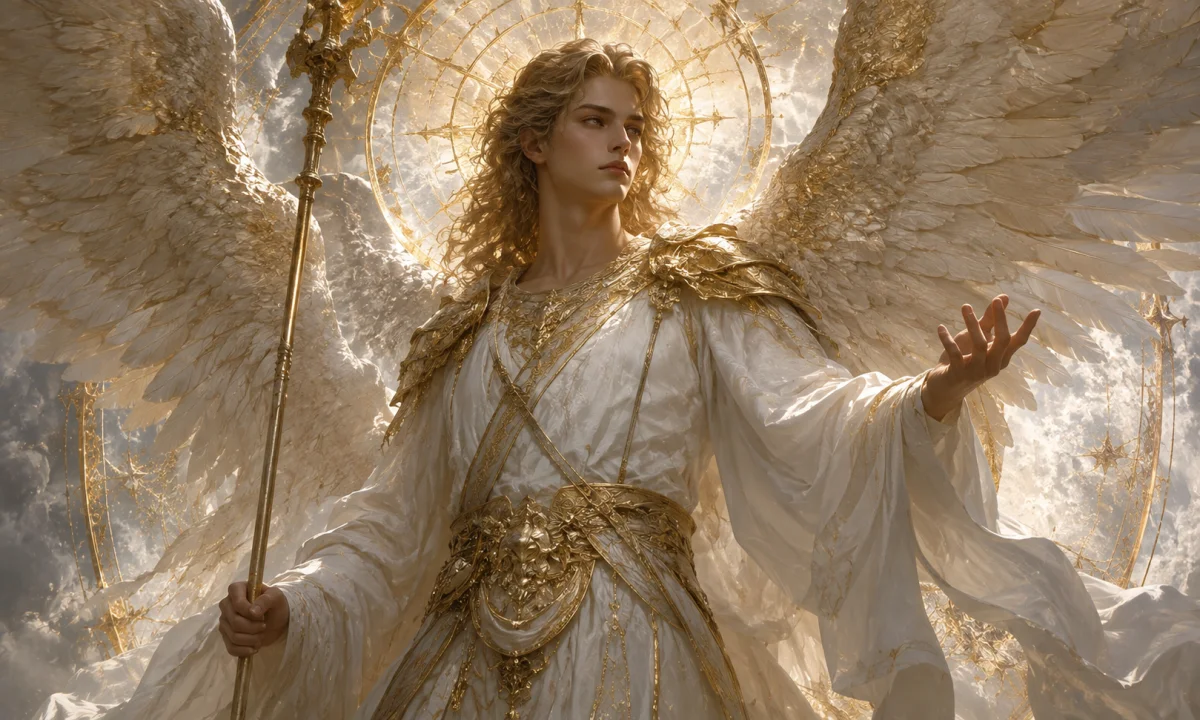
Anael is an angelic name found mainly in later Jewish, Christian and Western esoteric traditions. It is commonly associated with the planet Venus, Friday, love, beauty, harmony and pleasure, especially in ceremonial systems that organise angels according to the seven classical planets and the days of the week. The name is not attached to one universally recognised figure, however. Its spelling, identity and rank vary between texts, and Anael is sometimes treated as a form of Haniel, Hanael or Aniel without there being complete agreement that these names originally referred to the same being.
Origins and religious setting
Anael does not belong to the small group of angels whose names and stories are firmly established across major biblical traditions. The Hebrew Bible does not present Anael as a named angel, and there is no universally accepted scriptural narrative centred on this figure. Instead, the name belongs primarily to later angelological and magical systems that developed around biblical, Jewish and Christian ideas about heavenly beings.
Jewish angelology expanded considerably in late antiquity and the medieval period. Apocalyptic writings, mystical texts and rabbinic discussions described ranks of angels, heavenly palaces, divine attendants and cosmic administrators. Some of these traditions preserved angelic names that do not appear in the Bible. Christian writers later inherited and reorganised much of this material, while medieval and Renaissance occult authors arranged angels into elaborate hierarchies connected with planets, elements, directions, hours and days.
Anael is most clearly identifiable in the last of these settings: Western ceremonial magic and astrological angelology. In such systems, the seven visible planets known to ancient and medieval Europeans—Saturn, Jupiter, Mars, the Sun, Venus, Mercury and the Moon—were each assigned spirits, angels, intelligences and planetary rulers. Venus, associated with desire, affection, fertility, beauty and concord, was linked with Anael in a number of later sources.
These associations should not be confused with a single continuous doctrine shared by Judaism, Christianity and Islam. Angelic classifications differ greatly among religions and authors. An association found in a Renaissance magical handbook may have little or no authority in a synagogue, church or mosque, even when the name has a Hebrew appearance.
The name Anael and variant spellings
The spelling Anael is one of several forms used in European angelic literature. Variants include Hanael, Haniel, Aniel and, in some modern works, Hanniel. Transliteration from Hebrew, Aramaic, Greek or Latin can produce different spellings, and manuscript traditions often copied names inconsistently. A single angelic name may therefore appear in several forms even when authors intended the same figure.
Haniel is often connected with a Hebrew name commonly written as Ḥanī’el or Haniel. It is frequently interpreted as meaning “God is gracious” or “grace of God,” although the precise linguistic history of the form Anael is less secure. Some occult writers simply use Anael as an alternative spelling of Haniel, while others list Anael and Haniel separately. There is no general rule that resolves all of these differences.
The similar-looking name Aniel creates further uncertainty. In some angelic lists, Aniel is associated with particular virtues, divine names or periods of the day, while in other lists it is treated as a variant of Anael. The names may reflect copying errors, different transliteration practices or attempts to distinguish related figures. It is safer to identify the tradition being discussed than to assume that every occurrence refers to one standard angel.
Anael in planetary and ceremonial traditions
The best-known profile of Anael comes from planetary magic. In this framework, Anael is commonly described as the angel or ruling intelligence of Venus. Venus was not understood merely as a physical planet. It represented a broad field of influences: sexual attraction, affection, marriage, friendship, artistic pleasure, music, elegance, fertility, reconciliation and social grace.
Anael is also frequently assigned to Friday, the day traditionally governed by Venus. Some systems place Anael among the seven planetary angels who rule the days of the week. Others use the name for the principal angel of Venus while assigning different spirits to particular hours. The exact order and terminology vary, and not every planetary table uses Anael.
In planetary magic, an angelic name could be used in prayer, meditation, ritual timing, talismanic practice or the construction of a planetary seal. The purpose was not always to summon a personality in the modern fictional sense. A practitioner might seek to align an action with the qualities represented by Venus, asking for harmony, affection, artistic inspiration or the easing of conflict.
Some Renaissance and early modern systems distinguished between several levels of planetary beings. A planet could have a ruling angel, a spiritual intelligence, a planetary spirit and other subordinate entities. The terminology is inconsistent between authors, and the word “angel” may be used broadly. Consequently, calling Anael the “angel of Venus” does not always indicate the same rank or function in every source.
Attributes and symbolism
Anael’s traditional symbolic profile is largely derived from the qualities of Venus rather than from stories about the angel. Common associations include:
- Love and affection: emotional attachment, romantic desire and the cultivation of goodwill.
- Beauty: physical attractiveness, elegance, ornament and the appreciation of pleasing forms.
- Harmony: reconciliation, cooperation, diplomacy and the restoration of peaceful relationships.
- Music and the arts: song, poetry, dance and creative expression connected with pleasure and proportion.
- Fertility and prosperity: generative power, sensual vitality and forms of abundance associated with Venus.
- Friday and the colour green: correspondences used in some Western magical and astrological systems, though not universally.
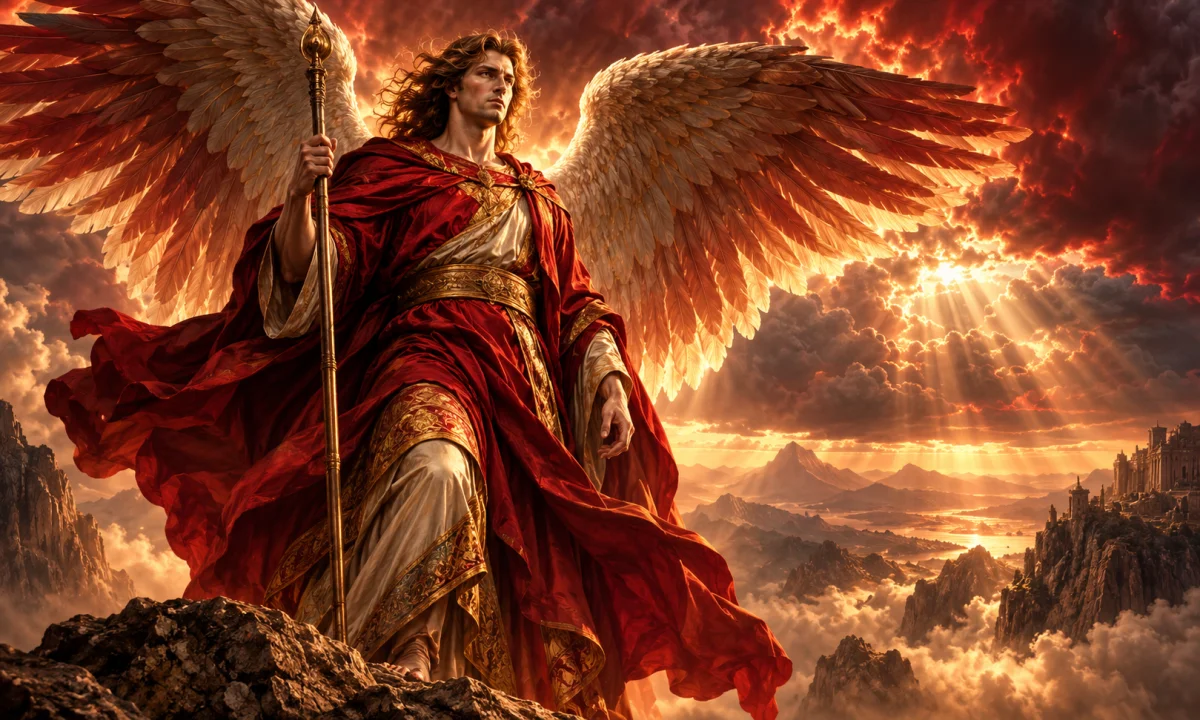
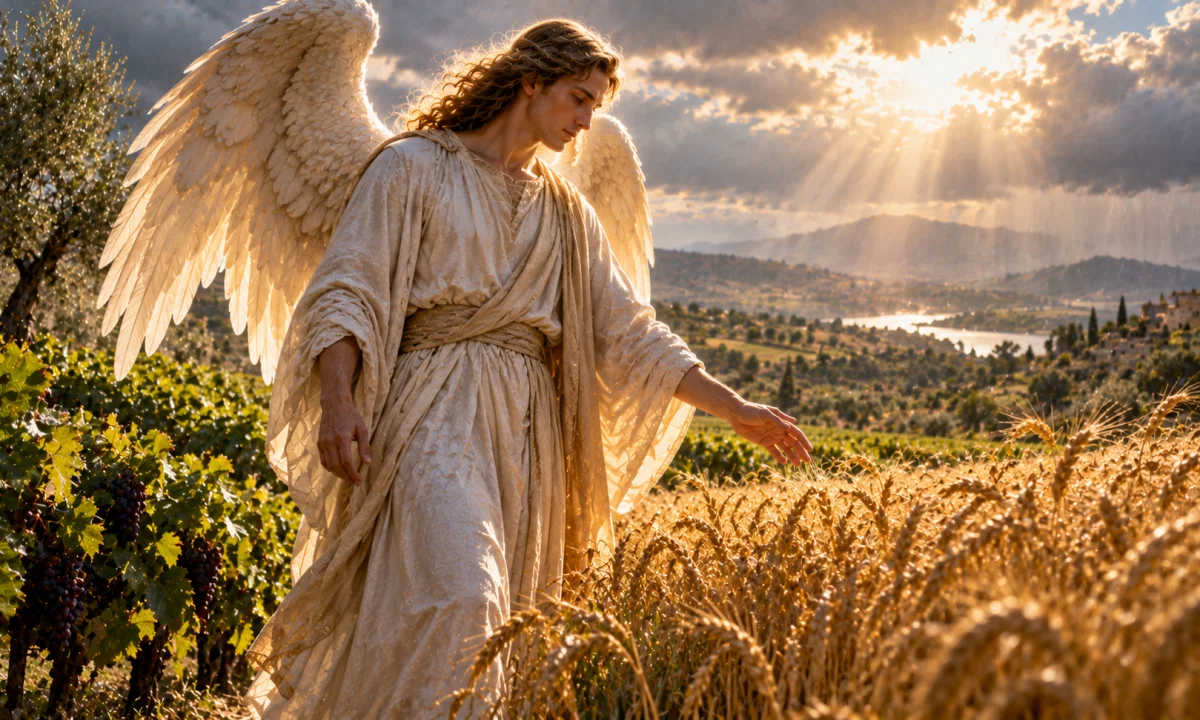
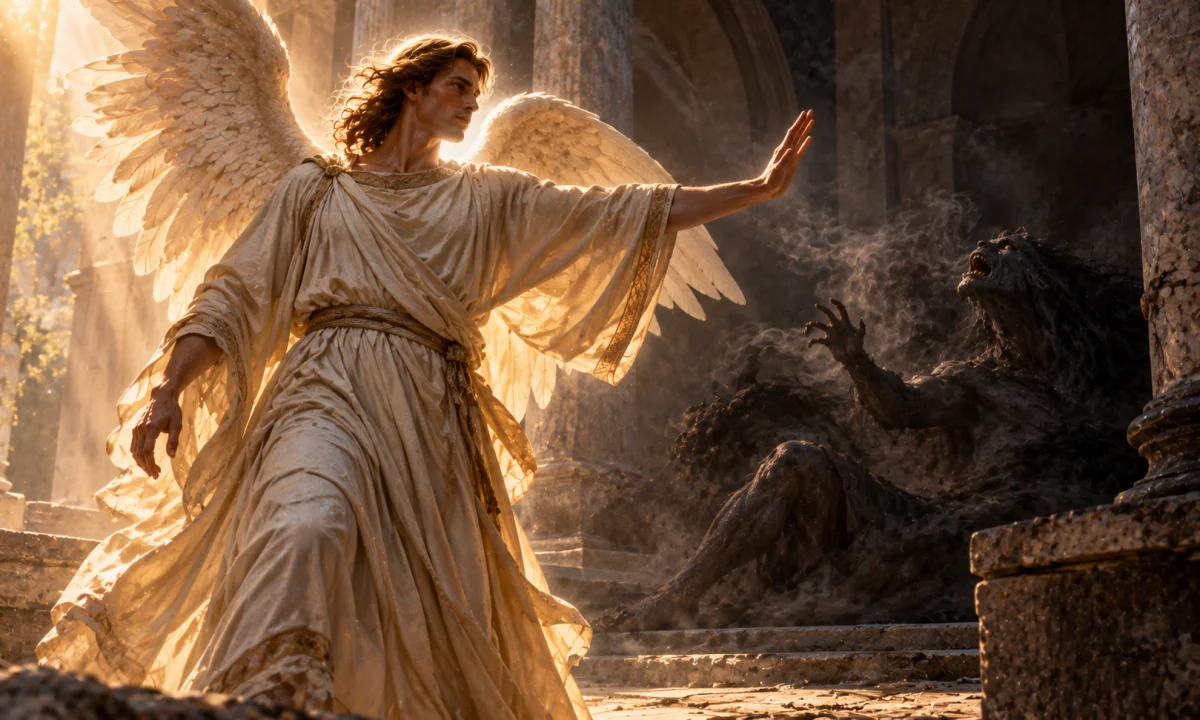
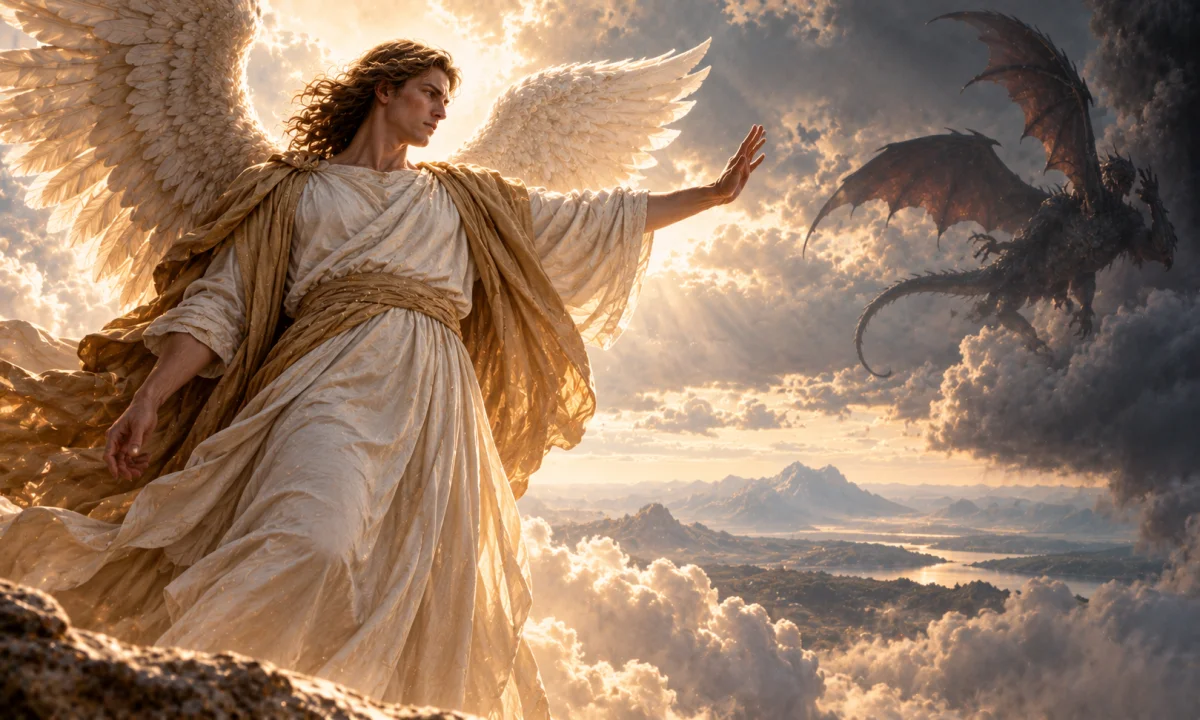
Descriptions of Anael’s appearance are much less stable than these symbolic associations. There is no widely shared ancient portrait or canonical physical description. Modern occult illustrations may show a radiant, winged human figure surrounded by flowers, stars, musical instruments or the planetary symbol of Venus. Such images express the angel’s assigned symbolism rather than preserve an agreed traditional appearance.
Likewise, Anael’s supposed powers should be understood within the system that assigns them. A text may say that a Venusian angel can assist with love, attraction, artistic work or reconciliation. This is an occult classification, not an established teaching shared by all religious communities. It also does not mean that every tradition regards love as an uncomplicated or purely positive force. Venusian symbolism can include longing, jealousy, sensual excess and the dangers of confusing desire with spiritual virtue.
Relationship to Haniel
The most important question concerning Anael’s identity is the relationship between the name and Haniel. Haniel appears in some Jewish and Christian angelic traditions as a high-ranking angel or archangel. In several later lists, Haniel is connected with grace, joy, beauty or the sphere of Venus. These similarities encouraged occult writers and modern reference works to treat Anael and Haniel as the same angel.
There is some traditional basis for the connection, especially where the names occur as spelling variants or where a Venusian angel is named Haniel in one source and Anael in another. Nevertheless, the equivalence is not universal. Some texts distinguish the names, and the attributes attached to Haniel in Jewish mystical or Christian angelological material do not always match the planetary profile assigned to Anael.
The titles “archangel,” “prince” and “angel of Venus” should therefore not be combined automatically. One author may regard Haniel as an archangel, another may identify Anael as a planetary ruler, and a third may use the names as interchangeable forms. These classifications belong to different layers of tradition and should be kept separate unless a particular source explicitly joins them.
Stories and relationships
Unlike Michael, Gabriel, Raphael or Uriel, Anael has no widely known cycle of scriptural or legendary stories. There is no generally accepted account of Anael’s creation, a decisive battle, a conversation with a prophet or a named role in a biblical event. Most descriptions are lists of names and correspondences rather than narratives.
In some later angelic catalogues, the figure associated with Anael or Haniel is placed among the seven major angels or heavenly princes. The number seven reflects several ancient and medieval patterns: the seven days, the seven classical planets and the seven heavens found in different cosmological traditions. The members of these groups are not consistent. One list may include Haniel, while another substitutes a different name or gives the same name a different office.
Anael is also sometimes connected with divine grace, joy and the beauty of creation. These themes can overlap with the role of angels as intermediaries between the transcendent God and the created world. Even here, however, the evidence usually consists of theological interpretation or later classification rather than a single foundational legend.
Religious interpretation
Within a religious reading, an angel associated with Venus can symbolise the sanctification of human relationships and the recognition that beauty, affection and creativity may have spiritual dimensions. Love in this sense is broader than romantic attraction. It can include friendship, compassion, reconciliation and the social bonds that make communal life possible.
At the same time, the use of planetary symbolism reflects a particular historical worldview. Medieval and Renaissance thinkers often saw the cosmos as a hierarchy in which celestial bodies, natural forces, spiritual beings and human actions were related by correspondences. Venus was believed to influence earthly qualities, while an angelic ruler represented or governed the planet’s spiritual dimension. This framework should be understood historically rather than presented as a universal feature of angelic belief.
Jewish mystical traditions and Christian angelology also warn, in different ways, against excessive attachment to created things. Beauty and desire may lead toward gratitude, love and harmony, but they may also become forms of vanity or idolatry. The benevolent qualities attributed to Anael are therefore best understood as disciplined and elevated forms of Venusian symbolism, not as a simple endorsement of every kind of pleasure.
Distinguishing Anael from similar figures
Several names and beings are easily confused with Anael:
- Haniel: often treated as a variant of Anael and frequently associated with grace, joy, beauty or Venus, but not identical in every tradition.
- Aniel: a similar name appearing in some angelic lists. Its identity and attributes vary, and it should not automatically be equated with Anael.
- Ariel: a separate angelic name found in Jewish, Christian and occult traditions. Ariel is often linked with nature, the earth or Jerusalem in different sources, rather than specifically with Venus.
- Anael in fictional works: modern novels, games and esoteric fiction may give the name a new biography or power set. These inventions should not be treated as evidence for older traditions.
The distinction between Anael and Venus is also important. Venus is a Roman goddess and the name of a planet, whereas Anael is an angelic figure assigned to Venus in later occult correspondence systems. They are not the same being. Medieval and Renaissance authors sometimes connected pagan deities, planets, angels and spiritual powers through symbolic analogies, but such comparisons do not erase their different religious origins.
Later reception and modern use
Anael continues to appear in modern books on angels, ceremonial magic, astrology and spiritual practice. Contemporary writers may describe Anael as an angel of love, feminine wisdom, beauty, emotional healing or artistic inspiration. These interpretations often combine older planetary correspondences with modern ideas about personal growth, relationships and meditation.
Such uses are part of modern esotericism and popular spirituality, not evidence of a single ancient cult of Anael. Some modern systems also assign Anael a gender, colour, crystal, sigil or detailed personality. These additions may be meaningful within a particular practice, but they are not consistently supported by older Jewish, Christian or Renaissance sources.
In popular culture, the name may be given to an angelic character in fantasy fiction, role-playing games or online spiritual communities. A fictional Anael can therefore differ greatly from the Venusian angel of ceremonial tradition. The name’s continuing appeal comes partly from its sound and partly from the attractive symbolic combination of grace, beauty, love and celestial power.
Significance of Anael
Anael is best understood as a variable angelic identity formed at the meeting point of Jewish and Christian angelology, medieval cosmology and Renaissance planetary magic. The most stable association is with Venus and Friday, together with themes of affection, beauty, harmony and artistic pleasure. The least certain aspects are the name’s original form, its exact rank and its relationship to Haniel or Aniel.
Rather than presenting Anael as a universally recognised archangel with one fixed biography, it is more accurate to identify the tradition in which the name appears. In a planetary magical context, Anael is the angelic ruler or representative of Venus. In a broader angelological context, the name may be a variant of Haniel. In modern spirituality or fiction, it may carry additional attributes created much later. These layers are related, but they are not interchangeable.