WORLD

Dalquiel
Dalquiel is a little-known angelic name found in later angelological and occult catalogues associated with Jewish and Christian esoteric traditions. The name is commonly linked with the third heaven and with service on Thursday, although these associations are not uniform and do not belong to the standard biblical or mainstream Christian descriptions of angels. Dalquiel is therefore best understood as a figure of specialised religious and magical angelology rather than as a universally recognised angel with a developed scriptural biography.
Origins and cultural setting
Dalquiel does not appear among the angels named in the Hebrew Bible, the New Testament, or the principal canonical writings of most Christian churches. The name belongs instead to the broad and diverse body of esoteric angelology: systems that classify angels according to the heavens, planets, days, hours, directions, virtues, or divine names.
Such systems developed over many centuries. Jewish apocalyptic writings described multiple heavens inhabited or governed by angels, while later mystical traditions expanded the angelic hierarchy through meditation, cosmology, and ritual speculation. Christian occult writers also inherited and reorganised many of these ideas, often combining Jewish, Christian, astrological, and magical terminology. Names could be copied from one catalogue to another, altered by scribes, or assigned new functions in different ritual manuals.
Dalquiel seems to belong to this later classificatory tradition. The surviving references are brief and generally present the name in a list rather than in a narrative. As a result, there is no widely accepted story of Dalquiel’s creation, deeds, fall, revelation, or relationship with a particular prophet or saint. The figure’s importance lies primarily in the place assigned to the name within an angelic hierarchy.
The name and its spelling
The spelling Dalquiel is not entirely stable. Variants such as Dalkiel and Dalqiel may appear in modern discussions or in transcriptions of older lists. These forms may represent genuine variant spellings, errors introduced during copying, or attempts to render an unfamiliar name from another alphabet.
The precise linguistic meaning of the name is uncertain. The ending -el is common in names connected with Semitic angelology and is generally understood as referring to God, as in Michael, Gabriel, and Raphael. That ending alone, however, does not establish a reliable translation or prove that Dalquiel originated in an ancient Hebrew source. The first element of the name has no securely agreed interpretation.
It is important not to treat every similar-looking name as a reference to Dalquiel. Angel lists contain many names with related endings and sometimes very similar spellings. A name that resembles Dalquiel may belong to a different catalogue, a different manuscript tradition, or a modern reconstruction. The evidence does not justify merging all of these forms into one clearly defined being.
Classification as an angel
In the sources that mention the name, Dalquiel is treated as an angelic attendant or ruler within a cosmic order. The word “ruler” in this context should not necessarily be understood as meaning a sovereign deity or an independent god. Esoteric angelologies commonly describe angels as administrators of divine order: they govern times, regions, celestial spheres, or aspects of creation while remaining subordinate to God.
Dalquiel is frequently associated with the third heaven. The expression “third heaven” has several meanings across religious literature, and these should not automatically be assumed to be identical. In some Jewish and Christian cosmological writings, the heavens are layered realms through which a visionary traveller may pass. In magical lists, however, the heavens may function more like divisions in a celestial hierarchy than like physical places described in a narrative vision.
The reference to a third heaven therefore indicates a position in a particular cosmological scheme, not a universally defined location recognised by all Jewish or Christian traditions. Different systems number the heavens differently, and the same angelic name may be placed differently in later compilations.
Association with Thursday
Another recurring attribution connects Dalquiel with Thursday. In traditional planetary astrology, Thursday is associated with Jupiter, whose Latin name, Dies Iovis, gave the day its name in several European languages. Esoteric systems often linked the days of the week with planets, angels, divine names, colours, metals, and ritual hours.
The Thursday association does not necessarily mean that Dalquiel was originally a deity of the day or a figure from an ancient calendar cult. In angelic magic, an angel assigned to Thursday was usually understood as a minister of divine power operating through the celestial order. The association could indicate a time regarded as suitable for prayer, invocation, contemplation, or a particular type of ritual work.
Some catalogues connect Jupiter and Thursday with qualities such as authority, justice, generosity, prosperity, learning, and social dignity. These qualities belong to the broader symbolism of Jupiter and should not be presented as unique or securely established attributes of Dalquiel. The available tradition does not provide a detailed account of Dalquiel personally embodying all of them.
Attributes and appearance
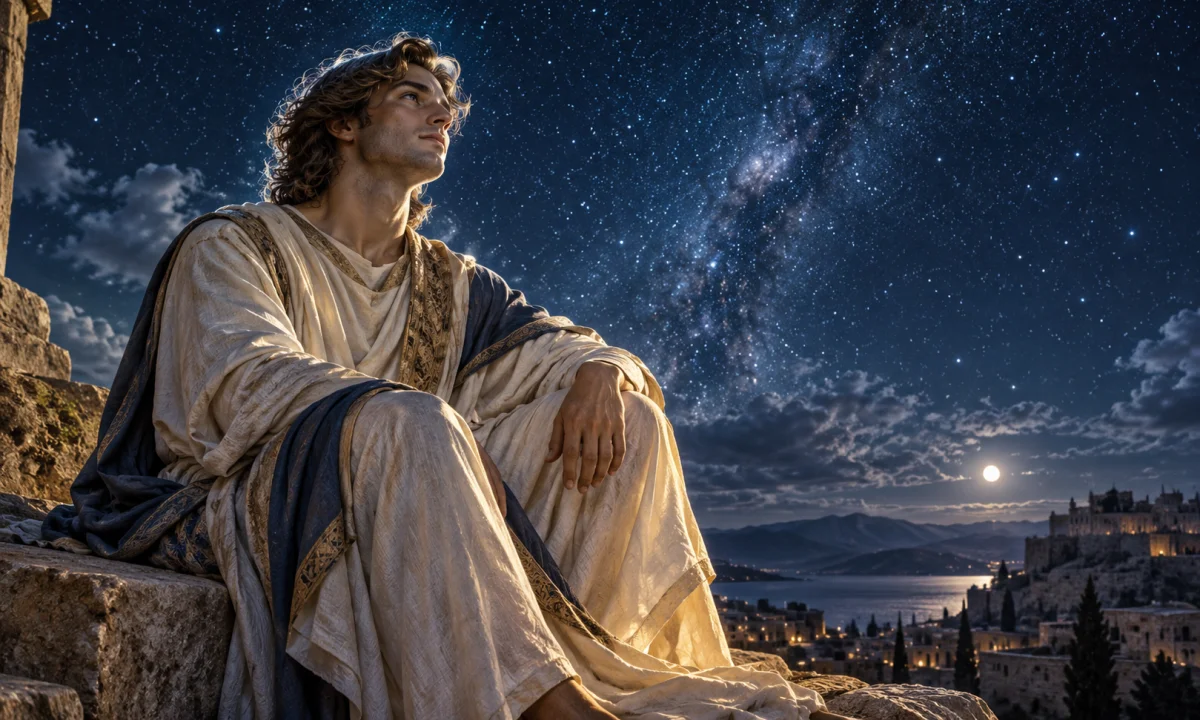
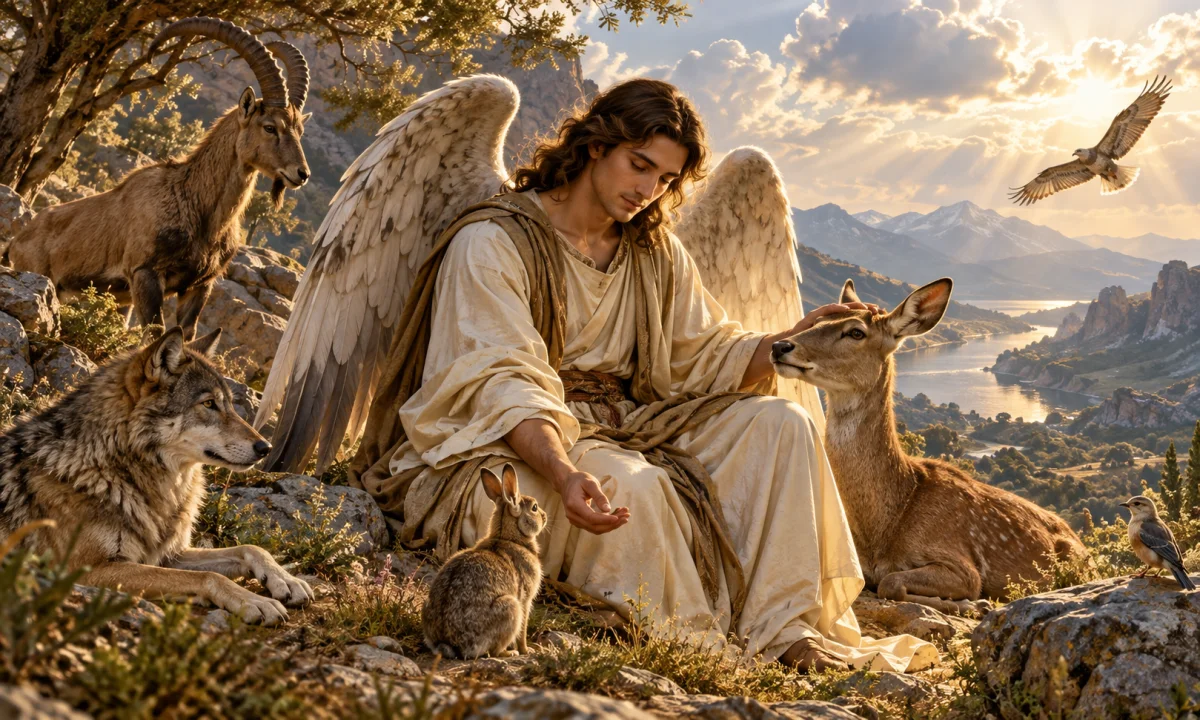
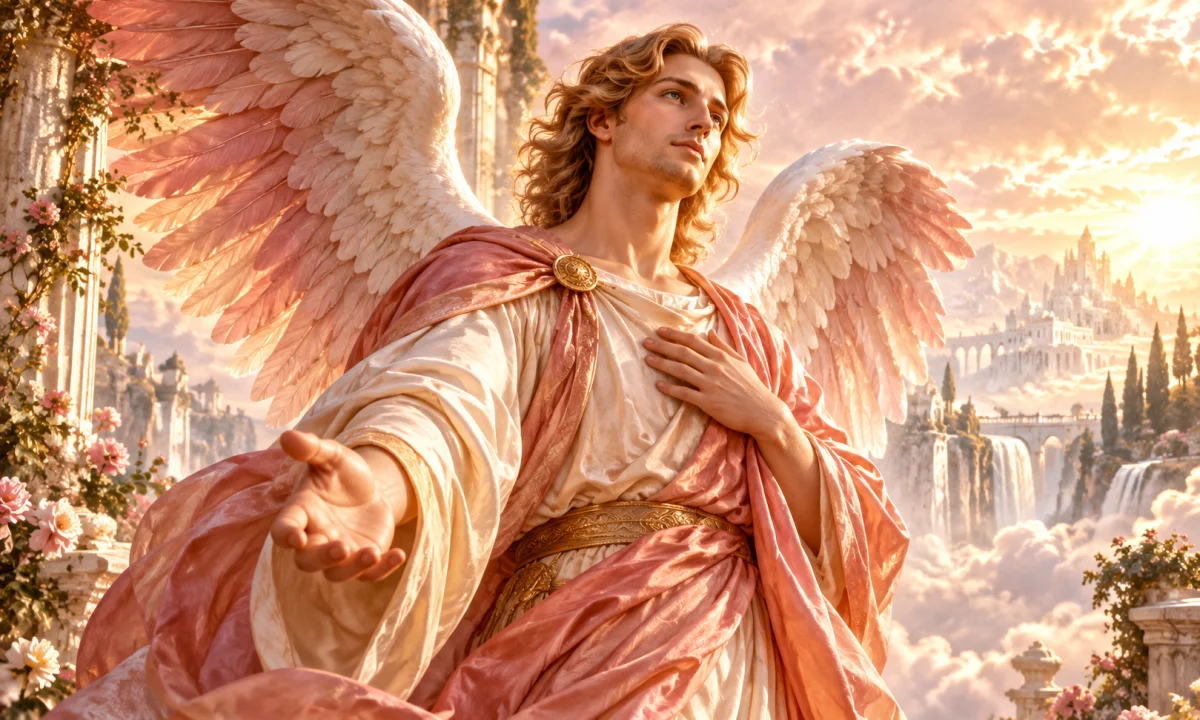
No ancient or authoritative description gives Dalquiel a fixed physical appearance. There is no dependable traditional portrait specifying wings, clothing, weapons, a halo, a colour, or a particular animal companion. Images found in modern collections may therefore be artistic inventions rather than representations preserved from an old religious tradition.
As an angel of a heavenly order, Dalquiel would conventionally be understood as a spiritual being rather than a human or animal creature. Yet even that general description should be used carefully. Angelic traditions contain many different ways of imagining heavenly beings, ranging from humanlike messengers to throne-bearers, fiery spirits, winged creatures, and symbolic manifestations of divine attributes.
The name’s placement in a celestial hierarchy may suggest ideas of order, mediation, and heavenly administration. It does not, by itself, establish a distinctive personality or a set of powers. Dalquiel is not known for a canonical miracle, a famous battle with a demon, or a recorded encounter with a biblical hero.
Stories and relationships
Dalquiel has no well-known narrative cycle comparable to the stories of Michael, Gabriel, Raphael, or Uriel. The references traditionally associated with the name are usually classificatory rather than dramatic. They identify a place, day, or function but do not recount a sequence of events.
There is likewise no securely established family relationship between Dalquiel and other angels. Claims that place Dalquiel among the sons, companions, servants, or rivals of a named archangel should be regarded cautiously unless they can be traced to a specific tradition. The name’s appearance in a list beside another angel does not necessarily imply friendship, kinship, or shared rank.
This lack of narrative detail is significant. Many modern descriptions of obscure angels expand a short catalogue entry into a complete biography, assigning a personality, appearance, sacred colour, emblem, and sphere of influence. Such additions may be meaningful as contemporary creative or devotional interpretations, but they should not be confused with information preserved by older religious sources.
Religious and symbolic interpretation
Dalquiel illustrates the way angelic cosmologies can organise the universe into a network of sacred correspondences. A name linked with a particular heaven and day places it within a system where time and space are spiritually ordered. The purpose of such a system was not always to provide a story. It could also offer a map for meditation, prayer, ritual timing, or reflection on the relationship between earthly life and the celestial realm.
From a religious perspective, an angel assigned to a celestial sphere may represent the belief that creation is not chaotic but governed through layers of divine wisdom. Angels in these systems act as intermediaries, not because God is absent, but because heavenly administration expresses the richness and hierarchy of divine power.
From a historical perspective, Dalquiel also demonstrates how traditions change as they are transmitted. Names move between languages and manuscripts; classifications are rearranged; astrological concepts are combined with theological ones; and later writers may treat an obscure entry as if it were an ancient, independent tradition. The uncertainty surrounding Dalquiel is therefore part of the subject’s history rather than a problem to be concealed.
Distinction from similar figures
Dalquiel should not automatically be identified with Zadkiel or Sachiel, even though all three names may appear in discussions of Thursday, Jupiter, mercy, authority, or related planetary symbolism. Zadkiel is a more widely recognised angel in Jewish and Christian angelological traditions and is often associated in later systems with mercy and benevolence. Sachiel is commonly used in occult planetary magic as an angel of Jupiter. These figures may occupy overlapping positions in different magical correspondences, but overlapping symbolism does not prove that they are alternate names for Dalquiel.
Nor should Dalquiel be confused with Dalziel, a name that appears in some modern occult and fictional contexts. Similar spelling is not sufficient evidence of identity. The same caution applies to Dalkiel and other forms: a variant may preserve the same name, but it may also reflect a separate tradition or a scribal mistake.
Dalquiel is also distinct from the angels named in canonical scripture. The presence of the ending -el does not place the name on the same level of textual authority as Michael, Gabriel, or Raphael. It indicates a naming pattern common in angelic traditions, not a shared scriptural status.
Later reception
In modern times, Dalquiel is most likely to be encountered in reference works, occult correspondence tables, angel-name websites, esoteric encyclopedias, and fictional settings that draw on obscure angelic names. These treatments sometimes give the figure a detailed office or personality far beyond what the older catalogues preserve.
Modern writers may interpret Dalquiel as a guardian of Thursday, an intermediary of Jupiter, or a spirit connected with prosperity, justice, wisdom, or leadership. Such portrayals can be useful examples of contemporary symbolic creativity, but they are interpretations rather than firmly documented elements of an ancient biography.
The most historically responsible description remains modest: Dalquiel is a rare angelic name associated in later esoteric angelology with the third heaven and, in some traditions, with Thursday. Its spelling, origin, rank, and exact significance are uncertain, and no broadly accepted body of religious stories defines the figure.