WORLD
WORLD
Uthlanga

Uthlanga is a name associated with origin traditions among Nguni-speaking peoples of southern Africa, especially in discussions of Zulu mythology. The term is often connected with a primordial reed bed or source from which the first human ancestor emerged. In some modern summaries, Uthlanga is presented as a creator being or ancient deity; however, the surviving evidence does not support one single, universally accepted identity. The name, spelling and role vary according to source, language and interpretation.
Origins in southern African tradition
Uthlanga belongs to a group of southern African origin traditions in which humanity is connected with the natural world. Reeds, caves, rivers, trees and other features of the landscape can function as places of emergence rather than merely as scenery. Such traditions express a relationship between people, ancestors and the land, while also explaining how the first community came into existence.
In accounts associated with Zulu religious thought, the first ancestor is commonly known as Unkulunkulu. Some versions say that Unkulunkulu emerged from a bed of reeds, often identified with a term written as Uhlanga or Uthlanga. From this beginning, human beings, animals and other elements of the world were brought into existence or became differentiated. Other accounts describe Unkulunkulu as the first human, the ancestor of humanity, or a powerful creator figure. These descriptions are not always equivalent, and they reflect different attempts to interpret an oral religious tradition.
The tradition should not be treated as a single scriptural creation narrative. Zulu religious knowledge was transmitted primarily through oral teaching, ritual practice, praise poetry, family histories and stories connected with ancestors and the landscape. Early European observers recorded these traditions in different ways, often using Christian terms such as “god,” “creator” or “devil.” Their reports were shaped by the questions and categories of their own cultures. As a result, the meaning of Uthlanga must be approached with care.
The name Uthlanga and variant spellings
The form Uthlanga is found in English-language references, while Uhlanga is another spelling frequently associated with the same complex of ideas. The spelling may reflect attempts to represent an isiZulu or related Nguni term using older systems of transcription. English sources also sometimes confuse the name of a place, object or primordial source with the name of a person or god.
Interpretations of the word are therefore important. In some descriptions, Uthlanga is treated as a “reed,” “reed bed” or “place of reeds.” In others, it is described as an original being who existed before ordinary human life. The distinction matters: a reed bed from which an ancestor emerges is not necessarily a personal deity who intentionally creates the universe.
There is also a broader linguistic and cultural context. Reeds have practical and ceremonial importance in several southern African societies. They may be used in building, craftwork, music and public ceremonies. In Zulu culture, reeds are prominently associated with the Umkhosi woMhlanga, commonly called the Reed Dance, although that modern royal ceremony should not be presented as a direct survival of every ancient origin belief. The cultural importance of reeds can help explain why a reed landscape might appear as a powerful symbol of beginnings, fertility, continuity and collective identity.
Uthlanga and Unkulunkulu
The most important distinction is between Uthlanga and Unkulunkulu. Unkulunkulu is a major figure in accounts of Zulu traditional religion. His name is often translated as “the very great one” or “the greatest one,” although translations vary. Depending on the tradition or source, Unkulunkulu may be described as the first ancestor, the first human, the originator of social institutions, or a creator associated with the formation of the world.
Uthlanga, by contrast, is frequently connected with the setting or substance from which Unkulunkulu emerged. In this interpretation, Uthlanga is not Unkulunkulu’s personal name. It is the primordial reed bed, origin-place or generative source. Some retellings reverse or blur this relationship and call Uthlanga the creator, while treating Unkulunkulu as a being produced by it. Others use the names in a way that suggests overlapping aspects of a single origin tradition.
Because the tradition was not preserved in one canonical text, it is difficult to impose a single family tree or divine hierarchy on it. Statements that Uthlanga was definitely the father, mother, spouse or parent of Unkulunkulu should be treated cautiously unless they are tied to a clearly identified local account. There is no generally accepted Zulu theological system in which every source assigns Uthlanga the same role.
The reed as an origin symbol
The image of emergence from reeds carries several possible meanings. At the most basic level, it presents human life as arising from a living part of the landscape. The first ancestor is not born in a distant heaven or manufactured by a craftsman-like god. Instead, humanity comes forth from a fertile, watery or vegetative environment.
Reeds grow in wetlands and along rivers, places associated with water, nourishment and transformation. A reed bed can also conceal what lies within it, making emergence from the reeds a natural image for the transition from hidden existence to visible life. The story may therefore be read as an account of birth, emergence and belonging, rather than only as a tale explaining the first biological human.
In an ancestral framework, the first person is also the source of a community. The origin of humanity and the origin of social order become closely related. Stories connected with Unkulunkulu sometimes attribute to the first ancestor knowledge of death, marriage, social customs or the organization of human life. The details differ, but the general pattern presents the earliest ancestor as a bridge between the natural world and human society.
Stories and traditional variations
There is no single complete cycle of Uthlanga stories comparable to the mythological cycles preserved in some written traditions. References tend to occur within wider accounts of Zulu cosmology, ancestral belief and the origin of living things. In these accounts, a reed bed may be the place where the first person appears, or the source from which people and animals emerge.
Some versions connect the first ancestor with the creation or release of other beings. A figure who begins as the first person may later be described in more exalted terms, especially when outside observers compare the figure with a creator god. This helps explain why Unkulunkulu is sometimes called a supreme deity in older English-language descriptions and, in other contexts, is presented primarily as an ancestral founder.
Another group of traditions concerns the separation of living beings and the arrival of death. In many African mythological systems, the human condition is explained through a message that was delayed, misunderstood or replaced by another message. Zulu accounts have sometimes been placed within this wider pattern, but details vary substantially between sources. It is not safe to attribute every story about the origin of death to Uthlanga specifically.
Likewise, stories about a supreme creator, a first ancestor, a reed source and the origin of people may have been combined by writers who were trying to produce a neat mythology. In oral traditions, different narrators may emphasize different relationships without considering them contradictory. A sacred figure can be both an ancestor and a creator in one setting, while the landscape or natural source remains central in another.
Religious and cultural significance
Uthlanga is best understood within a worldview in which the visible world, the ancestors and the living community are connected. Origin traditions do not simply answer the question “Where did humans come from?” They can also establish why people belong to a particular land, why ancestors remain relevant and how the community understands continuity between generations.
Traditional Zulu religion has commonly been described as placing great importance on ancestors, often called amadlozi or abaphansi in particular contexts. Ancestors may be approached through family ritual, offerings, praise and requests for protection. This does not mean that every origin figure is worshipped in the same manner as an ancestor, nor that Uthlanga has a standardized cult. The evidence for Uthlanga is too varied to support such a claim.
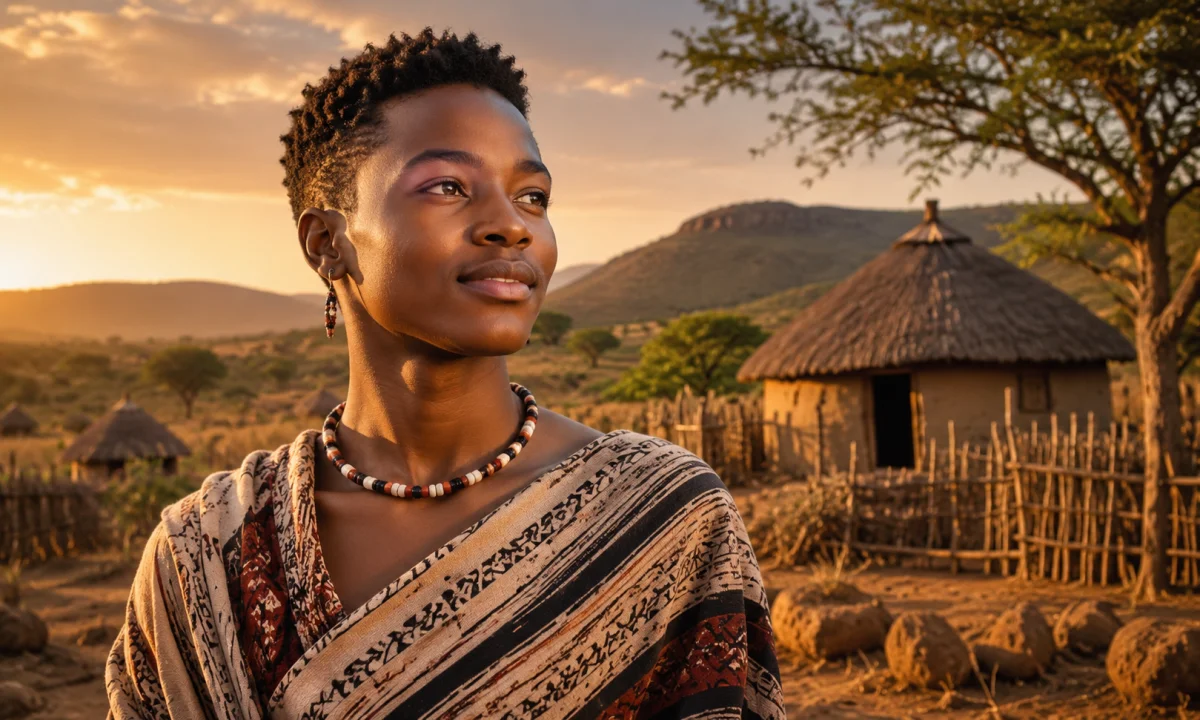
The reed-origin image also emphasizes that human identity is not separate from place. A people emerging from reeds belongs to a landscape of rivers, wetlands and cultivated land. Such stories can preserve ideas about fertility, ancestry and the dependence of society on the natural environment. Their significance is therefore religious, social and ecological at the same time.
Historical evidence and interpretation
Knowledge of Uthlanga comes mainly through oral traditions and written records made by outsiders or by later scholars. Oral traditions are not necessarily less meaningful because they change, but they do not behave like a fixed book. A story can be retold for a particular audience, adapted to a local history or expressed through praise language rather than a literal narrative.
Older records must be read especially carefully. Missionaries and colonial-era writers often sought a single “Zulu religion” with a supreme god, a devil, a creation story and a definite pantheon. These categories could obscure distinctions between a creator, an ancestor, a place of emergence and a poetic title. Different spellings may also make it appear that separate beings exist when the difference is only a matter of transcription. Conversely, similar names may sometimes have been wrongly treated as identical.
For this reason, scholars may describe Uthlanga as a motif, a primordial source, a place-name or an uncertain mythological figure rather than confidently classifying it as a god. The safest description is that Uthlanga is associated with a reed-origin tradition and with the emergence of the first ancestor or first people in some southern African accounts. More specific claims require a local tradition or a clearly defined source.
Distinguishing Uthlanga from similar figures
- Unkulunkulu: A major Zulu origin figure whose role may include first ancestor, first human and creator. Uthlanga is sometimes described as the reed source from which Unkulunkulu emerged.
- Qamata: A creator figure particularly associated with Xhosa religious traditions. Qamata should not be casually identified with Uthlanga or Unkulunkulu, even though different writers may compare their roles.
- Modimo: A term used in several Sotho-Tswana religious contexts for a high god or spiritual power. It belongs to related but distinct traditions and is not another name for Uthlanga.
- Nkulunkulu: A form of the name used in related Nguni contexts, including Swazi and other traditions. Similar wording does not automatically mean that every community preserves the same stories or theology.
- Uhlanga and uMhlanga: Forms that may be confused in English-language writing. Their spelling and meaning depend on language, transcription and context, so they should not be treated as interchangeable without evidence.
Uthlanga in modern discussions
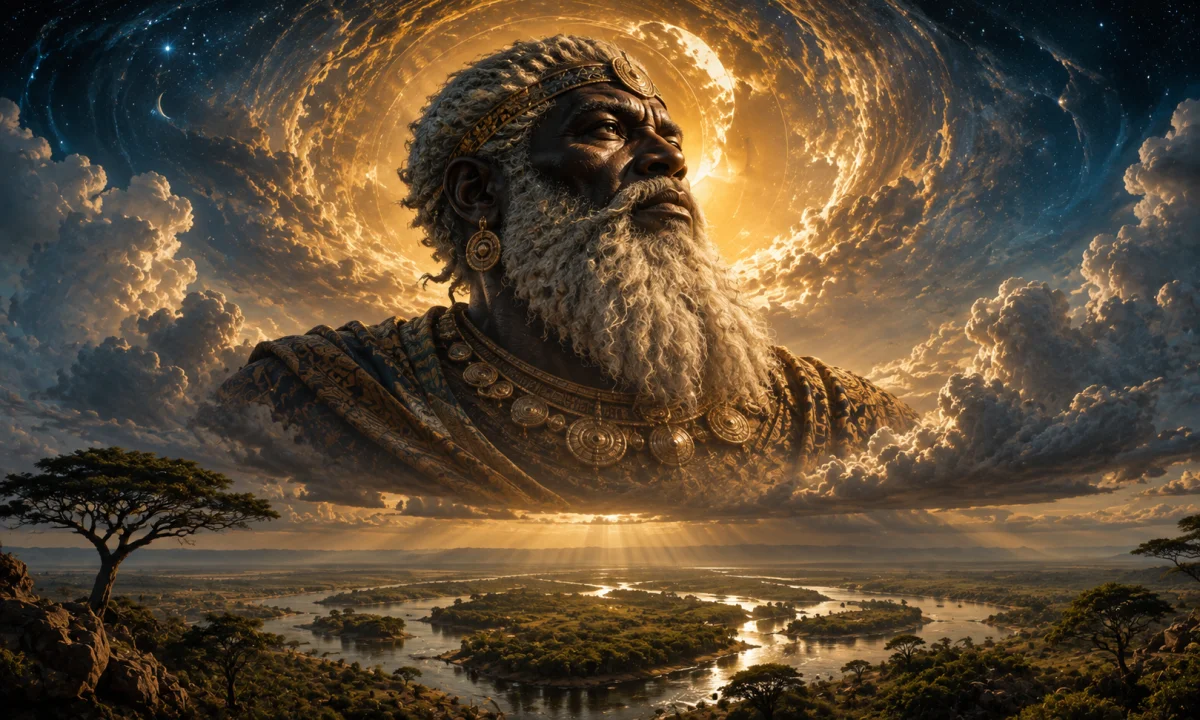
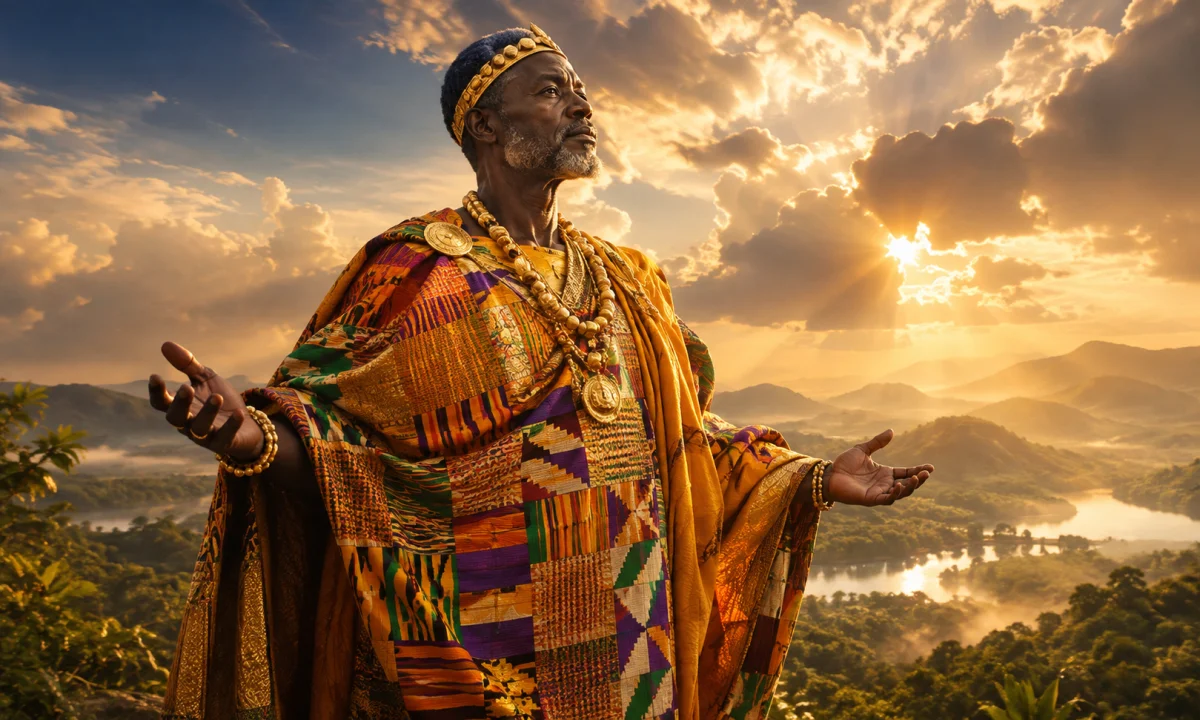
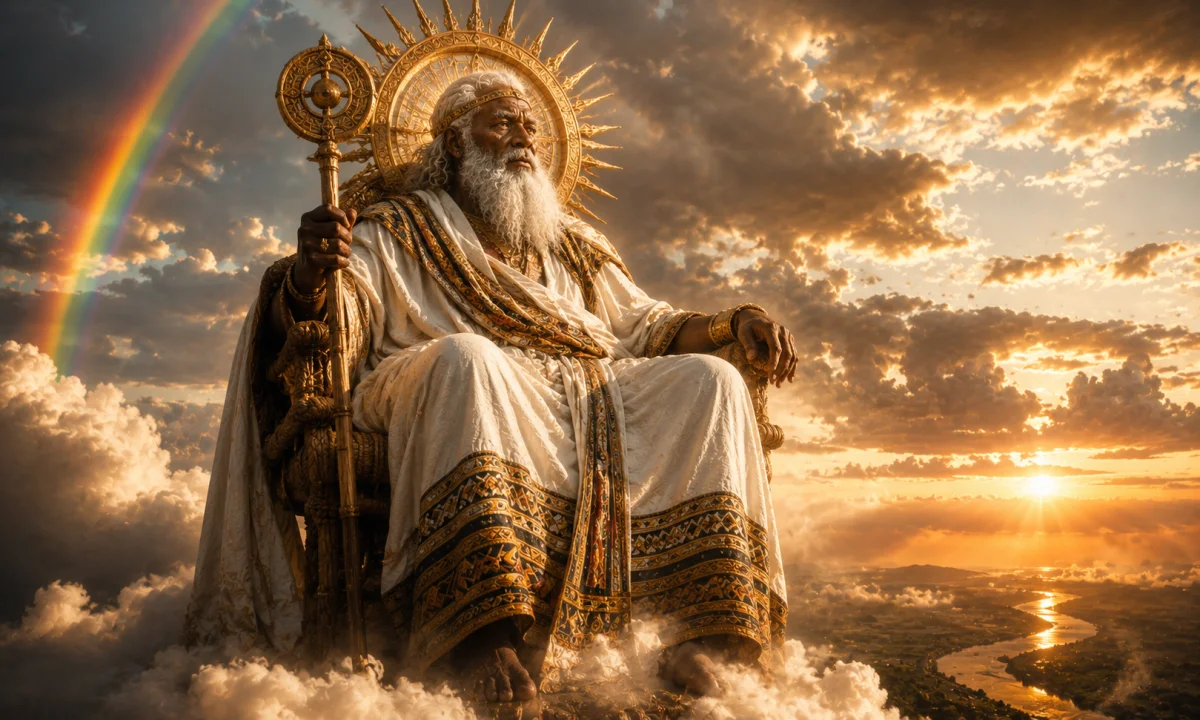
Uthlanga occasionally appears in websites, fantasy writing and generalized lists of African gods. Such presentations often turn an uncertain or symbolic origin term into a fully developed deity with a fixed appearance, powers, family and set of enemies. These details are usually modern inventions or composites rather than features securely established in Zulu tradition.
Modern retellings can still have value when they identify themselves as creative interpretations. They should not, however, be used as evidence for traditional belief. In particular, depictions of Uthlanga as a horned god, a warrior, a cosmic ruler or a universal African creator have no general basis in the limited traditional material associated with the name.
Uthlanga is therefore most accurately approached as an uncertain and variable figure or origin concept within southern African mythology. Its central image is the reed bed as a source of human emergence, while its connection with Unkulunkulu reflects the difficulty of separating place, ancestor and creator in records of an oral religious tradition. Preserving that uncertainty gives a more faithful account than assigning the name an invented pantheon or a single rigid identity.