WORLD

Tsui-Goab
Tsui-Goab is a powerful divine figure in the traditional religious narratives of the Khoekhoe, especially those associated with Nama-speaking communities of southern Africa. He is commonly described as a sky or supreme god, and in some accounts as a creator, rain-bringer, or guardian of life. His best-known myth concerns his repeated struggle with Gaunab, a dangerous being associated with death, misfortune and destruction.
Information about Tsui-Goab comes chiefly from oral traditions recorded by European missionaries, travellers and ethnographers in the nineteenth and early twentieth centuries. These records do not represent a single authorised scripture or a complete account of Khoekhoe religion. Spellings, interpretations and details differ between sources and communities. For that reason, Tsui-Goab should not be treated as a fixed character with one universally accepted mythology.
Khoekhoe religious and cultural setting
The Khoekhoe are Indigenous peoples of southern Africa whose languages belong to the Khoe-Kwadi language family. Historically, Khoekhoe-speaking communities lived across areas that are now Namibia, South Africa and neighbouring regions. Nama communities, in particular, preserved and transmitted many traditions about divine beings, ancestral figures, heroes and the forces governing illness, death, weather and social life.
Older European writings often used the term “Hottentot” for Khoekhoe people. That label is now widely regarded as outdated and inappropriate, although it may appear in historical discussions because it was used in the records through which many traditions became known to later readers. The word Khoekhoe, or a more specific community name such as Nama where appropriate, is preferred.
Khoekhoe religious traditions were not necessarily organised around a formal pantheon in the classical Mediterranean sense. European observers sometimes interpreted the material through categories such as “supreme god,” “devil,” “mythological hero” or “sun god.” Those labels can be useful as approximate descriptions, but they may also simplify beliefs that were embedded in ritual practice, oral storytelling, kinship, landscape and relations with the dead.
Tsui-Goab belongs to this broader religious environment. He is often presented as a high god, but the surviving accounts do not always agree about the extent of his creative powers, his relationship with other supernatural figures or the degree to which he was actively worshipped in daily life. A statement that he is “the Khoekhoe god” is therefore too broad: Khoekhoe traditions include different figures and local variations, and no single narrative describes the beliefs of every Khoekhoe-speaking community.
Name and spellings
The name appears in several forms, including Tsui-Goab, Tsui'goab, Tsuigoab and other forms reflecting different systems for writing Khoekhoe sounds. Older sources may use spellings that are not standard in modern English. The apostrophe in forms such as Tsui'goab can represent a feature of pronunciation or transcription rather than a separate element in the mythology.
The meaning of the name is not entirely secure. It has often been connected with the idea of an injured or wounded knee, an important detail in stories about Tsui-Goab’s combat with Gaunab. Other interpretations have attempted to connect the name with concepts such as strength, dawn or divinity. These explanations should not be presented as certain unless they are tied to a particular linguistic analysis. Different spellings and folk explanations do not necessarily indicate different gods.
Identity and classification
Tsui-Goab is most often classified as a high god or sky god. Descriptions of him may include the following roles:
- a powerful creator or maker of the world;
- a ruler or chief among supernatural beings;
- a source of rain, fertility or beneficial weather;
- a protector associated with life and order;
- an opponent of Gaunab and the forces represented by death and harm.
Not every account assigns all of these functions to him. Some sources emphasise his status as a great god, while others focus almost entirely on his battle with Gaunab. The word “creator” can also be misleading if it suggests a complete creation story comparable to those found in written theological systems. In many recorded traditions, Tsui-Goab’s importance is expressed through his power over the conditions of life rather than through a detailed account of how every part of the universe was made.
His association with the sky is similarly flexible. A sky god may be understood as a remote divine authority, a being connected with rain and storms, or a power whose dwelling and influence are above the human world. The available records do not provide one consistent cosmology describing his heavenly residence.
Appearance and the wounded knee
Tsui-Goab is not known for a single stable visual form. Traditional accounts recorded in English often give little descriptive information about his body or clothing. The feature most frequently associated with him is a wounded knee, sometimes treated as an explanation of his name and sometimes as the mark left by his conflict with Gaunab.
In the central combat narrative, the injury is not merely a physical detail. It shows that even a great divine power can be challenged and harmed. At the same time, Tsui-Goab survives the struggle and defeats his adversary in the versions that have been most widely circulated. The wounded knee therefore functions as a sign of endurance and victory rather than defeat.
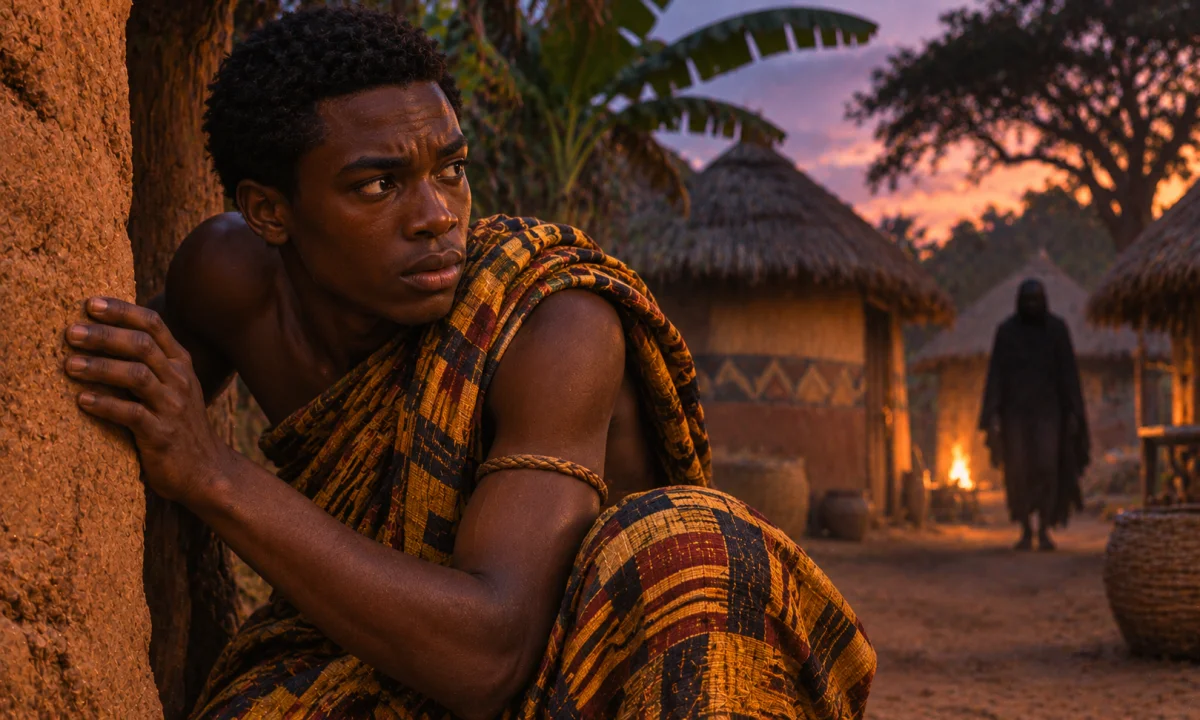
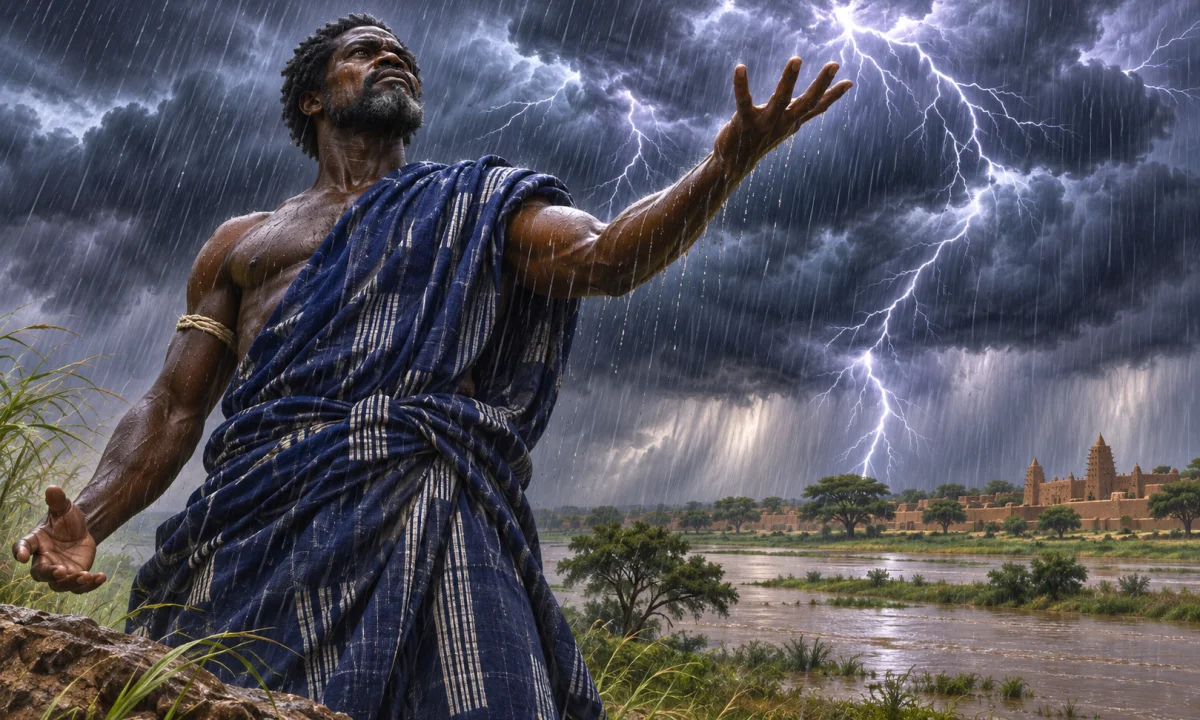
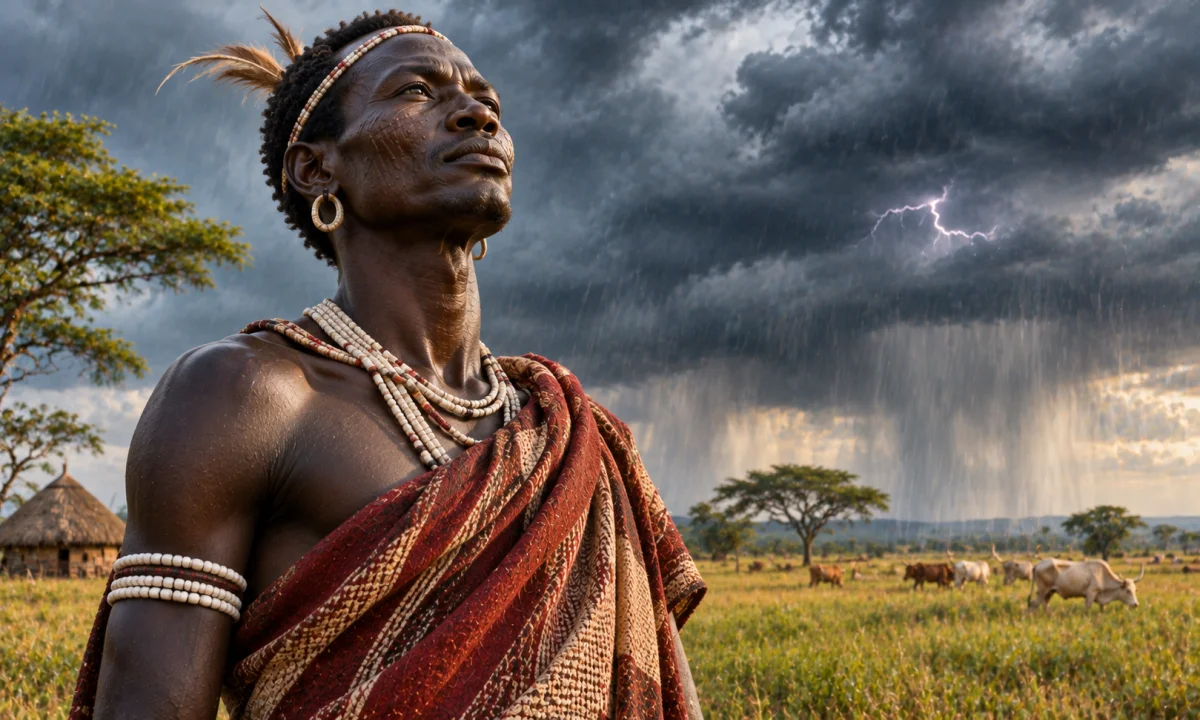
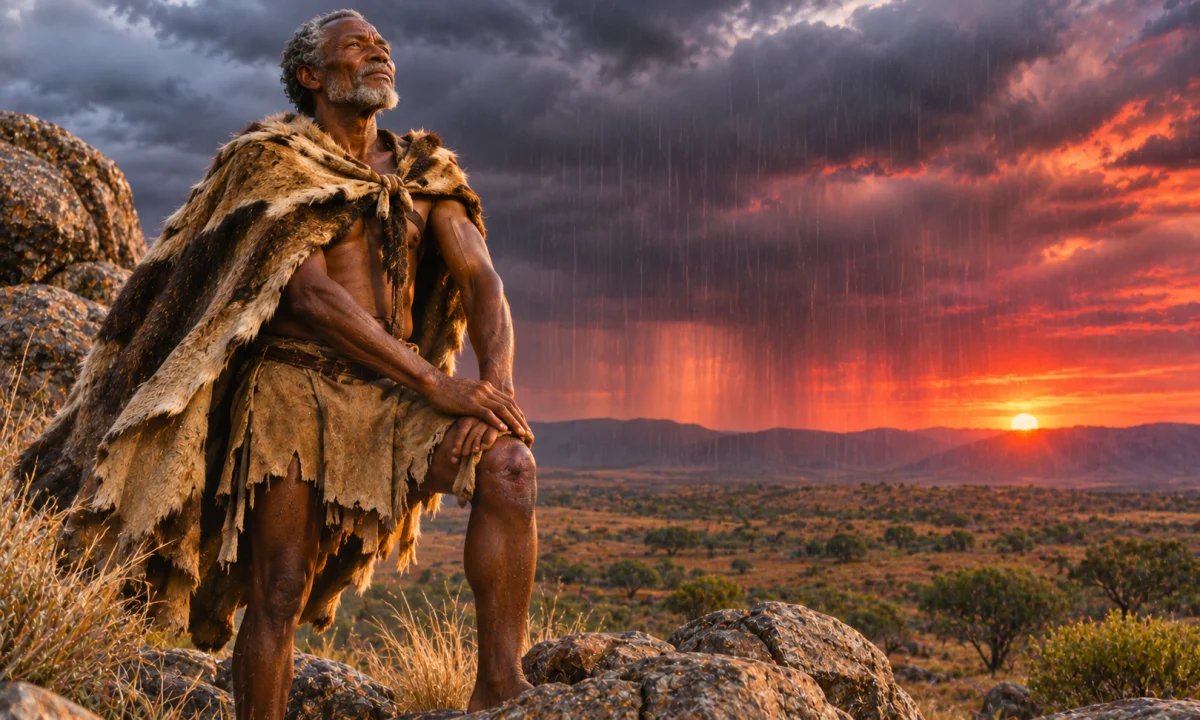
Readers should be cautious about illustrations that portray Tsui-Goab as a standard bearded “sky god,” a European-style king or a generic African deity. Such images are usually modern artistic choices, not descriptions securely preserved in Khoekhoe tradition. There is no universally established appearance that can be treated as canonical.
Tsui-Goab and Gaunab
The most important surviving story about Tsui-Goab is his conflict with Gaunab. Gaunab is often characterised as a hostile supernatural being connected with death, darkness, disease or the destruction of human life. The precise nature of Gaunab varies in the sources. He may be called a god, an evil power or a death-bringing figure, but these classifications reflect the language of the recorders as much as a clearly defined traditional category.
In commonly retold versions, Tsui-Goab and Gaunab fight more than once. Gaunab wounds Tsui-Goab in the knee, or Tsui-Goab is already known by a title referring to such an injury. Despite this harm, Tsui-Goab ultimately overcomes Gaunab. Some versions describe the two as repeatedly engaged in conflict, suggesting an ongoing opposition between life-giving order and destructive death rather than one isolated duel.
The story has been interpreted as a mythic expression of the tension between forces that sustain the community and forces that threaten it. Tsui-Goab’s victory may symbolise the preservation of life, rain, health or social order. Gaunab’s role, however, should not be reduced to a simple equivalent of the Christian Devil. The comparison became tempting for some Christian observers, but Khoekhoe traditions developed within their own cultural and religious framework. Death, danger and misfortune do not automatically create a “devil” in the specifically Christian theological sense.
The surviving accounts also do not establish a single detailed genealogy for the two figures. It is safer to describe them as opposing supernatural powers than to assign them a fixed family relationship. Claims that they are universally brothers, twins or members of a formal divine dynasty go beyond what the evidence securely supports.
Relations with other Khoekhoe figures
Tsui-Goab is sometimes discussed alongside Heitsi-eibib, one of the best-known figures in Khoekhoe and related southern African traditions. This can cause confusion because both appear in accounts of the region’s traditional mythology, but they are not simply two names for the same being.
Heitsi-eibib is generally portrayed as a culture hero, ancestor, trickster-like traveller or powerful human-divine figure, depending on the tradition and source. Stories about him commonly involve journeys, contests, cleverness, death and return. He may be associated with graves or stone heaps, and his narratives have a different character from the high-god traditions surrounding Tsui-Goab.
Tsui-Goab and Heitsi-eibib can appear in the same broad discussions of Khoekhoe religion, yet their roles should remain distinct. Tsui-Goab is usually the elevated divine power connected with the sky, life and the defeat of Gaunab. Heitsi-eibib is more often a legendary ancestor or culture hero whose adventures take place in a recognisably human world. Some historical sources blurred such distinctions, especially when trying to fit oral traditions into European categories of god, demigod and hero.
Tsui-Goab should also not automatically be identified with the sun, the moon or a general “African creator god.” Southern African Indigenous religions include many different traditions involving celestial bodies, rain powers, ancestors and supreme beings. Similar functions do not prove that figures from separate communities are the same deity.
Rain, life and the natural world
References to Tsui-Goab as a rain god or bringer of beneficial weather reflect the importance of rain in the environmental and economic life of southern Africa. For pastoral and mobile communities living in dry or seasonally variable regions, rain was directly connected with pasture, livestock, food, travel and survival. A high god associated with rain could therefore represent much more than a weather spirit: he could embody the conditions that allow community life to continue.
Still, the description “rain god” should be used carefully. In some accounts Tsui-Goab’s power over rain is prominent; in others, his principal identity is that of a supreme or great god. The surviving records are too varied to support a single universal list of his natural functions.
His opposition to Gaunab can be read in relation to this life-giving role. Rain, health and protection stand on one side, while drought, death and violence may be grouped on the other. Such interpretations are plausible ways of understanding the narrative, but they are interpretations rather than direct statements from a single canonical text.
Sources and limits of the evidence
There is no ancient Khoekhoe epic about Tsui-Goab preserved in a known written manuscript. Most information comes from oral narratives written down after sustained contact with European missionaries and colonial institutions. The recorders often translated unfamiliar concepts into Christian or classical vocabulary. They may also have selected stories that seemed to fit their own expectations about a “supreme being” or a conflict between a good god and an evil opponent.
Oral tradition is not deficient because it lacks a single fixed written version. Variation, local performance and adaptation are normal features of orally transmitted cultures. The difficulty lies in the fact that many early records preserve only fragments of that living tradition and do not always identify the storyteller, community, language or ritual context with enough precision.
Some accounts may also combine material from neighbouring peoples or from communities whose religious practices were changing under colonial pressure and Christian missionisation. As a result, a careful description should distinguish between:
- traditional themes: Tsui-Goab’s high status, his connection with life or the sky, and his struggle with Gaunab;
- recorded interpretations: labels such as creator, supreme god, devil or rain deity;
- modern reconstructions: attempts to build a complete pantheon or a systematic theology from scattered narratives.
Cultural significance
Tsui-Goab’s significance lies less in a large cycle of surviving adventures than in the position he occupies within a religious imagination shaped by weather, mortality, landscape and communal survival. He represents a power greater than human beings, yet the story of his wounded knee gives that power a vulnerable and embodied form. The myth does not present victory as effortless. Order survives through struggle.
The conflict with Gaunab also gives narrative form to experiences that are both personal and collective: illness, death, fear, drought and the uncertainty of the natural world. Tsui-Goab’s triumph offers an image of protection and renewal, but it does not erase the reality of danger. Gaunab remains an important presence precisely because death and misfortune cannot be treated as imaginary problems.
It is important not to turn Tsui-Goab into a generic symbol of “African spirituality.” Africa contains thousands of peoples, languages and religious traditions. Tsui-Goab belongs specifically to Khoekhoe-related traditions and should be discussed within that southern African context, with attention to the uncertainty and mediation of the historical record.
Later reception
Tsui-Goab has appeared mainly in encyclopaedias of mythology, comparative studies and retellings of African traditional religions. In these settings, a few memorable features—his status as a great god, the wounded knee and the battle with Gaunab—are often repeated without the qualifications found in more careful scholarship.
He is much less prominent in global popular culture than figures such as Anansi, Oshun or the Egyptian and Greek gods. When Tsui-Goab is used in modern fantasy, games or online mythological catalogues, writers may expand his powers, invent a detailed divine family or portray him as a conventional thunder god. Such additions belong to modern fiction or reconstruction, not to securely documented Khoekhoe tradition.
The most responsible portrayals retain the distinction between a living cultural heritage and a collection of mythological characters available for unrestricted reshaping. Tsui-Goab is best understood as a Khoekhoe high-god figure whose recorded traditions centre on life, weather, divine authority, vulnerability and the enduring struggle against Gaunab.