WORLD
WORLD
Torngarsak
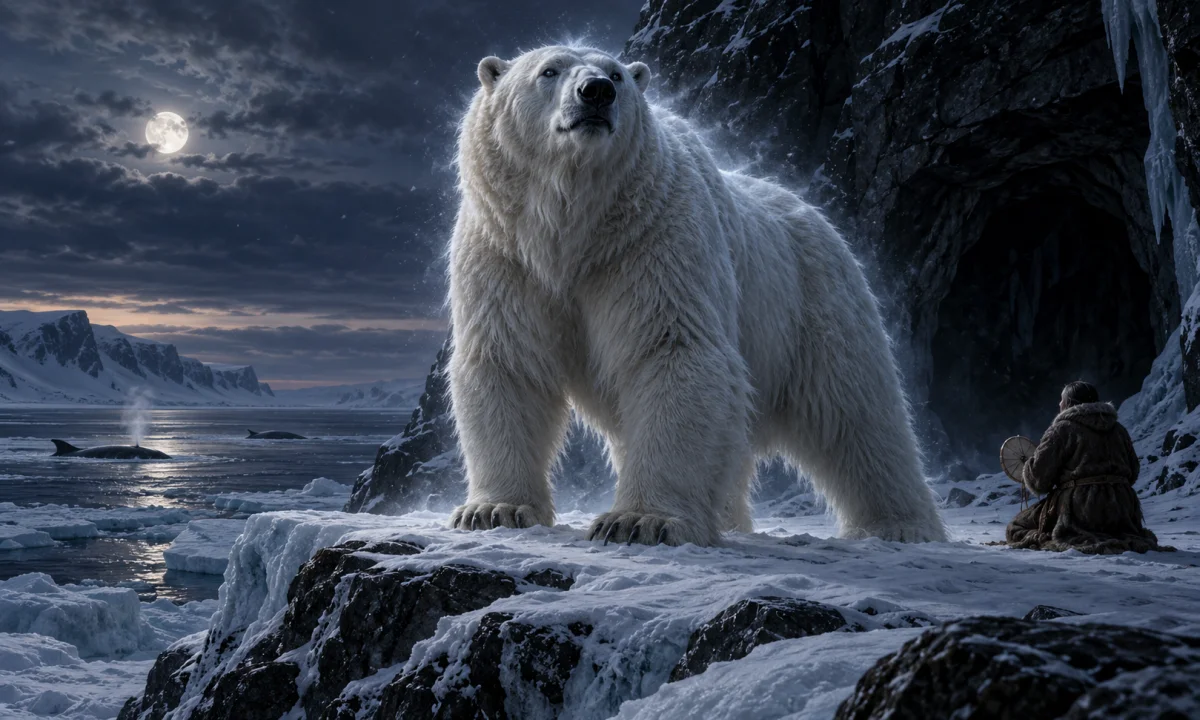
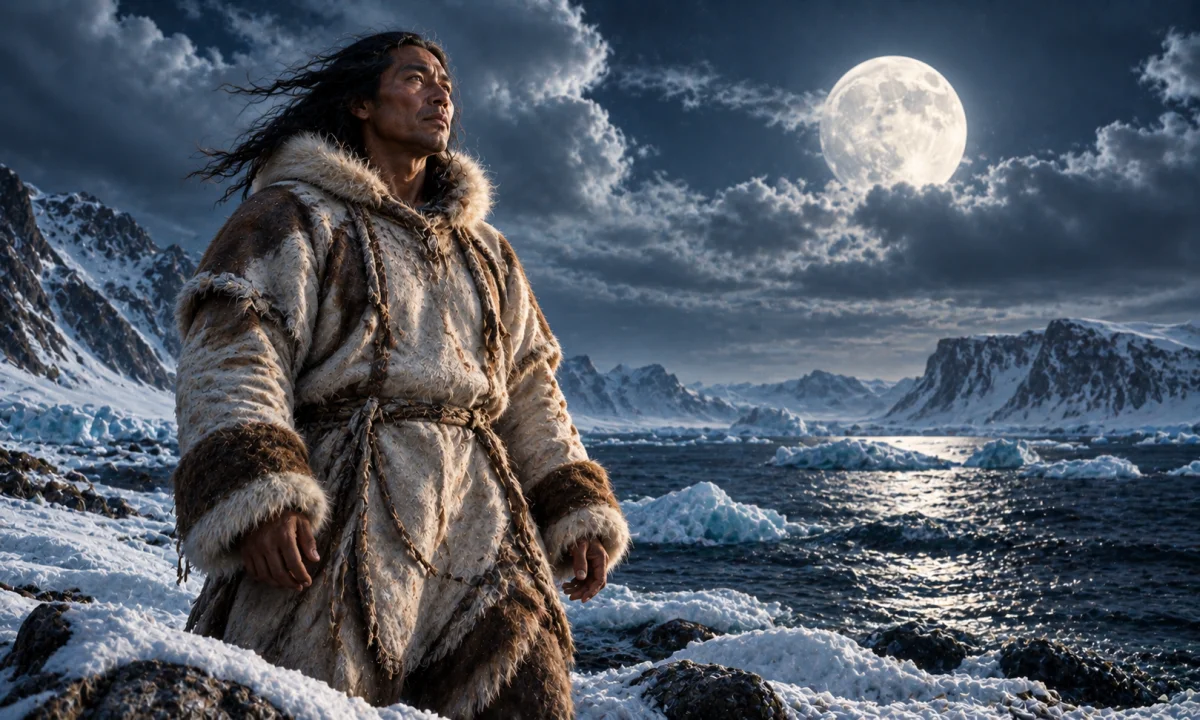
Torngarsak is a powerful spirit known from several Inuit religious traditions, especially those recorded in Greenland and the eastern Canadian Arctic. Older English-language sources also use forms such as Torngarsoak, Tornarsuk and Torngasuk. In many descriptions, Torngarsak is presented as a great or chief spirit associated with the sea, marine animals and the work of ritual specialists. The figure is sometimes called an Inuit god, but that label can be misleading: Inuit religious traditions do not form a single uniform pantheon, and the relationships between spirits, animals, ancestors and human beings vary greatly from one community and region to another.
Origins and cultural setting
Torngarsak belongs to the religious world of Inuit peoples, whose communities have traditionally lived across Greenland, northern Canada and Alaska. Inuit societies are culturally diverse, and their spiritual traditions were transmitted primarily through spoken teaching, ritual practice, personal experience and stories rather than through one canonical scripture. Accounts written by European missionaries, explorers and ethnographers therefore provide only partial and sometimes distorted records.
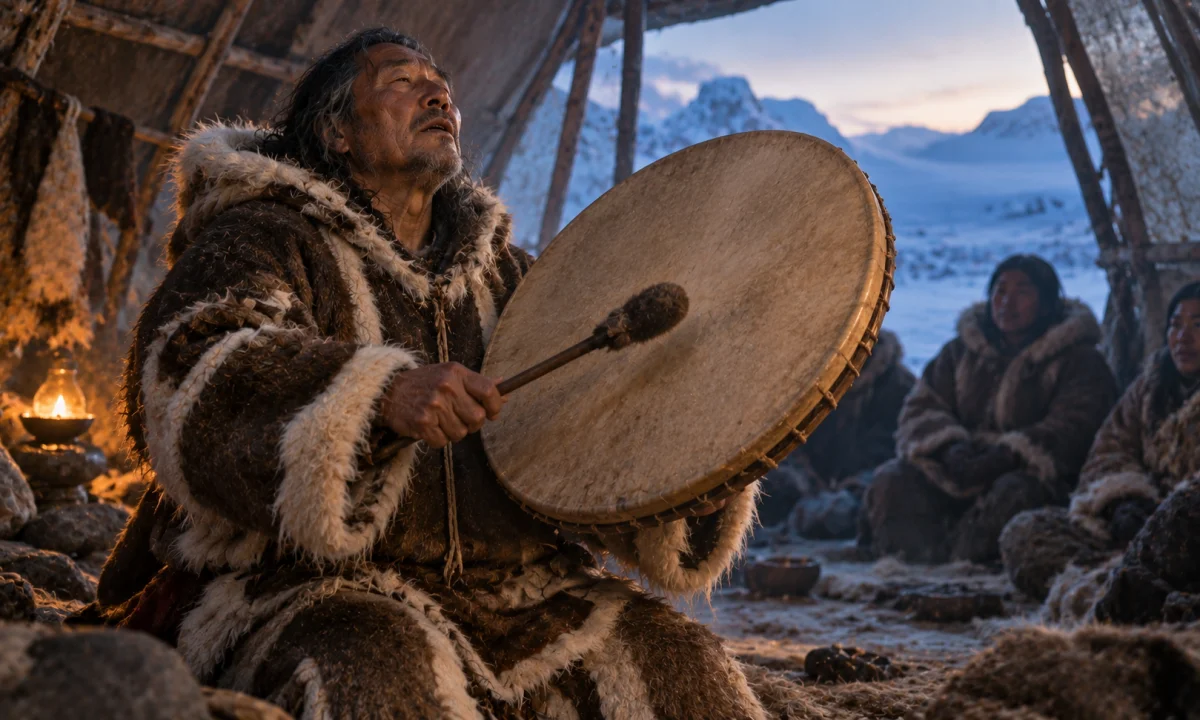
Inuit religious thought commonly recognizes many kinds of non-human persons and forces. Animals possess spiritual significance, places may have their own powers, and the boundary between the human and non-human worlds is not always fixed. A successful hunt, illness, weather, birth and death could all involve relationships with unseen beings. Ritual specialists, known in many Inuit languages by forms related to angakkuq, acted as mediators, healers and interpreters of these relationships.
Within this setting, Torngarsak is not best understood as a god who rules a formal heaven from a fixed position in a universal hierarchy. The surviving descriptions more often portray the figure as an exceptionally powerful spirit, or as the greatest among powerful spirits. The term used for such a being may be translated as “spirit,” “powerful spirit,” “helping spirit” or “deity,” depending on the translator and the period of the source.
The name and its variants
The spelling Torngarsak reflects an older system of recording an Inuit name in European languages. Other forms include Torngarsoak, Torngasuk, Tornarsuk and Torngasoak. Differences in spelling do not necessarily indicate different beings. They may reflect regional pronunciation, transcription practices or the attempt to represent Inuit sounds with European alphabets.
The name is connected with words represented in English as torngak, tuurngaq, tornat or related forms. These terms can refer to powerful spirits or spirit helpers, though their exact meaning varies by language and community. The singular and plural forms are also not consistent across older publications. As a result, it is unsafe to treat every occurrence of a similar-looking word as a reference to Torngarsak himself.
Older European writers frequently tried to arrange Inuit spiritual beings into categories familiar from European Christianity. A powerful spirit might be called a “god,” “devil,” “demon” or “supreme being.” Such translations reveal the assumptions of the recorder as much as they describe Inuit belief. Torngarsak’s identity should therefore be discussed with attention to the original cultural setting rather than through a rigid Christian-style classification.
Identity and classification
In many Greenlandic accounts, Torngarsak is described as one of the most powerful beings known to human beings. Some writers identify him as a supreme or nearly supreme spirit, while others describe him as a master of marine animals or as a spirit connected with the sea. He is frequently associated with the unseen forces that affect hunting and with the knowledge sought by an angakkuq.
The figure is generally described in masculine terms in older English sources, but this does not establish a single, universally fixed gender across Inuit traditions. European accounts often forced spirits into masculine or feminine categories, and regional traditions could assign different qualities or relationships to beings whose names were similar. The available evidence does not support a simple, pan-Inuit biography of Torngarsak.
Torngarsak is also not necessarily a creator god in the sense found in some other world religions. A few older accounts give him an elevated cosmic status, but they do not provide a consistent creation story accepted across Inuit communities. Claims that he was universally the creator, ruler of all animals or equivalent to a single “Inuit supreme god” should be treated as broad summaries of selected sources rather than established facts about all Inuit religion.
Association with the sea and animals
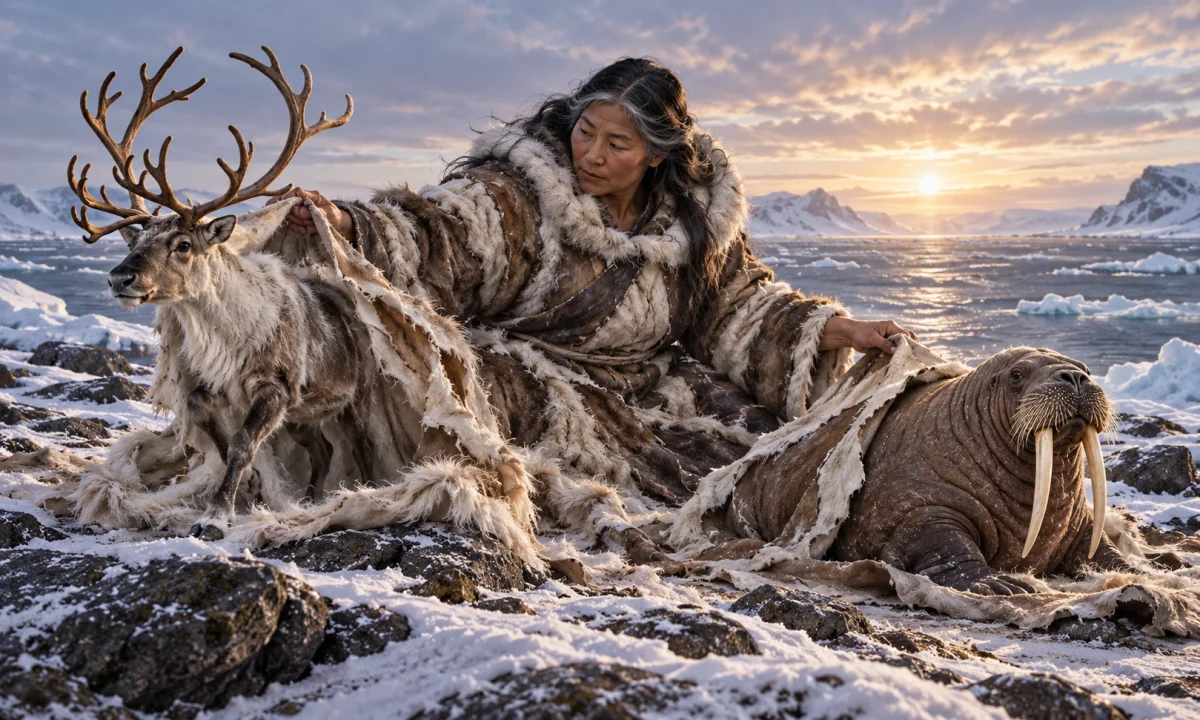
The strongest recurring association is with the sea and the animals on which Arctic communities depended. In particular, Torngarsak is often connected with marine animals, including seals and whales, and with the spiritual conditions that determine whether a hunt succeeds. This association does not mean that Torngarsak is simply a personification of the ocean. It reflects a religious understanding in which animals, hunters, environmental conditions and spiritual obligations are interdependent.
Hunting was not merely an economic activity. It involved proper conduct, respect for animals, observance of taboos and attention to the unseen consequences of human behavior. A shortage of game could be interpreted through broken rules, offended beings or an imbalance in relationships. A powerful spirit such as Torngarsak could therefore represent the wider spiritual authority behind the availability of marine life, even where local traditions gave more immediate responsibility to another being.
Descriptions of Torngarsak as “lord of the sea” or “master of whales” are useful as general indications of this role, but they should not be treated as exact titles shared by every Inuit group. In some traditions, marine animals are controlled or guarded by a female sea being, often known through names such as Sedna, Nuliajuk or Takannaaluk. The identity and functions of those figures vary as well. Torngarsak should not automatically be substituted for them.
Relationship to angakkuq and spirit helpers
Torngarsak is particularly important in accounts of shamanic or ritual activity. An angakkuq was believed to communicate with spirits, seek their assistance and travel spiritually to places inaccessible to ordinary people. Such work could involve healing, finding the cause of misfortune, restoring a person’s soul or addressing a crisis affecting the hunt.
Powerful spirits could serve as protectors or helpers, although the exact relationship between Torngarsak and an individual angakkuq is not uniform in the sources. Some accounts place a great spirit above lesser helping spirits; others use similar words for a range of beings connected with a ritual specialist. The idea of a single standardized priesthood with identical rituals everywhere is therefore inaccurate.
In descriptions influenced by Greenlandic traditions, Torngarsak may appear as a being whose power is available to, or approached by, an especially skilled angakkuq. This does not mean that all ritual specialists worshipped Torngarsak in the manner of a temple deity. Communication with a spirit was often practical and relational: the specialist sought knowledge, protection or restoration of balance rather than offering devotion according to a universal liturgy.
Appearance and powers
Torngarsak has no consistently preserved physical appearance. Some modern summaries give the figure a definite body, animal form or monstrous shape, but these descriptions should be examined carefully. Older accounts sometimes record visionary experiences, symbolic representations or statements about other spirits and later assign them to Torngarsak. There is no securely established traditional image comparable to the standardized visual forms of many classical gods.
The figure’s power is more important than a fixed appearance. Torngarsak is associated in different sources with:
- the sea and the animals living in it;
- the success or failure of hunting;
- knowledge available through ritual specialists;
- protection, assistance or danger in the spirit world;
- the wider order connecting human conduct with the natural environment.
These attributes should be understood as recurring themes rather than as a definitive list shared by every Inuit community. A powerful spirit could be helpful in one context and dangerous in another. Inuit religious traditions generally do not divide all supernatural beings into a simple opposition between wholly good and wholly evil. Respect, caution and correct behavior were more significant than assigning a being a permanent moral label.
Stories and traditional narratives
There is no single, widely attested epic narrative about Torngarsak that functions throughout the Inuit world. The figure is more often mentioned in ethnographic descriptions of religious beliefs, spirit relationships and ritual practice than in a large cycle of independent myths. This absence is important: it means that a short character biography assembled from scattered reference works can create a false impression of unity.
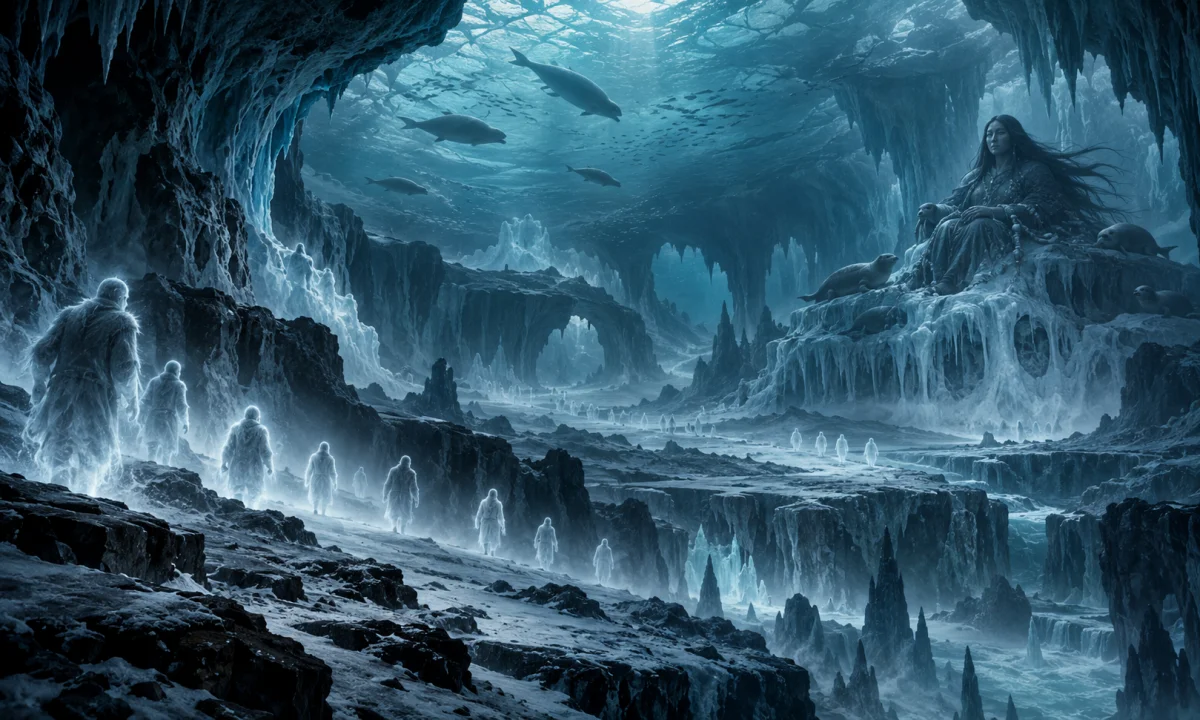
Many stories about the sea concern a powerful female being who withholds marine animals when people violate rules or behave improperly. In different regions, this being may be called Sedna, Nuliajuk, Takannaaluk or another local name. The angakkuq must travel to her dwelling, discover the cause of the animals’ absence and restore the relationship between humans and the sea. These narratives are central to several Inuit traditions, but they do not prove that the sea being is Torngarsak.
Some older writers combined or confused powerful spirits when summarizing Inuit religion. They might describe Torngarsak as the ruler of the sea in one passage and assign a similar role to another being elsewhere. Such inconsistencies reflect regional variation, translation and the limits of early observation. They are not evidence that all named figures were originally one character.
Torngarsak and Sedna
Confusion between Torngarsak and Sedna is especially common in general-reference material. Both may be associated with the sea, marine animals and the success of hunting, but they arise from different strands of tradition and should not be merged without qualification.
Sedna is commonly presented in popular accounts as a powerful female sea being who controls marine animals. Yet the name, story and attributes vary across Inuit regions, and some communities know a related figure by another name. Torngarsak, by contrast, is generally described in older sources as a powerful spirit, often masculine in grammatical or translated form, with a broader or less consistently defined role. The two may appear within the same regional religious landscape, but they are not universally spouses, relatives or alternate names.
Claims that Torngarsak is the husband, father or male counterpart of Sedna are not reliable as general statements about Inuit mythology. They usually result from combining separate traditions or from treating a European classification as though it were an indigenous genealogy.
Cultural significance
Torngarsak reflects the importance of spiritual relationships in Arctic life. The figure’s significance lies less in a detailed divine personality than in the idea that the sea, animals, human communities and unseen powers are connected. The availability of food could not be separated entirely from ethics, ritual knowledge and the observance of inherited rules.
This perspective also helps explain why the term “mythological god” can obscure as much as it clarifies. In many Inuit traditions, spiritual beings were not remote characters belonging only to a legendary past. They could be encountered through dreams, illness, hunting experiences, ritual performances and accounts of specialist journeys. A being’s reality was therefore connected with lived religious practice, not only with storytelling.
At the same time, descriptions of Torngarsak must acknowledge the historical conditions under which they were recorded. Missionaries sometimes interpreted Inuit spirits through the categories of Christian theology, while later writers extracted isolated details for comparative mythology. Translations could turn a complex relationship into a simple title such as “god of the sea.” Modern readers should distinguish between Inuit traditions themselves, early outsider reports and later reference-book summaries.
Later reception
Torngarsak has appeared occasionally in modern encyclopedic writing, fantasy treatments and comparative discussions of Arctic mythology. These adaptations often present the figure as a clearly defined sea god with a fixed appearance, powers and family relationships. Such portrayals may be creative reinterpretations, but they should not be mistaken for a complete account of traditional Inuit religion.
The name is best approached with the same care required for other Indigenous religious figures: recognize regional diversity, preserve distinctions between named beings and avoid treating a missionary or folklorist’s classification as a universal doctrine. Torngarsak is most accurately understood as a powerful spirit known especially from Greenlandic and related Inuit traditions, associated in surviving accounts with the sea, marine animals, spiritual authority and the ritual knowledge of angakkuq.