WORLD
WORLD
Ruwa
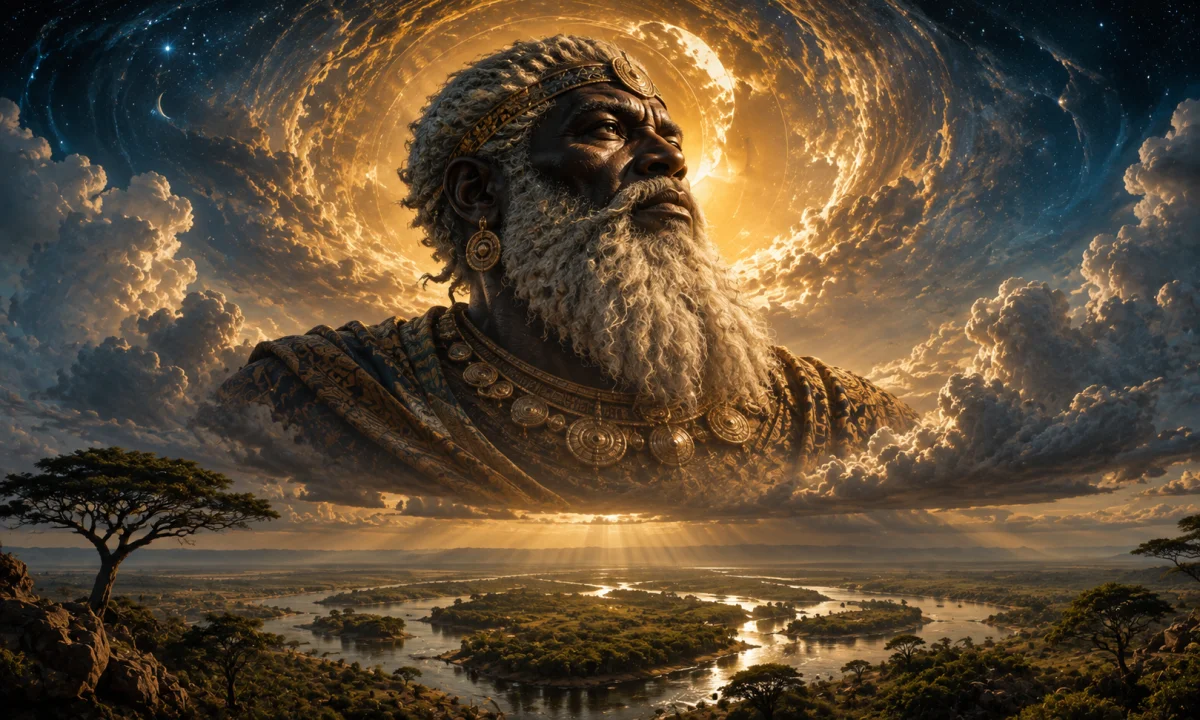
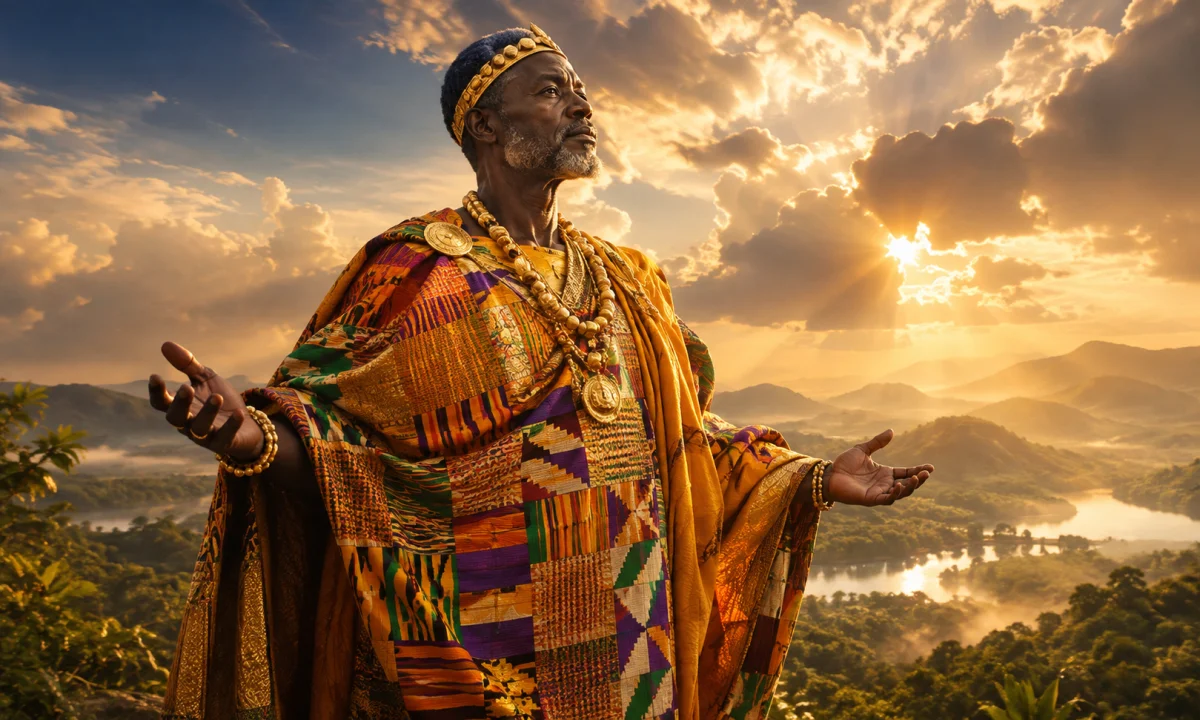
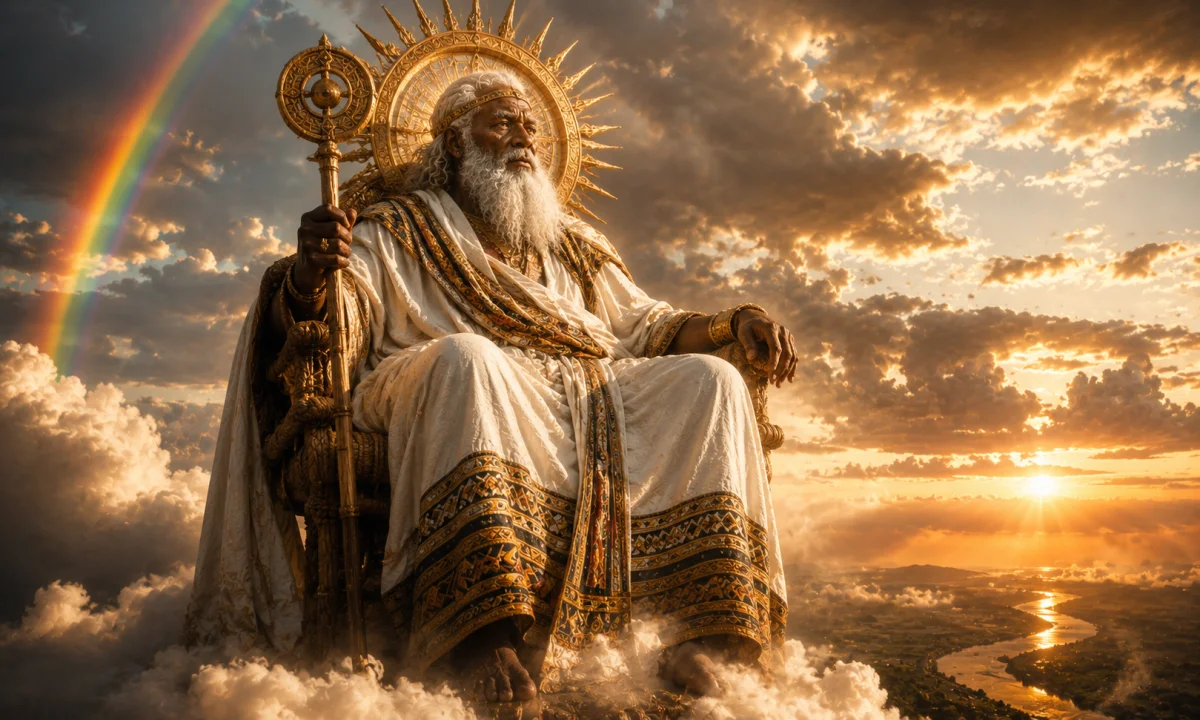
Ruwa is the supreme creator deity in the traditional religious thought of the Chagga people of northern Tanzania, especially in communities living on and around Mount Kilimanjaro. Ruwa is commonly associated with the sky, the sun, creation and the ordering of life. Chagga religious traditions were transmitted primarily through oral teaching, ritual practice, proverbs and stories rather than through a single sacred scripture. As a result, descriptions of Ruwa vary between communities and between recorded accounts, and some details that appear in modern summaries should be treated with caution.
Ruwa in Chagga religious tradition
The Chagga are a group of related communities whose historical homeland lies on the fertile slopes of Mount Kilimanjaro. They are not a completely uniform cultural group: local communities have maintained distinct dialects, institutions and traditions. Nevertheless, the name Ruwa is widely associated with the highest divine power in Chagga religion.
Ruwa is generally understood as a creator and sky deity. The name is also connected with the sun in many explanations of Chagga belief. This connection does not necessarily mean that Ruwa was simply identical with the physical sun. Rather, the sun could be viewed as a visible manifestation or sign of the deity’s power, especially because sunlight governs growth, time, warmth and the regular order of the natural world.
Ruwa’s position is often described as being above the other spiritual beings recognized in Chagga tradition. The natural world, human life, animals and the forces that sustain agriculture were ultimately dependent on Ruwa. This elevated status resembles the role of a supreme high god in several African religious systems, although comparisons should not obscure the particular Chagga setting in which Ruwa is understood.
Origins and surviving traditions
Knowledge of Ruwa comes from Chagga oral traditions and from descriptions recorded by outsiders, including missionaries, colonial officials and anthropologists. These records are useful but must be read carefully. They were often produced by people working within European Christian or academic categories, and they sometimes treated a diverse oral tradition as though it were a fixed mythology with one official version.
Chagga religious knowledge was not limited to stories about the beginning of the world. It was expressed through relationships with ancestors, local ritual places, family obligations, agricultural customs, healing, rainmaking and ideas about moral conduct. A story about Ruwa therefore formed part of a larger religious landscape rather than standing alone as a separate “myth” in the modern literary sense.
Oral traditions can also change in emphasis. A story told by one Chagga community may not contain the same names, episodes or explanations as a story recorded elsewhere. Christian teaching, colonial disruption, migration, formal education and changes in household life have all influenced how traditional beliefs are remembered and described. There is no single universally authoritative version of every Ruwa tradition.
Name and classification
Ruwa is usually classified as a deity of the Chagga people. It is sometimes called a creator god, sky god, sun god or supreme god. These labels are convenient in English, but each highlights only part of the figure’s meaning.
- Creator deity: Ruwa is associated with the origin and continuing order of the world and its living inhabitants.
- Sky deity: Ruwa is placed above the human realm and is linked with the heavens, weather and powers beyond ordinary human control.
- Sun deity: Ruwa is connected with sunlight and the life-giving energy of the sun in many interpretations.
- Supreme deity: Ruwa occupies the highest position in the religious hierarchy described by many accounts of Chagga belief.
These classifications should not be treated as proof that Chagga ideas divide reality in exactly the same way as the categories used in comparative mythology. In particular, “sun god” can suggest a deity who is merely a personified celestial body. For Ruwa, the association with the sun is more closely bound to creation, life and divine authority.
Ruwa and creation
Stories connected with Ruwa commonly present the deity as the source of human existence and the natural world. The precise details differ in surviving accounts. Some descriptions speak broadly of Ruwa creating or bringing forth human beings, animals and the conditions necessary for life. Other retellings focus more narrowly on the first people, the gifts they received or the obligations placed upon them.
It is not safe to present one fixed sequence of creation events as though it were shared by every Chagga community. Details concerning the material from which the first humans were made, the names of the first couple, or the precise relationship between Ruwa and particular animals are not consistently reported. Popular retellings sometimes combine motifs from several African traditions or add narrative details that are not securely established in Chagga sources.
The central religious idea is clearer than the disputed details: human life is not self-originating. It depends on a creative power greater than the human community, and the prosperity of people is connected to the balance of the wider natural world. This understanding is especially significant in a society historically shaped by cultivation on the slopes of Kilimanjaro.
Sunlight, rain and agricultural life
The Chagga homeland has long supported intensive agriculture, including the cultivation of bananas and other crops. Water, fertile soil, sunlight and predictable seasonal conditions are therefore not abstract religious themes. They are directly related to food, family survival and social well-being.
Ruwa’s associations with the sun and the sky place the deity within this agricultural environment. Sunlight allows crops to grow, while rain is essential to the fertility of the land. It would be misleading, however, to reduce Ruwa to a simple personification of weather. Chagga religious life involved a network of relations with ancestors, local spirits and ritual authorities, and responsibility for particular forms of healing, rainmaking or protection could be distributed among different religious specialists and spiritual powers.
Ruwa could be approached as the ultimate source of well-being, especially during moments of danger or communal difficulty. Appeals to the highest deity might be particularly important when ordinary human measures were insufficient. Such appeals existed alongside family and community rituals rather than replacing them.
Distance and divine authority
Accounts of many African creator deities describe them as powerful but relatively distant from ordinary human affairs. Ruwa is often represented in a similar way. The deity belongs to the highest level of the cosmos, while daily religious concerns may be handled through ancestors, family observances, local sacred places or ritual experts.
This apparent distance should not be mistaken for irrelevance. A supreme deity does not need to appear constantly in stories or receive every routine offering in order to remain central to a religious worldview. Ruwa’s authority is expressed through the continued existence and order of the world, the dependence of life on natural forces and the recognition that human beings answer to powers beyond themselves.
The relationship between Ruwa and human morality is described differently in different accounts. Some interpretations associate the deity with a broad moral order and with the consequences of violating the proper balance between people, ancestors and the natural world. It is difficult to identify a single standardized code of laws attributed directly to Ruwa. Chagga moral life was also shaped by kinship, age, custom, obligations to the community and respect for the dead.
Ruwa and the ancestors
Understanding Ruwa requires distinguishing the supreme deity from the ancestors. Ancestors were important in many Chagga communities as members of the extended family who remained involved, in spiritual form, in the fortunes of their descendants. They could be honored, remembered and approached in family rituals. Their influence was more immediate and relational than the remote power often attributed to Ruwa.
This does not necessarily mean that ancestors were rivals to Ruwa. A common pattern in African religious systems is the coexistence of a supreme creator with spiritual beings who mediate, protect, warn or affect daily life. The exact relationship between Ruwa and ancestral powers is not described identically in every source, but the two should not be merged into one category.
Nor should every Chagga ritual be described as worship directed exclusively to Ruwa. Ritual practices varied according to purpose and setting. A family might address ancestors, a community might seek rain or protection, and a person might consult a healer or ritual specialist. The existence of a supreme deity did not eliminate these other religious relationships.
Stories and variant interpretations
Modern reference works sometimes summarize Ruwa through a short creation narrative in which the deity creates the first human beings and establishes the conditions of life. Such summaries are useful introductions but can give a misleading impression of uniformity. Chagga oral tradition is better understood as a body of related teachings and narratives than as one canonical cycle comparable to a written epic.
Some retellings describe Ruwa as having given human beings important resources or as having set limits on their behavior. Others emphasize the deity’s power over life, death, fertility or the natural environment. These themes may be related without belonging to one formally fixed story.
There is also uncertainty about the spelling and interpretation of names in older records. European writers often represented African words according to the spelling systems of their own languages, and the pronunciation of a name could vary between Chagga communities. A variation in spelling does not automatically indicate a different deity, but similar-looking names from unrelated East African traditions should not be treated as alternate forms of Ruwa without evidence.
Cultural significance
Ruwa expresses a Chagga understanding of the world in which creation, nature and human responsibility are connected. The deity’s association with the sun gives religious meaning to a visible source of life, while the connection with the sky places Ruwa beyond ordinary human control. Together, these associations present a world that is ordered, dependent and morally significant.
The figure also reflects the importance of the Kilimanjaro environment. Mountain landscapes, cultivated slopes, forests, streams and changing weather all formed part of the setting in which Chagga religious ideas developed. It would be simplistic to claim that Ruwa is merely a “mountain god”: the deity is more broadly associated with the highest creative and celestial power. Nevertheless, the physical environment helped shape the concerns through which Ruwa was understood.
Ruwa can also be approached as a symbol of continuity. Chagga identity has been affected by political change, Christian missionary activity, Islam, formal schooling, wage labor, urbanization and national institutions. Traditional religious beliefs have not remained untouched by these changes. Some people preserve older ideas as religious convictions, some retain them as cultural knowledge, and others interpret them through Christian or secular frameworks.
Christianity and later representations
Christianity became highly influential among the Chagga during the modern period, and many Chagga people today identify with Christian denominations. In Christian-era descriptions, Ruwa was sometimes compared with the biblical God because both were presented as supreme creators. Such comparisons may help explain how an outsider interpreted Chagga belief, but they do not prove that the two traditions were originally identical.
Missionary accounts could also recast indigenous religious concepts in terms such as “heathen god,” “creator,” “devil” or “ancestor worship.” These labels carried theological judgments and sometimes obscured distinctions within Chagga religion. Modern scholarship and cultural discussion therefore tend to treat older descriptions as evidence requiring interpretation rather than as perfectly neutral records.
Ruwa has not become a major figure in global popular culture. The name occasionally appears in general lists of African gods, fantasy discussions or simplified online accounts of mythology. Such treatments often remove the deity from the Chagga cultural setting and present a few attributes—creator, sun and sky—as if they were a complete mythology. No widely established body of modern novels, films or games has given Ruwa a standard popular-culture identity comparable to figures such as Anansi or Mami Wata.
Distinguishing Ruwa from similar figures
Ruwa should not be automatically identified with every African deity associated with the sun, sky or creation. Africa contains many distinct religious traditions, and similar functions do not demonstrate a shared identity. For example, the Akan creator Nyame, the Yoruba Olódùmarè, the Maasai Enkai or Engai, and the Dinka Nhialic belong to different cultural and linguistic settings. They may all be described in English as high gods, but they are not versions of Ruwa.
Ruwa should also be distinguished from figures whose names resemble it in other African traditions. Transliteration, regional pronunciation and inconsistent older spelling can produce apparent similarities, while unrelated languages may independently contain short names with similar sounds. A claim that Ruwa is the same being as another deity requires specific cultural and historical evidence.
The most reliable identification is therefore a limited one: Ruwa is a supreme creator and celestial deity associated particularly with the Chagga people of the Kilimanjaro region of Tanzania. Beyond that basic description, details should be presented as belonging to particular accounts or interpretations rather than as universally shared doctrine.