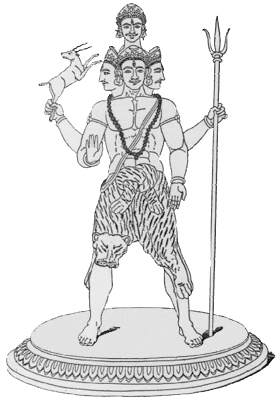
Rudra is a significant deity in Hindu mythology, known for his complex and multifaceted nature. He is often associated with storms, the hunt, and destruction, but he also embodies healing and protection. Rudra is a god of paradoxes, reflecting both the destructive and protective aspects of nature. His character can be traced back to ancient texts, where he plays a pivotal role in various myths and stories. Understanding Rudra requires delving into the rich tapestry of Hindu beliefs and traditions, where his presence is felt in various rituals and worship practices.
Origins of Rudra
The origins of Rudra can be found in the ancient Vedic texts, which are some of the earliest scriptures of Hinduism. In the Rigveda, Rudra is described as a fearsome deity, often associated with the howling winds and the violent aspects of nature. He is referred to as the “howler,” highlighting his fierce and tempestuous nature. The Vedic hymns portray Rudra as a god who brings both destruction and healing, reflecting the duality of his character. This duality is essential in understanding his role in the cosmic order and the balance of life and death.
 Rohinî
Rudra is often depicted as a wild and fierce figure, adorned with animal skins and wielding a bow and arrows. His imagery in the Vedic texts emphasizes his connection to the natural world, particularly to the forces of the wilderness. He is also associated with the mountains and the forests, symbolizing the untamed aspects of nature. This connection to nature is vital, as it shows how Rudra embodies the raw power of the earth and the elements.
Rudra in the Puranas
As Hindu mythology evolved, Rudra’s character became more complex, especially in the Puranas. These ancient texts expanded on his narratives, portraying him not just as a destructive force but also as a protective deity. One of the most important texts, the Shiva Purana, presents Rudra as an early form of Shiva, one of the principal deities in Hinduism. This connection illustrates how Rudra is often seen as a precursor to Shiva, embodying similar attributes of destruction and regeneration.
In the Puranas, Rudra is often depicted in the context of cosmic cycles. He is associated with the creation and dissolution of the universe, emphasizing his role in the eternal cycle of life. The stories highlight how Rudra’s anger can lead to destruction, but this destruction is necessary for new creation. This cyclical view of existence is a fundamental aspect of Hindu philosophy, showcasing the importance of balance between creation and destruction.
 Rishis
Rudra’s Family and Associations
Rudra is often depicted as a family man, with a significant connection to his consort, Parvati, and their children, including Ganesha and Kartikeya. This aspect of his character emphasizes his nurturing side, contrasting with his fierce persona. The relationship between Rudra and Parvati is symbolic of the balance between masculine and feminine energies in the universe. Their union represents the harmony that can be achieved when opposing forces come together.
In various texts, Rudra is also associated with the Maruts, the storm gods who are often depicted as his attendants. These deities represent the fierce and chaotic aspects of nature, further highlighting Rudra’s connection to storms and destruction. The Maruts are known for their speed and power, and their association with Rudra underscores the idea that he is a god who commands the elements and the forces of nature.
 Rig-veda
Worship and Rituals
Rudra is worshipped through various rituals and ceremonies, particularly in the context of Shaivism, a major sect of Hinduism that focuses on the worship of Shiva. One of the most significant forms of worship is the Rudrabhishekam, a ritual that involves the bathing of Shiva’s idol with sacred substances like milk, honey, and water. This ceremony is believed to invoke the blessings of Rudra and to cleanse the worshippers of their sins.
Devotees often chant the Rudram, a powerful hymn dedicated to Rudra, during their prayers. This hymn is found in the Yajurveda and is recited to seek protection and blessings from Rudra. The chanting of the Rudram is believed to create a powerful spiritual atmosphere, inviting the divine presence of Rudra into the space. The rhythmic repetition of the verses is said to have a calming effect, fostering a sense of peace and connection to the divine.
Rudra’s Symbolism
Rudra’s symbolism is rich and varied, reflecting the dual aspects of his nature. He is often associated with the trident (trishula), a weapon that represents his power over the forces of nature. The trident symbolizes the three fundamental aspects of existence: creation, preservation, and destruction. This triadic representation emphasizes the balance Rudra maintains in the cosmic order.
Another important symbol associated with Rudra is the bull, which represents strength and virility. The bull is often depicted in association with Shiva, further connecting Rudra to the idea of fertility and abundance. In many cultures, bulls are seen as symbols of power, and their association with Rudra underscores his role as a formidable force in the natural world.
Rudra in Modern Context
In contemporary Hinduism, Rudra continues to be a significant figure, especially among devotees of Shiva. Many temples are dedicated to Rudra, where rituals and ceremonies are performed to honor him. The reverence for Rudra reflects a deep understanding of the balance between destruction and creation, a theme that resonates with many followers today.
Moreover, Rudra’s presence can be felt in various cultural expressions, such as dance, music, and art. Traditional dance forms often depict stories of Rudra, showcasing his fierce nature and his role in the cosmic order. Artists and musicians draw inspiration from his character, creating works that celebrate his complexity and the lessons he embodies.
Rudra’s Influence on Philosophy
The philosophical implications of Rudra’s character are profound, influencing various schools of thought within Hinduism. His dual nature has led to discussions about the nature of good and evil, creation and destruction. Many philosophers explore how Rudra represents the necessity of both aspects in the universe, arguing that without destruction, there can be no creation.
This philosophical discourse often intersects with the concept of Karma, the law of cause and effect. Rudra’s actions, whether destructive or protective, are seen as part of a larger cosmic order that governs the universe. This understanding encourages followers to embrace both the positive and negative aspects of life, recognizing that each plays a vital role in the cycle of existence.
Rudra in Comparative Mythology
When examining Rudra in the context of comparative mythology, one can find parallels with various deities from other cultures. For example, the Greek god Zeus, who is associated with storms and thunder, shares similarities with Rudra in terms of their control over natural forces. Both deities embody the power and unpredictability of nature, serving as protectors and destroyers.
Similarly, in Mesopotamian mythology, the god Enlil represents wind and storms, reflecting a comparable role to that of Rudra. These similarities highlight a universal theme found in many cultures: the reverence for the forces of nature and the deities that embody them. The study of these parallels enriches our understanding of Rudra and his significance in the broader context of human spirituality.
Rudra stands as a profound symbol in Hindu mythology, representing the intricate balance between destruction and creation. His character, rooted in ancient texts and evolving through various interpretations, offers valuable insights into the nature of existence. Through worship, rituals, and philosophical exploration, Rudra continues to inspire and guide countless devotees, reminding them of the power and beauty inherent in the natural world.