WORLD
WORLD
Raluvhimba

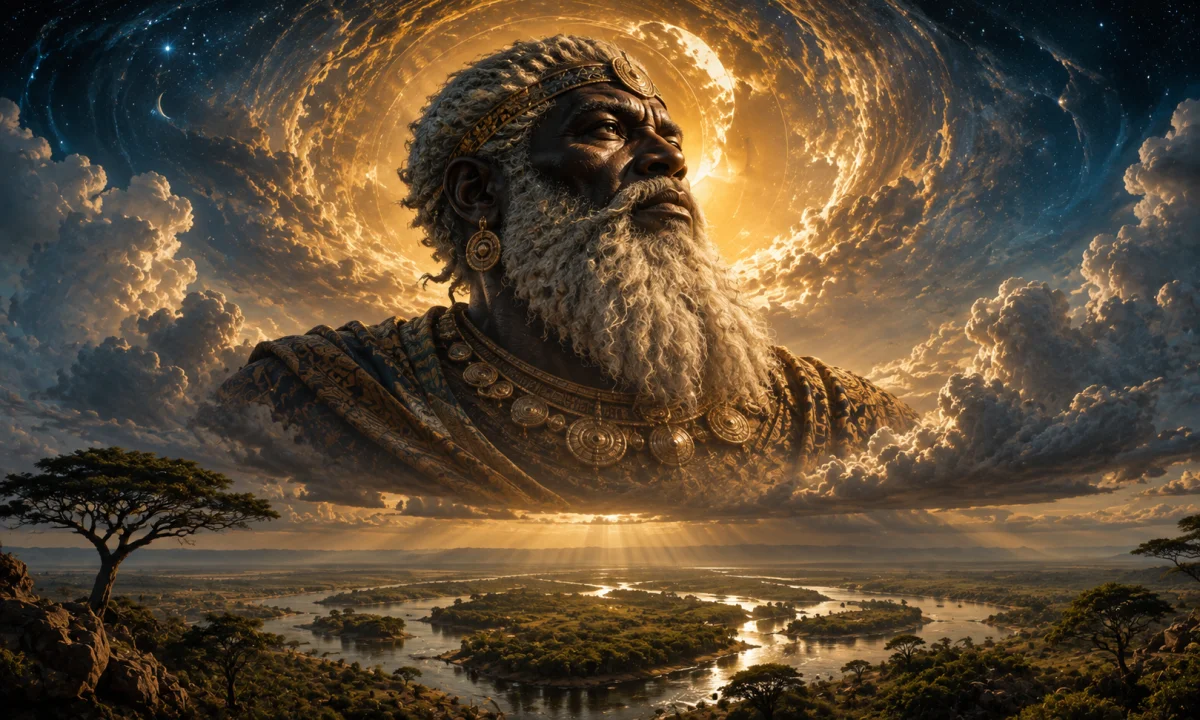
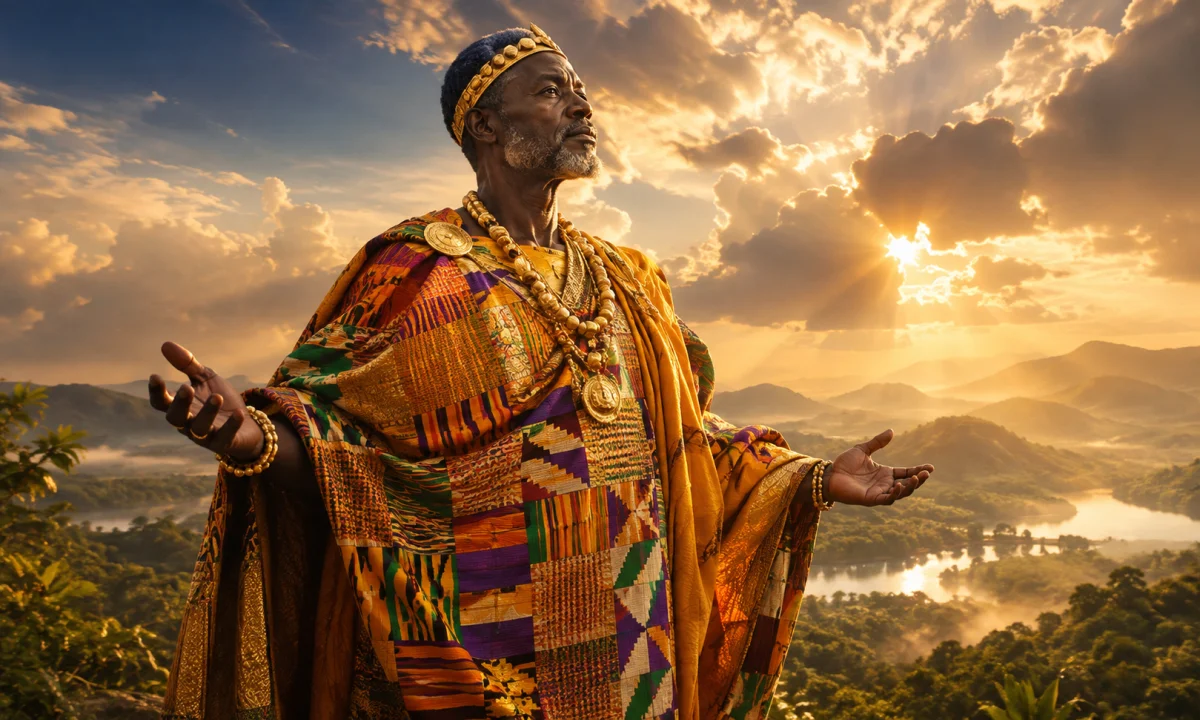
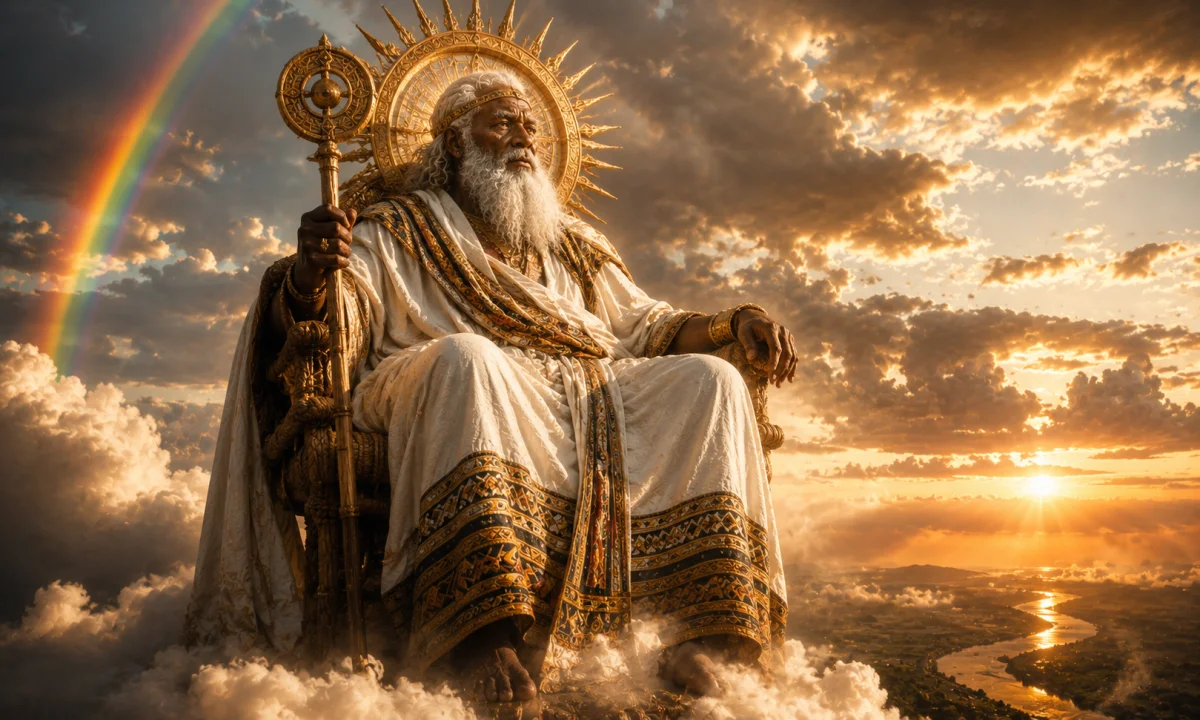
Raluvhimba is a divine figure associated with the religious traditions of the Venda-speaking people of southern Africa, especially communities in the Limpopo region of South Africa and neighbouring areas of Zimbabwe. He is commonly described in ethnographic and cultural accounts as a powerful sky or creator deity, with connections to thunder, lightning, rain and the ordering of the natural world. The available descriptions are not completely uniform, however. Some accounts present Raluvhimba as the supreme being, while others distinguish him from a more remote creator or use different names for related aspects of divine power.
Cultural setting
The Venda, or Vhavenda, belong to the wider cultural landscape of southern Africa. Their religious traditions developed through oral transmission, ritual practice, relations with ancestors and close attention to the landscape. Mountains, forests, rivers, pools and cultivated land could all possess religious significance. Sacred knowledge was not necessarily expressed through a single fixed creed, and local traditions could vary between communities, lineages and ritual authorities.
In this setting, a being associated with the sky and storms would have held particular importance. Rain was essential to agriculture and livestock, while thunder and lightning were powerful and dangerous signs. Storms could be interpreted through a religious vocabulary involving divine agency, ancestors, moral conduct and ritual responsibility. Raluvhimba therefore belongs to a world in which weather was not merely a physical event but could also carry spiritual meaning.
Information about Raluvhimba comes chiefly from oral traditions and from accounts recorded by outside observers, missionaries, folklorists and scholars. Such records are valuable but must be treated carefully. They were often written in different periods, using changing spellings and European categories such as “god,” “spirit” or “deity.” They may also have gathered together traditions that were more locally distinct. For that reason, no single description should automatically be treated as the universal Venda understanding of Raluvhimba.
Name and identity
The spelling Raluvhimba reflects Venda orthography, although older records may use other spellings or transcriptions. Variations in spelling do not always indicate different beings; they can result from attempts to represent Venda sounds through languages such as English or Afrikaans. At the same time, similar-looking names in neighbouring traditions should not be assumed to refer to the same figure.
The exact meaning and grammatical force of the name are not consistently explained in accessible sources. It is therefore safer not to assign a confident literal translation without a specific linguistic context. Raluvhimba is sometimes described as a personal name and sometimes as a title or designation for a divine power. This uncertainty reflects the wider difficulty of translating oral religious concepts into the categories of written mythology.
Descriptions of Raluvhimba commonly place him among the highest powers in the Venda religious universe. In some interpretations, he is the creator or supreme ruler of the heavens and the world. In others, he appears especially as a thunder or storm deity whose activity is closely connected with rain and lightning. These descriptions may represent different local traditions, different stages of interpretation or different ways of referring to one complex divine figure.
Raluvhimba and the sky
Raluvhimba’s strongest associations are with the upper world and the forces of the atmosphere. Thunder and lightning were signs of immense power, and a deity connected with them could be regarded as both life-giving and dangerous. Rain sustains crops, fills water sources and supports animals, yet violent storms can destroy homes, fields and trees. The same power that nourishes life can therefore also threaten it.
Accounts that identify Raluvhimba with thunder or lightning do not necessarily mean that he was imagined as a simple personification of weather. In traditional religious thought, natural phenomena can be manifestations of a being’s presence, actions or authority without reducing that being to the phenomenon itself. Lightning may be a sign of divine power, while rain may express blessing, anger, renewal or the restoration of balance.
The sky also gives Raluvhimba a position above ordinary human affairs. A high god associated with the heavens can represent authority that is universal rather than limited to one family or settlement. This does not mean that everyday religious life ignored local spirits or ancestors. Rather, divine power could be understood through several connected levels: a supreme or celestial power, ancestral relations, local sacred places and ritual practices that addressed immediate needs.
Creation and divine authority
Some accounts describe Raluvhimba as a creator figure who brought the world or its essential order into being. These statements should be understood as broad descriptions rather than as evidence for one fixed Venda creation narrative. There is no single written canonical text that preserves a universally accepted story of Raluvhimba’s creation of the world.
In oral traditions, creation may be expressed through brief statements, genealogical ideas, narratives about the separation of realms, or explanations of why human beings live under particular natural and social conditions. A creator may not appear in a long myth with a sequence of clearly defined events. Divine authority can instead be conveyed through titles, prayers, prohibitions, ritual actions and stories about the origin of important places or customs.
Where Raluvhimba is treated as a supreme deity, his authority is often portrayed as greater than that of human rulers and ancestors. This does not necessarily mean that people approached him in the same way they approached ancestral spirits. A remote sky deity might be honoured through ritual specialists, chiefs, prayers or appeals made during drought and storms, while ancestors remained central to family and community religious life.
Rain, fertility and danger
Rainmaking has been an important religious and political concern in many southern African societies, including communities living in regions where agriculture depends heavily on seasonal rainfall. It would be misleading to reduce Venda rain traditions to worship of one weather god, because rain rituals could involve rulers, specialists, ancestors, sacred sites and inherited ritual knowledge. Nevertheless, Raluvhimba’s association with rain places him within this broader concern with fertility and environmental balance.
Rain is not only a resource but also a symbol of continuity. It enables seeds to germinate, supports grazing and links the well-being of the community to the condition of the land. A storm deity can consequently represent the dependence of human society on forces beyond human control. Respect for such a deity may express humility, caution and the need to maintain proper relationships with the natural and spiritual environment.
Lightning adds a more threatening dimension. In many African religious traditions, lightning can be interpreted through ideas of punishment, transgression, witchcraft, ritual danger or extraordinary spiritual power. These interpretations are not identical across cultures, and they should not automatically be attributed to every Venda account of Raluvhimba. The important point is that lightning makes the deity’s power visible while also marking it as unpredictable and potentially destructive.
Relationship with ancestors and other sacred powers
Venda religious life traditionally includes reverence for ancestors, often called vhadzimu in Venda contexts. Ancestors may act as guardians of descendants and as intermediaries within the relationship between families, communities and the wider spiritual world. Their role is not the same as that of a supreme sky deity.
Raluvhimba should therefore not be treated simply as an ancestor or as a deceased human hero who became divine. The available descriptions generally place him in a different category, associated with cosmic or atmospheric power. Yet the boundaries between categories can appear less rigid in oral religion than in modern reference works. A community may discuss the supreme deity, ancestral spirits, sacred places and ritual specialists as parts of one religious system without presenting them as separate “mythological characters” in the modern sense.
Some descriptions of Venda religion also refer to a high creator under names such as Mwali or related forms. These names are especially important in wider southern African traditions, including Shona- and Kalanga-speaking contexts. Raluvhimba should not automatically be equated with every being called Mwali, Mwari or Nwali. In some sources the names may be treated as comparable or overlapping expressions of a high god; in others they belong to distinct regional or theological traditions. The relationship depends on the community and source being discussed.
Stories and narrative tradition
Raluvhimba is not known through a large, stable cycle of written myths comparable to the stories surrounding figures such as Zeus, Odin or the Egyptian gods. Much of his significance lies in religious description rather than in a long sequence of dramatic episodes. The surviving record does not provide a universally agreed set of adventures, family relationships or personal rivalries.
For this reason, claims that give Raluvhimba a detailed spouse, a fixed genealogy or a specific battle should be treated with caution unless they can be tied to a clearly identified Venda tradition. Popular summaries sometimes expand a brief ethnographic statement into a complete character biography. That process can make the figure easier to present but may create details that are not securely supported by traditional evidence.
What can be said with greater confidence is that Raluvhimba belongs to a religious pattern in which the most powerful divine presence is encountered through the sky, storms, rain and the continuing order of life. His “story” may be found less in a single narrative than in the relationship between human communities, the land and the forces that sustain or endanger them.
Religious meaning and interpretation
Raluvhimba can be interpreted as a figure representing the dependence of human life on powers that cannot be controlled through ordinary technology or political authority. Crops, water supplies and livestock are subject to weather, and weather is subject to forces that appear remote and overwhelming. A deity of thunder and rain embodies this dependence in personal and religious form.
His association with the sky may also express distance. High gods in many African traditions are sometimes described as powerful but not constantly involved in daily affairs, while ancestors and local spiritual beings are approached more directly. This pattern is not universal, and it should not be used to claim that all African religions imagine a “deus otiosus,” or withdrawn creator. In the case of Raluvhimba, the balance between remoteness and activity varies among accounts.
The figure is also significant for understanding how African religions have been represented. Older writers sometimes searched for a single “supreme god” in order to compare African traditions with Christianity or other large religious systems. That approach could overlook local variation and the importance of ritual practice. Raluvhimba is better understood within Venda religious life, where divine power, ancestral authority, sacred landscapes and community responsibilities are interconnected.
Distinguishing Raluvhimba from similar figures
Raluvhimba should not be confused with every African thunder god or sky deity. Shango, for example, belongs to Yoruba religious tradition in West Africa, while Nyami Nyami is associated with Tonga traditions in the Zambezi region. These figures have their own histories, symbols and ritual contexts. Similar associations with storms or water do not make them versions of Raluvhimba.
Nor should Raluvhimba be merged with Mwari, Mwali or Nwali simply because these names can all be translated in general terms as “God” or “creator” in different sources. Related ideas may have circulated across neighbouring societies, and regional traditions have influenced one another, but cultural proximity does not prove identity. The safest description is that Raluvhimba is a Venda-associated divine figure whose identity overlaps with broader southern African concepts of a high god in some interpretations but remains distinct in others.
Modern representation
Raluvhimba has a relatively limited presence in international popular culture compared with better-known African deities. When he appears in modern lists of mythology, he is often reduced to a brief label such as “Venda god of thunder” or “creator god.” Such labels can identify an important association, but they may conceal the uncertainty and regional variation in the evidence.
Contemporary cultural work, education and scholarship can help preserve knowledge of Venda religious traditions, especially when they retain Venda names and acknowledge living cultural context. A respectful presentation should avoid treating Raluvhimba as an invented fantasy character detached from the Vhavenda. It should also avoid presenting one outsider’s description as a complete account of a living and historically changing tradition.