WORLD
WORLD
Palhik Mana

Palhik Mana is a female katsina of Hopi religious tradition, commonly known in English as the Butterfly Maiden. She is associated with butterflies, beauty, seasonal renewal, young people and, in many modern descriptions, fertility. Palhik Mana is not best understood as a goddess in the classical European sense. Within Hopi life, katsinam are powerful spirit beings connected with the natural world, ancestors, social relationships and ceremonial practice. They may be represented by masked dancers, songs, prayers and carved figures, but no single English-language description captures every local understanding of them.
Hopi religious and cultural setting
The Hopi are an Indigenous people of the southwestern United States, especially the mesas of northeastern Arizona. Hopi religious life has developed through oral tradition, ceremonial societies, agricultural practice and relationships with the land. Rain, crops, animals, clouds, ancestors and community responsibilities are not treated as isolated subjects. They form part of a religious world in which human conduct affects the balance and well-being of the community.
Katsina is a common English spelling of a Hopi term often written kachina in older sources. The Hopi term katsinam is the plural form used for the spirit beings themselves. Katsinam include figures associated with rain, animals, plants, weather, the ancestors and particular social or ceremonial functions. Their appearances and responsibilities are not identical, and they should not all be reduced to nature spirits or minor deities.
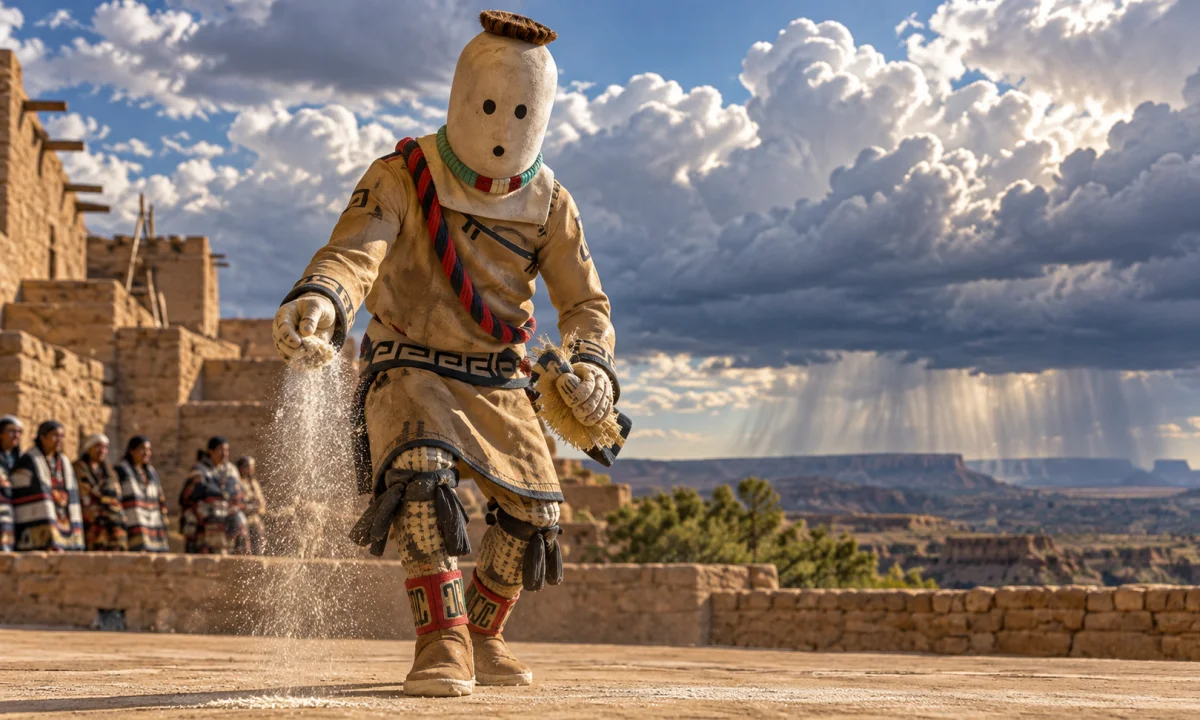
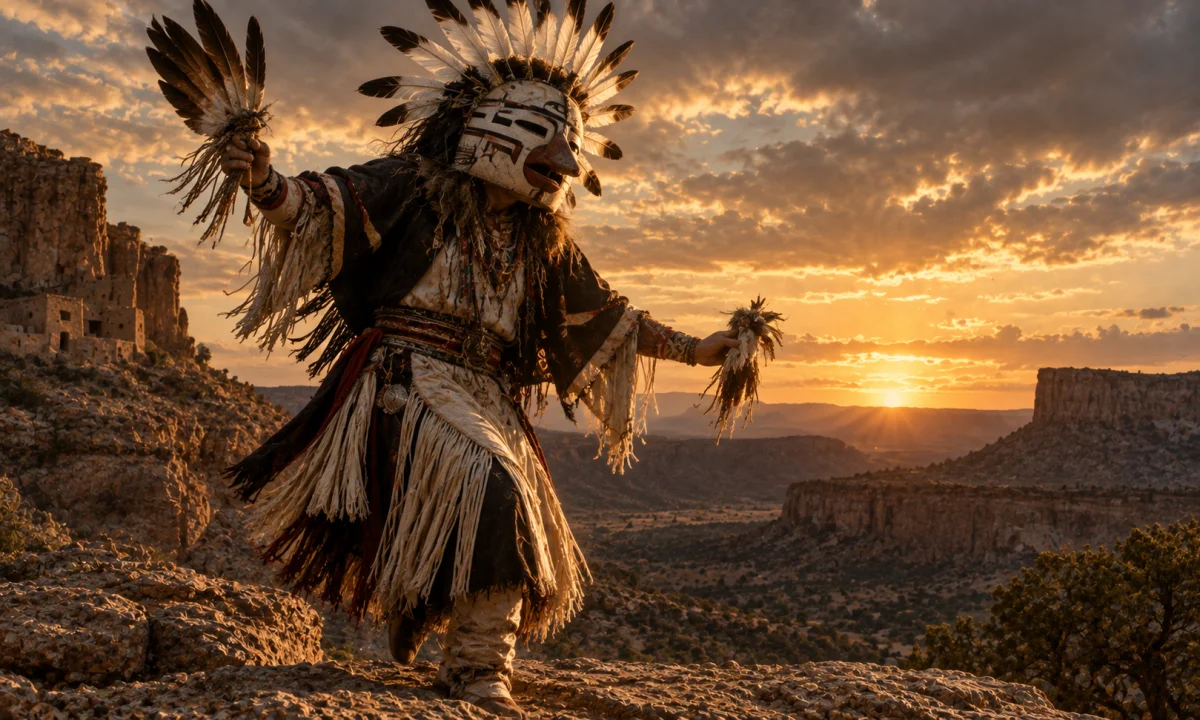
During the ceremonial season, masked dancers embody particular katsinam. The dancer is a human participant, while the mask and ritual performance make the katsina present in a religiously meaningful way. This distinction is important: a katsina mask is not merely a theatrical costume, and a carved katsina figure is not simply a decorative image. At the same time, Hopi ceremonies are diverse, and knowledge about particular dances may be restricted or understood differently by different communities.
Name and identity
Palhik Mana is also written Palhikmana, Pahlik Mana or with other variations reflecting different systems of spelling and pronunciation. English-language sources commonly translate the name as “Butterfly Maiden.” The element mana is generally explained in relation to a girl or young woman, while palhik is associated with a butterfly. Exact linguistic explanations can vary, however, and a short translation should not be treated as a complete account of the figure’s significance.
The word “maiden” can also be misleading when read through European folklore. It does not necessarily define Palhik Mana as a permanently young, unmarried supernatural woman with a fixed biography. Rather, it is a conventional translation used to identify a female katsina and to distinguish her from other figures. Some descriptions emphasise youth, beauty and courtship; others focus more broadly on butterflies, seasonal change, growth and the vitality of the community.
Palhik Mana belongs to the Hopi katsina tradition, but she is not necessarily described in exactly the same way in every Hopi village, ceremonial context or account recorded by outsiders. There is no universally authoritative mythology book that provides one complete biography of every katsina. Much of the tradition survives through practice, memory, language, teaching and participation rather than through a single written canon.
Connection with butterflies
Butterflies provide the central visual and symbolic association of Palhik Mana. Their transformation from caterpillar to winged insect makes them readily connected with change, emergence and the passage from one stage of life to another. Their presence in the warmer seasons also links them with flowering plants, agricultural abundance and the renewal of the natural world.
These associations have encouraged interpretations of Palhik Mana as a figure of fertility. In this context, fertility should not be restricted to human reproduction. It may also refer to the growth of crops, the renewal of life, the continuation of families and the hoped-for flourishing of the community. Interpretations that present her only as a romantic “love goddess” are generally too narrow and can impose categories that do not reflect the wider Hopi ceremonial setting.
Butterflies may appear in the designs, clothing or carved representations connected with Palhik Mana, but there is no single appearance that applies to every representation. A dancer’s regalia, a mask and a katsina carving may differ according to the occasion, the community, the period and the individual maker. Popular illustrations sometimes give her literal butterfly wings or a highly standardised costume. Such images should not automatically be assumed to reproduce a traditional ceremonial form.
The Butterfly Dance and seasonal celebration
Palhik Mana is strongly associated in English-language accounts with the Hopi Butterfly Dance. This is a social and ceremonial dance connected with young people, community life and the close of the summer growing season. Public descriptions often portray dancers using butterfly imagery while songs, movement and formal participation create an atmosphere of celebration and renewal.
The Butterfly Dance is sometimes described as a courtship or fertility dance. Such descriptions reflect important themes, including maturation, relationships between young people, marriage and the continuation of the community. Nevertheless, reducing the dance to courtship can obscure its broader character. Hopi dances commonly join social enjoyment with prayer, teaching, memory and concern for the well-being of the people. Their meanings may be understood at several levels at once.
Accounts of the dance differ in details such as timing, participants, costumes and the exact role attributed to Palhik Mana. Some descriptions connect the figure particularly with young women or with a group of female dancers, while others focus on the presence of a female katsina within a larger ceremonial setting. These differences do not necessarily indicate that one account is correct and all others are false. They may reflect local variation, changes over time or the limited perspective of an outside observer.
The dance should therefore not be treated as a staged story in which Palhik Mana has one fixed sequence of adventures. It is more accurate to understand it as a living ceremonial and social tradition in which the Butterfly Maiden’s identity is expressed through performance, visual symbols and relationships among people, the natural world and the spirit beings.
Attributes and symbolic meanings
- Butterflies: They connect Palhik Mana with transformation, seasonal beauty, flowering plants and the renewal of life.
- Youth and maturation: Her association with young people can evoke the transition from childhood into adult social responsibilities.
- Fertility and abundance: This may include human continuity, healthy crops and the general flourishing of the community.
- Beauty and celebration: Her presence is linked with ornament, dancing, music and the joyful dimensions of communal ceremony.
- Seasonal change: Butterflies and summer dances place her within a wider cycle of growth, harvest and preparation for the changing year.
These meanings are interpretive themes rather than a definitive list of powers. Descriptions that claim Palhik Mana controls butterflies, grants specific wishes or governs a precisely defined domain may be modern simplifications unless they are grounded in a particular Hopi teaching. Katsinam can be powerful and sacred without functioning like characters in a fantasy system with formally assigned abilities.
Stories and relationships
Palhik Mana is not known primarily through a single famous narrative comparable to a long heroic epic. Her importance is more closely connected with ceremonial appearance, dance and the network of meanings surrounding the katsinam. This is one reason that general reference works sometimes provide short, symbolic descriptions while presenting them as if they were complete mythology.
Some popular accounts place Palhik Mana in relationships with other katsinam or describe her as a bride, companion or central participant in a ceremonial gathering. Such details are not consistent across all sources and should not be treated as universally accepted Hopi tradition. A relationship appearing in one local explanation, performance or ethnographic record may not have the same status elsewhere.
Hopi religious traditions also include accounts of emergence, ancestral beings, migration, rain and the establishment of ceremonial responsibilities. Palhik Mana may be discussed within the wider world of those traditions, but she should not be casually inserted into every emergence or creation narrative. No reliable general account supports treating her as the universal creator of butterflies, the first woman or the mother of all katsinam.
Katsina figures and carved representations
Carved figures associated with Hopi katsinam are often called kachina dolls in English. The term can encourage misunderstanding because these objects have served different purposes at different times. Traditionally, carved figures could be given to children as teaching objects, helping them recognise the masked beings appearing in ceremonies. Their educational role did not make the beings themselves fictional or merely childish.
Palhik Mana carvings may present a female figure with butterfly imagery, bright colours, a distinctive headdress or other features chosen by the carver. Styles vary considerably. Earlier figures, ceremonial teaching pieces and works made for the art market should not automatically be placed in the same category. A carving can be culturally meaningful while also being produced for sale, and its appearance alone cannot establish the precise ceremonial identity intended by its maker.
The commercial market for Hopi katsina carvings expanded greatly during the twentieth century. Museum displays and collectors sometimes classify figures according to names and visual types that do not fully reflect Hopi usage. Attribution can also be difficult when a figure is separated from the maker’s explanation or from the community in which it was created. The name Palhik Mana therefore identifies a traditional association, but not every butterfly-themed carving can safely be assumed to represent her.
Distinction from similar figures
Palhik Mana should not be confused with every female or butterfly-related spirit in Indigenous North American traditions. Many peoples have their own stories about butterflies, female culture heroes, fertility beings and seasonal dances, but these traditions belong to distinct languages and religious histories. Similar imagery does not prove a shared origin.
She should also be distinguished from Butterfly Maiden figures invented or reshaped in modern fantasy, spiritual merchandise and generic “Native American mythology” collections. Such sources often combine Hopi material with Navajo, Pueblo, Aztec or entirely fictional elements. A woman with butterfly wings, a magical romance plot or a list of supernatural powers may be a modern creation rather than a description of Hopi tradition.
The term kachina is sometimes used loosely for any Native American spirit, mask or doll. That usage is inaccurate. Katsina traditions are specifically associated with Pueblo peoples, and the Hopi system has its own language, ceremonial organisation and local knowledge. Even among Pueblo traditions, related terms and practices should not be treated as interchangeable.
Cultural significance and modern reception
Palhik Mana’s significance lies less in an isolated set of supernatural attributes than in the way she connects natural transformation with human community. Butterflies, young people, flowering seasons, dance and the continuation of life become parts of a religious and social pattern. Her imagery can express hope for renewal, but that hope exists within responsibilities to family, community, land and ceremonial order.
Outsider descriptions have often interpreted Hopi katsinam through categories such as “gods,” “mythological characters” or “fertility deities.” These labels may offer a rough point of comparison, but they can conceal the fact that katsinam are encountered through active community traditions rather than only through stories preserved in books. Published accounts may also omit sacred or restricted knowledge, simplify Hopi terms or record practices at a particular historical moment.
In contemporary popular culture, Palhik Mana appears mainly through art, educational material, museum interpretation and commercial images of the Butterfly Maiden. These representations can preserve awareness of her name and association with butterflies, but they often detach her from the ceremonies and community relationships that give the figure meaning. Fantasy versions that portray her as a winged goddess, universal nature spirit or romantic supernatural heroine belong to modern adaptation, not to a single, comprehensive Hopi tradition.
Respectful discussion of Palhik Mana therefore requires attention to both her recognisable symbolism and the limits of outside knowledge. She is a female Hopi katsina associated especially with butterflies, seasonal renewal, young people and communal celebration, while the details of her appearance, ceremonial role and interpretation may vary according to local tradition and context.