WORLD
WORLD
Mana
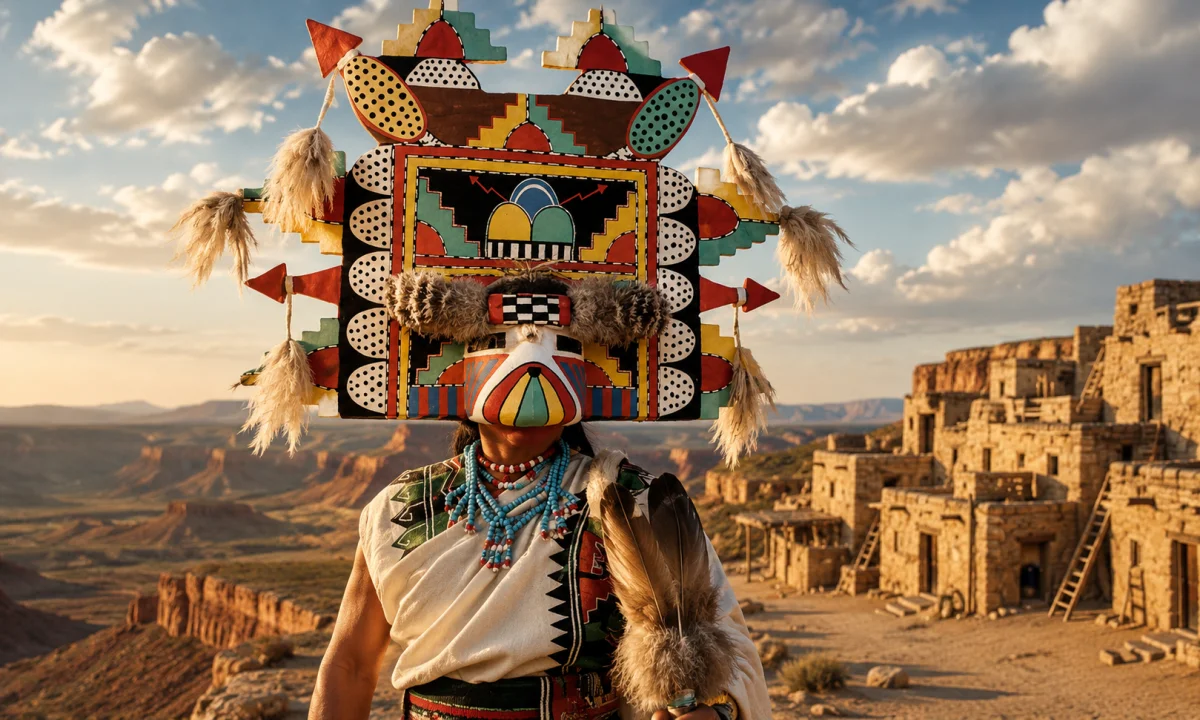
Mana is a name that appears in some English-language lists and discussions of Hopi katsinam, the spirit beings represented in Hopi ceremonial dances and carved figures. Its identification is not as firmly documented as that of better-known Hopi figures such as Masau'u, Spider Woman, or the principal Rain and Corn katsinam. The name may therefore refer to a relatively specialized katsina tradition, a regional or ceremonial variant, or a modern cataloguing of a figure whose identity has not been consistently recorded.
Hopi cultural setting
The Hopi are a Pueblo people whose communities are located principally in northeastern Arizona. Hopi religious life is grounded in relationships among human beings, ancestral powers, the land, plants, animals, clouds, rain, and the beings known as katsinam or kachinam in commonly used English spellings. The singular is often written katsina or kachina.
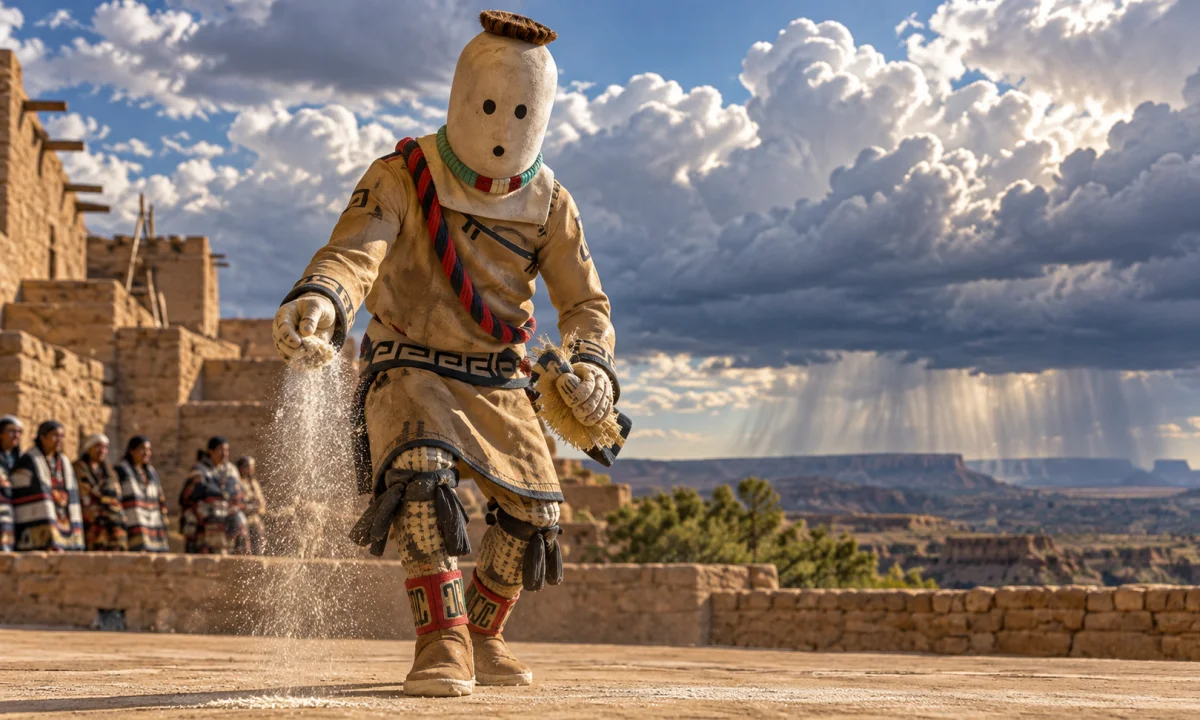
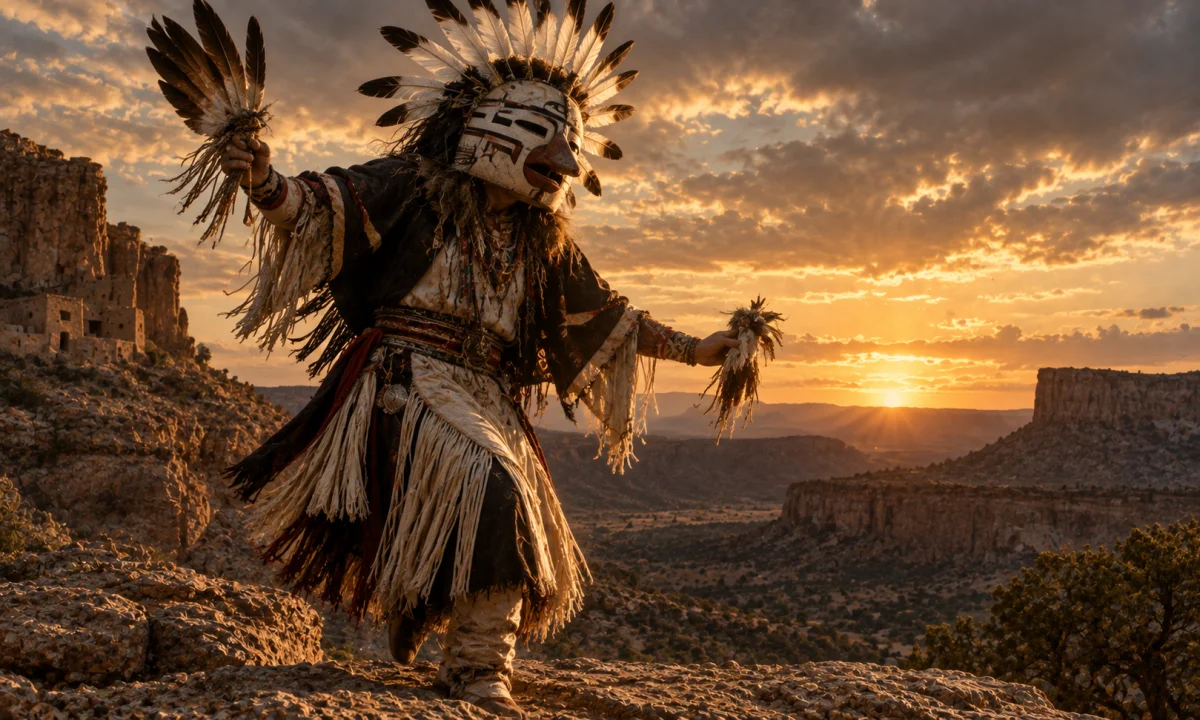
Katsinam are not simply fictional characters or decorative figures. Within Hopi ceremonial understanding, they are powerful spirit beings associated with the ordering of the world and with the well-being of human communities. During the ceremonial season, men wearing masks and regalia embody particular katsinam in public dances. The dancers are not generally understood as pretending to be spirits in the theatrical sense; ceremonial impersonation makes the presence of the katsina effective within the ritual setting.
Hopi ceremonies are connected with agricultural life, especially the need for rain in a dry environment. They also express obligations between generations, villages, families, and the wider living world. Katsina dances can teach children about the spiritual order, reinforce social relationships, and ask for conditions that support crops and community life.
The small wooden objects often called “kachina dolls” in museums and tourist contexts are more accurately understood, in many cases, as tithu or teaching figures. They help children learn to recognize katsinam and their attributes. They are not automatically idols or objects of worship. The distinction between a ceremonial katsina, its masked human embodiment, and a carved teaching figure is important when interpreting a name such as Mana.
Name and identity
The identity of Mana is uncertain in the available general literature. Some popular reference works, collectors’ catalogues, and online lists treat Mana as a female or maiden katsina. Other accounts do not include the name, or use different spellings and classifications. A consistent, widely documented myth describing Mana’s origin, family, powers, and adventures is not securely established.
That uncertainty should not be taken to mean that the name has no significance for Hopi people. Hopi ceremonial knowledge has traditionally been transmitted through community practice, instruction, and participation rather than through a single written mythology containing every figure. A name may be known within a particular village, society, ceremonial group, or period without appearing in every outside account. At the same time, outsiders have often recorded Hopi religious figures selectively, simplified their identities, or treated ceremonial names as if they belonged to a fixed universal catalogue.
The form Mana should therefore be used cautiously. English-language sources sometimes present it as though it were the name of one clearly defined Hopi goddess. That description is too certain. The evidence more safely supports calling Mana a name associated in some sources with a Hopi katsina, while acknowledging that the figure’s classification and attributes vary or remain poorly documented.
Attributes and appearance
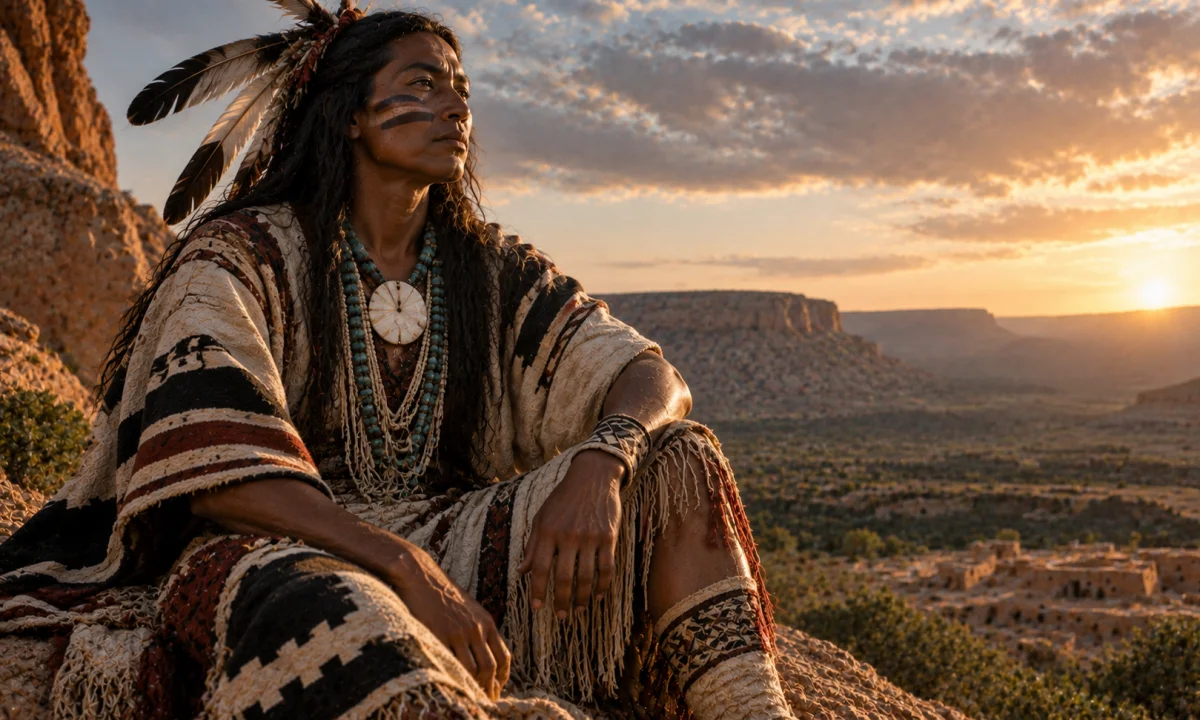
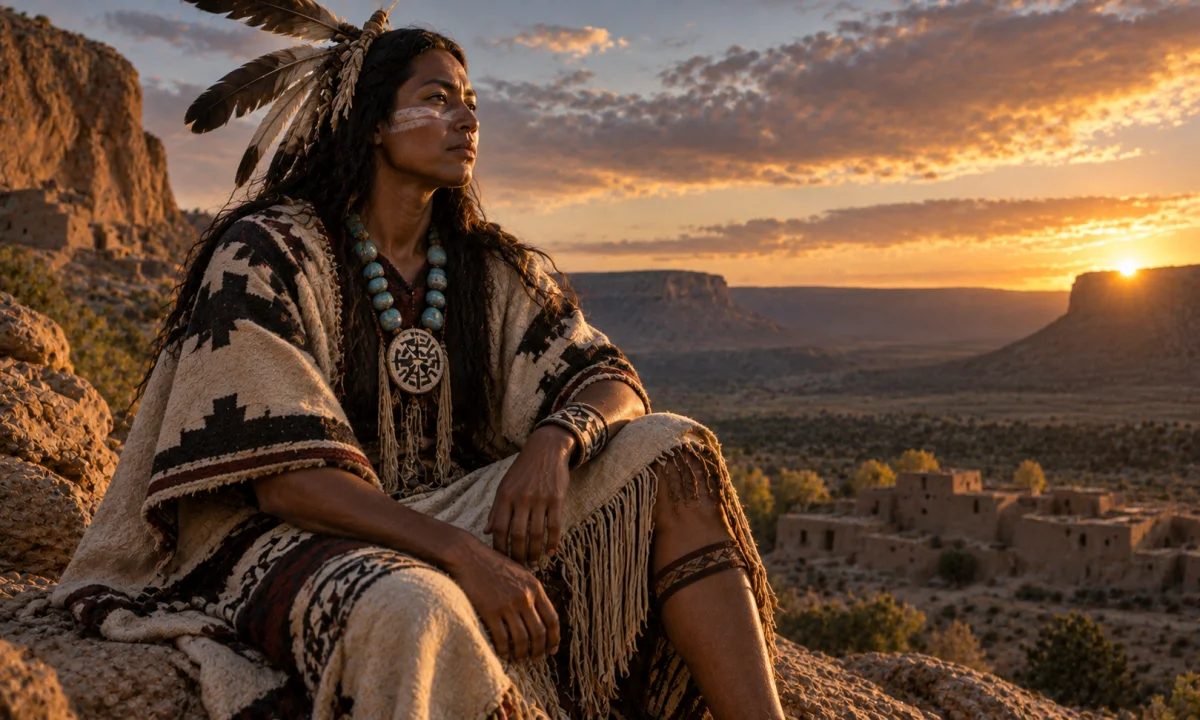
There is no single securely established description of Mana’s appearance that can be applied across all Hopi traditions. Images sold or displayed under the name may show a female-presenting figure, often with clothing, hairstyle, or adornment associated by the maker or collector with a young woman. Such visual features do not by themselves establish an ancient or universal identity.
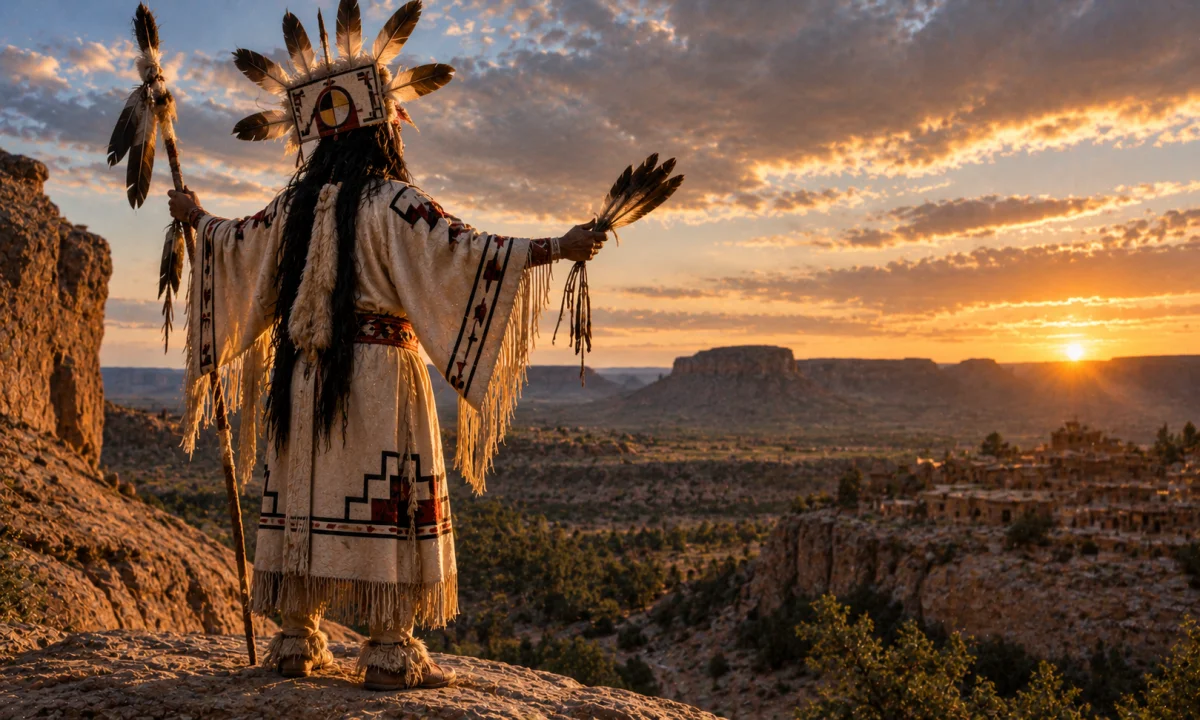
Katsina appearance is highly meaningful, but it is also dependent on local ceremonial practice. Masks, painted designs, feathers, clothing, tools, dance movements, and accompanying songs can identify a spirit or indicate its relationship to rain, plants, animals, ancestors, social roles, or particular ceremonies. A carved figure may emphasize features useful for teaching or recognition rather than reproduce the full appearance of a masked dancer.
For Mana specifically, claims that she possesses a fixed magical power, governs a particular natural force, or has a universally recognized costume should be treated as unverified unless they are tied to a clearly identified Hopi tradition. General statements about female katsinam should not automatically be presented as facts about Mana. The same caution applies to claims that she is a queen, wife, daughter, fertility goddess, or universal mother figure. Those labels are common in commercial and popular descriptions, but they do not establish a traditional Hopi classification.
Stories and ceremonial role
No major, consistently recorded myth cycle about Mana is known in the same way that broad accounts exist for important Hopi figures such as Spider Woman or Masau'u. This lack of a documented story is significant. It means that an account of Mana should not be expanded with invented episodes, genealogies, battles, or romantic relationships merely because similar motifs occur in other mythologies.
If Mana is understood as a katsina name, her importance would belong primarily to ceremonial presence rather than to a written narrative biography. Many katsinam are encountered through dances, songs, masks, movements, and relationships within the ceremonial cycle. Their meanings may be practical and communal as well as theological. A katsina can participate in the education of children, the renewal of social ties, the presentation of gifts, and the community’s hopes for rain and agricultural success.
Hopi ceremonial knowledge is also not necessarily uniform across all villages. The Hopi villages have distinct histories and ceremonial societies, and outside observers have sometimes grouped local traditions together under broad labels. Consequently, a name recorded in one context may not have exactly the same prominence, form, or meaning elsewhere. Variability is a normal feature of the record, not evidence that one source must always be correct.
Relationship to Hopi katsinam
Calling Mana a “Hopi goddess” can create several misunderstandings. Hopi religious beings are not always organized according to the categories used in classical European mythology, where gods and goddesses are often imagined as individual supernatural persons with stable domains. Katsinam form a diverse ceremonial and spiritual category, and their relationships to humans, nature, ancestors, and the community cannot be reduced to a list of Olympian-style deities.
Nor are all katsinam equivalent. Some are associated with rain clouds or weather; others have animal forms, ancestral associations, comic or disciplinary functions, or roles in particular dances. Some may be welcomed publicly, while others appear in more restricted settings. A name’s inclusion in a collector’s catalogue does not reveal its full ceremonial status.
Hopi religious life also includes major figures who are not simply interchangeable with katsinam. Spider Woman, for example, is a powerful culture figure in Hopi emergence traditions and is often treated differently from a masked katsina. Masau'u, associated in many accounts with the Earth and the underworld or with the conditions of human existence, also has a distinctive place. Replacing these diverse beings with the generic term “kachina god” obscures their differences.
Possible confusion with the wider concept of mana
The name Mana is especially vulnerable to confusion with the word mana used in discussions of Polynesian and, more broadly, Oceanian religious traditions. In those contexts, mana commonly refers to a form of spiritual efficacy, authority, potency, or power. Its meaning varies among cultures and languages, and scholars have debated how best to translate it. It is not normally the name of one particular Hopi spirit.
The Oceanian concept became well known in English-language anthropology and popular writing. As a result, writers and websites sometimes assume that a figure called Mana must be a personification of supernatural power or that the Hopi name is related to the Polynesian term. There is no sound basis for treating the two as the same tradition. Similar spellings do not prove a shared origin, and the Hopi and Polynesian religious systems developed in different cultural and linguistic settings.
Mana should also not be confused with maná in biblical and Christian discussion, with the biblical manna, or with unrelated personal names and fictional characters. Transliteration and simplified English spelling can make unrelated words appear connected. The cultural context in which a name is recorded is essential.
Sources and limits of interpretation
Knowledge of Hopi religion comes from several kinds of evidence, including Hopi oral traditions, ceremonial practice, archaeological and artistic evidence, ethnographic observation, museum collections, and accounts written by outsiders. These forms of evidence do not carry identical authority. A museum label may preserve a collector’s interpretation; an ethnographic account may reflect what an observer was permitted or able to learn; and a commercial description may repeat an unsourced claim.
Hopi traditions have also been affected by colonial intrusion, missionary activity, tourism, collecting, and the removal of ceremonial objects from their communities. Public descriptions may therefore reveal as much about outside expectations as about Hopi understandings. The widespread use of the word “kachina” in English, for example, has often encouraged people to treat carved figures as the primary form of Hopi religion, even though ceremonial life is much broader and more complex.
Respect for cultural boundaries is particularly important. Not every Hopi religious teaching is intended for public publication, and not every ceremonial name should be explained as though it had a simple dictionary definition. An incomplete account is preferable to a confident invention that turns a living religious tradition into a catalogue of fantasy characters.
Cultural significance
Even where Mana’s individual identity cannot be reconstructed with confidence, the name can be considered within the broader significance of Hopi katsina traditions. These traditions connect spiritual responsibility with community continuity. They teach that human life depends on proper conduct, cooperation, respect for the land, and reciprocal relationships with powers that sustain the world.
The ceremonial system also demonstrates that mythology is not limited to stories. A religious tradition may preserve knowledge through movement, sound, clothing, architecture, seasonal timing, food, instruction, and participation. A figure whose narrative is poorly recorded may still have meaning through the ceremony in which the figure appears. For this reason, the absence of a famous written myth about Mana does not justify dismissing the name as unimportant; it does require restraint about what can be claimed.
Mana in modern representations
In modern markets, the name Mana may appear on labels for carved figures, decorative objects, costume illustrations, or general-purpose mythology websites. These representations frequently assign a precise personality, family relationship, or supernatural domain to the figure. Such details may be based on a particular artist’s interpretation, a collector’s terminology, or an unsourced repetition rather than on a documented, widely shared Hopi tradition.
Modern popular culture has also encouraged a broad use of “kachina” for any stylized Pueblo-inspired spirit character. This usage can detach Hopi religious beings from their living communities and reduce them to fantasy designs. A responsible representation should identify whether it depicts a ceremonial tradition, a teaching figure, an individual artist’s interpretation, or an entirely fictional creation.
Mana is therefore best presented as a traditionally uncertain Hopi katsina name, not as a universally recognized Hopi goddess with a fixed mythology. Its interpretation depends on the particular Hopi or external source in which it occurs, and any detailed account should distinguish documented ceremonial knowledge from later cataloguing, speculation, and modern artistic invention.