WORLD
WORLD
Negafook
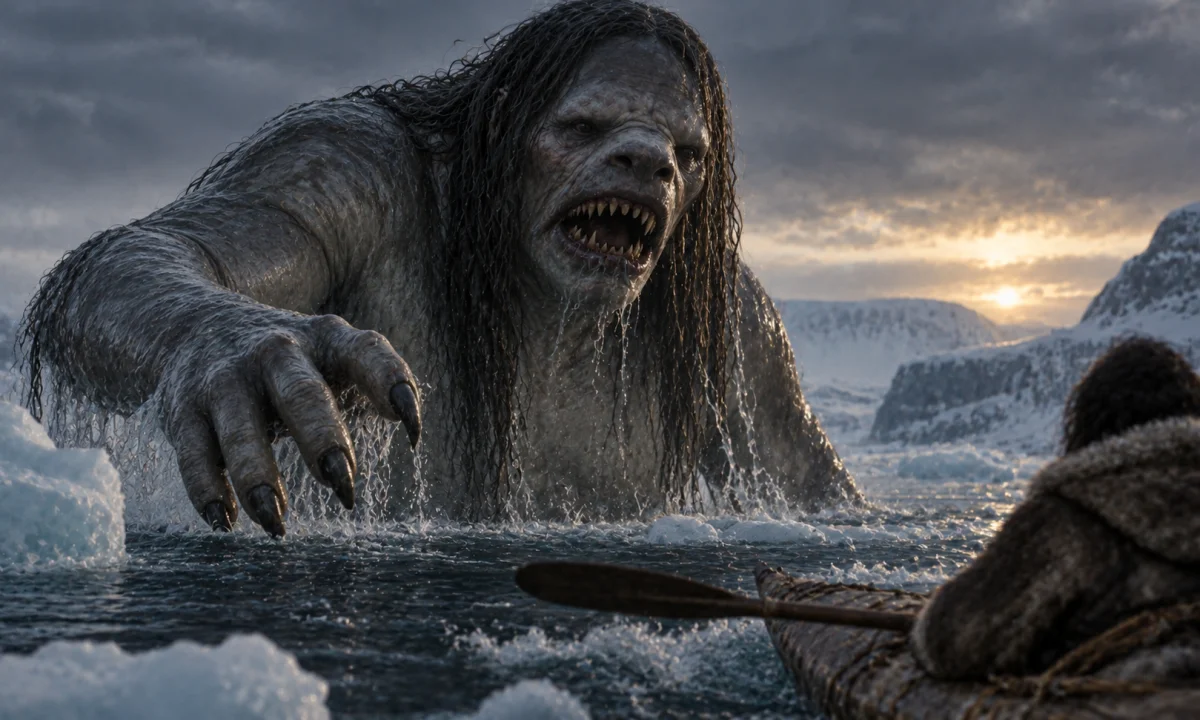
Negafook is a name associated with cold weather in some modern accounts of Inuit mythology. He is commonly described as a spirit or deity responsible for severe cold, frost, or winter winds. The name is sometimes written Negafok, but the figure is not documented with the same consistency across Inuit communities, languages, or published traditions as better-known beings such as Sedna, Sila, or the various regional masters of animals.
Because Inuit societies are spread across a vast Arctic region, there is no single, uniform Inuit mythology. Inuit-speaking peoples—including the Iñupiat, Kalaallit, Inuinnait, Inuvialuit, and many other communities—have distinct languages, histories, ritual practices, and storytelling traditions. A name recorded in an English-language reference work may therefore represent a local figure, a particular spelling of an Indigenous name, an interpreter’s rendering, or a later attempt to classify a complex spiritual tradition using familiar categories such as “god” or “weather spirit.”
Origins and cultural setting
Inuit religious traditions developed in close relationship with the Arctic environment. Sea ice, wind, darkness, temperature, animal movements, and changing weather were not merely physical conditions; they could determine whether a community travelled safely, found food, or survived a season. The beings associated with these forces were understood through relationships of respect, obligation, taboo, ritual knowledge, and practical skill.
Within this setting, a figure connected with cold would have had a significance extending beyond simple meteorology. Cold could preserve meat and fish, maintain sea ice, and make certain kinds of travel or hunting possible. It could also bring danger through exposure, starvation, frozen equipment, or sudden changes in the ice. A being described as governing cold weather should not automatically be interpreted as an embodiment of evil or as a purely destructive demon. Arctic spiritual traditions often treat powerful natural forces as necessary, dangerous, and deserving of careful respect at the same time.
Traditional Inuit accounts do not generally divide the universe into a simple opposition between good gods and bad gods. Human conduct, ritual observance, relations with animals, and adherence to community rules could affect the balance between people and the spiritual world. Weather was often part of a larger network of relationships involving animal beings, the sea, the sky, the dead, shamans, and other spiritual powers.
Name and identity
The form Negafook is an English spelling, and Negafok is a common variant. The exact original-language form and meaning are not securely established in the general reference tradition in which the name is usually encountered. English spellings of Inuit names can vary considerably because different languages use different sound systems and because earlier writers often represented unfamiliar sounds inconsistently.
Negafook is usually classified in short reference accounts as an Inuit god of cold weather, or more cautiously as a weather spirit. That classification should be treated as a broad description rather than proof that all Inuit communities recognized a single deity under this name. The surviving information is brief: Negafook is associated with cold, and some accounts place him in the far north or connect him with cold winds. Detailed traditional narratives, ritual descriptions, genealogies, and regional variants are not widely preserved in the popular English-language material that discusses him.
It is therefore difficult to state with confidence whether Negafook was originally understood as a personal deity, an immanent force of nature, a local spirit, or a name that became detached from its original cultural context. The word “god” may reflect the terminology of an outside recorder rather than an exact equivalent in the community from which the tradition came.
Association with cold and winter
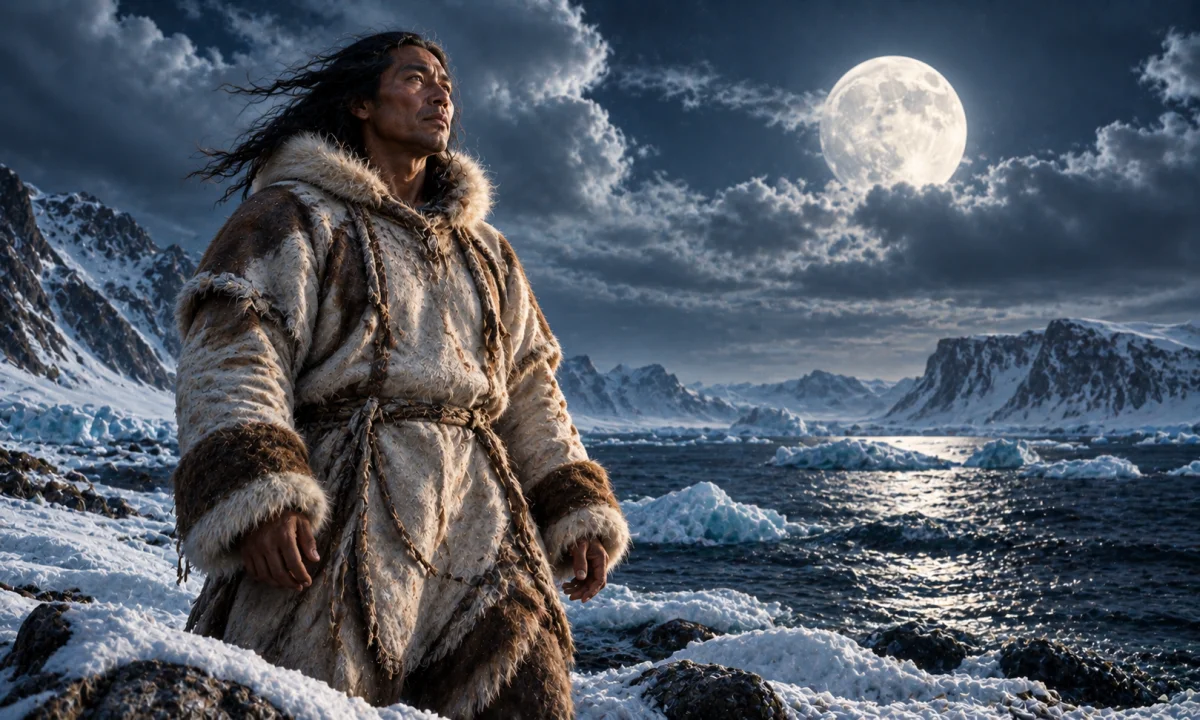
The central attribute assigned to Negafook is the power of cold. In summaries of the figure, this may include freezing temperatures, winter conditions, and bitter winds from the north. Some descriptions portray him as the source or ruler of cold weather, while others treat him more generally as a personification of the Arctic winter.
These descriptions should not be expanded into a detailed mythology that the evidence does not support. There is no securely established body of widely attested stories explaining Negafook’s birth, family, dwelling, clothing, weapons, marriage, or conflicts with other deities. Nor is there a reliable basis for assigning him a fixed appearance. Illustrations that show a particular face, body, animal form, or costume are modern artistic interpretations unless they can be connected to a specific recorded tradition.
The association with cold can nevertheless be interpreted within the realities of Arctic life. Cold is both a material resource and a serious threat. Frozen conditions can preserve food and create routes across sea ice, yet a blizzard can erase tracks, separate travellers, and make a return impossible. A weather spirit connected with such conditions would represent a force that humans could not simply command. Survival depended on reading the environment, preparing carefully, and maintaining appropriate relationships with the unseen powers believed to influence it.
Negafook and the far north
Some modern descriptions say that Negafook lives in the far north. This detail fits the symbolic geography often used in popular accounts: the colder north becomes the dwelling place of the being who brings winter. It should not, however, be treated as a universally recorded feature of Inuit belief.
For Inuit peoples, “the north” is not an abstract fantasy land separated from ordinary life. The Arctic is a lived homeland with many inhabited regions, travel routes, hunting grounds, and coastal environments. A statement that a spirit lives “in the north” may be an English writer’s simplification of a more specific place, direction, landscape, or realm. Without a documented local narrative, the precise meaning of the detail remains uncertain.
Likewise, the idea that Negafook controls all cold weather may be a convenient summary rather than a complete account of traditional belief. Inuit spiritual systems frequently recognize numerous beings and forces associated with particular animals, places, winds, waters, or activities. Authority over weather may be distributed, situational, or connected with broader concepts of spirit and atmosphere rather than assigned to one universal ruler.
Relationship to Sila and other spiritual powers
Negafook is sometimes presented in modern mythology lists alongside Sila, a major and complex concept in several Inuit traditions. Sila may refer to air, weather, the atmosphere, the world, intelligence, consciousness, or a broad spiritual power, depending on the language and cultural context. It is not accurate to reduce Sila to a single “weather god” with an identical role everywhere.
Some popular accounts create a direct opposition between Negafook as the power of cold and Sila as a power of warmth or a more favourable sky. This neat contrast may help organize a short mythology entry, but it should not be assumed to represent a traditional mythic rivalry. There is no generally established Inuit story in which Negafook and Sila are universal opposing characters. Their apparent pairing may result from modern efforts to arrange weather-related names into a system of contrasting forces.
Negafook should also be distinguished from figures associated with the sea, animals, hunting, death, or storms. Sedna, for example, is widely known in many different regional forms as a powerful being connected with marine animals and the sea. Her stories and names vary substantially, but she is not simply another name for a spirit of cold. Similarly, wind beings, sky powers, and local masters of particular animals may have overlapping environmental associations without being the same figure.
Stories and surviving tradition
A major difficulty in discussing Negafook is the scarcity of well-attested narrative material. Popular summaries generally provide an attribute rather than a cycle of myths. They may identify him as the bringer of cold, locate him in the north, and occasionally describe his influence as beneficial because cold preserves food or maintains the conditions needed for Arctic life. Such statements are useful as indications of how the figure has been represented, but they do not amount to a full traditional biography.
No single canonical scripture governs Inuit mythology, and many traditions were transmitted orally through storytelling, ritual instruction, family knowledge, and the teaching of experienced hunters and spiritual specialists. Written records were produced at different times by missionaries, explorers, anthropologists, government employees, and Indigenous authors. These records vary greatly in purpose and reliability. A short name in a list of “Inuit gods” may preserve only a fragment of a local tradition.
For that reason, claims about Negafook’s relatives, enemies, worshippers, temples, or specific adventures require caution. There is no sound basis for inventing a standard myth in which he fights a warmth deity, commands a host of winter demons, or punishes people in a particular way. Nor should a generic image of an Arctic giant be presented as an ancient description of Negafook.
Religious and symbolic significance
If Negafook reflects a genuine local or regional weather tradition, his importance would lie in the recognition that cold has agency, danger, and value within Arctic life. The figure can be understood as expressing the limits of human control over the environment. People may prepare clothing, shelters, food stores, lamps, sledges, boats, and hunting equipment, but they cannot eliminate the power of winter or guarantee safe travel.
Cold also illustrates why Inuit environmental knowledge cannot be separated neatly from religious thought. Reading cloud formations, wind direction, snow conditions, animal behaviour, and sea-ice changes is practical knowledge, yet these observations exist within ethical and spiritual frameworks. Respect for the land and animals, proper conduct, and attention to inherited teachings could all be relevant to survival. A spirit of cold would belong to that larger world of reciprocal relationships rather than to an isolated “weather department.”
The image of a cold-bringing power may also carry a lesson about balance. The Arctic environment is not made habitable by warmth alone. Freezing conditions preserve supplies, shape animal habitats, and create the seasonal patterns on which people depend. At the same time, excessive cold can destroy life. This mixture of necessity and peril is more faithful to the cultural setting than a simple interpretation of Negafook as a villain.
Regional variation and classification
“Inuit mythology” is a broad modern category, not the name of one homogeneous religious system. The Inuit world includes numerous language communities across Alaska, Canada, and Greenland, with traditions that have changed through time and continue to develop. A figure’s name, gender, role, and importance may differ from one region to another, and a being known in one place may be absent from another.
Gender is also difficult to establish in Negafook’s case. English-language listings often use masculine pronouns, but this may reflect a particular source’s grammatical or interpretive choice rather than a securely documented traditional identity. Where the original linguistic and ethnographic context is unclear, it is better to describe Negafook as a figure associated with cold than to insist on a fixed human-like personality.
The same caution applies to the word “worship.” Inuit relationships with spiritual beings could involve ritual observance, offerings, avoidance rules, songs, stories, or shamanic practices, but there is no evidence for a standardized, pan-Inuit cult devoted specifically to Negafook. Treating every named spiritual figure as the object of formal worship imposes categories that may not fit the traditions concerned.
Negafook in modern reference culture
Negafook appears most often in modern lists, encyclopedic summaries, mythology websites, and compilations of gods associated with weather. These formats tend to compress a complicated cultural landscape into one-line identifications such as “god of cold weather.” The result makes the name easy to remember but can give a false impression of a large, well-documented mythology.
There is no prominent, widely established body of modern popular culture built around Negafook comparable to the use of figures such as Sedna, the Wendigo, or major Norse and Greek deities. When Negafook is adapted for fiction, games, fantasy art, or role-playing settings, those portrayals should be recognized as creative inventions or reinterpretations. A horned winter monster, an ice giant, or a warrior in elaborate fur armour may be an effective fictional design, but none of these features is securely established as traditional.
The most responsible way to represent Negafook is therefore modestly: as a name associated in some sources with an Inuit power or spirit of cold weather, with uncertain regional and historical documentation. That limited description is more accurate than supplying an elaborate mythology unsupported by surviving evidence.