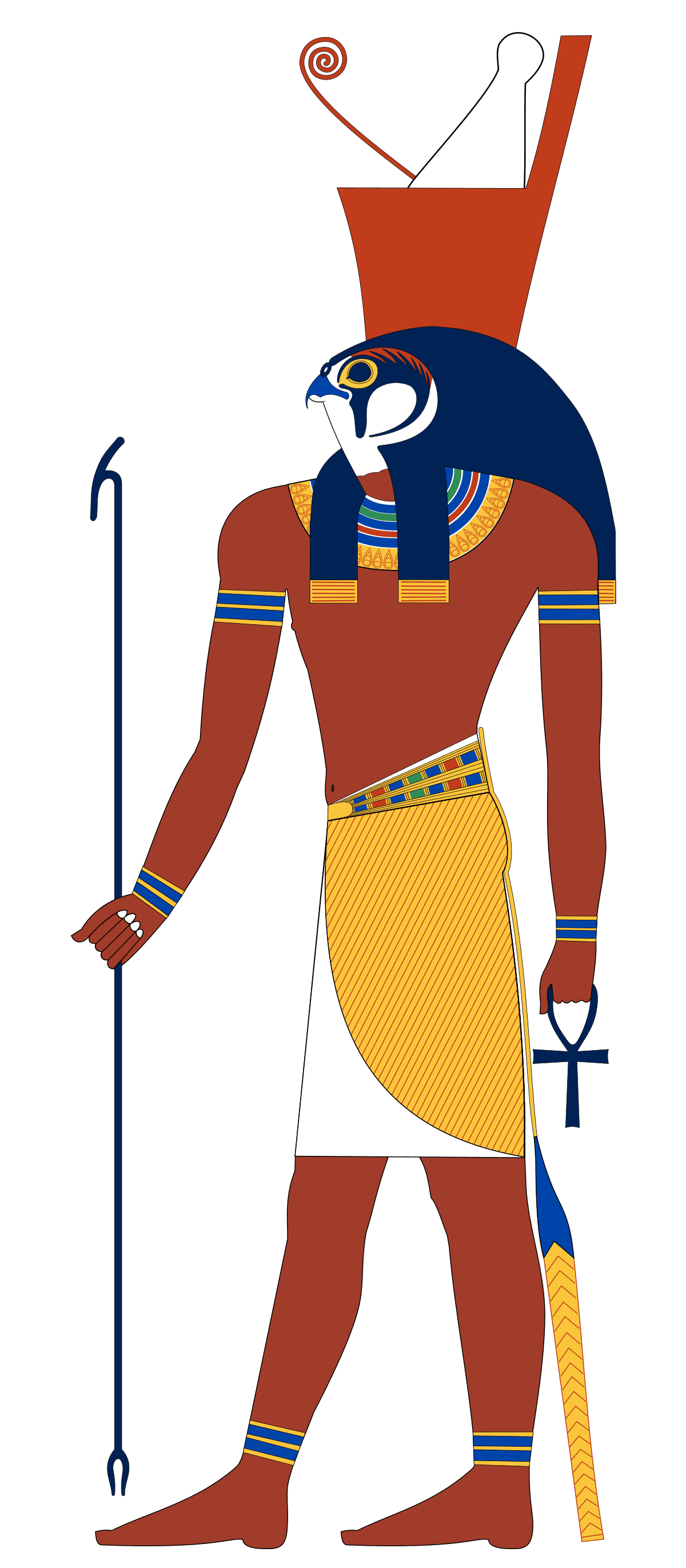
Horus is one of the most important deities in Egyptian mythology. Known as the god of the sky, Horus has a rich history and a complex set of symbols and meanings. His name is often associated with the sky and kingship. Horus is usually depicted as a falcon or as a man with a falcon’s head, which reflects his dominion over the sky and his role as a protector of the pharaohs. The stories surrounding Horus are numerous, and they illustrate the values and beliefs of ancient Egyptian society.
The Origins of Horus
 Hez-ur
The origins of Horus can be traced back to ancient Egyptian creation myths. According to these myths, Horus was the son of Osiris and Isis. Osiris was the god of the underworld, and Isis was the goddess of motherhood and magic. Their story begins with the murder of Osiris by his brother Set, the god of chaos. After Osiris’s death, Isis searched for his body and eventually gave birth to Horus. This act of motherhood and resilience is a significant theme in Horus’s mythology.
As a child, Horus was hidden from Set to protect him. His mother, Isis, took him to the Nile Delta, where he grew up in secret. This aspect of Horus’s early life symbolizes the struggle between good and evil, order and chaos. Horus’s eventual rise to power is marked by his quest to avenge his father and reclaim the throne of Egypt. This narrative is central to many myths involving Horus, illustrating the themes of justice and restoration.
The Symbolism of Horus
Horus is rich in symbolism, with each aspect of his representation carrying deep meaning. One of the most recognizable symbols associated with Horus is the Eye of Horus, also known as the Wedjat. This symbol represents protection, royal power, and good health. The Eye of Horus was often used as an amulet, believed to offer safety and healing to those who wore it. The eye itself is a representation of the sun and the moon, which further emphasizes Horus’s connection to the sky.
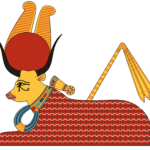 Hesat
HesatAnother important symbol associated with Horus is the falcon. The falcon is a creature known for its keen eyesight and ability to soar high in the sky, making it a fitting representation of a sky god. Horus’s association with the falcon also emphasizes his role as a protector of the pharaohs. In ancient Egypt, the pharaoh was considered a living god, and Horus was believed to inhabit the pharaoh’s body during his reign. This connection between Horus and the pharaoh symbolizes the divine right to rule.
The Myth of Horus and Set
The conflict between Horus and Set is one of the most famous stories in Egyptian mythology. After the death of Osiris, Set took control of the throne, but Horus was determined to reclaim his rightful place. This struggle between Horus and Set symbolizes the battle between order and chaos. Horus, representing order, sought to restore the balance that Set had disrupted. The battles between these two gods were fierce and lasted for many years.
One of the most notable events in this myth is the contest for the throne of Egypt. The gods decided to hold a series of challenges to determine who would be the rightful ruler. These contests included various tests of strength and skill, showcasing both gods’ abilities. Ultimately, Horus’s determination and cleverness helped him prevail. He emerged victorious and was crowned the ruler of Egypt, establishing himself as a symbol of rightful kingship and justice.
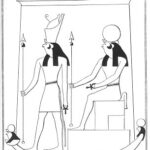 Heru-behutet
The Role of Horus in Egyptian Society
Horus played a crucial role in ancient Egyptian society. As a god of the sky and kingship, he was revered by the pharaohs and the people of Egypt. The pharaohs often identified themselves with Horus, believing they embodied his spirit. This connection legitimized their rule and reinforced the idea that the pharaoh was a divine figure. Temples dedicated to Horus were built throughout Egypt, serving as places of worship and centers of power.
In addition to his association with kingship, Horus was also seen as a protector of the people. Many Egyptians believed that Horus watched over them and ensured their safety. This belief led to the widespread use of the Eye of Horus as a protective symbol. The amulet was commonly worn by individuals, and it was believed to bring good fortune and ward off evil. Horus’s influence extended beyond the realm of the pharaohs, reaching into the everyday lives of the people.
Horus in Art and Architecture
Horus’s presence in Egyptian art and architecture is significant. His image can be found in numerous paintings, sculptures, and reliefs throughout ancient Egypt. Artists often depicted him as a falcon or a man with a falcon’s head, emphasizing his divine nature. The details in these artworks reflect the importance of Horus in the lives of the ancient Egyptians. They serve as a testament to the reverence and respect that the people had for this powerful deity.
Temples dedicated to Horus, such as the Temple of Horus at Edfu, showcase the architectural grandeur of ancient Egypt. This temple is one of the best-preserved temples in the country and is a significant site for understanding the worship of Horus. The temple features intricate carvings and inscriptions that tell the story of Horus and his battles with Set. These artworks not only served a religious purpose but also educated the people about their mythology and beliefs.
The Legacy of Horus
The legacy of Horus extends far beyond ancient Egypt. His influence can be seen in various cultures and religions throughout history. The themes of kingship, protection, and the struggle between good and evil resonate in many mythologies worldwide. Horus’s story has inspired countless works of art, literature, and even modern media. His image continues to be a symbol of power and protection, reflecting the enduring nature of his legacy.
Horus also played a role in the development of the concept of the divine ruler. The idea that a king is a god or has divine authority can be traced back to the worship of Horus. This concept has influenced various political systems and ideologies throughout history. The association of rulers with deities continues to be a theme in many cultures, demonstrating the lasting impact of Horus on human civilization.
Horus in Modern Culture
In modern times, Horus has become a symbol of ancient Egyptian culture and mythology. His image is often used in popular culture, from movies to literature. The Eye of Horus, in particular, has gained recognition as a symbol of protection and wisdom. Many people today wear the Eye of Horus as a fashion statement or as a representation of their interest in ancient cultures.
Horus’s story has also been explored in various forms of media, including films, television shows, and video games. These adaptations often take creative liberties but generally maintain the core themes of his mythology. The fascination with Horus and Egyptian mythology continues to thrive, as people seek to understand the mysteries of the past. The enduring nature of his stories reflects humanity’s ongoing interest in the divine and the struggles that shape our world.
Horus remains a central figure in Egyptian mythology, symbolizing the complexities of life, death, and the balance of power. His story is a reflection of the values and beliefs of ancient Egyptian society, emphasizing the importance of justice, protection, and the divine right to rule. As we explore the myths and symbols associated with Horus, we gain insight into the rich tapestry of human history and the enduring legacy of one of the most revered gods in ancient Egypt.