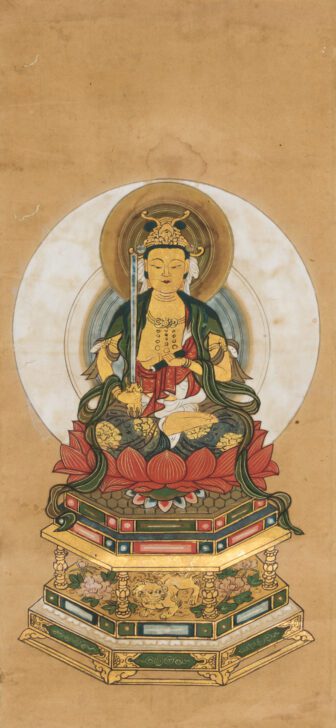
Monju Bosatsu, also known as Manjushri in Sanskrit, is a significant figure in Buddhist mythology. He is revered as the embodiment of wisdom and is often depicted holding a sword in one hand and a sutra in the other. This representation symbolizes his ability to cut through ignorance and delusion, illuminating the path to enlightenment. Monju Bosatsu is a key figure in various Buddhist traditions, including Mahayana and Vajrayana, and his teachings emphasize the importance of wisdom in the pursuit of spiritual awakening.
Origins of Monju Bosatsu
The origins of Monju Bosatsu can be traced back to ancient India, where he was first recognized in Buddhist texts as a personification of wisdom. He is often associated with the teachings of the Buddha, particularly those that focus on the nature of reality and the importance of insight. In the Prajnaparamita Sutras, Monju Bosatsu plays a crucial role, illustrating the principles of profound wisdom. His character evolved as Buddhism spread across Asia, adapting to various cultural contexts while retaining his core attributes of wisdom and enlightenment.
 Miroku
In the Chinese tradition, Monju is known as Wenshu, and he is celebrated for his deep understanding of the teachings of the Buddha. His presence in Chinese Buddhism highlights the significance of wisdom as a guiding force in one’s spiritual journey. Similarly, in Japanese Buddhism, he is referred to as Monju, and he is often depicted in temples and shrines, symbolizing the aspiration for enlightenment through wisdom. His various names and forms reflect the universal nature of his teachings, transcending cultural boundaries.
Iconography of Monju Bosatsu
The iconography of Monju Bosatsu is rich and varied, often reflecting the different interpretations of his character across cultures. He is typically portrayed as a young man, embodying the freshness and clarity of wisdom. One of the most distinctive features of Monju’s iconography is the sword he wields, which represents his ability to cut through ignorance and confusion. This sword is often depicted as a double-edged blade, signifying the dual nature of wisdom: it can both enlighten and challenge.
In addition to the sword, Monju Bosatsu is frequently shown holding a sutra, which symbolizes the teachings of the Buddha. The sutra represents the written wisdom that guides practitioners on their spiritual journey. His attire is often elaborate, adorned with jewels and intricate designs, signifying the preciousness of wisdom. The serene expression on his face reflects the deep understanding and compassion that accompany true wisdom. These visual elements come together to create a powerful representation of Monju Bosatsu as a guide on the path to enlightenment.
 Milo Fo
Monju Bosatsu in Buddhist Practices
Monju Bosatsu plays a vital role in various Buddhist practices, particularly in rituals and ceremonies aimed at cultivating wisdom. In many temples dedicated to Monju, practitioners engage in chanting and meditation focused on his teachings. These practices are designed to deepen one’s understanding of the nature of reality and enhance one’s ability to discern truth from illusion. The act of chanting Monju’s name is believed to invoke his presence and blessings, aiding practitioners in their pursuit of wisdom.
In some traditions, practitioners may also create offerings to Monju Bosatsu as a form of devotion. These offerings often include flowers, incense, and fruits, symbolizing purity and the aspiration for spiritual growth. The ritual of offering serves as a reminder of the importance of wisdom in everyday life and encourages practitioners to cultivate a discerning mind. Additionally, retreats and workshops centered around Monju Bosatsu’s teachings are common, providing individuals with the opportunity to immerse themselves in the study and practice of wisdom.
Monju Bosatsu in Literature
Monju Bosatsu has been a subject of fascination in Buddhist literature, where he is often depicted as a teacher and guide. Various texts explore his attributes and the significance of wisdom in the path to enlightenment. The Prajnaparamita Sutras, for example, feature Monju prominently, discussing the nature of wisdom and its role in overcoming ignorance. These texts emphasize that wisdom is not merely intellectual understanding but a profound insight into the nature of existence.
 Maya
MayaMoreover, stories and parables involving Monju Bosatsu illustrate his teachings in a practical context. These narratives often highlight encounters with seekers who struggle with ignorance or confusion. Monju’s responses and guidance serve as a model for how one can approach the challenges of life with wisdom and clarity. Through these literary works, Monju Bosatsu’s character is further developed, showcasing the multifaceted nature of wisdom and its transformative power.
Monju Bosatsu in Popular Culture
In contemporary times, Monju Bosatsu continues to inspire artists, writers, and filmmakers, appearing in various forms of popular culture. His image can be found in paintings, sculptures, and digital art, often used to symbolize the quest for knowledge and enlightenment. Many artists draw upon the rich iconography of Monju to convey messages about the importance of wisdom in navigating the complexities of modern life.
Furthermore, Monju Bosatsu’s teachings resonate in literature and cinema, where characters often embody his qualities of wisdom and discernment. These narratives may explore themes of personal growth, self-discovery, and the pursuit of truth, reflecting the timeless relevance of Monju’s teachings. As society grapples with challenges such as misinformation and confusion, the figure of Monju Bosatsu serves as a reminder of the enduring importance of wisdom in achieving clarity and understanding.
Monju Bosatsu in Zen Buddhism
In Zen Buddhism, Monju Bosatsu holds a special place as a symbol of wisdom and insight. Zen practitioners often meditate on his teachings, seeking to cultivate a deeper understanding of their own minds and the nature of reality. The practice of Zazen, or seated meditation, is a central aspect of Zen, where practitioners aim to quiet their thoughts and connect with the present moment. Monju’s presence in Zen serves as a guiding light, encouraging practitioners to embrace wisdom in their meditation practice.
Additionally, Zen koans often feature Monju Bosatsu as a figure who challenges practitioners to think beyond conventional understanding. These koans, which are paradoxical anecdotes or riddles, encourage deep contemplation and insight. By engaging with the teachings of Monju through koans, Zen practitioners are invited to explore the nature of wisdom and its application in daily life. This unique relationship between Monju Bosatsu and Zen practice highlights the dynamic interplay between wisdom and meditation.
Monju Bosatsu in the Context of Enlightenment
Monju Bosatsu is closely associated with the concept of enlightenment in Buddhism. His teachings emphasize that wisdom is a crucial component of the path to awakening. Unlike mere intellectual knowledge, true wisdom arises from direct experience and insight into the nature of reality. Monju serves as a reminder that the pursuit of enlightenment is not solely an intellectual endeavor but requires deep introspection and understanding.
The journey toward enlightenment often involves overcoming various forms of ignorance and delusion. Monju’s sword symbolizes the need to cut through these obstacles, allowing practitioners to see things as they truly are. This process can be challenging, as it requires confronting deeply held beliefs and assumptions. However, Monju’s presence offers encouragement, reminding practitioners that wisdom is attainable through dedication and practice. The teachings of Monju Bosatsu thus serve as a guiding framework for those on the path to enlightenment.
Monju Bosatsu and Compassion
While Monju Bosatsu is primarily associated with wisdom, his teachings also encompass the importance of compassion. Wisdom and compassion are often seen as two sides of the same coin in Buddhism, and Monju exemplifies this interconnectedness. His understanding of the nature of suffering and the human condition informs his compassionate responses to the struggles of others. Practicing wisdom without compassion can lead to a detached understanding, whereas cultivating both qualities enriches the spiritual journey.
Monju’s teachings encourage practitioners to develop a compassionate outlook toward themselves and others. This includes recognizing the shared struggles of all beings and responding with kindness and understanding. The act of cultivating wisdom is not solely for personal gain but is also a means to alleviate the suffering of others. Monju Bosatsu thus serves as a model for integrating wisdom and compassion in daily life, fostering a holistic approach to spiritual practice.
The Global Influence of Monju Bosatsu
As Buddhism spread across the globe, the influence of Monju Bosatsu can be seen in various cultures and traditions. In countries such as Tibet, Monju is venerated as a powerful deity associated with wisdom and learning. Tibetan Buddhism incorporates his teachings into rituals and practices aimed at enhancing understanding and insight. Monju’s presence in Tibetan culture highlights the universal appeal of wisdom and its relevance in diverse spiritual contexts.
In the West, interest in Buddhist philosophy has grown, leading to a renewed appreciation for figures like Monju Bosatsu. His teachings on wisdom resonate with individuals seeking deeper understanding and meaning in their lives. Many contemporary spiritual seekers find inspiration in Monju’s attributes, incorporating his wisdom into their own practices. This global influence underscores the timeless nature of Monju Bosatsu’s teachings and their capacity to transcend cultural boundaries.
Monju Bosatsu and Education
Monju Bosatsu is often associated with education and the pursuit of knowledge. In many Buddhist traditions, he is seen as the patron of scholars and students. His emphasis on wisdom encourages individuals to engage in lifelong learning and self-improvement. Monju’s teachings serve as a reminder that true knowledge goes beyond rote memorization; it involves critical thinking and the application of insights in everyday life.
In educational settings, Monju’s influence can be observed through the incorporation of mindfulness and contemplative practices. Many educators recognize the value of fostering wisdom in students, encouraging them to develop a deeper understanding of themselves and the world around them. By embracing the teachings of Monju Bosatsu, educational institutions can cultivate environments that prioritize critical thinking, empathy, and a love for learning.
Monju Bosatsu in Modern Spirituality
In modern spirituality, Monju Bosatsu continues to inspire individuals seeking wisdom and clarity. His teachings resonate with those navigating the complexities of contemporary life, offering guidance on how to cultivate a discerning mind amidst distractions and confusion. Many spiritual seekers draw upon Monju’s attributes to enhance their meditation practices and personal growth journeys.
Moreover, Monju Bosatsu’s emphasis on wisdom aligns with the growing interest in mindfulness and self-awareness. As individuals seek to develop a deeper understanding of their thoughts and emotions, the teachings of Monju provide valuable insights. His presence in modern spirituality serves as a reminder of the importance of wisdom in fostering a meaningful and fulfilling life.
The Legacy of Monju Bosatsu
The legacy of Monju Bosatsu is one of profound wisdom and insight that continues to resonate with practitioners around the world. His teachings have inspired countless individuals on their spiritual journeys, encouraging them to cultivate wisdom as a guiding principle. The timeless nature of Monju’s message transcends cultural and temporal boundaries, making him a relevant figure in both traditional and contemporary contexts.
As the world faces challenges such as uncertainty and confusion, the teachings of Monju Bosatsu offer a beacon of hope. His emphasis on the pursuit of wisdom encourages individuals to seek clarity and understanding in their lives. The legacy of Monju Bosatsu reminds us that wisdom is not merely an abstract concept but a practical tool for navigating the complexities of existence.