
Fugen is a significant figure in Buddhist mythology, representing wisdom, compassion, and the pursuit of enlightenment. In Mahayana Buddhism, Fugen is often depicted as a bodhisattva, which is a being who has attained a high level of spiritual enlightenment but chooses to remain in the cycle of rebirth to help others achieve the same state. This selfless dedication to the well-being of all sentient beings is a central theme in Buddhist teachings. Fugen’s role is particularly prominent in the context of the Lotus Sutra, one of the most important texts in Mahayana Buddhism.
Origins of Fugen in Buddhist Mythology
The origins of Fugen can be traced back to ancient Buddhist texts and traditions. Fugen is often associated with the figure of Samantabhadra, a bodhisattva who embodies the virtues of wisdom and meditative practice. In many depictions, Fugen is shown riding a white elephant, symbolizing strength and purity. The elephant is also a powerful symbol in Buddhism, representing the ability to overcome obstacles on the path to enlightenment.
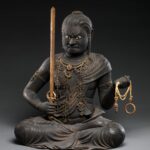 Fudo
FudoFugen’s name, which means “Universal Worthy,” reflects his qualities of compassion and wisdom. He is revered in various schools of Buddhism, particularly in East Asian traditions, such as Chinese, Japanese, and Korean Buddhism. His teachings emphasize the importance of ethical conduct and the practice of the Six Perfections, which are essential for anyone aspiring to attain enlightenment.
Symbolism and Iconography of Fugen
Fugen is often depicted in art and sculpture, where his symbolism carries deep meanings. In most representations, he is shown seated on a lotus flower, which symbolizes purity and spiritual awakening. The lotus grows in muddy waters but blooms beautifully above the surface, illustrating the potential for enlightenment even in the midst of suffering and ignorance.
Another prominent feature in Fugen’s iconography is the white elephant. The elephant represents strength and the ability to carry the burdens of others. This imagery serves as a reminder of Fugen’s commitment to assisting sentient beings on their journey toward enlightenment. Additionally, Fugen is often portrayed with multiple arms, each holding various implements that symbolize the different aspects of his compassionate activities.
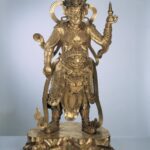 Si Da Tian Wang
Common Symbols Associated with Fugen
- White Elephant: Represents strength and purity.
- Lotus Flower: Symbolizes spiritual awakening.
- Multiple Arms: Indicates the various compassionate activities he undertakes.
- Offerings: Often depicted with offerings to represent generosity and support for practitioners.
Fugen in the Lotus Sutra
The Lotus Sutra is one of the most revered texts in Mahayana Buddhism, and Fugen plays a vital role in its teachings. Within this sutra, Fugen embodies the ideal of the bodhisattva, emphasizing the importance of compassionate action and the pursuit of wisdom. His teachings encourage practitioners to cultivate a deep understanding of the interconnectedness of all beings and to act with kindness and generosity.
One of the key messages of the Lotus Sutra is that anyone can attain enlightenment, regardless of their background or circumstances. Fugen exemplifies this principle by actively engaging with the world and helping others. His presence in the sutra serves as an inspiration for those on the spiritual path, encouraging them to practice the teachings and share their insights with others.
 Emma-o
The Role of Fugen in Buddhist Practice
Fugen’s teachings are not just theoretical; they have practical implications for those who wish to follow the Buddhist path. His emphasis on compassion and ethical conduct serves as a guide for practitioners in their daily lives. By embodying the qualities of Fugen, individuals can cultivate a more profound sense of connection with others and contribute positively to their communities.
Practitioners often engage in specific rituals and practices dedicated to Fugen. These may include chanting his name, making offerings, and participating in ceremonies that honor his teachings. Such practices are intended to deepen one’s understanding of compassion and encourage the development of a generous spirit. Additionally, many Buddhists believe that invoking Fugen’s name can help them overcome obstacles and challenges on their spiritual journey.
Practices Associated with Fugen
- Chanting: Reciting Fugen’s name to cultivate compassion.
- Offerings: Making offerings to express gratitude and generosity.
- Meditation: Meditating on Fugen’s qualities to develop wisdom and understanding.
- Community Service: Engaging in acts of kindness and support for others.
Fugen in Different Buddhist Traditions
Fugen’s influence extends across various Buddhist traditions, each interpreting his teachings in unique ways. In Japanese Buddhism, for example, Fugen is often associated with the Kannon (Avalokiteshvara) and is venerated as a protector of the Dharma. In this context, he is seen as a guiding force for practitioners, helping them navigate the challenges of life and spirituality.
In Chinese Buddhism, Fugen is frequently depicted alongside other bodhisattvas, such as Manjushri, who represents wisdom. Together, they embody the complementary qualities of compassion and wisdom, highlighting the importance of both in the journey toward enlightenment. The interplay between these figures illustrates the interconnectedness of their teachings and the holistic approach of Mahayana Buddhism.
Fugen’s Teachings on Compassion and Wisdom
At the heart of Fugen’s teachings is the concept of compassion. He encourages practitioners to cultivate a genuine concern for the well-being of others. This involves not only feeling empathy but also taking action to alleviate the suffering of those around us. Fugen’s teachings remind us that compassion is not just a feeling; it is a practice that requires commitment and dedication.
Alongside compassion, Fugen emphasizes the importance of wisdom. Wisdom in Buddhism is often understood as the ability to see things as they truly are. This means recognizing the impermanent and interconnected nature of all phenomena. By developing wisdom, practitioners can make informed decisions that benefit themselves and others. Fugen’s teachings encourage a balanced approach, where compassion and wisdom work together to guide ethical conduct and spiritual growth.
Fugen in Popular Culture
Fugen’s influence extends beyond traditional religious practices and has made its way into popular culture. In various forms of art, literature, and media, Fugen’s character often serves as a symbol of hope and inspiration. Artists frequently draw upon the imagery of Fugen, depicting him in paintings and sculptures that celebrate his qualities of compassion and wisdom.
Additionally, Fugen’s teachings have been adapted into modern contexts, where they are used to promote mindfulness, compassion, and ethical living. Workshops and seminars inspired by Fugen’s philosophy encourage individuals to explore their capacity for kindness and generosity in everyday life. This modern interpretation of Fugen’s teachings resonates with people seeking to cultivate a more compassionate and connected existence.
Conclusion: The Legacy of Fugen
Fugen’s legacy continues to inspire countless individuals on their spiritual journeys. His teachings on compassion and wisdom serve as guiding principles for practitioners, reminding them of the importance of ethical conduct and the interconnectedness of all beings. As a bodhisattva, Fugen exemplifies the ideal of selfless service, encouraging us to act with kindness and compassion in our daily lives.
Through various rituals, practices, and artistic representations, Fugen’s influence remains alive and relevant in contemporary society. His message of compassion transcends cultural and geographical boundaries, resonating with individuals from all walks of life. As we navigate the complexities of our modern world, Fugen’s teachings offer a pathway toward greater understanding, empathy, and connection with one another.