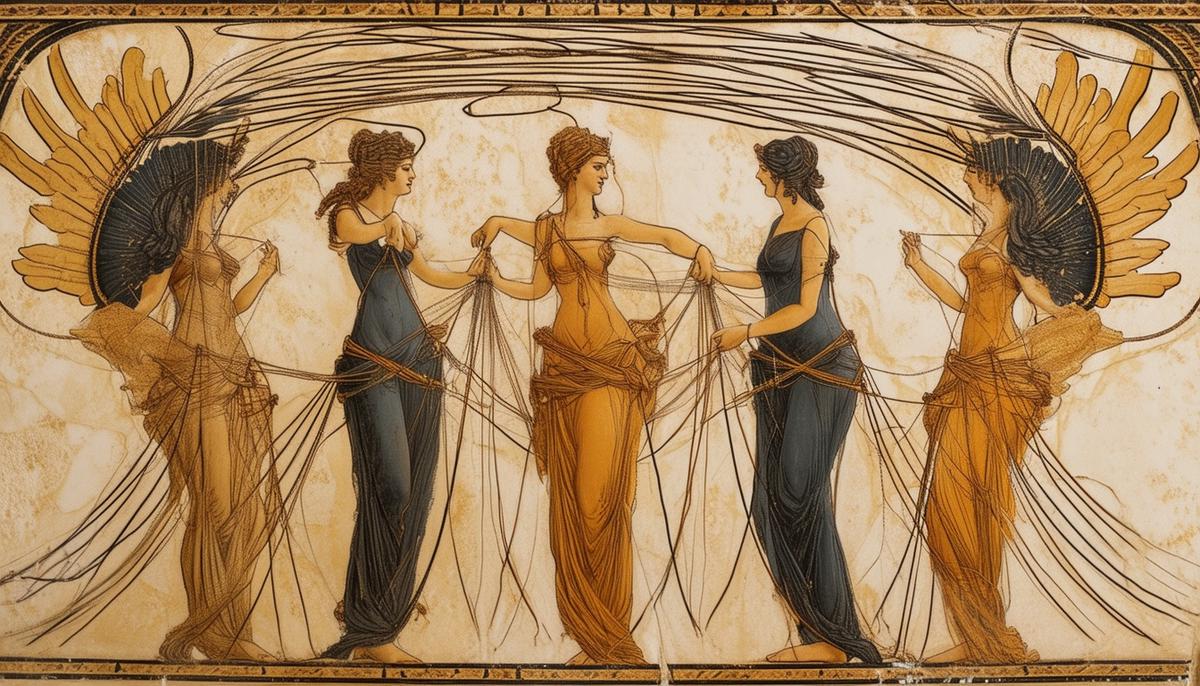
The concept of Fates is a fundamental aspect of Greek mythology. Known as the Moirai, the Fates were three powerful sisters who controlled the destiny of every individual, both mortal and immortal. Their names were Clotho, Lachesis, and Atropos. Each sister had a specific role in the weaving of life’s tapestry, ensuring that every being had a predetermined path. This article will delve into the significance of the Fates, their roles, and how they influenced the lives of gods and humans alike.
The Three Sisters of Fate
The Fates were often depicted as three elderly women who spun the thread of life. Clotho, the youngest sister, was responsible for spinning the thread. She represented the beginning of life and the opportunities that come with it. With her spindle, she created the thread that symbolized a person’s life. Clotho’s role was essential because she determined when a life would begin, which is a powerful position in the grand scheme of existence.
 Gaia
GaiaLachesis, the middle sister, measured the length of the thread. She represented the duration of life and the experiences that a person would go through. Lachesis determined the fate of individuals by deciding how long they would live. Her role was crucial, as it was not just about the length of life, but also the quality of experiences that shaped a person’s character and destiny.
Finally, there was Atropos, the oldest sister, who cut the thread of life. Her action signified the end of a person’s existence. Atropos held the ultimate power over life and death, as she decided when it was time for someone to die. The symbolism of her cutting the thread serves as a reminder that every life has an end, and it is inevitable. Together, the three sisters wove the intricate patterns of fate, intertwining the lives of all beings in the universe.
The Role of the Fates in Greek Mythology
The Fates played a significant role in many Greek myths and stories. They were often seen as impartial and unyielding, embodying the idea that destiny is predetermined and cannot be changed. Even the gods feared the Fates, as their power was absolute. This fear was evident in the tale of Zeus, the king of the gods, who, despite his immense power, could not escape the decrees of the Fates. This highlights the belief that fate governs even the most powerful beings.
 Galeus
One famous story involving the Fates is that of Oedipus. According to the myth, Oedipus was destined to kill his father and marry his mother. Despite his attempts to avoid this fate, he ultimately fulfilled the prophecy. This tale illustrates the futility of trying to escape destiny, a recurring theme in Greek mythology. The Fates, in this context, serve as a reminder that some things are beyond human control, no matter how hard one tries to change their path.
Another important myth is the story of Achilles. According to the Fates, Achilles was destined to die young in battle. His mother, Thetis, tried to protect him by hiding him among women, but he was eventually discovered and joined the Trojan War. His fate was sealed, and he met his end as prophesied. This story reflects the belief in the inevitability of fate, as even the greatest heroes could not escape their destined outcomes.
The Symbolism of the Fates
The Fates symbolize the concept of destiny and the belief that life is a tapestry woven with experiences, choices, and outcomes. Each thread represents an individual’s life, with its unique colors and patterns. The Fates remind us that while we may have some control over our choices, there are larger forces at play that ultimately determine our paths. This duality of free will versus fate is a central theme in many Greek myths.
 Ganymede
Moreover, the Fates can also be seen as a representation of the cycle of life. The act of spinning, measuring, and cutting the thread mirrors the stages of life: birth, growth, and death. This cyclical nature is essential in understanding the human experience. The Fates teach us that life is not just about the moments we cherish but also about the inevitability of change and the acceptance of our mortality.
In art and literature, the Fates have often been depicted with symbols that emphasize their roles. For example, Clotho is often shown with a spindle, Lachesis with a measuring rod, and Atropos with a pair of scissors. These symbols serve to reinforce their identities and functions within the realm of Greek mythology. The visual representation of the Fates helps convey the complex ideas of life, death, and destiny to audiences across generations.
Modern Interpretations of the Fates
In contemporary culture, the Fates continue to resonate with audiences. They are often referenced in literature, film, and art as symbols of destiny and the human condition. The idea that our lives are influenced by forces beyond our control remains relevant today. Many modern stories explore the tension between free will and fate, echoing the themes established in ancient Greek mythology.
For instance, in literature, authors often use the Fates as a metaphor for the struggles of characters who are trying to forge their own paths in life. These characters may grapple with the idea that their destinies are already written, leading to conflicts that drive the narrative forward. This exploration of fate versus free will invites readers to reflect on their own lives and the extent to which they believe in destiny.
In film, the Fates are sometimes portrayed as mysterious figures who guide characters towards their destinies. This representation can be seen in movies that involve prophecy and predetermined outcomes. Such narratives challenge characters to confront their fates, leading to moments of introspection and growth. The Fates serve as a powerful reminder of the complex interplay between choice and destiny in our lives.
The Fates in Art and Literature
The Fates have inspired countless works of art throughout history. In ancient Greece, they were often depicted in pottery, sculpture, and frescoes. Artists captured their essence, emphasizing their roles in weaving the fabric of life. These representations helped convey the importance of the Fates in Greek culture and their impact on the lives of both mortals and gods.
In literature, the Fates have appeared in various forms, from epic poems to modern novels. One of the most notable mentions is in Homer’s Iliad, where the Fates are invoked to emphasize the inevitability of death in battle. The concept of fate is intricately woven into the narrative, influencing the actions and decisions of the characters. This highlights the enduring significance of the Fates in storytelling, as they serve as a reminder of the power of destiny.
In more recent literature, authors have continued to explore the themes of fate and free will. Books like “The Alchemist” by Paulo Coelho and “The Fault in Our Stars” by John Green delve into the complexities of destiny and the choices we make. These modern tales often draw inspiration from the Fates, illustrating how their influence persists in contemporary narratives. The exploration of fate in literature invites readers to ponder their own lives and the forces that shape their journeys.
The Fates in Different Cultures
While the Fates are a significant aspect of Greek mythology, similar concepts of fate and destiny exist in various cultures around the world. For example, in Roman mythology, the Fates were known as the Parcae. They served a similar function, controlling the destinies of individuals. The Parcae were often depicted as three women, paralleling the Greek Moirai in their roles and symbolism.
In Norse mythology, the concept of fate is represented by the Norns. These three female beings also determine the destinies of gods and humans. The Norns weave the threads of life, similar to the Fates, and their influence is profound in the lives of all beings. This cross-cultural comparison highlights the universal themes of fate and destiny that resonate across different mythologies.
In Hindu mythology, the idea of karma reflects a different perspective on fate. Karma emphasizes the importance of actions and their consequences, suggesting that individuals have the power to shape their destinies through their choices. While this differs from the deterministic view of the Fates, it underscores the ongoing human quest to understand the nature of fate and free will.
The Legacy of the Fates
The legacy of the Fates endures in modern society. Their influence can be seen in various aspects of culture, including literature, film, and art. The themes of fate, destiny, and the struggle for control over one’s life continue to resonate with people today. This ongoing fascination reflects the human desire to understand the complexities of existence and the forces that shape our lives.
Moreover, the Fates serve as a reminder of the interconnectedness of all beings. Their roles in weaving the tapestry of life emphasize that every individual is part of a larger narrative. This interconnectedness encourages empathy and understanding, as we recognize that our choices impact not only ourselves but also those around us.
As we navigate our own paths in life, the lessons imparted by the Fates remain relevant. They challenge us to reflect on the choices we make and the potential consequences of those decisions. In doing so, we gain a deeper understanding of our own lives and the intricate web of fate that binds us all together.