WORLD
WORLD
Heike
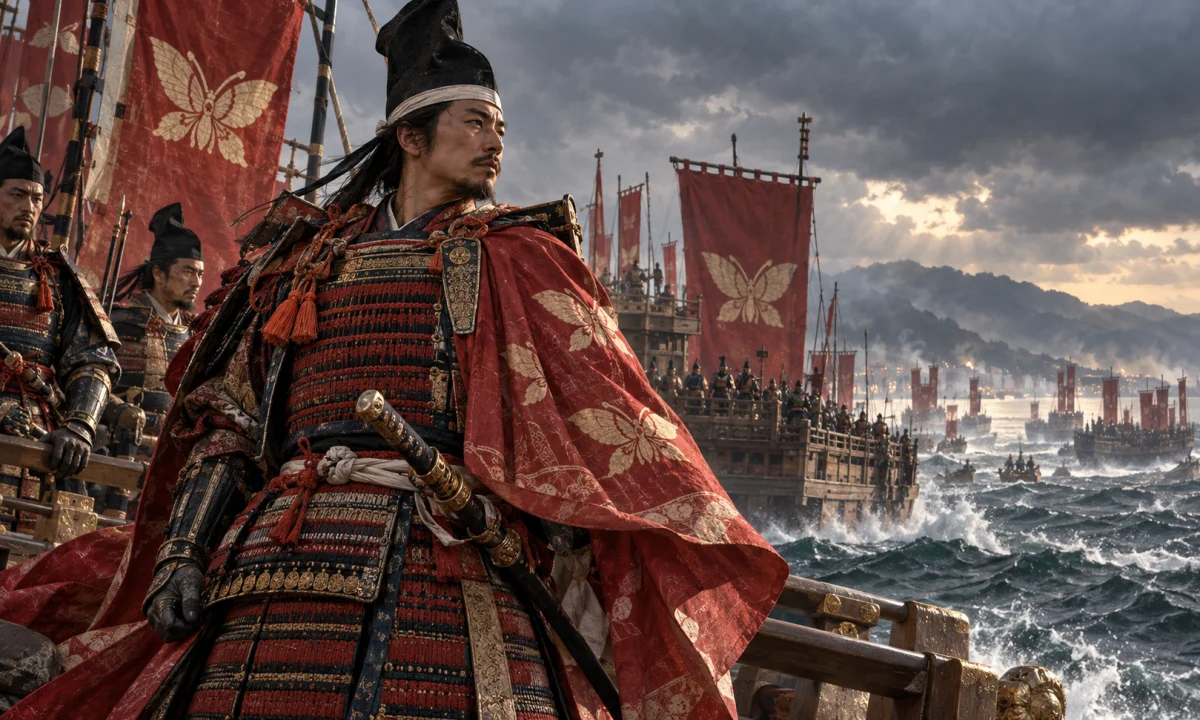
Heike is not the name of a single god, monster or spirit. In Japanese tradition, it usually refers to the Taira clan, a powerful warrior family whose defeat in the Genpei War (1180–1185) became the subject of history, epic literature, temple traditions and ghost stories. The word is also used more broadly for the people, culture and tragic legacy associated with the Taira, especially as portrayed in the medieval epic Heike monogatari, or The Tale of the Heike.
Because the Heike belong to both recorded history and folklore, it is important to distinguish the historical Taira family from the legendary images that developed around them. Some episodes describe real political and military events, while others were shaped by oral performance, Buddhist ideas about impermanence and local traditions concerning the restless dead. In later Japanese culture, “the Heike” can therefore mean a historical clan, an epic subject or a community of spirits connected with a vanished regime.
The name Heike and the Taira clan
Heike is written 平家 and literally means “the Taira house” or “the Taira family.” The character hei is an alternative reading of the character used in Taira, while ke means a household, lineage or family. The term is paired in medieval history with Genji, the name used for branches of the Minamoto clan. The conflict between the Taira and Minamoto is consequently called the Genpei War, using the Chinese-style readings of the two clan names.
The Taira were not a single, uniform family in every period. Several branches of the imperial family received the surname Taira after being removed from the line of direct succession. The branch that became dominant in the late Heian period descended from Taira no Takamochi and established influence in eastern Japan. The Taira lineage that ruled Kyoto politics in the twelfth century is often called the Ise Taira, after the province of Ise, although its members held estates and offices in many regions.
The best-known leader of this branch was Taira no Kiyomori (1118–1181). Through military success, court alliances and marriage connections, Kiyomori brought his family to an extraordinary level of power. His daughter Tokuko became the consort of Emperor Takakura, and their son became Emperor Antoku. This made the Taira closely connected to the imperial court, but it also intensified resentment among rival warriors, court factions and religious institutions.
Historical setting
During the late Heian period, political authority was divided among the imperial court, aristocratic families, powerful Buddhist institutions and provincial warrior houses. The Taira and Minamoto had both served the court as military families, but their rivalry became increasingly dangerous during a series of succession disputes and armed conflicts.
The Taira emerged victorious from the Heiji Disturbance of 1159, in which Taira no Kiyomori defeated the forces associated with Minamoto no Yoshitomo. Kiyomori then became the most influential military figure in Kyoto. His power was not simply that of a warlord ruling independently of the court. He operated through court titles, marriage politics and control of important offices, while also using armed force to protect his position.
Opposition eventually gathered around Minamoto no Yoritomo, who established his base in eastern Japan, and other Minamoto leaders, including Yoshitsune and Noriyori. In 1180, Prince Mochihito issued a call for resistance against the Taira. The resulting conflict spread across Japan and lasted until the naval battle of Dan-no-ura in 1185.
At Dan-no-ura, the Taira fleet was defeated in the waters of the western Inland Sea. Emperor Antoku, still a child, was carried into the sea by members of the Taira court and drowned. His grandmother, Taira no Tokiko, is traditionally said to have taken him in her arms. The defeat ended Taira political dominance and allowed Minamoto no Yoritomo to consolidate the military government later known as the Kamakura shogunate.
The Heike in medieval epic
The main literary form through which the Heike became famous is Heike monogatari. The work does not function like a modern historical chronicle. It combines memories of warfare, court narrative, Buddhist reflection, speeches, battle scenes and stories of individual suffering. Its exact composition history is complex, and the text exists in different manuscript and performance traditions.
For centuries, professional performers known as biwa hōshi recited versions of the tale while accompanying themselves on the biwa, a short-necked Japanese lute. These performers helped preserve and transform stories about the Genpei War. Blind or itinerant reciters were later strongly associated with the Heike tradition, although the historical circumstances of individual performers varied.
The opening passage of the epic expresses its central theme: the sound of the Gion Shōja bells reveals the impermanence of worldly things, and the blossoms of the sala tree remind listeners that the prosperous must eventually fall. The passage is not merely a poetic introduction. It establishes the Buddhist idea of mujō, the impermanence of all conditioned existence, as the moral and emotional framework of the narrative.
In the epic, the Taira are not depicted only as villains, just as their opponents are not portrayed as purely virtuous. Their pride, violence and political ambition contribute to their downfall, but their family members also display loyalty, refinement, courage and tenderness. This mixture of grandeur and vulnerability is one reason the Heike became such a durable subject in Japanese storytelling.
Important figures and episodes
Taira no Kiyomori
Kiyomori is the central architect of Taira power. Traditional accounts portray him as a forceful and sometimes ruthless political leader. The Heike monogatari emphasizes his anger, ambition and attachment to authority, while also presenting him as a man caught within the instability of political fortune.
Later legends sometimes give Kiyomori extraordinary or ominous qualities, including encounters with uncanny beings and signs of karmic punishment. These episodes belong to the moralized and supernatural world of the epic rather than to securely established historical evidence. They portray his suffering as part of a Buddhist explanation of violent power and retribution.
Taira no Shigemori
Kiyomori’s eldest son, Taira no Shigemori, often appears as a more restrained and thoughtful figure than his father. In literary tradition, he recognizes the dangers of the family’s conduct and attempts to moderate Kiyomori’s policies. His illness and death before the final collapse of the Taira contribute to the epic’s sense that the clan is losing its balance and protection.
Shigemori is not necessarily presented in the same way in every historical or literary account. His reputation as a wise and morally perceptive statesman is especially important in the epic tradition, where he serves as a contrast to the excesses associated with Kiyomori.
Taira no Atsumori
The death of Taira no Atsumori is among the most famous episodes connected with the Heike. At the battle of Ichinotani in 1184, the Minamoto warrior Kumagai Naozane encounters a young Taira warrior attempting to reach the sea. The young man is identified as Atsumori, a courtly figure carrying a flute.
Kumagai initially considers sparing him because of his youth and refinement, but circumstances lead to Atsumori’s death. After discovering the flute among the dead, Kumagai is overwhelmed by the contrast between the cultivated life of the young warrior and the brutality of battle. The story became a powerful meditation on mortality, the obligations of warriors and the painful bonds between enemies.
The Atsumori episode was later adapted into Noh drama, where the dead Atsumori appears as a spirit. In that setting, the story becomes more explicitly concerned with remembrance, attachment and the possibility of release from resentment. The Noh play does not simply repeat the historical episode; it reshapes it through Buddhist ideas about the suffering of the dead.
Emperor Antoku and the fall at Dan-no-ura
The child Emperor Antoku occupies a particularly important place in Heike tradition. His presence with the Taira fleet gives the final battle a religious and dynastic significance beyond an ordinary military defeat. According to the famous account, his grandmother Tokiko tells him that beneath the waves lies another imperial palace and carries him into the sea.
The story associates Antoku’s death with the loss of the sacred imperial regalia. The sacred mirror and sacred jewel were said to have been recovered, while the sword was lost in the sea, although accounts differ in their details. These objects belong to the mythology of the Japanese imperial institution, and the Dan-no-ura narrative links the historical defeat of the Taira with a crisis in sacred kingship.
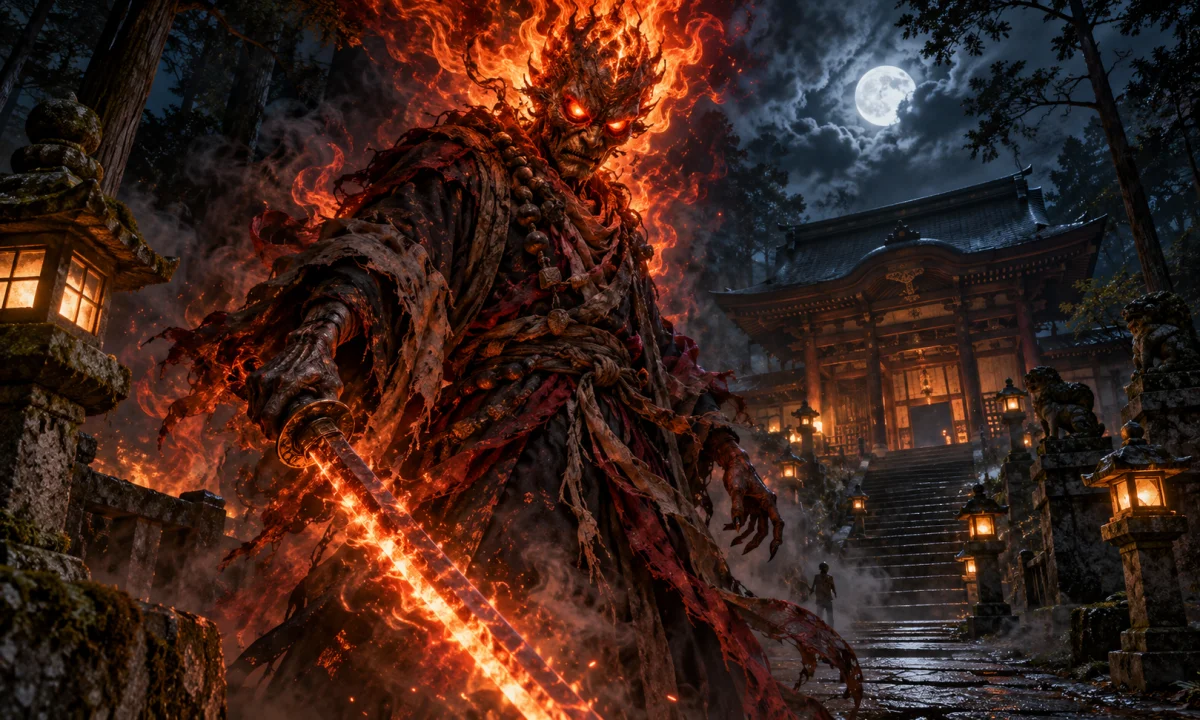
Antoku’s death also gave rise to traditions that the spirits of the drowned Taira continued to inhabit the waters around the battlefield. Such traditions should not be treated as evidence that the historical figures literally survived. They belong to a widespread religious and folkloric pattern in which violent or unquiet deaths create onryō, dangerous spirits capable of causing misfortune unless properly remembered and pacified.
Heike spirits and the religious imagination
In Japanese religious culture, the dead do not automatically become one clearly defined type of supernatural being. Buddhist memorial practice, local shrine traditions and popular beliefs have often overlapped. A person who died violently, without proper rites or while burdened by strong resentment, might be feared as a restless spirit. Public calamity could be interpreted as evidence that such a spirit required ritual attention.
The defeated Taira came to be imagined in this way in various places. Their deaths at sea, the destruction of their family and the disappearance of their political world provided material for legends about haunting and possession. The term goryō is also relevant in Japanese religious history: it refers broadly to an angry or dangerous spirit, often that of a powerful person who died unjustly or violently and whose anger threatened the living.
These categories are not exact equivalents, and not every Heike ghost tradition uses the same terminology. Some stories focus on a particular dead warrior, some on the collective spirits of the drowned, and others on the need for memorial rites. The legends reflect a concern with restoring relations between the living, the dead and the places where traumatic events occurred.
The Heike crabs
Heike crabs are small crabs associated with the waters around the Shimonoseki Strait, near the traditional site of Dan-no-ura. Their shells can appear to bear patterns that resemble a human face. A popular explanation says that these crabs are reincarnated Heike warriors or that the faces represent the clan’s dead.
This is a famous example of folklore connected with the Heike, but it should not be presented as a biological fact or as a belief uniformly held throughout Japan. The resemblance between the shell markings and a human face has encouraged comparison with the drowned warriors, while the surrounding battlefield legends have supplied the supernatural interpretation. Modern discussions sometimes also connect the crabs with natural selection and the preservation of shell shapes that resemble faces, but the Heike association remains a cultural interpretation rather than proof of transformation.
Women, children and the human cost of defeat
Heike tradition is not limited to male warriors. The stories of Taira women and children reveal how the fall of a ruling family affected people who did not determine military policy. Taira no Tokiko, Kenreimon-in and other court women appear in narratives of exile, loss and religious withdrawal. Kenreimon-in, the former imperial consort and mother of Antoku, is traditionally said to have entered religious life after the defeat.
The Heike monogatari frequently contrasts the splendour of court culture with the vulnerability of those who possess it. Fine clothing, music, poetry and ceremonial rank cannot protect the Taira from war. The suffering of women and children is central to the epic’s critique of pride and worldly security, although the text also shapes their experiences through the conventions of medieval Buddhist and courtly literature.
The Taira princesses and court attendants are sometimes remembered through local temple traditions, memorial services and later performing arts. Such traditions vary from place to place. A shrine or temple connected with the Heike may preserve a local genealogy or legend, but a local claim should not automatically be treated as historically proven descent from the entire clan.
Heike and similar names or traditions
Heike should not be confused with Hōjō, Minamoto or other warrior families that later ruled Japan. The Taira were the principal rivals defeated in the Genpei War, whereas the Hōjō became the dominant regents of the Kamakura shogunate after the Minamoto victory. Nor should Heike be treated as another name for the samurai class as a whole. The term refers specifically to the Taira house and its associated tradition.
It is also useful to distinguish the historical Taira clan from the supernatural beings who appear in later stories. A ghost of Atsumori, a group of drowned warriors or a crab interpreted as a Heike survivor is not identical with the historical clan. These figures are products of different genres: historical record, epic, Buddhist tale, Noh drama, local legend and modern folklore.
Cultural significance
The Heike became one of the most influential symbols of impermanence in Japanese culture. Their rise and collapse illustrate how power can be lost even when a family appears invincible. This does not mean that the tradition teaches a simple lesson that all ambition is evil. Rather, it repeatedly places worldly achievement beside death, grief and the instability of political fortune.
Their story also demonstrates how history can become sacred or mythic without turning entirely into mythology. Battles, rulers and dates can be investigated through historical records, while the same events acquire additional meanings through ritual, poetry and tales of the dead. At Dan-no-ura, for example, the historical defeat of a military faction, the end of a courtly world, the death of a child emperor and the haunting of a battlefield coexist within one cultural memory.
Later reception
Heike material continued to develop through Noh, kabuki, puppet theatre, illustrated books, novels, television dramas and other forms of popular storytelling. Works about Atsumori often emphasize the emotional encounter between enemies, while adaptations of Dan-no-ura focus on dynastic tragedy and the fate of the drowned. Later creators may simplify, dramatize or rearrange the original traditions, so an adaptation should not be assumed to represent the medieval epic exactly.
In modern Japan, the Heike remain visible in historical festivals, memorial ceremonies, museums, school literature and tourism connected with sites of the Genpei War. The continuing interest is not based solely on battles. It also comes from the combination of political history, family tragedy, Buddhist reflection, performing arts and legends about spirits who cannot easily leave the places where they died.