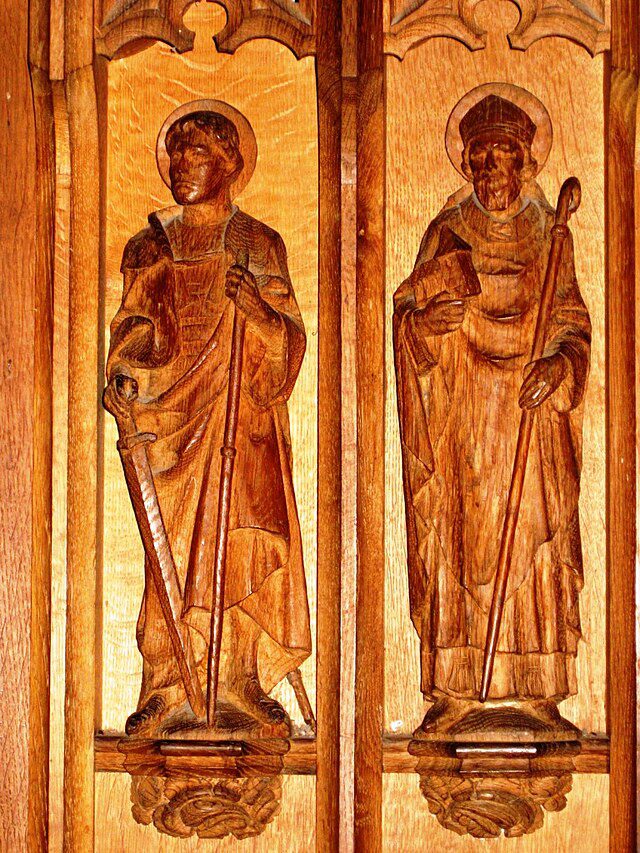
St. Cedd was a prominent figure in early Christian history, particularly in England during the 7th century. He was a monk and a bishop who played a crucial role in the spread of Christianity among the Anglo-Saxon tribes. His life and works are significant in understanding the Christian mythology that developed during this period. The story of St. Cedd is one of devotion, missionary work, and the challenges faced by early Christians in a pagan society.
The Early Life of St. Cedd
 St. Cecilia
St. Cedd was born around the year 620 in Northumbria, England. He was one of the many siblings in his family, which included other notable saints such as St. Chad, his brother. From a young age, Cedd showed a keen interest in religious matters. He initially studied under the guidance of St. Aidan at the monastery of Lindisfarne, which was known for its strong commitment to spreading Christianity. This period of his life laid the foundation for his future missionary endeavors.
During his time at Lindisfarne, Cedd immersed himself in the teachings of Christianity. He learned about the Bible and the teachings of Jesus Christ, which deeply influenced his life. His dedication to learning and spirituality was evident, and he became known for his piety and commitment to the Christian faith. This early education was critical, as it prepared him for the challenges he would face later as a missionary.
The Missionary Work of St. Cedd
St. Cedd’s missionary work began when he was sent to evangelize the pagan tribes in the region of Essex. In 653, he was appointed by St. Aidan to lead a mission to convert the East Saxons. This mission was particularly challenging, as the tribes were deeply rooted in their pagan beliefs. Cedd approached his work with patience and understanding, recognizing the importance of building relationships with the people he aimed to convert.
 St. Catherine Of Sweden
Upon arriving in Essex, Cedd established a church in the town of Tilbury. He preached the message of Christianity, focusing on the love and mercy of God. His ability to connect with the local population was remarkable. Cedd’s genuine compassion and respect for the local customs helped him gain the trust of the people. Many began to embrace Christianity, and his efforts were met with success.
Key Achievements in Essex
- Establishment of a church in Tilbury
- Conversion of many local tribes to Christianity
- Promotion of education and religious teachings
In addition to his preaching, Cedd also focused on educating the new converts. He believed that understanding the Christian faith was essential for true conversion. Cedd taught the basics of Christianity, including the importance of prayer, the sacraments, and the teachings of Jesus. His dedication to education helped to solidify the faith of those who converted, ensuring that Christianity would take root in the region.
The Role of St. Cedd as a Bishop
St. Cedd was consecrated as a bishop around 664 AD, a significant milestone in his life. His elevation to bishopric came after the Synod of Whitby, a crucial meeting that addressed the differences between the Celtic and Roman practices of Christianity. Cedd played a vital role in this synod, advocating for the Roman methods of calculating Easter and other ecclesiastical matters. His leadership and theological understanding were recognized, and he was appointed to oversee the church in the East Saxon region.
 St. Catherine Of Siena
As a bishop, St. Cedd was responsible for the spiritual well-being of his flock. He traveled extensively throughout his diocese, offering guidance and support to the local clergy and laity. His pastoral care was characterized by compassion and dedication. Cedd often visited remote villages, ensuring that even the most isolated communities had access to the teachings of Christianity.
Pastoral Duties and Responsibilities
- Conducting religious services and sacraments
- Providing spiritual guidance to the clergy
- Addressing the needs of the community
St. Cedd’s pastoral duties also included addressing social issues within the community. He was known for his commitment to helping the poor and marginalized. His efforts to care for the needy were an essential aspect of his ministry. Cedd’s actions reflected the core teachings of Christianity, emphasizing love, compassion, and service to others.
The Legacy of St. Cedd
St. Cedd’s influence extended beyond his lifetime, leaving a lasting legacy in the regions where he preached. His work contributed significantly to the establishment of Christianity in England. The churches he founded continued to flourish, and many of his converts became key figures in the Christian community. The impact of his missionary work can still be felt today, as many churches and communities honor his contributions.
After his death in 664 AD, St. Cedd was venerated as a saint. His feast day is celebrated on October 26th, a date that holds significance for many Christians. Various churches and religious institutions continue to commemorate his life and works, recognizing his role in shaping the early Christian landscape in England.
Commemoration and Influence
- Feast day celebrated on October 26th
- Veneration as a saint in various Christian traditions
- Continued influence on Christian education and missionary work
St. Cedd’s legacy is also reflected in the continued emphasis on education within the Christian faith. He believed in the importance of teaching and learning as vital components of spiritual growth. Many modern Christian educational institutions trace their roots back to the principles established by early saints like Cedd. His commitment to spreading knowledge and understanding remains a guiding principle in Christian education today.
St. Cedd in Christian Mythology
In Christian mythology, St. Cedd is often depicted as a symbol of faith and perseverance. His life story illustrates the challenges faced by early Christians as they sought to spread their beliefs in a predominantly pagan world. The narratives surrounding his life highlight themes of courage, dedication, and the transformative power of faith. These elements contribute to his status as a revered figure in Christian mythology.
St. Cedd’s interactions with local tribes are often portrayed as moments of divine intervention and guidance. His ability to connect with people from different backgrounds serves as a reminder of the universal message of Christianity. The stories of his miracles and teachings continue to inspire many, reinforcing the idea that faith can transcend cultural barriers.
Symbolism and Themes
- Faith and perseverance in the face of challenges
- Transformation through belief and education
- Universal message of love and compassion
Additionally, St. Cedd is often associated with the establishment of peace among conflicting tribes. His efforts to bring people together under the banner of Christianity illustrate the potential for faith to foster unity and reconciliation. This aspect of his legacy resonates with many contemporary issues, emphasizing the relevance of his teachings in today’s world.
The Impact of St. Cedd’s Life on Modern Christianity
The life and works of St. Cedd have had a profound impact on modern Christianity. His emphasis on education and pastoral care has influenced the way churches operate today. Many Christian denominations prioritize education as a means of spiritual growth, following the example set by St. Cedd and other early saints. His commitment to serving the community continues to inspire individuals and organizations to engage in charitable works.
Moreover, St. Cedd’s approach to missionary work serves as a model for contemporary evangelism. His emphasis on building relationships and understanding the local culture is a practice that many missionaries adopt today. This relational approach helps to foster genuine connections and encourages a more profound acceptance of the Christian message.
Modern Practices Inspired by St. Cedd
- Focus on education within church communities
- Relational approach to missionary work
- Commitment to community service and outreach
St. Cedd’s legacy is also evident in the numerous churches and institutions named in his honor. These places serve as reminders of his contributions to the Christian faith and continue to promote the values he espoused. Through these institutions, the teachings of St. Cedd live on, inspiring future generations to follow his example of faith and service.
The Veneration of St. Cedd
The veneration of St. Cedd extends beyond his feast day. Many Christians participate in various rituals and practices to honor his memory. Pilgrimages to sites associated with his life, such as Tilbury and other locations in Essex, are common among those seeking spiritual connection. These journeys allow individuals to reflect on St. Cedd’s life and draw inspiration from his unwavering faith.
In addition to pilgrimages, the use of icons and images depicting St. Cedd is prevalent in many Christian communities. These representations serve as reminders of his life and contributions. They are often used in worship settings, encouraging believers to seek guidance from his example as they navigate their spiritual journeys.
Rituals and Practices
- Pilgrimages to sites associated with St. Cedd
- Use of icons and images in worship
- Community events to celebrate his life
Community events celebrating St. Cedd’s life are also common. These gatherings often include prayer services, educational programs, and discussions about his teachings. Such events provide an opportunity for Christians to come together, share their faith, and reflect on the importance of St. Cedd’s contributions to Christianity.
The Significance of St. Cedd in Ecumenical Dialogues
St. Cedd’s life and works have also played a role in ecumenical dialogues among various Christian denominations. His commitment to unity and understanding is a theme that resonates with many who seek to bridge the gaps between different Christian traditions. His legacy serves as a reminder of the importance of collaboration and mutual respect among believers.
In discussions about the historical development of Christianity, St. Cedd is often referenced as a figure who exemplified the early church’s commitment to spreading the Gospel while respecting local cultures. His approach serves as a model for contemporary ecumenical efforts, emphasizing the need for dialogue and cooperation in addressing shared challenges.
Contributions to Ecumenical Dialogues
- Exemplifying unity among diverse Christian traditions
- Encouraging respectful dialogue and collaboration
- Serving as a model for contemporary ecumenical efforts
St. Cedd’s influence in ecumenical dialogues highlights the importance of understanding the historical context of Christianity. By recognizing the contributions of early figures like Cedd, modern Christians can better appreciate the rich tapestry of their faith and work towards greater unity in diversity.
Conclusion of St. Cedd’s Journey
The journey of St. Cedd is one marked by faith, dedication, and a commitment to serving others. His life serves as an inspiration to many, reminding believers of the importance of education, compassion, and perseverance in their spiritual journeys. The impact of his work continues to be felt in the Christian community today, as individuals strive to embody the values he espoused.
As we reflect on the life of St. Cedd, we are encouraged to carry forward his legacy of faith and service. His story serves as a reminder that even in the face of challenges, the transformative power of love and compassion can lead to lasting change. The teachings of St. Cedd inspire us to be agents of hope and unity in our communities, just as he was in his time.