 WORLD
WORLD
Irish mythology
Articles about Irish mythology within Europe.
Last articles
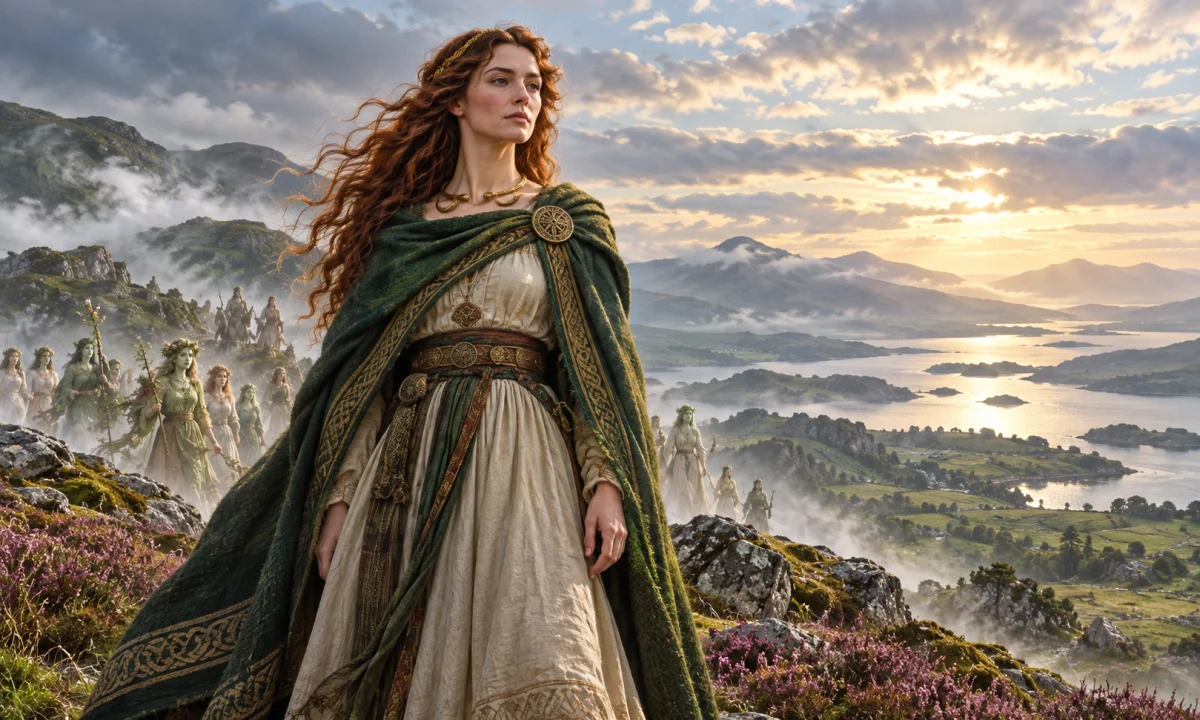
Fódla
Fódla is a figure of Irish mythology associated with the land of Ireland and with the sovereignty of the country. In medieval Irish tradition, she is one of the three sisters who represent or personify Ireland, alongside…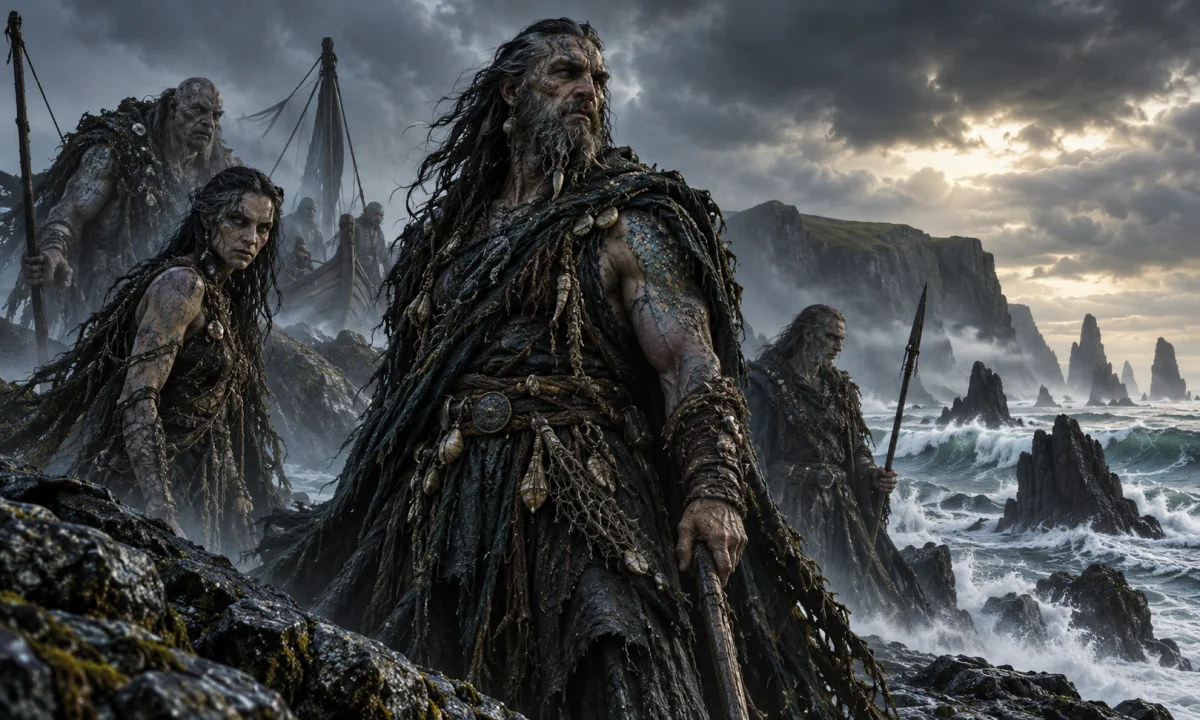
Fomorians
The Fomorians are a powerful and often hostile group of supernatural beings in Irish mythology. In Irish tradition they appear as ancient inhabitants, rulers, raiders and enemies of other peoples who claim Ireland, espec…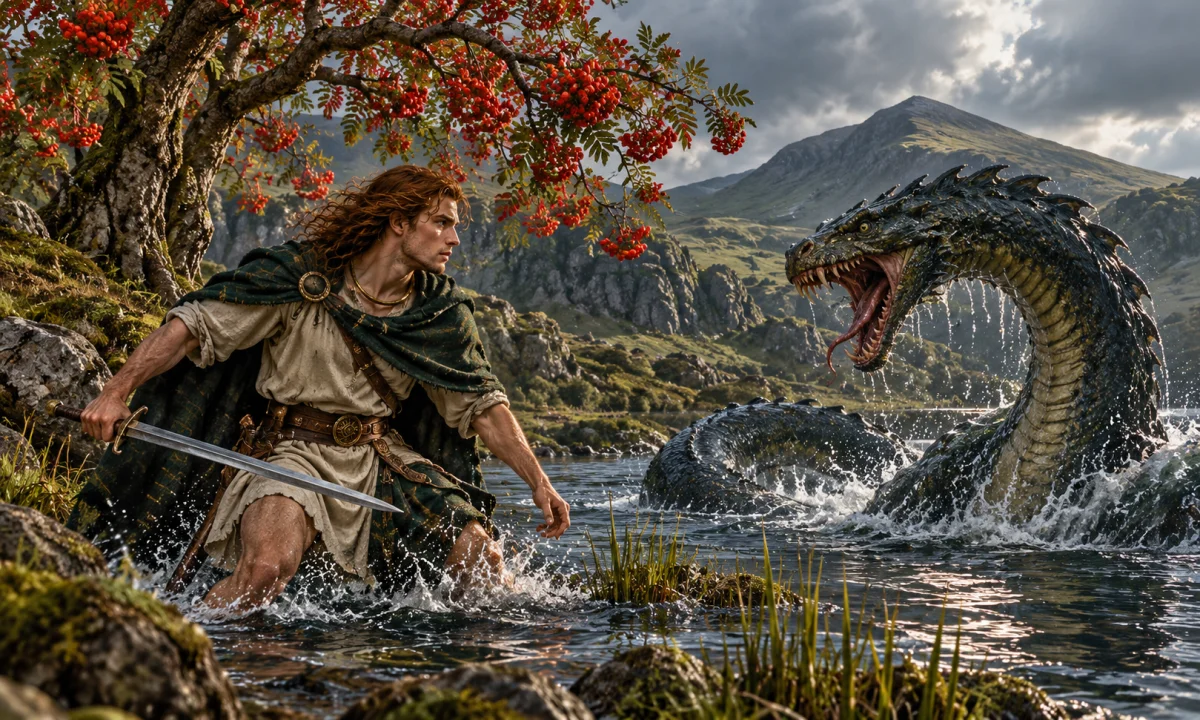
Fraoch
Fraoch, also written Fróech or Froech, is a heroic figure of medieval Irish literature associated especially with the tale Táin Bó Fraích, usually translated as The Cattle Raid of Fraoch. He belongs to the heroic world o…
Fúamnach
Fúamnach is a woman of the supernatural world in Irish mythology, best known as the first wife of Midir, a powerful Otherworld figure associated with Brí Léith. She appears chiefly in the medieval Irish tale Tochmarc Éta…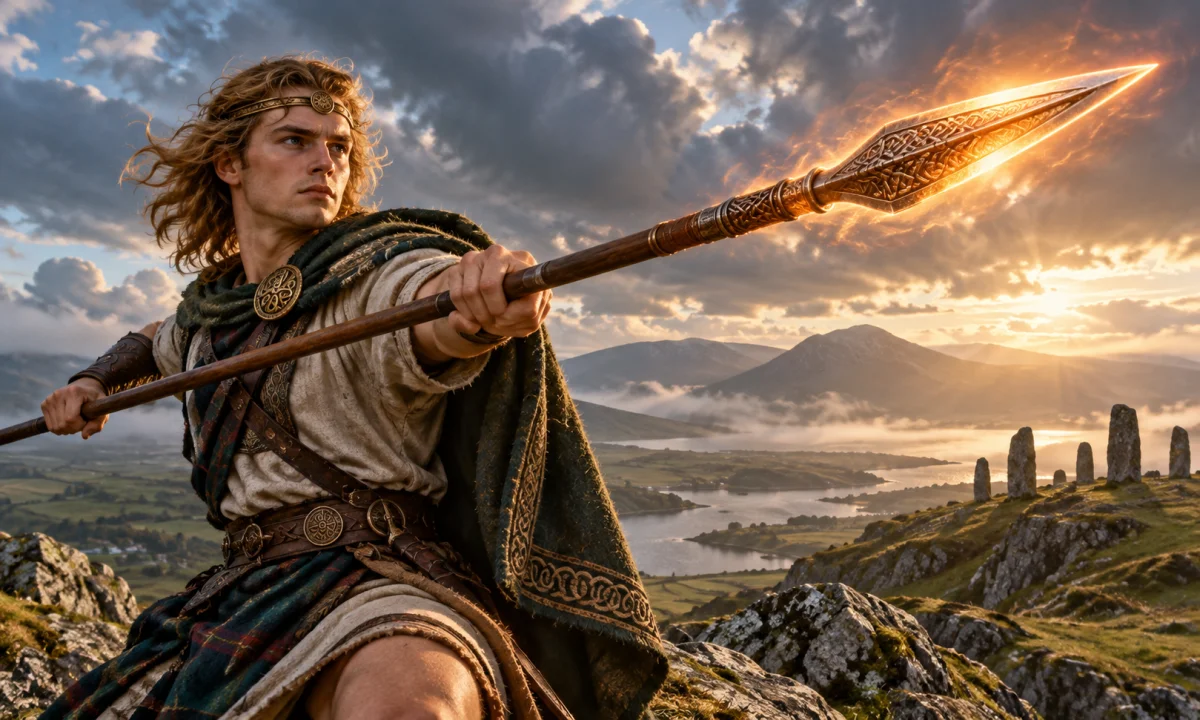
Gae Assail
Gáe Assail is a magical spear associated with Lugh, the renowned hero and champion of the Tuatha Dé Danann in Irish mythological literature. It is usually counted among the Four Treasures of the Tuatha Dé Danann, a group…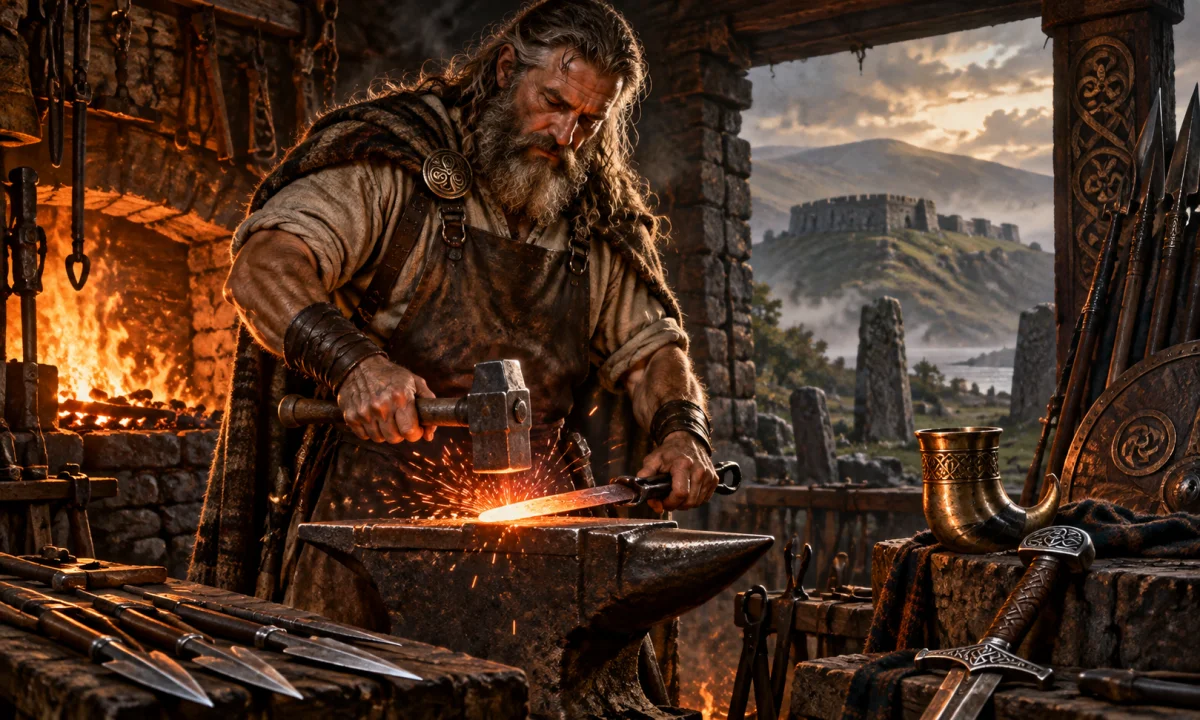
Goibhniu
Goibhniu is a divine smith of Irish mythology and one of the most important craftsmen of the Tuatha Dé Danann, the supernatural people who appear in medieval Irish literature as rulers of Ireland before the coming of the…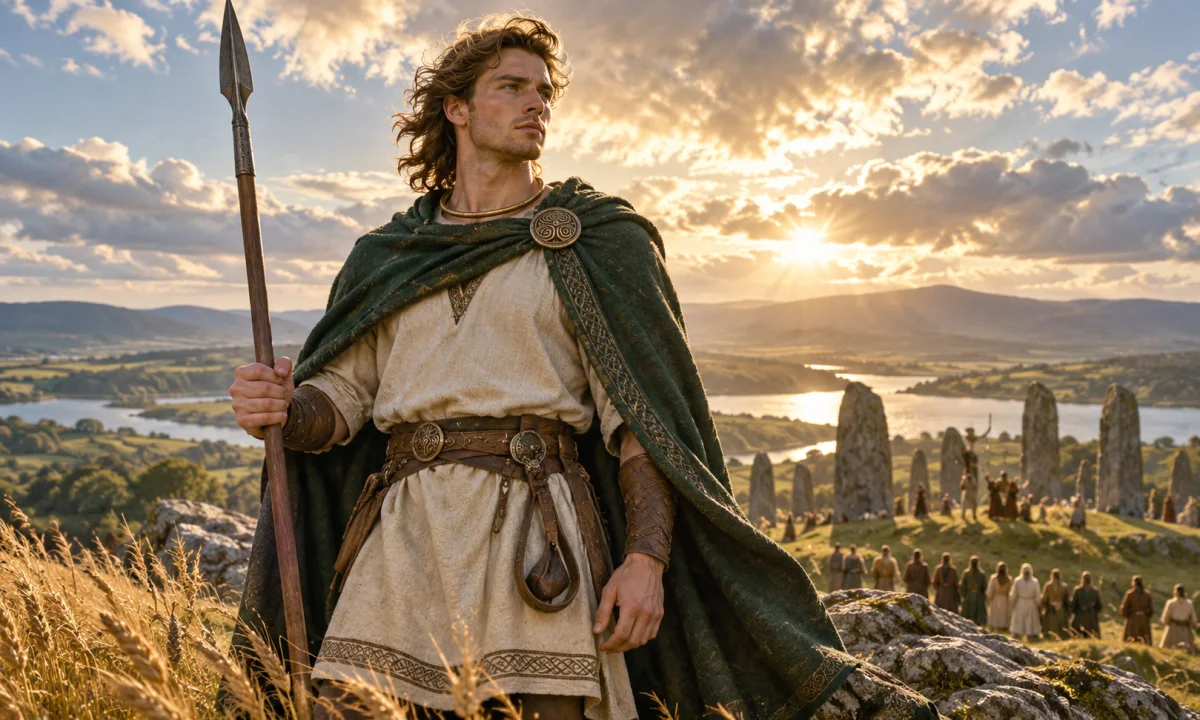
Lugh
Lugh is one of the most prominent figures in Irish mythology. A member of the Tuatha Dé Danann, the supernatural people who become associated with Ireland’s pre-Christian divine world, he is celebrated as a warrior, rule…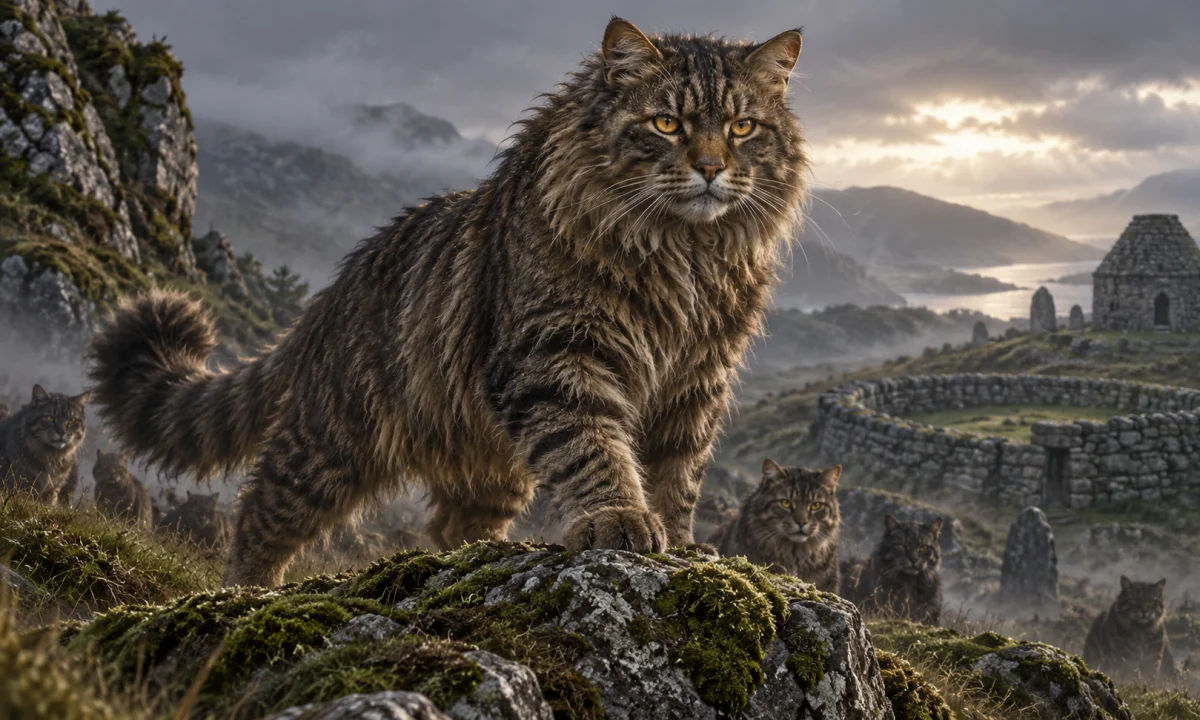
Irusan
Irusan is a legendary cat associated with Irish folklore and with the tradition of the King of the Cats. He is generally described in later retellings as an unusually large or powerful cat who rules over other cats. Unli…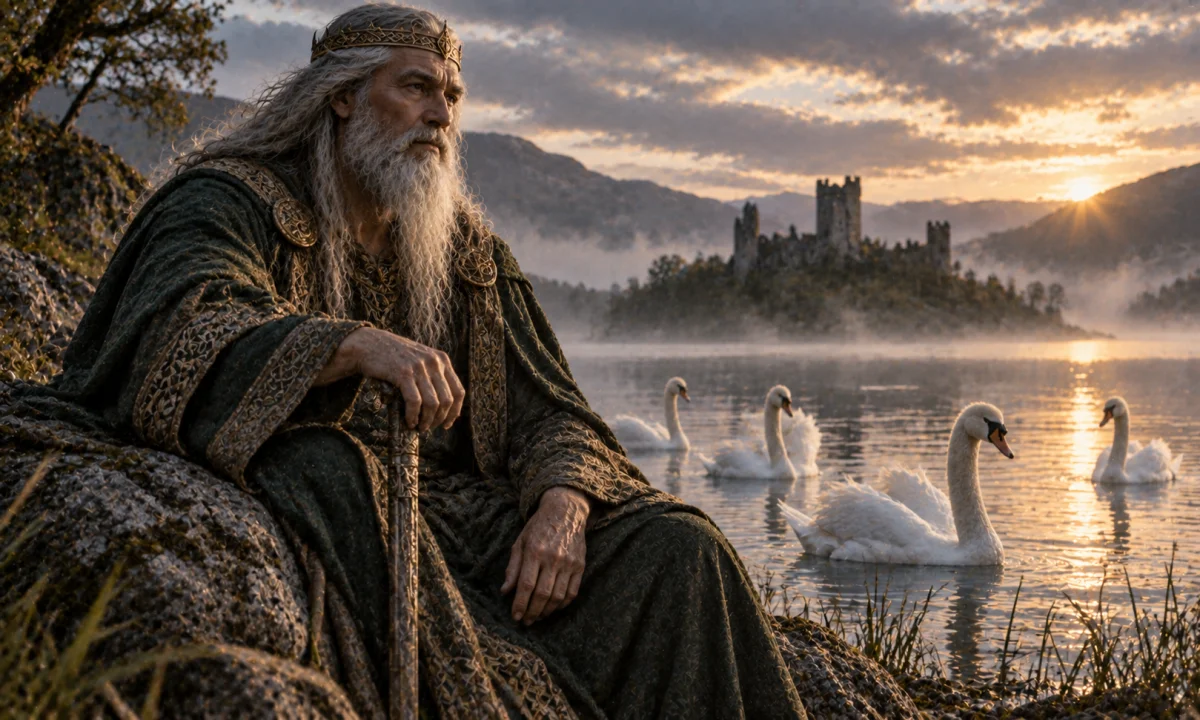
Lir
Lir is a figure of Irish mythology best known as the father of the Children of Lir, the four children transformed into swans in one of Ireland’s most famous tragic legends. He is also associated with the sea through the …
Mac Cécht
Mac Cécht is a name associated with more than one figure in medieval Irish literature. Most often, it identifies a member of the Tuatha Dé Danann, the supernatural people who appear in Ireland’s mythological history, and…
Macha
Macha is a name associated with several important female figures in Irish mythology and medieval Irish tradition. The name belongs to more than one character, and the surviving stories do not always present them as a sin…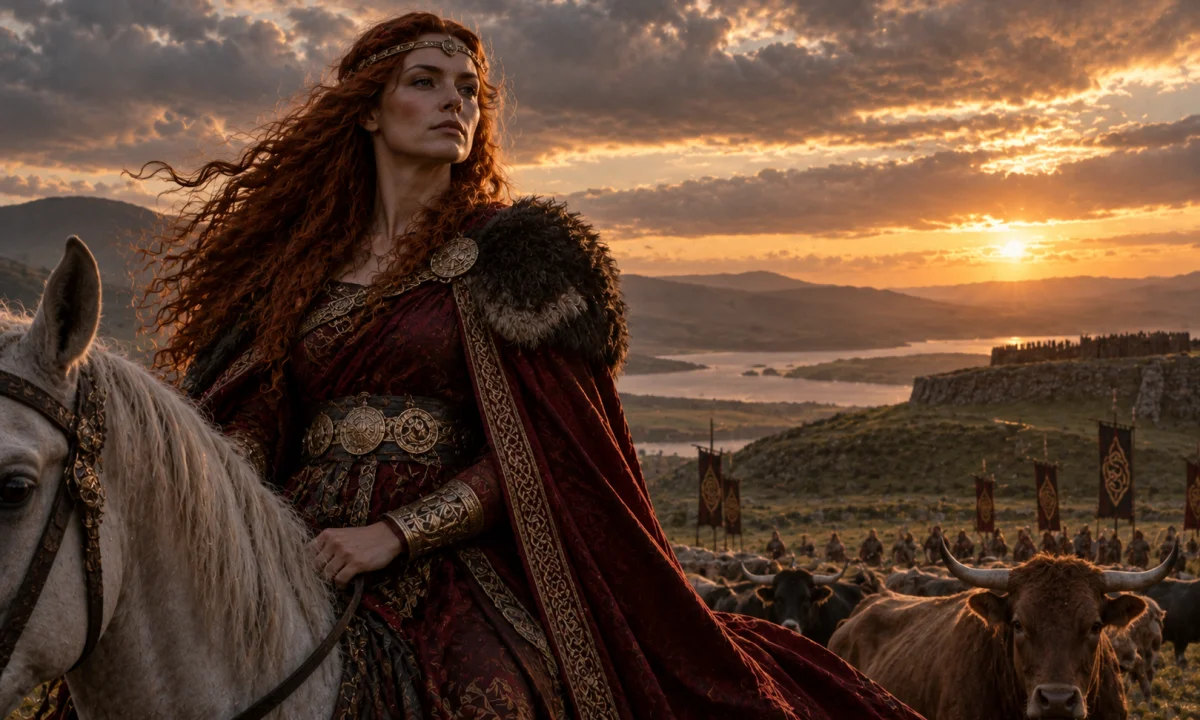
Medb
Medb is one of the most powerful and controversial figures in Irish mythology. Usually known in English as Maeve, she is the queen of Connacht and a central character in the Ulster Cycle, one of the four major narrative …Irish mythology: myths, traditions and legends
Irish mythology encompasses the sacred narratives, heroic traditions, supernatural beings and legendary histories preserved in the literature and folklore of Gaelic Ireland. It includes stories of the Tuatha Dé Danann, the Fomorians, Cú Chulainn, Finn mac Cumhaill, otherworldly women, sacred kings and ancestral peoples said to have shaped the island’s past. These traditions were not recorded as a single pre-Christian scripture or organised into one consistent pantheon. Most surviving narratives were written in medieval Christian Ireland, often centuries after the religious settings they appear to reflect.
The academic term mythology does not imply that the stories were regarded simply as falsehoods. They carried meanings connected with ancestry, landscape, kingship, social obligation, warfare and relationships with the supernatural. Their surviving forms combine inherited oral tradition, literary composition, biblical chronology, political genealogy and Christian interpretation. Irish mythology must therefore be approached as a layered body of material rather than a transparent record of ancient pagan belief.
Scope and cultural setting
Irish mythology belongs primarily to the Gaelic cultural and linguistic traditions of Ireland. It is related to Scottish Gaelic tradition through shared language and historical contact, but the two should not be treated as completely interchangeable. It also differs from Welsh and wider Brittonic mythology, despite their broader connections within the Celtic-speaking world.
The expression Celtic mythology is useful for comparison, but there was no single Celtic religion shared unchanged from Ireland to continental Europe. Irish gods and heroes are known mainly from medieval vernacular literature, while Gaulish and other continental traditions survive largely through inscriptions, archaeology and descriptions by Greek and Roman authors. Similar names or themes can suggest historical relationships, but direct equivalence requires evidence.
Pre-Christian Ireland was divided among numerous kingdoms and local communities. Political boundaries changed repeatedly, and sacred traditions could be associated with particular dynasties, provinces, rivers, hills or ceremonial centres. Medieval writers sometimes reorganised these local materials into narratives concerning the whole island.
Medieval sources and oral transmission
The earliest extensive Irish mythological narratives survive in manuscripts written by Christian scribes. Important collections include the Book of the Dun Cow, the Book of Leinster and later compilations preserving prose tales, poetry, genealogies and place-name traditions. The surviving manuscripts are often later than the works they contain, and individual narratives may preserve linguistic or thematic elements from earlier periods.
Christian scholars did not merely copy pagan stories without alteration. They edited, interpreted and sometimes attempted to place traditional figures within biblical or universal history. Gods could be presented as ancient human rulers, magicians, fallen peoples or inhabitants of a distant heroic age. At the same time, scribes preserved material that might otherwise have disappeared.
Oral tradition remained fundamental. Professional poets, storytellers and learned families maintained genealogies, praise poetry, legal knowledge and heroic narratives. A written version records one stage in a story’s development rather than its original or definitive form.
Differences between manuscripts may involve names, genealogies, motives and entire episodes. These variations should not always be corrected into one standard narrative. They reveal that Irish mythological tradition remained flexible across regions and historical periods.
The traditional narrative cycles
Modern scholarship commonly organises medieval Irish literature into several broad cycles. These categories help readers navigate the material, but medieval authors did not necessarily conceive of every story through the same system.
The Mythological Cycle concerns successive peoples associated with the settlement and supernatural history of Ireland, especially the Tuatha Dé Danann and their conflicts with the Fomorians. The Ulster Cycle centres on the court of Conchobar mac Nessa, the warriors of the Ulaid and the achievements of Cú Chulainn.
The Fenian Cycle, also called the Finn Cycle, follows Finn mac Cumhaill and the warrior band known as the Fianna. The Cycles of the Kings contain legends concerning rulers, dynasties and the moral or supernatural conditions of kingship. Many tales cross these boundaries or combine heroic, mythological and historical elements.
Lebor Gabála Érenn and the settlement of Ireland
Lebor Gabála Érenn, commonly translated as the Book of the Taking of Ireland or Book of Invasions, presents a sequence of peoples said to have occupied Ireland before the ancestors of the Gaels. Its groups include the people of Cessair, Partholón, Nemed, the Fir Bolg, the Tuatha Dé Danann and the Milesians.
This work should not be read as a factual record of prehistoric migrations. It is a medieval learned synthesis combining native traditions, genealogy, biblical history and models borrowed from Christian chronicles. Its authors sought to place Ireland within a universal account of human descent after the biblical flood.
Some figures and episodes may preserve older mythological material, but the complete sequence is a literary construction developed over time. Attempts to identify every invasion with a specific archaeological population are generally too speculative.
The final conflict between the Tuatha Dé Danann and the Milesians explains the transfer of visible rule to the Gaelic ancestors. The Tuatha Dé Danann withdraw into the hills and otherworldly places, allowing medieval tradition to connect divine beings of the past with the later inhabitants of the síd.
The Tuatha Dé Danann
The Tuatha Dé Danann are among the central supernatural peoples of Irish mythology. Their name is commonly interpreted as the people or tribe of the goddess Danu, although Danu herself is poorly documented in surviving Irish sources. The relationship between the name and a clearly defined mother goddess remains uncertain.
Medieval texts describe the Tuatha Dé Danann as powerful beings skilled in magic, craftsmanship, poetry, healing and warfare. They arrive in Ireland, defeat the Fir Bolg and later fight the Fomorians. Although Christian writers sometimes portray them as ancient humans or magicians, many of their members possess characteristics associated with pre-Christian divinities.
The group includes figures such as the Dagda, Brigid, Nuada, Lugh, Dian Cécht, Goibniu, Ogma and the Morrígan. Their identities vary between texts, and they do not form a stable pantheon with universally defined roles. Family relationships and titles can change according to the source.
The Tuatha Dé Danann are often presented in modern fantasy as a uniform race of fairies or elves. Medieval Irish texts portray them more broadly as a powerful supernatural people connected with sovereignty, knowledge, artistic skill and the otherworld.
The Fomorians and supernatural opposition
The Fomorians are a diverse group of threatening or rival beings associated with conflict, oppression and destructive power. Some appear monstrous, while others possess noble or human-like qualities. They cannot be defined simply as demons, giants or embodiments of chaos.
In the Second Battle of Mag Tuired, the Fomorian ruler Bres governs the Tuatha Dé Danann unjustly, and Balor threatens them with a destructive eye. Lugh, who possesses both Tuatha Dé and Fomorian ancestry, leads the opposition and kills Balor.
The conflict is sometimes interpreted as a struggle between forces of order and chaos or between agricultural society and dangerous natural powers. Such readings can be useful, but the surviving narrative also addresses kingship, tribute, ancestry, skill and political legitimacy.
The Fomorians are not always external enemies. Their family connections with the Tuatha Dé Danann complicate any strict division between two opposing supernatural races.
Lugh and mastery of many arts
Lugh is one of the most prominent figures associated with the Tuatha Dé Danann. He is linked with kingship, warfare, skill and excellence in multiple arts. His epithet Samildánach describes him as possessing many talents.
In the narrative of the Second Battle of Mag Tuired, Lugh arrives at Tara and offers a succession of skills, including those of warrior, craftsman, poet and healer. He is admitted when he demonstrates that no other individual possesses all of them together.
Lugh leads the Tuatha Dé Danann against the Fomorians and defeats his grandfather Balor. This genealogy places him between the opposing groups and makes his victory more complex than a battle against an entirely foreign enemy.
The festival of Lughnasa bears his name and was associated with seasonal gatherings, games and harvest-time observances. The historical relationship between the mythological Lugh and every later Lughnasa custom varies by region and cannot be reconstructed in complete detail.
The Dagda, abundance and authority
The Dagda is a major figure whose name is usually understood as meaning the good god, with good referring to excellence or effectiveness rather than simple moral virtue. He is associated with abundance, knowledge, protection, fertility and leadership.
His attributes include a great club capable of killing and restoring life, a cauldron that does not leave the deserving unsatisfied and a harp connected with the ordering of seasons or emotions. These objects appear in different literary contexts and should not be treated as a fixed inventory defined by one canonical source.
The Dagda can appear dignified and powerful, but some narratives also present him through humour, enormous appetite and sexual episodes. This combination reflects a figure whose authority includes both cosmic power and bodily abundance.
He is frequently connected with other members of the Tuatha Dé Danann, including the Morrígan and his son Óengus. His residence is associated in particular with Brú na Bóinne, although narratives differ over the ownership and transfer of the site.
Brigid and the problem of continuity
Brigid is associated in medieval tradition with poetry, healing, craftsmanship and learned skill. One source describes multiple figures named Brigid or several aspects connected with these domains, making it difficult to reconstruct one definitive pre-Christian identity.
Saint Brigid of Kildare became one of Ireland’s most important Christian saints. Scholars and popular writers have long debated the relationship between the saint and the earlier divine figure. Shared names, associations with fire and the importance of Kildare make historical continuity plausible in some form, but the evidence does not support treating the saint simply as a pagan goddess disguised as a Christian figure.
The festival of Imbolc and later customs associated with Saint Brigid show how religious practices can develop through continuity, reinterpretation and Christian devotion. Each custom requires individual historical examination rather than one universal explanation.
The Morrígan and the complexities of identity
The Morrígan is connected with warfare, sovereignty, prophecy and the approach of death. She appears in several forms and may overlap with figures such as Badb, Macha and Nemain. The precise relationship among these names differs between texts.
She frequently appears near battlefields, sometimes in the form of a crow or raven-like bird, and predicts destruction or victory. Her role is not simply that of a goddess of war. She also tests heroes, influences sovereignty and participates in the larger ordering of conflict.
In the Ulster Cycle, she encounters Cú Chulainn, offers or challenges a relationship with him and later opposes him in transformed shapes. At his death, a bird settling upon him signals that he can no longer resist his enemies.
Modern occult and popular representations often standardise the Morrígan as one fixed triple goddess. Medieval Irish sources are more complicated and do not provide one consistent system matching every modern reconstruction.
The Ulster Cycle and heroic society
The Ulster Cycle presents a heroic world centred on Emain Macha and the court of King Conchobar mac Nessa. Its narratives involve cattle wealth, honour, feasting, rivalry, fosterage, single combat and obligations between rulers and warriors.
The surviving stories combine mythological elements with memories of an imagined heroic past. Scholars have sometimes compared their society with Iron Age Ireland, but the texts were shaped by medieval authors and cannot be treated as direct documentary records of pre-Christian life.
The central work is Táin Bó Cúailnge, the Cattle Raid of Cooley. Queen Medb of Connacht launches an invasion of Ulster to seize the great bull Donn Cúailnge. A supernatural debility affects the warriors of Ulster, leaving the young Cú Chulainn to delay the invading army through a succession of combats.
The conflict begins through questions of wealth, status and rivalry between Medb and her husband Ailill. It expands into a destructive war in which heroic reputation repeatedly clashes with kinship, friendship and social obligation.
Cú Chulainn and the limits of heroism
Cú Chulainn is the greatest warrior of the Ulster Cycle. Born as Sétanta, he receives his better-known name after killing the guard dog of the smith Culann and offering to replace it until another can be raised. The name is commonly interpreted as the Hound of Culann.
His supernatural father is usually identified as Lugh, while his mother is Deichtine. The surviving versions of his birth differ, reflecting the development of his legend rather than one stable biography.
In battle, Cú Chulainn experiences the ríastrad, a terrifying bodily distortion or battle frenzy. Modern translations sometimes call it a warp-spasm, but its violent transformations do not fit neatly into modern categories of shape-shifting or berserker rage.
Cú Chulainn’s strength is balanced by tragic limitations. He is bound by obligations known as geasa, becomes caught between conflicting duties and ultimately dies after his protections are broken. His story celebrates extraordinary courage while showing the destructive cost of heroic identity.
Medb, sovereignty and political ambition
Queen Medb is ruler of Connacht and one of the central figures of the Táin. She is politically ambitious, sexually independent and determined to equal or surpass her husband in wealth and authority.
Medb should not be reduced to a villain responsible for an unnecessary war. Her character expresses concerns involving sovereignty, status, desire and the exercise of female power within heroic literature. Different texts present her with varying degrees of criticism and admiration.
Some scholars have proposed that Medb preserves features of an earlier sovereignty goddess whose union with a ruler legitimised kingship. The linguistic and narrative evidence makes this a significant interpretation, but the literary queen cannot be treated simply as a transparent survival of one ancient deity.
Geasa, honour and binding obligations
A geis, plural geasa, is a binding requirement or prohibition placed upon a person. It may protect a hero, define identity or establish a condition that cannot be violated without serious consequences.
Geasa frequently create tragic conflicts because two obligations can become impossible to obey simultaneously. Cú Chulainn is forbidden to eat the flesh of a dog but is also constrained by expectations of hospitality. His enemies exploit this tension before his final battle.
These restrictions should not be understood merely as magical weaknesses resembling rules in modern fantasy. They express the power of speech, social duty and fate within Irish narrative.
Finn mac Cumhaill and the Fianna
The Fenian Cycle concerns Finn mac Cumhaill and the Fianna, bands of warriors and hunters who operate beyond ordinary settled society while remaining connected to kings and communities. Their stories combine combat, hunting, poetry, romance and encounters with the otherworld.
Finn gains exceptional knowledge in the tale of the Salmon of Knowledge. While cooking the fish for the poet Finegas, he burns his thumb and places it in his mouth, accidentally receiving the wisdom intended for his teacher. Later traditions connect his insight with biting or sucking his thumb.
Finn is warrior, leader, poet and judge, but his portrayal varies. Some narratives emphasise generosity and wisdom, while others present jealousy, ageing or conflict within the Fianna.
Oisín, Finn’s son, is both warrior and poet. In later tradition, he survives into the Christian age and debates Saint Patrick, allowing storytellers to contrast heroic values with Christian teaching.
Diarmuid and Gráinne
The pursuit of Diarmuid and Gráinne is one of the best-known Fenian narratives. Gráinne, promised in marriage to the ageing Finn, compels the warrior Diarmuid to flee with her. Their pursuit across Ireland connects romance, honour and loyalty with numerous places in the landscape.
Diarmuid is bound by obligation despite his loyalty to Finn. The conflict does not present a simple modern love triangle; it concerns hospitality, leadership, reputation and the dangerous force of binding speech.
Diarmuid eventually dies after being wounded by a boar. Finn possesses the ability to heal him with water carried in his hands but delays or fails to act in time. The episode exposes the tension between personal resentment and the responsibilities of leadership.
The Otherworld and the síd
Irish mythology contains several otherworldly regions rather than one single realm. They may appear beneath hills, across the sea, under lakes or alongside the human world. Names such as Tír na nÓg, Mag Mell and Emain Ablach refer to distinct places or literary traditions, not interchangeable titles for one universal Celtic heaven.
The Otherworld is often characterised by beauty, abundance, music, youth and altered time. It can also be dangerous because human visitors may become unable to return or discover that centuries have passed.
The word síd originally refers to a mound and came to describe supernatural inhabitants associated with such places. The modern Irish term aos sí refers broadly to the people of the mounds. These beings developed through the literary transformation of the Tuatha Dé Danann and through later fairy belief.
Calling them fairies can be convenient, but modern images of tiny winged beings do not reflect the powerful and often human-sized figures of Irish tradition.
Voyages and otherworld journeys
Irish literature includes voyage tales in which travellers encounter marvellous islands, strange beings, altered time and moral or spiritual tests. The genre known as the immram developed within Christian literary culture while drawing upon older traditions of sea journeys and otherworld encounters.
The Voyage of Bran describes a journey toward an otherworldly land after Bran hears supernatural music and receives a silver branch. When the travellers return to Ireland, they discover that far more time has passed than expected.
The Voyage of Saint Brendan is explicitly Christian and became widely known throughout medieval Europe. Its marvellous islands and sea creatures belong to Christian pilgrimage literature, although they also reflect Irish narrative traditions.
Sovereignty and sacred kingship
Irish narratives frequently connect the wellbeing of the land with the justice and legitimacy of its ruler. A true king brings fertility, peace and abundance, while a corrupt or physically disqualified ruler may cause disorder.
Sovereignty is sometimes personified as a woman who offers kingship through union, drink or recognition. She may appear old and unattractive before transforming into a beautiful figure once the rightful ruler accepts her.
These narratives express the relationship between political authority and territory. They should not be reduced to a single ritual that can be reconstructed with certainty across all of pre-Christian Ireland.
Tara became especially important in medieval representations of high kingship, although Ireland was rarely governed as a centralised kingdom in the manner imagined by later national histories.
Dindshenchas and the mythology of place
The Dindshenchas is a large body of prose and poetry explaining the origins and meanings of Irish place names. These traditions connect hills, rivers, lakes, plains and settlements with gods, heroes, deaths, battles and transformations.
The explanations are not necessarily reliable linguistic histories. A place-name story may be based on poetic wordplay, political memory or an attempt to connect a local site with a prestigious figure.
Even when historically invented, such narratives reveal how medieval Irish writers understood landscape as a record of ancestral events. Mythology was embedded in geography rather than located only in a distant supernatural realm.
Christianisation and the survival of tradition
Christianity became established in Ireland during late antiquity, but religious change was gradual. Older narratives continued within a literate Christian culture and were adapted rather than completely erased.
Medieval writers often avoided presenting the Tuatha Dé Danann as gods. They could classify them as skilled humans, demons, neutral spirits or an ancient people defeated before the arrival of the Gaels. These explanations allowed traditional stories to survive within a Christian historical framework.
Saints’ legends also absorbed local narrative patterns. Holy figures defeat monsters, challenge druids, control dangerous landscapes and establish churches at significant places. Similarity does not always mean that a saint directly replaced a named pagan deity.
Irish folk religion later combined official Christianity with beliefs concerning holy wells, healing customs, fairies, omens and the returning dead. These traditions continued to change across the medieval and modern periods.
Folklore and later supernatural beings
Later Irish folklore includes banshees, leprechauns, púcaí, merrows, household spirits and many other beings. They belong to the broader development of Irish supernatural tradition, but not every folkloric figure appears in medieval mythological literature.
The banshee, from Irish bean sí, is a woman of the fairy mound whose lament warns of a death in certain families. She is not simply a female monster that kills those who hear her cry.
The púca is a shape-changing and unpredictable being that may appear as an animal or human-like figure. Its behaviour varies between regions and stories. The leprechaun developed from traditions concerning solitary fairy craftsmen, but modern commercial imagery greatly simplified the figure.
Modern nationalism and literary revival
Irish mythology became especially important during the nineteenth- and early twentieth-century cultural revival. Writers, translators and political movements used heroic and supernatural traditions to express national identity during opposition to British rule.
W. B. Yeats, Lady Gregory and other revival writers adapted medieval literature and living folklore for modern audiences. Their works increased international awareness of Irish mythology but also reshaped it according to Romantic, literary and nationalist concerns.
Modern fantasy frequently combines the Tuatha Dé Danann, Celtic deities and fairy folklore into a standard supernatural system. Such adaptations may be imaginative and influential, but they should remain distinct from the varied medieval sources.
Irish mythology survives through manuscripts, oral tradition, landscape, literature and contemporary cultural interpretation. Its figures resist simple classification because they developed through the interaction of pre-Christian inheritance, medieval scholarship, Christian theology, political memory and centuries of storytelling.