WORLD

Emer
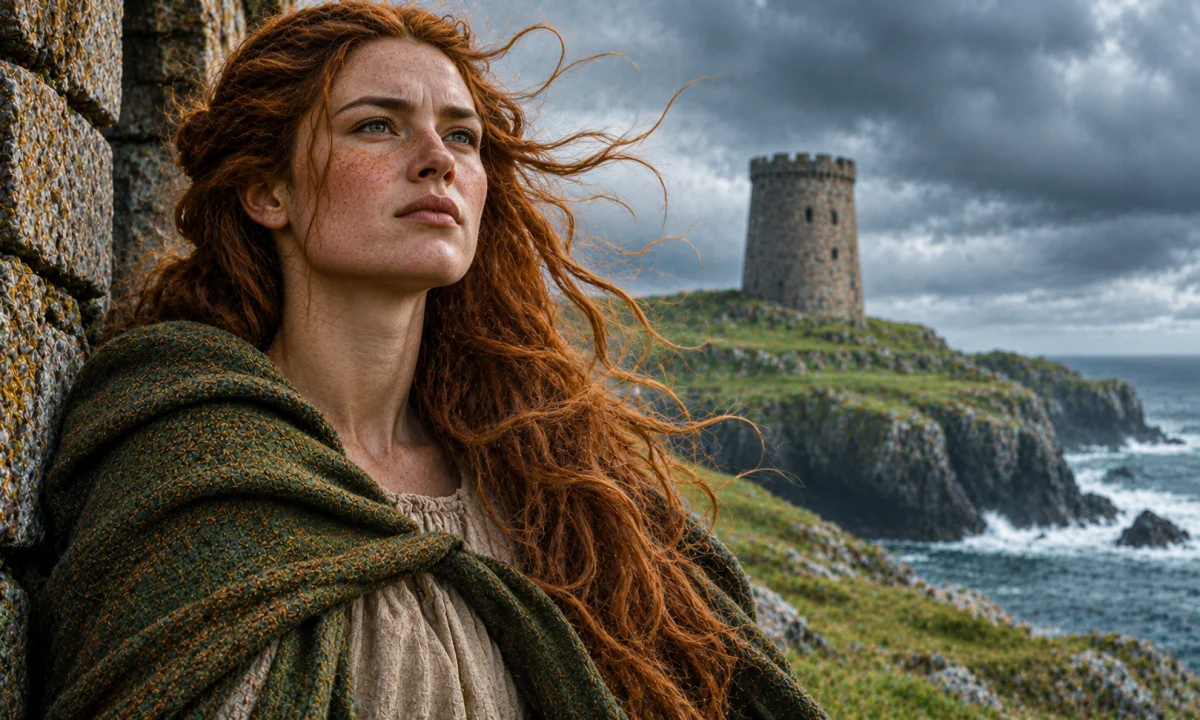
Emer is one of the central women of Irish mythology and the wife of Cú Chulainn, the greatest warrior of the Ulster Cycle. She is usually portrayed as a mortal noblewoman rather than a goddess or supernatural being. Her importance comes from her intelligence, dignity, practical skill and emotional strength, as well as from her relationship with Ireland’s most celebrated heroic figure.
Emer in Irish tradition
Emer belongs to the heroic literature of medieval Ireland, especially the stories associated with the kingdom of Ulster. These narratives are commonly known as the Ulster Cycle, a group of tales concerning Cú Chulainn, King Conchobar mac Nessa, the warriors of Ulster, and conflicts between Ulster and Connacht.
The stories were written down by Christian scholars during the medieval period, but many of them preserve material that had circulated orally for much longer. The surviving texts are not records of a single, fixed ancient mythology. They exist in different manuscripts, versions and later adaptations, and details can vary considerably. There is no secure evidence that Emer was worshipped as a deity in pre-Christian Ireland. She is presented primarily as a heroic woman within legendary history.
Her most important early narrative is Tochmarc Emire, usually translated as The Wooing of Emer. The work survives in medieval manuscript tradition and was transmitted in more than one form. It explains how Cú Chulainn met Emer, how her father tried to prevent their marriage, and how the hero acquired the training that made him famous.
Name and identity
The name is commonly written Emer in English, following a spelling based on Irish manuscript forms. Modern Irish often uses Émer. The pronunciation and precise meaning of the name are not completely certain, and proposed etymologies should be treated cautiously. Variations in spelling reflect the history of the Irish language and the way medieval texts were copied rather than necessarily indicating different characters.
Emer is generally identified as the daughter of Forgall Monach, a powerful Ulster lord. Her mother is less prominent in the surviving narratives, and genealogical details are not consistent enough to support a single complete family history. Forgall is often described as a wealthy or influential ruler whose opposition creates the main obstacle in the courtship story.
She is not the same figure as Deirdre, the tragic heroine associated with the Sons of Uisliu, nor is she the same as Aífe, the warrior woman linked to Cú Chulainn and the mother of his son Connla. These women all belong to the wider Ulster Cycle, but they have different identities, stories and roles.
The six gifts of Emer
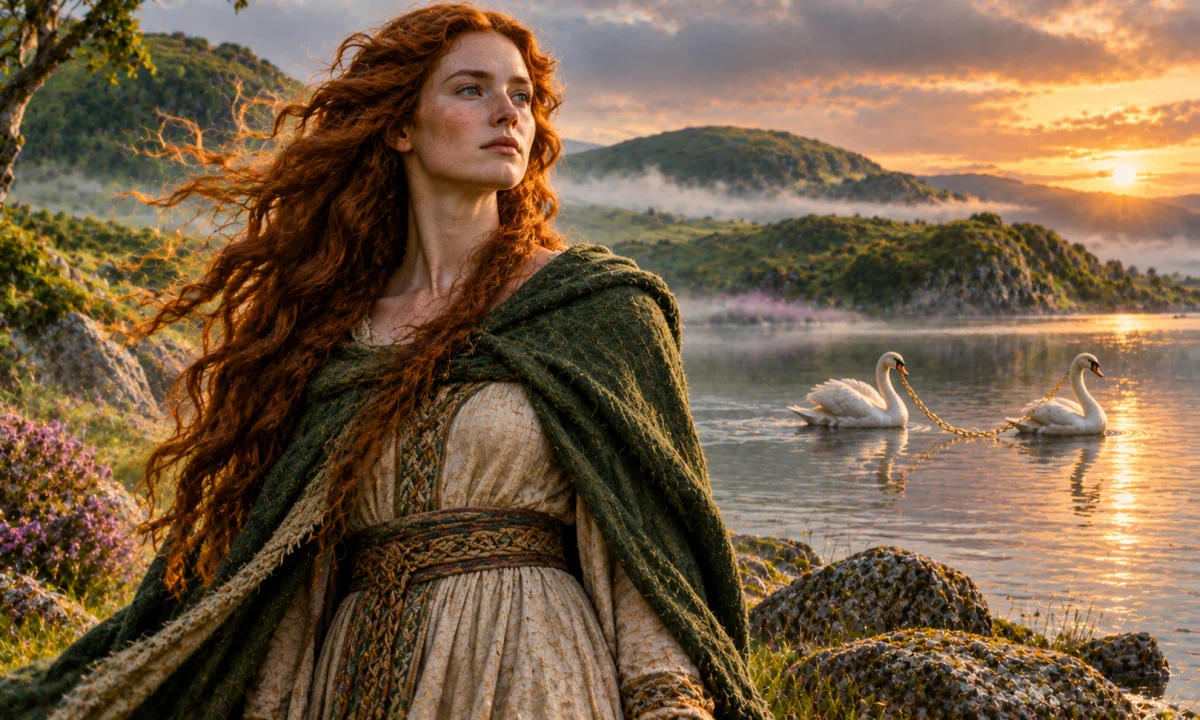
The Wooing of Emer introduces Emer through an idealised description of her qualities. She is said to possess what later translators often call the six gifts of womanhood. Lists differ slightly in wording, but they usually include beauty, a pleasing voice, eloquent speech, skill with needlework, wisdom or good judgment, and chastity.
This list is not simply a catalogue of physical attractions. It presents Emer as a complete aristocratic woman whose value includes education, self-control, artistic skill and intelligence. The emphasis on speech is particularly significant in Irish heroic literature, where eloquence, legal knowledge, poetic ability and the capacity to interpret events are marks of status.
Her chastity is also important in the moral framework of the tale, although it should not be read as the only measure of her worth. Emer is not merely a reward offered to the hero. She is a discerning speaker who tests Cú Chulainn, understands the danger surrounding their relationship and acts decisively when circumstances require it.
The meeting with Cú Chulainn
When Cú Chulainn meets Emer, he is already an exceptionally gifted young warrior, but he has not yet completed the training that will establish his legendary reputation. Their first conversation is often presented as a verbal contest. Emer recognises his qualities, yet she does not surrender her judgment to his fame or physical prowess.
In some versions, she makes a pointed remark about the hero’s youth or lack of experience. Cú Chulainn responds with wit, and the exchange demonstrates that he is capable of matching her intelligence. Their attraction is therefore represented through conversation as much as through beauty or heroic strength.
Forgall Monach does not approve of the match. His opposition is often explained by his desire to marry Emer to another man, or by his fear that Cú Chulainn’s status and abilities will make him a dangerous son-in-law. Rather than confronting the young warrior directly, Forgall devises a scheme intended to remove him from Ireland.
Scáthach and the warrior training
Forgall encourages Cú Chulainn to seek advanced training from Scáthach, a renowned warrior woman in Alba, the medieval Irish name for Scotland. The advice is deceptive because the journey is extremely dangerous. Cú Chulainn nevertheless travels to Scáthach and becomes her pupil.
Scáthach’s instruction forms part of a larger group of tales about Cú Chulainn’s education among foreign warrior women. He learns advanced combat techniques and faces demanding trials. The famous gae bolga, a distinctive and deadly weapon associated with him, is connected in the tradition with this period of training, although the details vary between texts.
The episode is important for Emer as well as for Cú Chulainn. Forgall’s attempt to separate them unintentionally helps transform the young man into the hero capable of challenging him. The courtship narrative thus joins romantic pursuit with the making of a warrior. Emer is the reason for the journey, but she is not simply waiting passively for its outcome.
The escape from Forgall
After returning from his training, Cú Chulainn goes to Forgall’s stronghold to claim Emer. In the most familiar version, Forgall refuses to honour the marriage and attempts to defend his fortress. Cú Chulainn defeats the men guarding it and carries Emer away. She is accompanied by her attendants, and the escape includes the recovery of her bride-price or dowry.
Forgall dies during the conflict, commonly by falling from the fortress walls while trying to escape or resist. The exact sequence differs among versions, as do the numbers of warriors and attendants involved. The central pattern remains stable: the father’s attempt to control Emer’s marriage leads to his own destruction, while Emer and Cú Chulainn leave together.
The episode reflects several features of heroic storytelling. Marriage is connected with family alliances, wealth and honour, while a woman’s consent can be caught between the wishes of her male relatives and the claims of a heroic suitor. At the same time, the narrative gives Emer a clear preference: she wishes to marry Cú Chulainn and joins him in escaping her father’s authority.
Emer as Cú Chulainn’s wife
Emer’s importance does not end with the courtship. She remains a significant figure in stories about Cú Chulainn’s adult life, particularly when his heroic obligations threaten domestic loyalty. Unlike the warrior hero, who is repeatedly drawn into combat, prophecy and supernatural encounters, Emer often represents judgment, emotional insight and the consequences of his actions.
She is not depicted as a warrior in the same manner as Cú Chulainn, Scáthach or Aífe. Her skills belong to a different sphere: speech, household management, discernment and the preservation of honour. Irish heroic literature does not always divide these abilities from political or martial power as sharply as modern categories might suggest. A woman who can interpret a crisis and speak with authority can exercise considerable influence even when she does not fight in battle.
Her relationship with Cú Chulainn is also not free from tension. His fame brings danger to everyone connected with him, and his encounters with other women or with the supernatural world repeatedly test their marriage. Emer’s responses tend to combine grief, jealousy, loyalty and self-command rather than presenting a simple image of the endlessly patient wife.
Emer and Fand
One of the best-known stories involving Emer is Serglige Con Culainn, often translated as The Wasting Sickness of Cú Chulainn or The Sickbed of Cú Chulainn. In this tale, Cú Chulainn becomes involved with Fand, a woman of the Otherworld and the wife of Manannán mac Lir.
Different versions arrange the events differently. Cú Chulainn is drawn toward Fand through an Otherworldly encounter, and his relationship with her creates suffering for both Emer and Fand’s husband. Emer’s jealousy is understandable within the story, but she is not reduced to a caricature of an angry wife. Her feelings arise from a genuine threat to her marriage, while the supernatural setting makes ordinary emotional loyalties difficult to maintain.
In some versions, Emer is prepared to act violently against Fand. In others, she shows remarkable generosity when she realises the depth of Fand’s attachment to Cú Chulainn. The situation is finally resolved when Fand chooses to return to Manannán. Manannán separates the lovers with his magical cloak, and a ritual or enchantment removes their memory of one another.
This tale places Emer at the centre of a complicated moral and emotional conflict. She is a wife defending her relationship, but she is also capable of recognising another woman’s pain. The story does not present marriage as a simple possession. Instead, it explores desire, obligation, memory and the unstable boundary between the human world and the Otherworld.
Emer in the Ulster Cycle
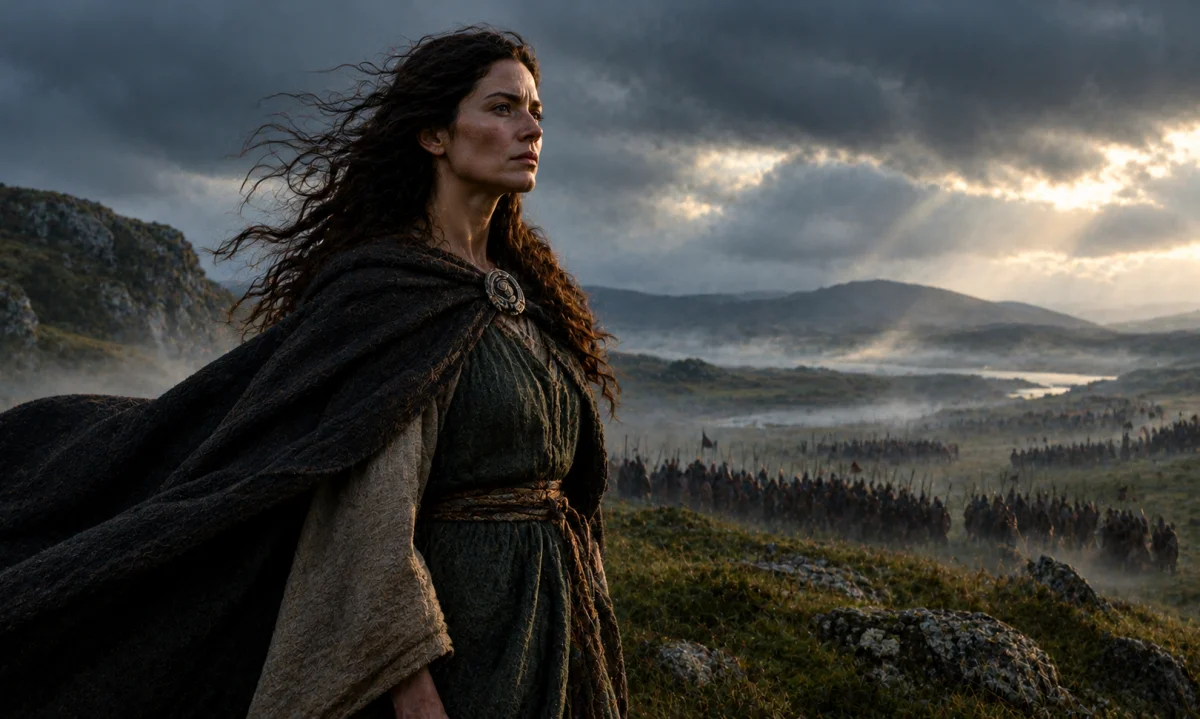
Emer appears in the wider cycle surrounding the Táin Bó Cúailnge, or Cattle Raid of Cooley, although her prominence varies from episode to episode. The Táin focuses mainly on the conflict between Connacht and Ulster and on Cú Chulainn’s defence of Ulster while its warriors are incapacitated by a curse. Emer belongs to the domestic and social world surrounding the hero, a world that gives emotional meaning to his extraordinary violence and isolation.
She is particularly important when Cú Chulainn’s heroic life is viewed from the perspective of those who love him. His battle frenzy and supernatural abilities make him admirable, but they also expose him to injury, grief and death. Emer’s presence helps reveal the cost of the heroic ideal. The warrior’s glory cannot be separated from the suffering endured by his household and companions.
In accounts of Cú Chulainn’s death, Emer is associated with the mourning that follows the hero’s final defeat. Details differ among the surviving narratives, and not every text gives her the same role. Later retellings often heighten the tragic image of Emer grieving for her husband. Such scenes are consistent with her established role, but individual dramatic details should not automatically be treated as part of every medieval version.
Character and symbolism
Emer can be understood as a figure of steadfastness under pressure. She is surrounded by men who try to direct her future: her father, her suitor, rival warriors and supernatural figures. Yet the stories repeatedly give her a voice of her own. Her intelligence is introduced before her marriage, and her judgment remains important after it.
She also represents the human obligations that heroic literature places beside martial honour. Cú Chulainn is celebrated for courage, speed and supernatural force, but Emer reminds the audience that a hero must also be a husband, a member of a family and a person capable of causing pain. Her presence gives emotional and ethical dimension to stories that might otherwise focus only on combat.
The “six gifts” associated with Emer have sometimes encouraged modern readers to treat her as an idealised model of womanhood. That interpretation captures part of the traditional presentation, but it can be too narrow. The narratives give her not only beauty and chastity but also judgment, eloquence and the ability to act in difficult circumstances. Her strength is usually expressed through knowledge and decision rather than through the weapon-based heroism expected of Cú Chulainn.
Emer and similar figures
Emer is sometimes confused with other prominent women in Irish legend. Deirdre is another famous heroine of the Ulster Cycle, but her story concerns love, exile and tragedy among the Sons of Uisliu. Medb is the queen of Connacht who leads the expedition in the Táin; she is a ruler and a political strategist, not Emer’s rival wife. Scáthach is a martial instructor and otherworldly or semi-legendary warrior woman who trains Cú Chulainn, while Aífe is associated with his son Connla.
Emer should also be distinguished from goddesses or sovereignty figures in Irish tradition. Her marriage to a heroic king-like figure does not make her a goddess, and the surviving medieval texts do not describe her as a deity receiving religious worship. Attempts to identify every prominent woman in Irish myth with a pre-Christian goddess remain interpretations rather than established facts.
Later reception
Emer has continued to appear in modern retellings of the Ulster Cycle, including literary adaptations, translations, historical fiction and drama. Writers have variously emphasised her intelligence, her marriage to Cú Chulainn, her jealousy in the story of Fand, or her experience as the wife of a hero whose destiny leaves little room for ordinary happiness.
One influential modern treatment is W. B. Yeats’s play The Only Jealousy of Emer, which reworks the traditional material in a symbolic and theatrical form. Yeats’s version belongs to modern Irish literary culture rather than to the medieval tradition itself. Its tone, psychology and treatment of supernatural experience should therefore be distinguished from the narratives preserved in medieval manuscripts.
In traditional Irish legend, Emer’s identity rests on more than her relationship with Cú Chulainn. She is the eloquent daughter of Forgall Monach, the woman associated with the six gifts, the intelligent partner who withstands attempts to control her marriage, and the figure whose judgment brings a human perspective to one of Ireland’s most violent heroic cycles.