WORLD
WORLD
Fionn Mac Cumhaill
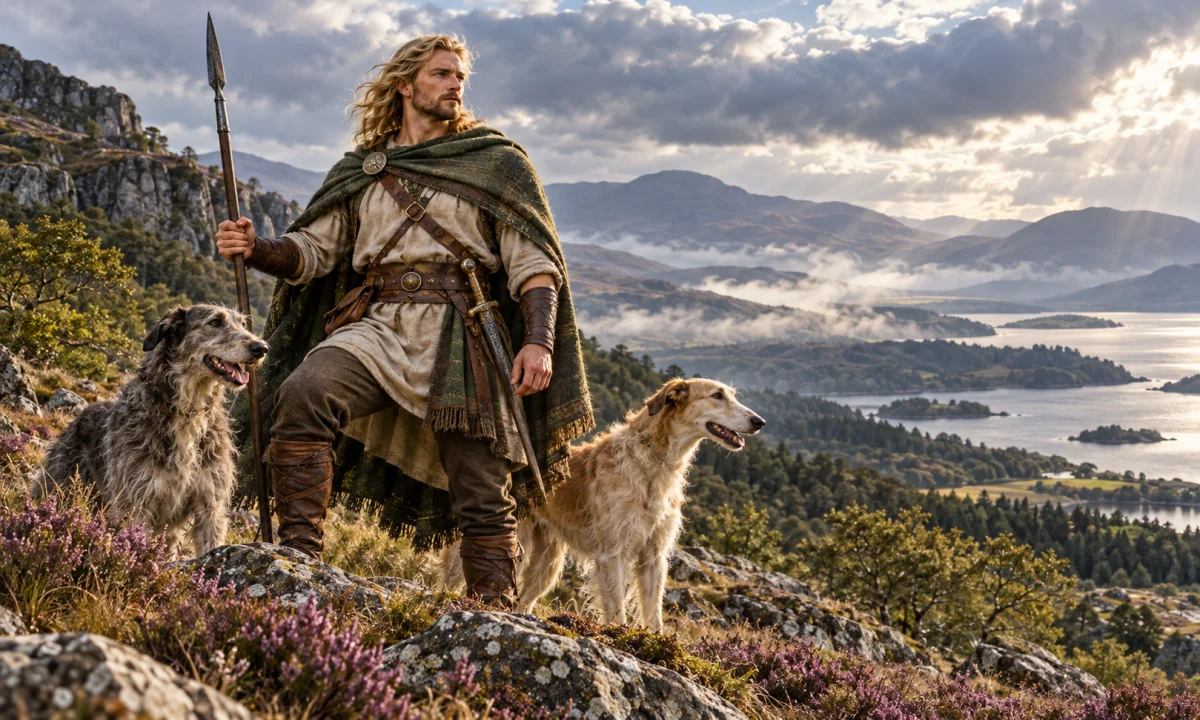
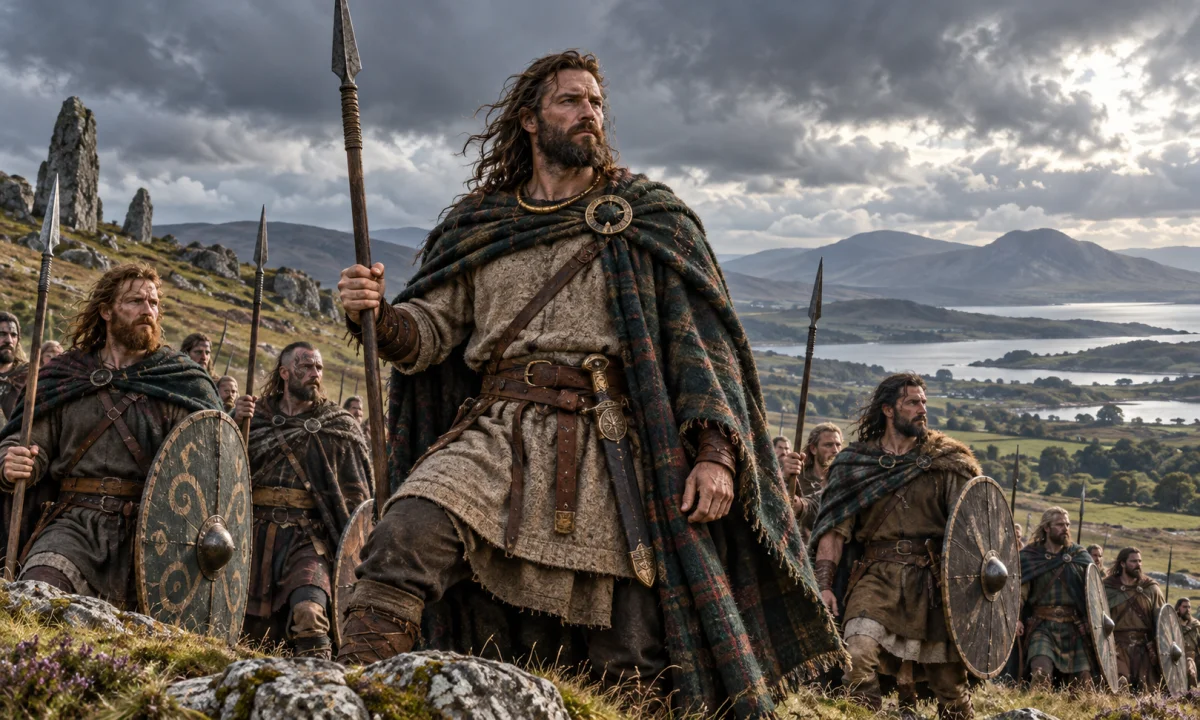
Fionn Mac Cumhaill, also widely known as Finn McCool or Fionn mac Cumhaill, is one of the central heroes of Irish mythology. He is the leader of the Fianna, a celebrated band of warrior-hunters, and the principal figure of the Fenian or Finn Cycle, a large body of Irish narrative concerned with heroic adventure, loyalty, love, hunting, warfare and the passing of an older pagan order. Fionn is sometimes described as a giant in later folklore, but in the medieval literary tradition he is primarily a legendary human hero with exceptional wisdom, strength and leadership.
Origins and cultural setting
Fionn belongs to the heroic tradition known in Irish as fiannaíocht, meaning the lore or storytelling associated with the Fianna. These stories developed in a society where warrior bands, hunting, hospitality and relations between local kings were important parts of heroic imagination. The Fianna live partly outside ordinary political society: they serve kings when required, but also move through forests and wilderness, hunting, guarding the land and testing the boundaries of law and loyalty.
The Fenian Cycle is one of the major groupings of Irish mythological and heroic literature, alongside the Mythological Cycle, the Ulster Cycle and the Historical Cycle. These categories are modern scholarly classifications rather than divisions used consistently by medieval Irish writers. The stories themselves vary greatly in tone and date. Some are compact heroic tales, some are romantic adventures, some are origin legends for places and customs, and others are long narratives in which the world of the Fianna is remembered by survivors after its decline.
The surviving written evidence comes from manuscripts produced over many centuries. Fenian material appears in medieval manuscripts, but many important versions were written down in the early modern period, and the stories also continued through oral tradition. One significant work is Acallam na Senórach, usually translated as Colloquy of the Elders, in which the aged warrior Oisín and the survivor Caílte speak with Saint Patrick. The framework places the heroic past beside Christian Ireland and allows the older warriors to describe the deeds, landscapes and customs of Fionn’s time.
These texts should not be treated as direct records of a pre-Christian religion. Christian scribes preserved, reshaped and sometimes moralised older material, while oral storytellers continued to alter it for new audiences. Fionn’s world contains traces of ancient ideas about sovereignty, wilderness, supernatural knowledge and the relationship between human communities and the landscape, but there is no secure evidence that Fionn was worshipped as a god in the manner of a documented Celtic deity.
Name, identity and classification
The name appears in several forms, including Fionn mac Cumhaill, Finn mac Cumhaill, Fionn MacCumhaill and the anglicised Finn McCool. The spelling Fionn reflects modern Irish usage, while Finn is common in older English-language scholarship and in Scottish Gaelic contexts. The element mac Cumhaill means “son of Cumhall,” identifying him through his father.
Fionn is commonly associated with meanings such as “fair,” “bright” or “white,” but the name’s interpretation is not simply a fixed physical description in every story. In Irish tradition, names can carry wordplay and may be connected to events, qualities or changes in identity. In the early part of his life, Fionn is called Demne in several narratives. He acquires the name Fionn after the circumstances of his upbringing and the development of his unusual appearance or qualities, although details differ among versions.
Fionn is best classified as a heroic and folkloric figure, not as a god. He has extraordinary abilities and sometimes appears in supernatural or giant-like form, but he also experiences family conflict, grief, desire, error and old age. His stories combine features of the warrior chief, hunter, poet, lawgiver, trickster and culture hero. Different narratives emphasise different aspects of his character, and there is no single authoritative biography that reconciles every episode.
Family and the rise of the Fianna
Fionn’s father is Cumhall mac Trénmhoir, a leader associated with the Fianna. His mother is generally named Muirne, daughter of Tadg mac Nuadat. In accounts of Fionn’s birth, Cumhall’s death creates danger for the child, and Muirne places him in the care of foster-mothers or guardians. The exact sequence varies, but the stories consistently present Fionn as a child whose identity must be protected before he can claim his inheritance.
He is trained in the wilderness and becomes skilled in hunting, weapons and poetry. His early life is not simply a preparation for kingship. It establishes an important feature of the Fenian tradition: Fionn’s authority comes from knowledge, experience and personal excellence as much as from birth. Although he is the son of a famous leader, he must prove himself through difficult tests and gain the recognition of the warriors.
The Fianna are not always portrayed as a single fixed organisation. In some tales they are a disciplined warrior fellowship serving the High King of Ireland; in others they resemble independent companies bound by codes of honour, seasonal movement and mutual loyalty. Fionn’s followers include Oisín, his son and one of the greatest poets of the tradition; Oscar, his grandson and a formidable warrior; Diarmuid Ua Duibhne, famed for his beauty and martial skill; and Caílte mac Rónáin, a swift and eloquent survivor of the old band.
Fionn’s principal rival is often Goll mac Morna. Goll is connected with the group responsible for the death of Cumhall in many accounts, and the rivalry between Goll and Fionn reflects competing loyalties within the Fianna. Yet Goll is not always a simple villain. Some stories show him as a powerful warrior whose honour, strength and relationship with Fionn are more complicated than a straightforward conflict between good and evil.
The Salmon of Knowledge
The best-known episode from Fionn’s youth is the story of the Salmon of Knowledge. The tale explains how he acquires wisdom not through ordinary education but through an accidental encounter with a supernatural source of knowledge.
A poet or wise man named Finegas has spent years trying to catch a salmon that has eaten the nuts of a hazel tree associated with wisdom. When the fish is finally caught, Finegas gives it to the young Demne to cook, warning him not to eat it. While preparing the salmon, Demne burns his thumb on its skin and instinctively puts the thumb in his mouth. Through that small taste, the wisdom of the salmon passes to him.
In one common version, Finegas realises what has happened and allows the boy to eat the rest of the fish. In other tellings, Fionn himself catches or cooks the salmon, and the details of the transfer differ. The important transformation is the same: he gains the ability to know hidden things, particularly by sucking his thumb. This power later helps him solve problems, identify danger and lead the Fianna.
The episode is not merely an explanation of Fionn’s intelligence. It connects him with older motifs involving sacred food, hazardous knowledge and the accidental acquisition of supernatural wisdom. His knowledge is powerful but not always comfortable. Like many legendary heroes who gain insight beyond ordinary human limits, Fionn becomes a figure who can perceive truths that others would rather avoid.
Appearance, abilities and character
Fionn is usually represented as a tall, powerful and attractive warrior, although descriptions vary. His name can suggest fairness or brightness, and later folklore often gives him a striking or gigantic appearance. He is an exceptional hunter, fighter and leader, but his most distinctive quality is the combination of practical skill with inspired knowledge.
- Leadership: Fionn commands the Fianna and is expected to distribute rewards, settle disputes and protect the honour of the band.
- Hunting: The forest, mountains and open country are central to his identity. Hunting is both a practical activity and a test of courage, endurance and perception.
- Poetic knowledge: Fionn belongs to a culture in which poetry is closely connected with memory, authority and supernatural insight.
- Supernatural wisdom: After the Salmon of Knowledge, he can gain information by sucking his thumb, especially when facing a difficult question.
- Martial ability: He is a formidable warrior, though the stories often give equal importance to strategy, judgement and the loyalty of his companions.
Fionn is not an uncomplicated ideal hero. He can be generous, perceptive and protective, but he can also be jealous, suspicious or harsh. His conflicts with Diarmuid and Gráinne reveal the dangers of authority when it is mixed with desire and wounded pride. The tradition’s interest lies partly in this tension: Fionn is a great leader, yet greatness does not prevent him from making damaging decisions.
Important stories and relationships
Fionn and Sadhbh
In one important narrative, Fionn meets Sadhbh, a woman who has been transformed into a deer through the action of a supernatural being. Fionn’s kindness allows her to return temporarily to human form, and they become partners. Their son is Oisín. However, Sadhbh is later separated from Fionn and transformed again, leaving the child to grow up in difficult circumstances before being recognised.
The story links Fionn’s life to the wilderness and shows how fragile the boundary can be between human and animal worlds. It also provides a legendary explanation for Oisín’s unusual name and character. Versions differ substantially in their treatment of Sadhbh, and the episode should not be merged with unrelated deer-maiden stories from other traditions.
Diarmuid and Gráinne
Tóraigheacht Dhiarmada agus Ghráinne, usually called The Pursuit of Diarmuid and Gráinne, is one of the most famous Fenian romances. Gráinne, daughter of a king, is betrothed to the ageing Fionn but falls in love with Diarmuid Ua Duibhne. She places him under a magical obligation, or geis, to flee with her. Diarmuid is reluctant, yet he eventually becomes her companion as Fionn and the Fianna pursue them across Ireland.
The narrative explores the conflict between arranged marriage and personal desire, as well as the destructive force of honour and revenge. Fionn’s behaviour varies between versions: sometimes he appears as a wronged elder seeking justice, while elsewhere his pursuit seems driven by resentment and jealousy. The story does not present a simple moral division. Diarmuid’s beauty, Gráinne’s determination and Fionn’s authority all contribute to the tragedy.
Oisín and the old age of the Fianna
Oisín is both Fionn’s son and the poetic voice of the Fenian tradition. In later stories, he returns from the supernatural land of Tír na nÓg and finds that the heroic world has disappeared. His encounter with Saint Patrick in Colloquy of the Elders places pagan heroic memory in conversation with Christianity.
Oisín defends the Fianna’s courage, generosity and hospitality, while Patrick represents a new religious and social order. The exchange is not simply a condemnation of the old world. The Christian framework preserves admiration for Fionn and his companions even as it marks their age as past. Through Oisín, Fionn becomes part of a larger meditation on memory, cultural change and the loss of heroic values.
Fionn as giant and landscape hero
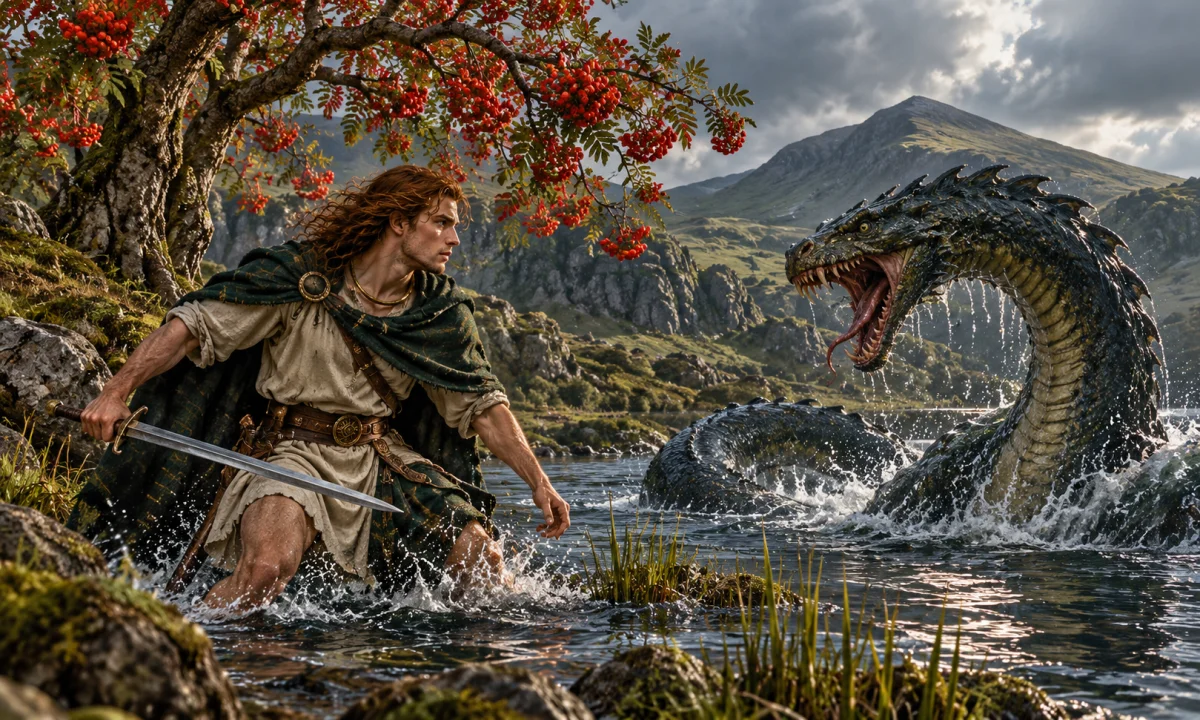
Later Irish and Scottish Gaelic folklore often portrays Fionn as a giant or as a builder of remarkable landscape features. The most famous example is the Giant’s Causeway in County Antrim. In one popular legend, Fionn constructs the causeway to confront the Scottish giant Benandonner. The story includes comic deception: Fionn disguises himself as a baby, causing Benandonner to imagine how enormous the child’s father must be and to flee back across the sea, destroying the causeway behind him.
This tale belongs to a broader tradition of landscape legends that explain unusual rocks, hills and shorelines through the actions of giants. It should not be treated as a literal account of the geological formation of the Giant’s Causeway. Nor should every giant story be assumed to describe the same version of Fionn. The giant of local folklore and the warrior-leader of the Fenian Cycle overlap, but they are not identical in emphasis.
Other traditions place Fionn in caves or beneath hills, waiting to return when Ireland needs him. These “sleeping hero” motifs are widespread in European folklore and appear in different forms around Fionn and other legendary kings. Their distribution and wording vary, so particular claims about his supposed tomb, sleeping place or final death depend on local tradition rather than on a single universally accepted account.
Interpretation and cultural significance
Fionn’s stories are especially important because they preserve a vision of heroic society outside the courts and genealogies of kings. The Fianna belong to the wild margins of Ireland, yet they are also guardians of order. Their lives involve forests, rivers, animals, weather and seasonal movement, making the landscape an active part of the narrative rather than a passive setting.
The contrast between Fionn and the Christian Saint Patrick in later texts has also encouraged interpretations of the Fenian Cycle as a meeting between older Irish tradition and Christianity. This does not prove that every Fenian episode preserves a pre-Christian myth in an unchanged form. Instead, it shows how Irish storytellers used inherited heroic material to think about religious transformation, mortality, national memory and the values of the past.
Fionn’s identity also changes according to region and period. Irish-language tradition generally uses Fionn mac Cumhaill, while Scottish Gaelic tradition has its own substantial body of Fenian material, often using Finn or Fionn mac Cumhail. The two traditions share characters and themes but are not simply interchangeable. Local storytelling has produced different adventures, landscapes and relationships.
Fionn in later literature and popular culture
Fionn became internationally familiar through the eighteenth-century Ossianic poems associated with James Macpherson. Macpherson presented “Fingal” and other figures as part of a cycle of poems attributed to Ossian, the anglicised form of Oisín. These works drew on Gaelic traditions but were not straightforward translations of a single ancient epic. Macpherson reshaped the material in the literary style of his period, and the authenticity and origins of the poems became the subject of major controversy.
Despite that controversy, the Ossianic poems had a major influence on European Romanticism. They spread versions of Fingal, Ossian and the heroic Gaelic past among readers who might never have encountered Irish or Scottish Gaelic storytelling. Later writers, artists and composers continued to reinterpret Fionn, often separating the giant of popular legend from the complex warrior chief found in Fenian narratives.
Modern references to Finn McCool commonly appear in Irish tourism, children’s literature, fantasy fiction and retellings of the Giant’s Causeway story. Such adaptations can keep the name widely recognisable, but they often simplify his relationships and combine episodes from different periods. The traditional figure remains most fully understood through the varied body of stories in which Fionn is at once hunter, leader, father, poet, rival and guardian of a heroic world that survives chiefly through memory.